
Attorney General Jeff Jackson is suing the U.S. Department of Education for terminating nearly $50 million in federal education funding for North Carolina public schools, most of it serving rural and low-income communities through the federal Full-Service Community Schools (FSCS) program, according to a press release. According to the complaint, the funding was cut because the program conflicts with the current administration’s priorities.
The federal funding is already being used by schools across North Carolina to support approximately 23,000 students, including in counties impacted by Hurricane Helene.
EdNC was embedded in a community school, P.W. Moore Elementary in Elizabeth City, for the 2024-25 school year, and we are releasing a documentary about the impact of the program in January 2026.
On Dec. 12, the department notified North Carolina that these grants would be terminated effective Dec. 31. “If allowed to stand, this will force schools to shut down programs and potentially lay off staff in the middle of the school year,” says the press release.
“Our kids deserve better. A surprise cut of nearly $50 million from rural schools, with virtually no notice and no allegation of misuse, is unlawful and harmful,” said Jackson. “The Department of Education approved these programs, allowed schools to build them, and now it’s trying to pull the rug out from under dozens of rural communities. Our students shouldn’t be treated like that, and we’re going to court to protect them.”
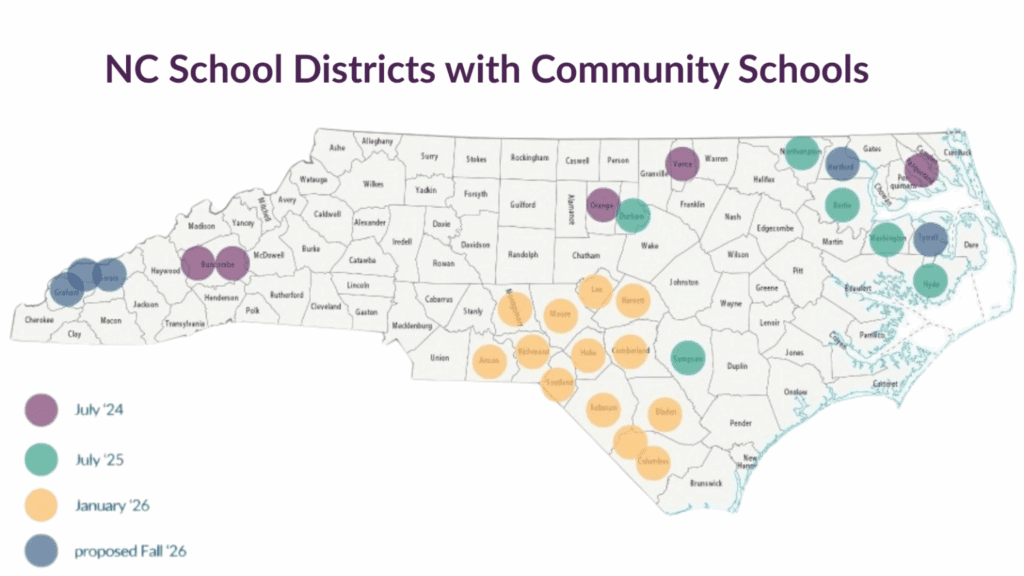
Congress authorized and funded the Full-Service Community Schools (FSCS) Program through the Elementary and Secondary Education Act and the Every Student Succeeds Act to support schools serving communities with high poverty, poor health outcomes, and lower educational attainment. In 2023, the Department of Education awarded more than $49.8 million through this program to the North Carolina Community Schools Coalition, which includes the Department of Public Instruction. Over five years, the coalition planned to serve 55 schools across 18 North Carolina public school districts.
The grants support students in rural and under-resourced areas by expanding learning opportunities, addressing Adverse Childhood Experiences (ACEs) that affect student development and success, strengthening and retaining effective elementary and middle school educators, and improving student achievement. They also fund early childhood education and literacy initiatives, family programming, and college and career exposure opportunities, including college tours and presentations from trade programs.
The FSCS program is designed to give schools local control so they can respond to the real needs of their students and communities. Rural districts face different challenges, and this flexibility allows schools to decide how best to support students — whether that means addressing food insecurity, expanding after-school programs, providing health or mental health services, or helping families stay housed.
That flexibility is especially critical during emergencies. After Hurricane Helene, schools used these funds to help families secure temporary housing and transportation so students could remain connected to school during a period of extreme disruption.
— The press release
Under federal law, multiyear grants like these can only be terminated for performance-based reasons, according to the press release.
“NC Community Schools exist at the intersection of grassroots community engagement and evidence-based school improvement strategy,” said Dan Kimberg and Dr. Kanecia Zimmerman, co-directors of the NC Community Schools Coalition. “NCCSC’s work in communities across NC has demonstrated what is possible when schools, staff, students, families, and community members are empowered to lead transformational change to meet their local needs.”
The lawsuit alleges that the department’s actions violate the Administrative Procedure Act, federal education regulations, and the U.S. Constitution, which gives Congress the authority to direct federal spending.
A copy of the complaint is available here.
Editor’s Note: EdNC receives support from Duke University.

Recommended reading