
Nature walks and cow eyeballs: Science Camp at Surry Community College

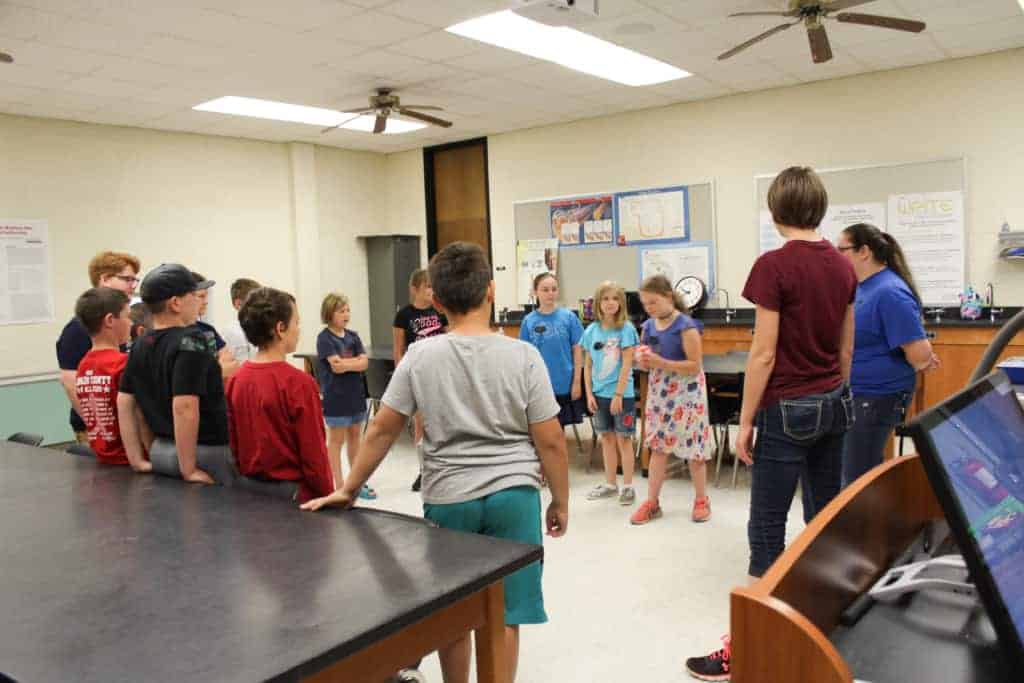
On the first day of Science Camp at Surry Community College (SCC), a group of students stood in a circle to introduce themselves and play icebreaker games. Instructor Traci Ballance started the group off with the question, “What does science mean to you?”
Students around the circle chimed in:
“Nature. Ourselves. The world.”
“Everything has science in it.”
“The human body.”
“Chemistry.”
From June 19-21, the fourth, fifth, and sixth graders would expand on their interests in science through activities like gardening, a nature scavenger hunt, visiting the greenhouse, identifying wildflowers and trees, and even dissecting a cow eyeball.
“I just want to expose them to a lot of other different things and let them get to do stuff that they maybe haven’t gotten to do before,” Ballance said.
“In this area, with the campus, there’s kind of a lot we can do,” she said of the opportunities at SCC. Ballance teaches biology and anatomy & physiology at the college, and the science camp offered a chance for students to explore subjects offered in the school’s Associate in Science degree program, including environmental biology, microbiology, ecology, botany, genetics, and more.
“I feel like it’s really important because if you get it instilled in them at a young age, then they have time to think about it and then they can grow maybe into that as a job or as a career,” Ballance said.
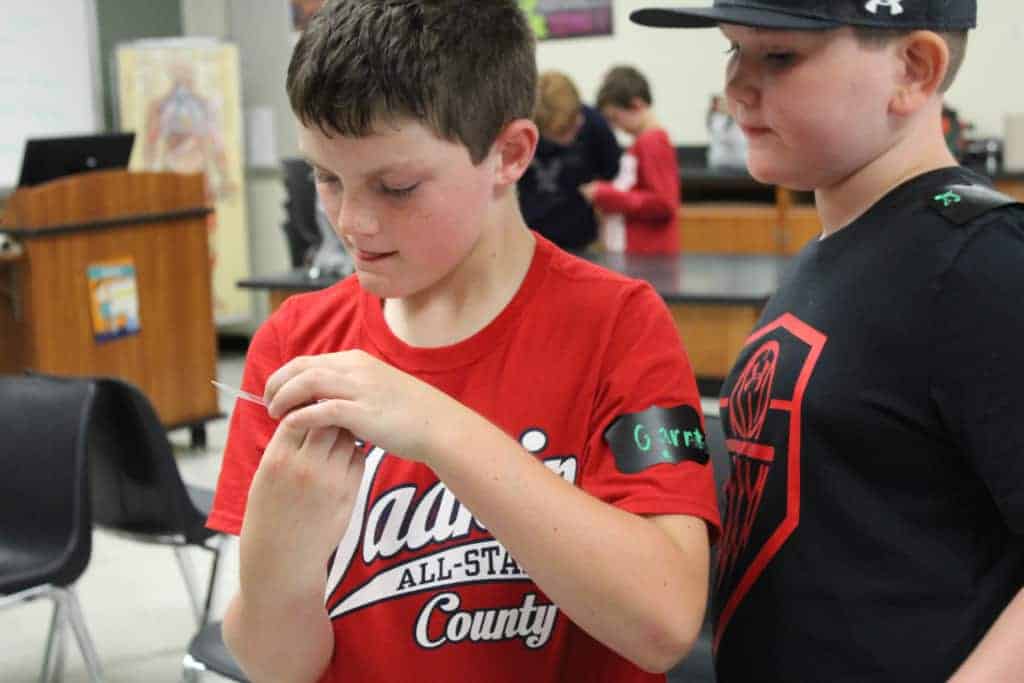
Some students, like 9-year-old Garrett Norman, already had science career goals in mind. Norman has his sights set on becoming a veterinarian.
“I like animals because I’ve got six animals: one’s a fish, one’s a dog, one’s a cat, and then two of them are bunnies. And I want to know if I see one getting sick, what I could possibly do to help it,” he said. “I figured with the science camp, it would be able to teach me things about animals.”
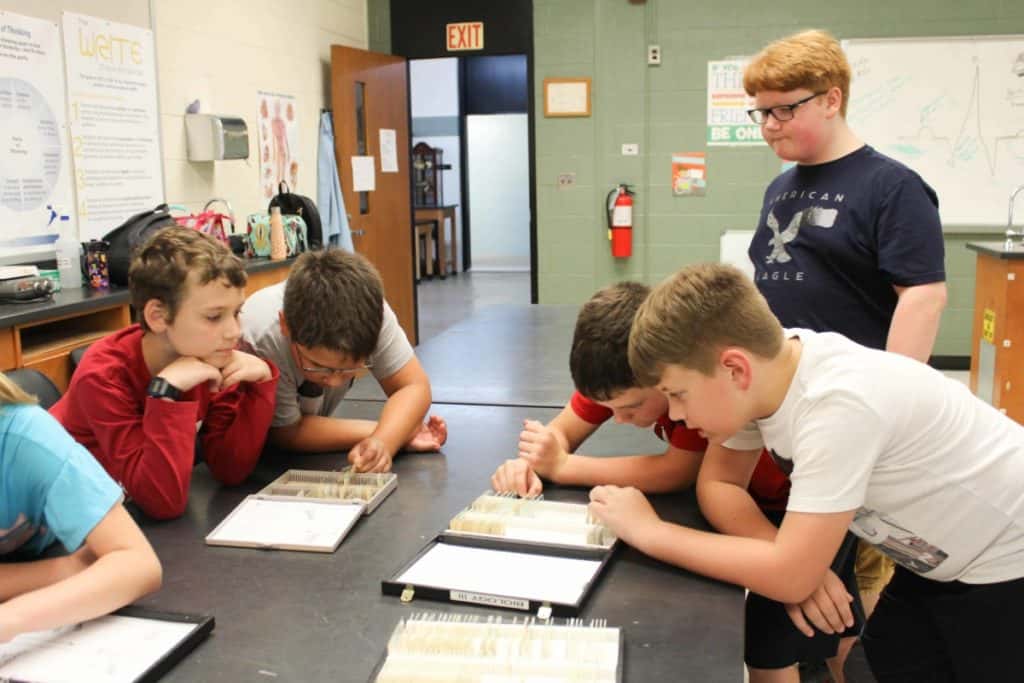
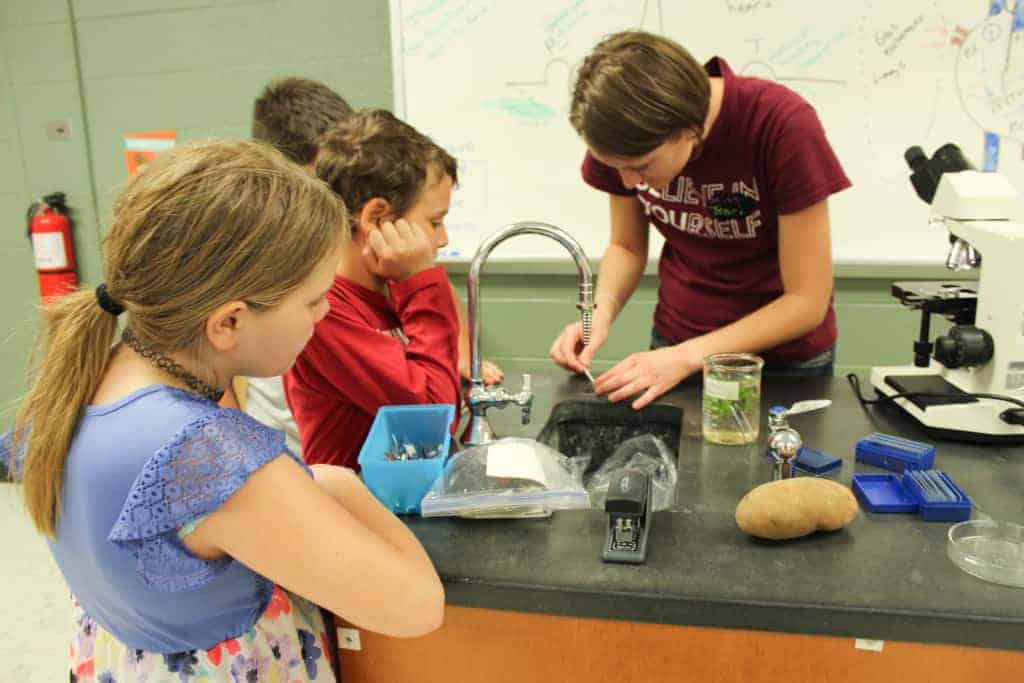
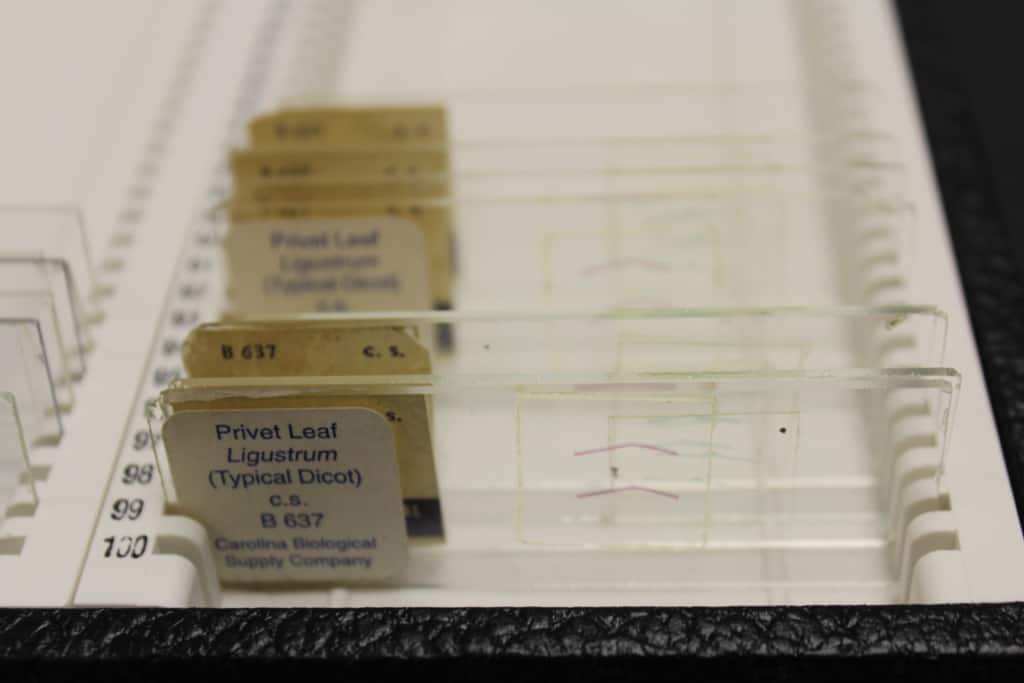
Norman had just wrapped a microscope activity, where students examined slides containing paramecium, parasites (like louse and ticks), larvae, and amoebas.
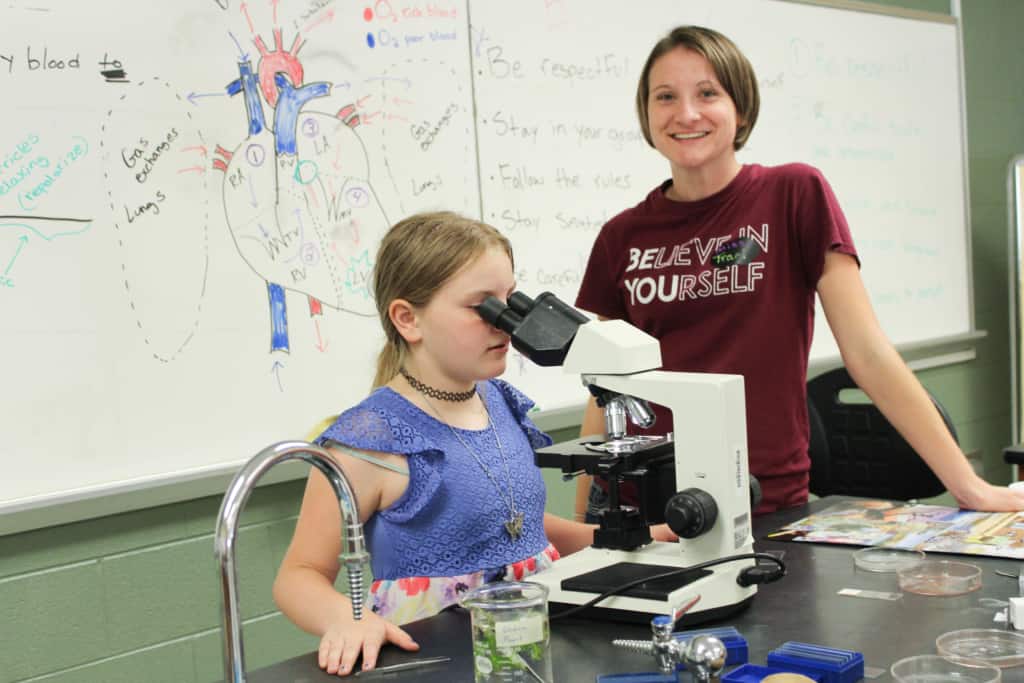
“We’re looking in the microscopes right now and we just looked inside of a little water plant leaf,” said 10-year-old Megan Collins.
Collins said she looked forward to the rest of the camp, especially spending time outdoors.
“I’m usually an outdoors person, you know, hiking and stuff like that,” she said. Her brother, 11-year-old Isaac Collins, was also a camp participant. He said he wanted to be able to learn about science so that he could build dirt bikes in the future.
“All my family, it’s all been dirt bikes!” he said.
Ballance said she could relate to the students’ interests, especially when coming from a small town.
“I know when I was little, I didn’t really have very many opportunities to do stuff science-related,” said Ballance, who grew up in Currituck County. “I feel like it’s important to just kind of get kids involved in as much as possible.”
“I want them to be able to leave saying, ‘Oh my gosh I’ve done something I’ve never done before. I didn’t know this. I didn’t know you could do that!’” she said.
For Ballance, her start in science came at College of the Albemarle, a community college in Elizabeth City.
“When I went to a community college, I had a biology teacher that was amazing, and so that’s really when it first kind of clicked for me that, ‘Yeah, this is fun,'” she said. She would continue on to complete an undergraduate degree at Eastern Carolina University and a graduate degree at Western Carolina University.
Science has come full circle for her, now teaching biology at a community college herself.
“You kind of get this close-knit family feel to it,” she said of teaching at SCC. “I just really like that it’s small. It kind of reminds me of home.”
Interested in more STEM education news? Sign up for our STEM newsletter here.