As North Carolina works to meet its statewide attainment goal — 2 million adults with a degree or credential by 2030 — initiatives across the state are advancing efforts to strengthen education-to-workforce pipelines.
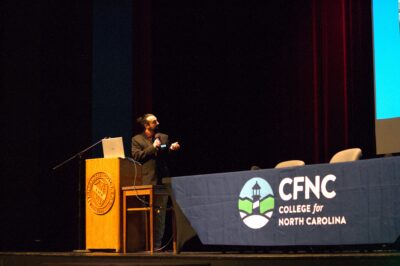
On Feb. 12, myFutureNC — the statewide nonprofit organization focused on educational attainment — recognized six initiatives during its annual State of Educational Attainment convening. The convening also included new data on the state’s progress toward its attainment goal and an overview of myFutureNC’s proposed Workforce Act of 2026.
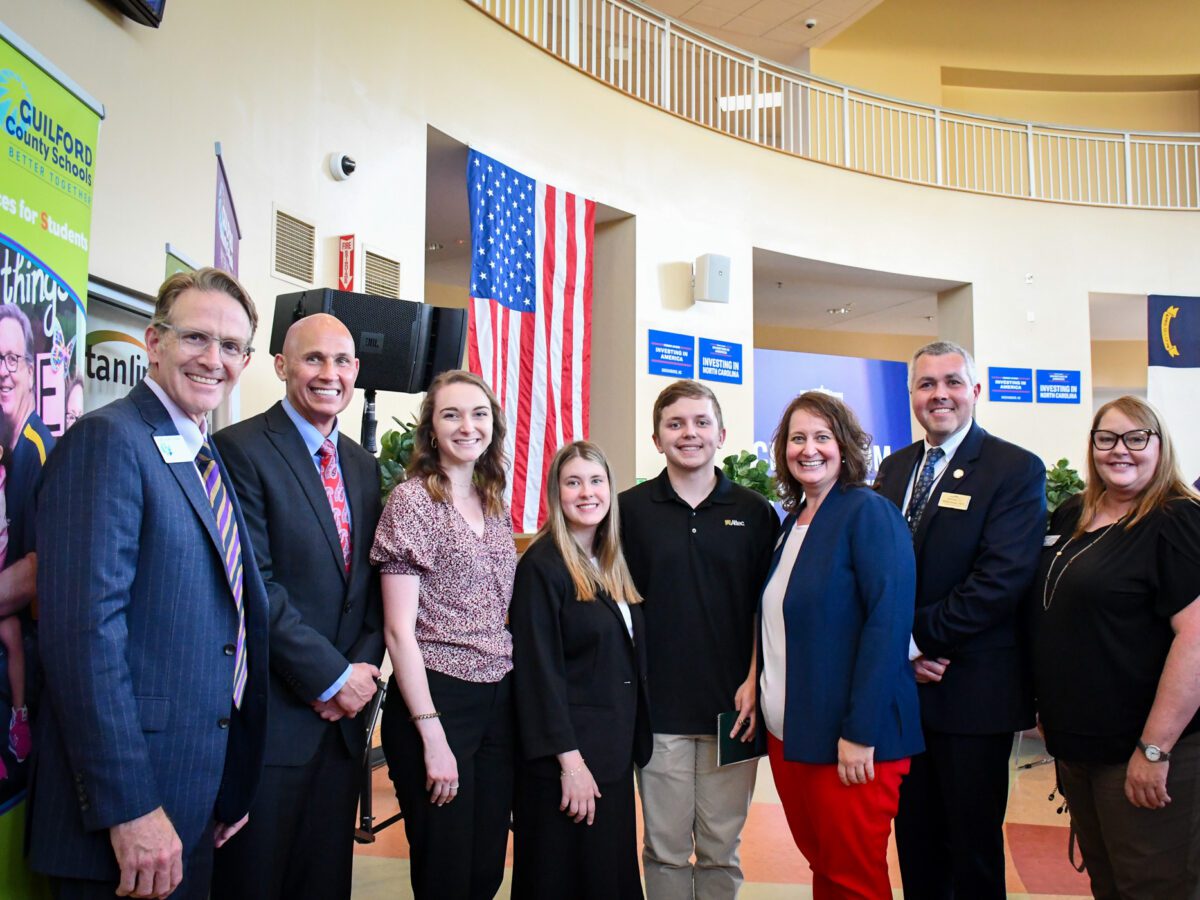
“Their leadership is accelerating progress in classrooms, institutions, workplaces, and communities across the state — and reminding us that statewide goals are achieved through local action,” said Cecilia Holden, president CEO of myFutureNC, of the 2026 Champions for Attainment. “Thank you for showing what’s possible when leadership meets commitment.”
Learn more about each of the recognized initiatives below.
 Sign up for Awake58, our newsletter on all things community college.
Bertie Attainment Coalition
The Bertie Attainment Coalition is a partnership that works to align K-12 schools, community colleges, workforce agencies, local government, and nonprofits to increase postsecondary attainment in Bertie County.
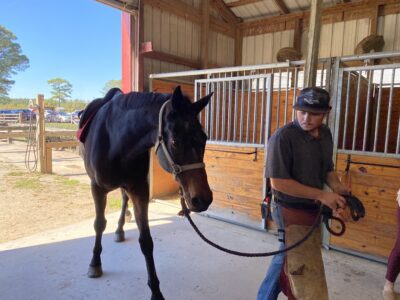
The county is served by two community colleges: Martin and Roanoke-Chowan. Instead of competing for students, the colleges decided to “work together to try to figure out how we could attract students just to college,” said Dr. Tabitha Miller, president of Martin Community College.
“Many people in Bertie County were missing out — and it wasn’t because they lacked talent, but it was because the pathway was confusing, and support was often scattered,” said Dr. Murray Williams, president of Roanoke-Chowan Community College.
Read more on Bertie County

NC Career Coaches
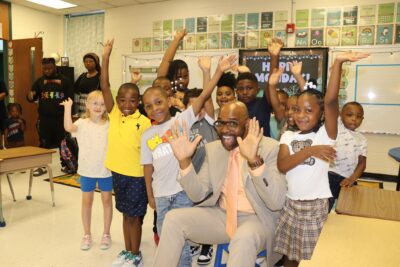
The NC Career Coach Program, operated by the N.C. Community College System (NCCCS), places coaches in high schools to help students determine career goals and identify educational pathways to meet those goals. The program was established by the N.C. General Assembly in 2015 and is funded through state appropriations and matching funds from community colleges.
During the 2024-25 school year, the program had 92 career coaches who collectively served more than 31,000 students across 64 local education agencies (LEAs), a 57% increase in the number of students served compared to the previous year.
“Career coaches are the bridge, and in some cases, they’re really talking to first-generation students and showing them it is possible,” said Dr. Jennifer McLean, state director of advising and coaching at the NCCCS. “They don’t see themselves as college ready, but the coaches encourage them in that one-on-one environment.”
NC Health Talent Alliance
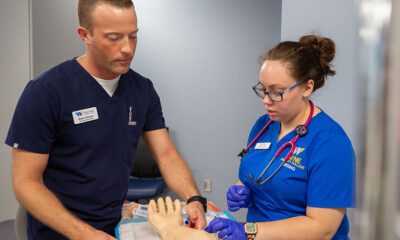
The NC Health Talent Alliance is a statewide public-private partnership led by the NC Chamber Foundation, North Carolina Area Health Education Centers, and the NC Center on the Workforce for Health. The Alliance aims to address health care workforce shortages by developing targeted programs to fill identified gaps, according to its website.
In 2025, the Alliance released its annual analysis of workforce data for key health occupations, identifying that one in every three licensed practical nurse (LPN) positions is unfilled, and one in every eight registered nurse (RN) positions is unfilled.
“Through the North Carolina Health Talent Alliance, we’re able to bring employers together — both at the regional, local, and statewide levels — to better understand what their employee needs are going to be,” said Meredith Archie, president of the NC Chamber Foundation. “Employers are now helping us shift workforce development to a demand-driven system.”
NC Reconnect
NC Reconnect is a statewide initiative that works to reengage adult learners who started at a community college but did not complete a credential.
According to a recent four-year evaluation, the initiative’s efforts have successfully reenrolled more than 3,000 adults, and participants return to community colleges at rates far higher than the statewide average.
“At the core of NC Reconnect, it is really about reaching out to them and giving them something that they couldn’t refuse — to return, to upskill, and to completely change their family’s economic reality,” said MC Belk Pilon, president of the John M. Belk Endowment, which launched NC Reconnect in 2021.
Read more about NC Reconnect
Surry-Yadkin Works
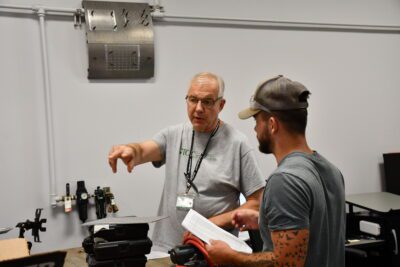
Launched in 2021, Surry-Yadkin Works is a regional work-based learning program that brings together Elkin City Schools, Mount Airy City Schools, Surry County Schools, Yadkin County Schools, and Surry Community College to offer pre-apprenticeships, apprenticeships, job shadowing, and more.
According to its website, Surry-Yadkin Works partnered with 88 businesses and 211 students this semester.
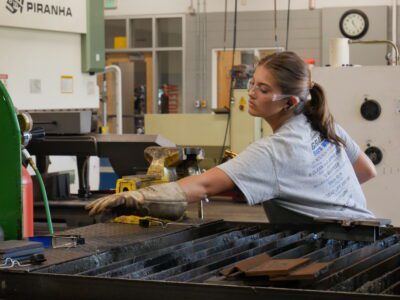
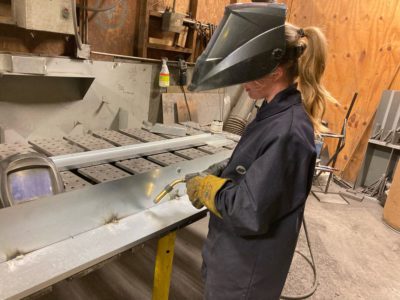
“Through this apprenticeship that they’ve offered, you’re learning on the job everyday, and I’ve realized I enjoy this type of work, and I would want to carry on and keep going with it,” said Carson Hill, a welding apprentice.
Read more about Surry-Yadkin Works
The Forward Fund
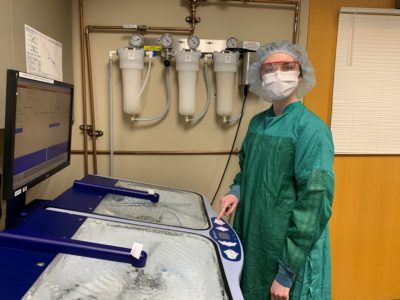
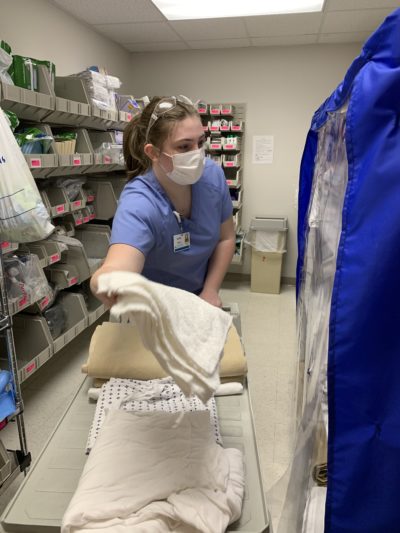
Launched in 2025, The Forward Fund provides zero-interest, outcomes-based loans to students pursuing short-term, high-demand workforce credentials.
According to its website, “this financing lowers the overall risk to the learner while engaging with employers and education and training providers to build a stronger workforce.” Cape Fear Community College is an eligible institution for the Fund.
“The Forward Fund is designed as an opportunity for those that are living here and maybe stuck in low-wage or multiple minimum-wage employment jobs, to level up — kind of bet on themselves,” said Meaghan Dennison, CEO of The Forward Fund.
Editor’s note: The John M. Belk Endowment supports the work of EducationNC.

Recommended reading