The number of health care and social assistance jobs will increase more quickly than any other industry between now and 2034, according to the U.S. Department of Labor’s 10-year employment projections released last fall. North Carolina’s labor market, according to the state’s Department of Commerce, closely mirrors these national projections.
Driven by an aging population, the increasing prevalence of chronic disease, and lingering burnout following the COVID-19 pandemic, demand for health care workers in North Carolina remains high. In 2025, North Carolina’s Department of Commerce recorded 0.6 jobs seekers per job opening in health care support occupations, indicating there were about twice as many job openings as there were applicants.
The state’s 58 community colleges play a key role in meeting these workforce needs, as each college offers health care programs designed in response to local industry demand. In 2024-25, more than 44,000 students were enrolled in health care programs across the North Carolina Community College System (NCCCS).
However, starting and maintaining health care programs can cost hundreds of thousands of dollars, creating barriers for community colleges working to meet health care workforce needs. For example, colleges must purchase expensive medical training equipment, hire qualified health care faculty, and complete accreditation processes to ensure graduates’ credentials and degrees are recognized by their industries.
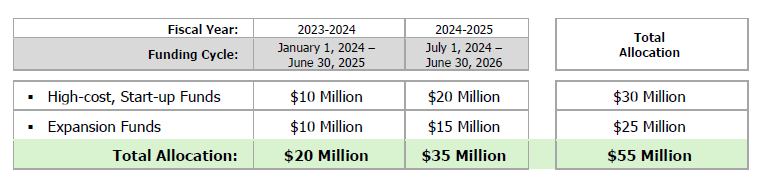
In 2023, the North Carolina General Assembly allocated $55 million to the NCCCS to address these challenges. Now in its final year of funding, the two-year High-Cost Healthcare Start-Up and Expansion Grant program provided community colleges with funds to launch and expand in-demand health care programs, including both curriculum and short-term workforce programs, to meet local workforce needs.
 Sign up for Awake58, our newsletter on all things community college.
Grant overview
Part of North Carolina’s $1.6 billion dollar Medicaid sign-on bonus in 2023, the legislature’s $55 million allocation was split into two categories that the NCCCS distributed to colleges over two years: $30 million in “high-cost, start-up funds” to help colleges launch health care programs, and $25 million in “expansion funds” to enhance existing programs’ offerings.
According to a legislative report on the grant’s 2024-25 fiscal year, presented to the State Board of Community Colleges in November, NCCCS plans to award all of the funds through 95 start-up and 66 expansion grants for a total of 161 grant awards.
Community colleges submitted their proposals for grant funds to the NCCCS in late 2023. Funding was available for both curriculum and continuing education programs, and preference was given to initiatives at rural colleges in Tier 1 counties and to collaborative cross-regional projects.
For example, $750,000 in start-up funds were allocated to Asheville-Buncombe Technical Community College to lead a behavioral health and direct care workforce pipeline initiative in partnership with Forsyth Technical Community College and Stanly Community College. According to the report, the project’s goals are expanding access to training, credentialing, and career pathways in behavioral health in rural and underserved parts of the state.
The grant’s 2023-24 annual report reads that each community college had five opportunities over two funding cycles to submit proposals. The maximum award amounts were $500,000 for start-up grants and $400,000 for expansion grants. In all, each of the state’s 58 community colleges received at least one grant, with some receiving as many as five.
The annual report also lists the 27 types of in-demand health care programs that grants went toward. The following five received the highest amount of combined start-up and expansion grant funds:
- Associate degree in nursing (ADN) and practical nursing (PN) programs ($13.3 million)
- Emergency medical services programs ($10.6 million)
- Surgical technology programs ($4.2 million)
- Dental assisting programs ($3.9 million)
- Medical sonography programs ($3.2 million)
Funds could be used toward salaries for instructional and noninstructional staff, program equipment, curriculum development, faculty professional development, and accreditation costs. For example, 38 colleges received health care start-up funds to assist with the reaccreditation process for their emergency medical technician (AEMT) course.
In response to new accreditation requirements from the North Carolina Office of Emergency Medical Services that will go into effect July 1, 2026, the NCCCS put out a call to colleges offering the AEMT course to assist them with the reaccreditation process. Through this call, the system was able to use just over $900,000 of the grant funds, according to Barbara Boyce, a workforce consultant with the NCCCS.
According to Andrew Gardner, associate vice president of workforce strategies at the NCCCS, legislative start-up and expansion funds are a proven model to meet business needs that the system has used in the past for other occupations. In 2021, for example, the legislature allocated $5.2 million to the NCCCS for High-cost Workforce Start-up Funds. The grant program’s similar funding structure helped 16 community colleges start programs in occupations including heavy equipment operation, truck driving, and industrial cybersecurity.
As previous legislative funding directed toward workforce expansion has focused on a variety of in-demand workforce occupations, Boyce added that a strength of the high-cost health care start-up and expansion grant program has been its focus on the health care sector. The model, she said, has ensured funds are targeted toward in-demand and growing health care occupations.
Expanding in-demand workforce training at Central Carolina Community College
Community colleges used over half of the grant funds — 65% — to purchase equipment and instructional materials that allowed them to modernize classrooms, simulation labs, and clinical training environments, according to the report. “Collectively, these investments modernized healthcare training statewide, expanded enrollment capacity, and strengthened the pipeline of work-ready graduates entering high-demand fields,” it reads.
Ongoing changes in technology make it important for health care education programs to have up-to-date equipment for students to practice the technical skills they’ll need in the workforce. The 2023-2024 annual report on the grant program lists 46 different types of specialized training equipment that community colleges requested in their grant proposals.
The equipment listed in the report — ranging from phlebotomy kits to cardiac catheterization lab simulators — also sheds light on the often specialized, expensive equipment colleges must own to provide this crucial hands-on training.


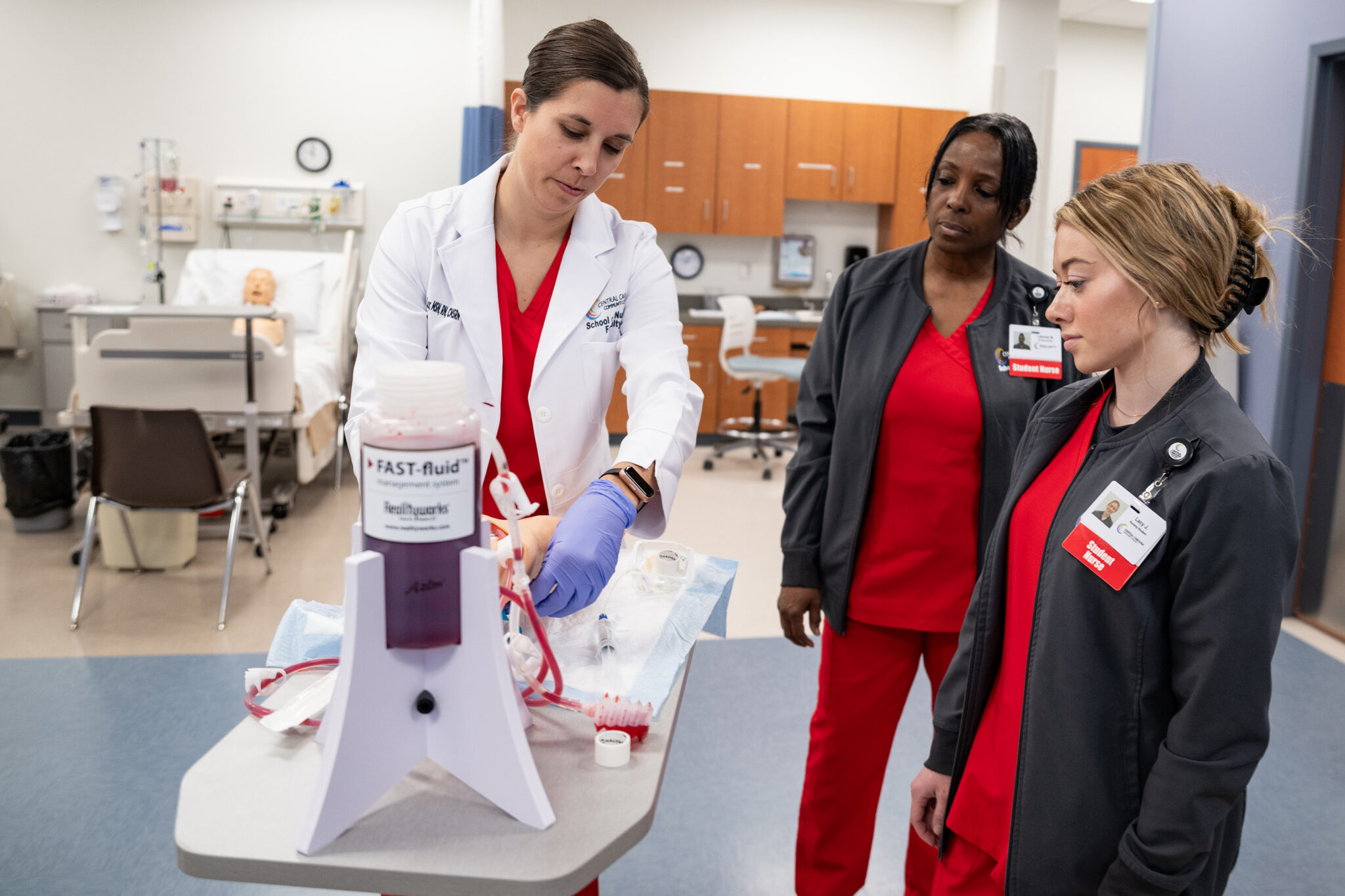
For example, Barbara Campbell, the department chair of nursing programs at Central Carolina Community College (CCCC), said a high-fidelity mannequin that her associate degree in nursing (ADN) students might use to train could cost between $10,000 and $20,000.
CCCC is one of the 33 colleges that received grant funds for their nursing programs. By 2033, NC NurseCast projects that the state will have a shortage of nearly 12,500 registered nurses (RN) and 5,000 licensed practical nurses (LPN). As the NCCCS report explains, a key reason for the state’s nursing shortage is the fact that more nurses are retiring from the field than graduating from nursing programs.
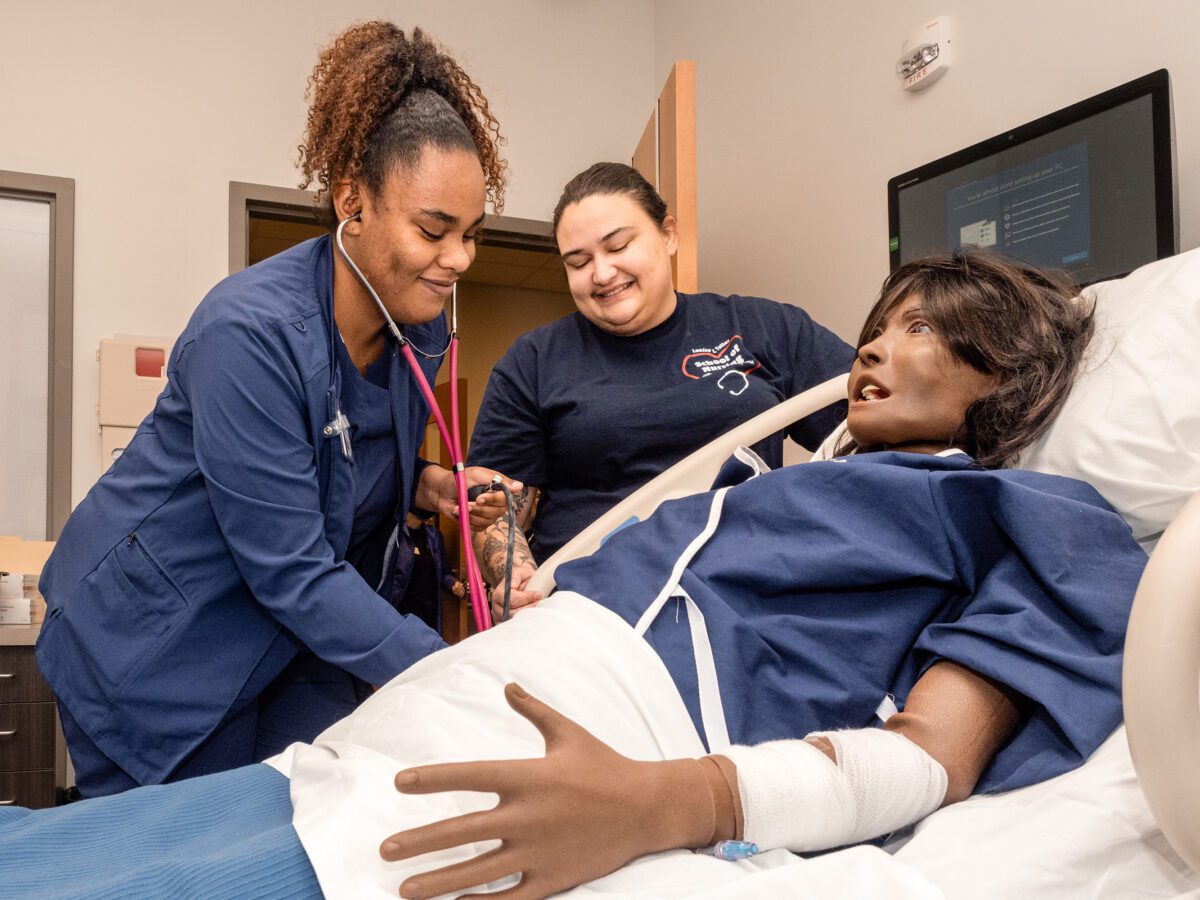
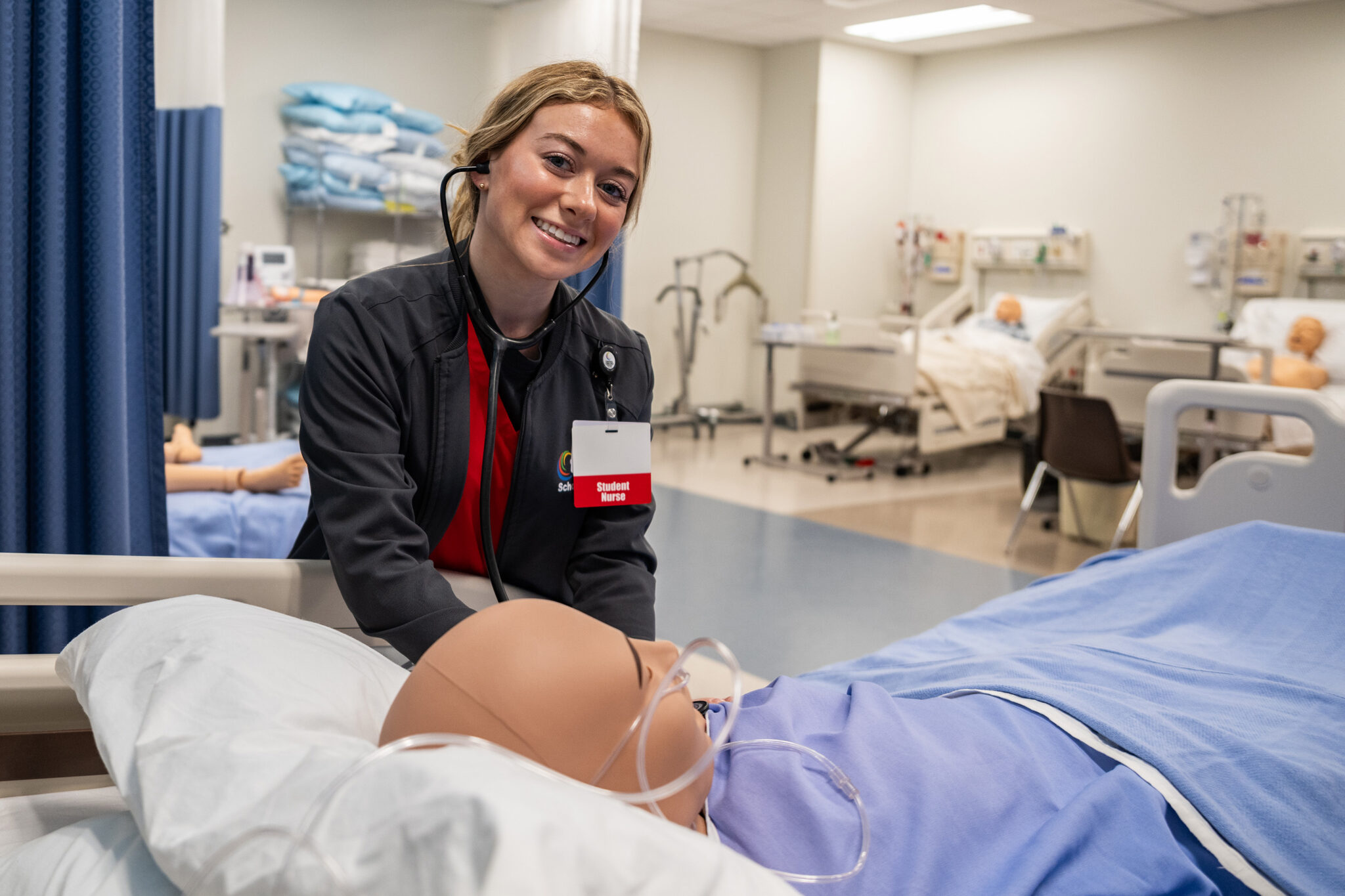
Two of the three grants CCCC received were expansion funds for ADN and nurse aide programs. According to Denise Martin, dean of health sciences and professional services at CCCC, most of the nearly $400,000 in ADN expansion funds were used to outfit a nursing skills lab at CCCC’s Chatham Health Sciences Center. The college used the funds to create a realistic hospital room for nursing students, including the purchase of mannequins, headwalls, and computer and simulation equipment.
The rest of the funds, Martin said, went toward hiring three faculty to teach in the new lab.
Because of these enhancements, the college’s two-year ADN program grew by 40 seats, increasing enrollment capacity from 140 to 180 seats, according to Martin.
“That’s 20 more grads a year that could potentially come out, and if every school did that across the country, we would no longer have a nursing shortage,” Martin said.
In addition to using funds to purchase equipment and hire faculty, the 2024-25 NCCCS report says other colleges used the funding to extend scheduling options to improve access for working adults and caregivers who are interested in pursuing nursing education. Halifax Community College and Piedmont Community College, for example, used funding to introduce evening and weekend nursing cohorts, and Forsyth Tech was able to condense their LPN-to-RN transition program from three semesters into two.
Another factor driving demand for nurses is the state’s aging population. As adults live longer, health needs are creating demand for health care workers who can assist older adults in nonhospital settings. According to state-level labor market data in the NCCCS report, the health care occupation with the highest projected job growth between 2024 and 2030 — 18% — are home health and personal care aides.
Distinct from RNs and LPNs, these roles are typically filled by nurse aides, or certified nursing assistants, who work under the supervision of licensed health care providers. In North Carolina, students can receive this type of certification after completing a nurse aide program.
CCCC is one of six colleges in the report that collectively received just over $2 million in expansion grants to bolster their nurse aide programs.
According to Beverly Brock, CCCC’s director of continuing education health programs, the college used their roughly $380,000 nurse aide expansion grant to establish another new lab skills space at the college’s main campus in Lee County and to hire three additional instructors, two of which work in Lee County, making it possible for the college to serve more nurse aide students without compromising their required student to nursing faculty ratio.
Martin added that while some nurse aide graduates immediately begin working in the field, most nurse aide students go on to enroll in the college’s LPN or ADN curriculum, which the nurse aid program serves as a prerequisite for.
Taken together, she said, the expansion grants played a critical role in strengthening the college’s nursing pipeline by increasing the college’s capacity to train both entry-level nurse aide and curriculum LPN and ADN students.
Read more about community colleges and nursing education

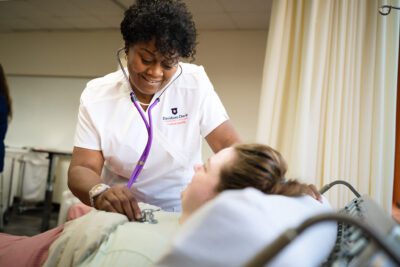
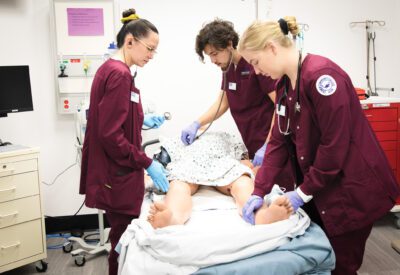
Physical therapist assistants (PTA), another job sector driven by the growing number of older adults in the state and their health care needs, are also projected to grow 18% between 2024 and 2030.
Almost $1.4 million in grants were allocated to three colleges to support PTA programs. Two colleges, Martin Community College and South Piedmont Community College, received expansion funds. According to the report, at Martin Community College, a $395,000 grant was used to purchase new therapeutic equipment, install outdoor exercise stations, and construct a walking path.
At Central Carolina, however, the college already owned most of the equipment necessary to start the PTA program. Tiffany Needham, PTA program department chair, said the college’s start-up grant fund was used primarily to fund salaries for PTA adjunct faculty who specialize in the orthopedic, pediatric, and neurological components of the PTA curriculum.
As in the college’s nursing programs, expanding teaching staff is crucial to serving more students. The NCCCS report lists instructional and noninstructional salaries and faculty preparation and professional development as main uses of the grant funds across all colleges, as money was used to hire “new faculty and staff to expand instructional capacity, reduce student-to-faculty ratios, and improve student support services.”
Although hiring faculty is not a one-time expense, as colleges must pay salaries year after year, the additional full-time equivalent (FTE) funding newly enrolled students will generate in operational revenue make it possible for colleges like CCCC to make these investments in their teaching teams.
Needham added that the three new adjunct professors helped the program expand while meeting accreditation standards by continuing to meet required student-to-faculty ratios, meeting contemporary practice requirements, and by enhancing the level of knowledge and expertise PTA students have access to, adding additional tools to their skill “toolbox.”
“Being able to hire adjuncts that do have that contemporary practice or experience has allowed that extra set of hands that truly work with that population, or … have more tools in their toolbox to demonstrate or to educate our students,” Needham said. “That has helped tremendously.”
The inaugural PTA cohort at Central Carolina Community College will graduate this spring, and Needhman says most of the 16 students already have plans to work in their local community after passing their certification exam in the summer.
Meeting rural oral health care needs at College of The Albemarle
Over half of the total grant allocation — or $28.6 million — was provided to 32 rural colleges in the form of 80 awarded grants, according to the report.
At College of The Albemarle (COA), leaders say the start-up grant funding they received is making a direct impact on access to oral health across the college’s seven-county rural service area.
Robin Harris, COA’s dean of health sciences and wellness programs, said the college has been working to start a dental program since 2008, but high start-up costs kept the program from taking off.
In 2021, COA formed a partnership with East Carolina University’s dental clinic and Catawba Valley Community College’s dental assistant faculty to offer a dental assistant program to COA students for two years. After the two years, Harris said, the college’s plan was to try to stand the program up at COA.
Around the time the second year of that partnership was ending, the NCCCS announced applications for health care grant funds, and in 2024, the $250,000 start-up grant COA received made it possible for the college to make the investments necessary to launch their own dental assistant program.
Twenty-four students have graduated from the dental assisting program in its first two cohorts, and 12 more will begin the course this March.
As the 24-week dental assistant program began graduating its first students, Harris said NCCCS approached the college to see if they were interested in another round of funding to also launch a dental hygienist curriculum program.
According to Harris, the closest community college dental hygiene programs to COA were located more than two hours away at Halifax, Wayne, and Coastal Carolina community colleges.
“It’s very apparent that we had a huge desert area up here in (northeastern) North Carolina, and that we could understand why our dentists were saying, ‘Please put in dental hygiene,’” she said.
A large portion of the second round of grant funds were used to meet accreditation requirements, as the hygienist program could not enroll students before obtaining accredited status from the Commission on Dental Accreditation. This included hiring a dental hygiene instructor, developing the curriculum, and paying a $18,000 accreditation fee — all up-front costs that Harris estimates to total roughly $150,000.
“That is a huge impact, particularly on a smaller college, of trying to do that,” Harris said of paying for start-up costs. “And that was the big hold up over the years — ‘There’s just no way, we don’t have this money up front to spend on this.’”
Because of the grants the college received, the dental hygienist program will launch in fall 2027 after COA completes construction of a new health sciences building that will house both the dental assistant and hygienist programs.
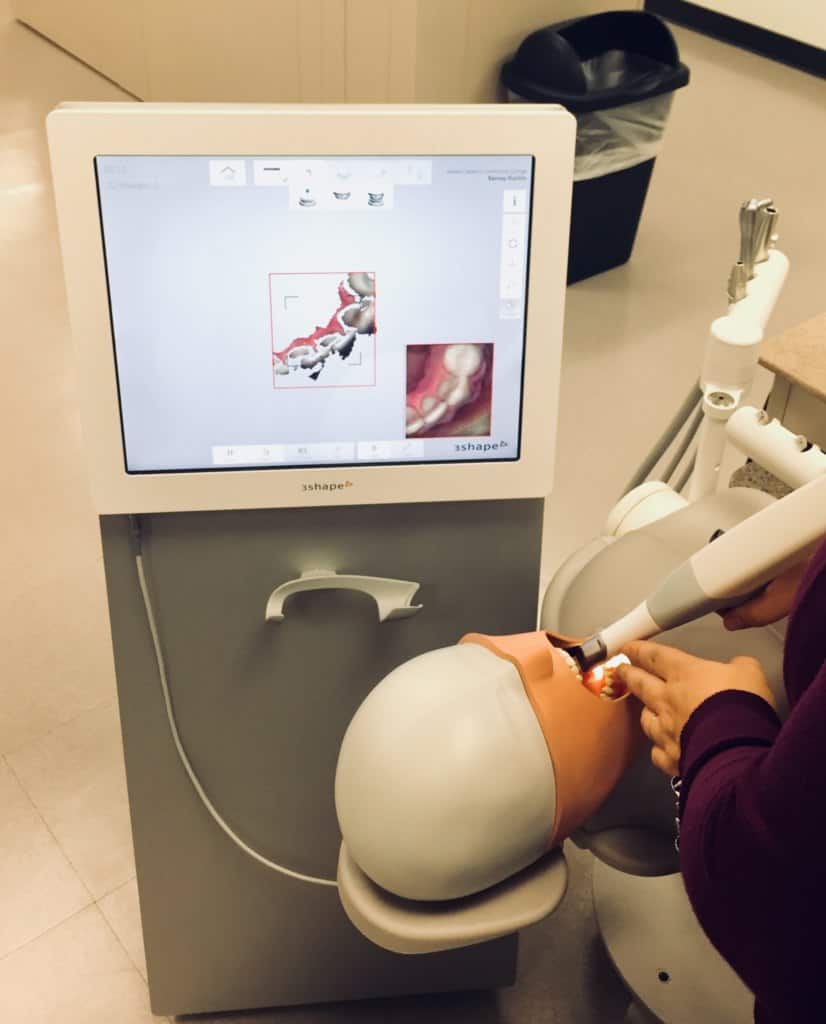
College leaders at COA expect the roughly $500,000 in total grant funds to have far-reaching economic impact as dental offices in the region grow and graduates working in the field earn family-sustaining salaries.
“And then on top of that, what’s most important in my heart, is that this makes these offices be able to grow, to be able to add more seats, to be able to see more patients, to be able to help them be better in their oral health, which you can’t measure financially,” Harris added.
COA President Jack Bagwell said that funding that helps community colleges launch workforce-aligned programs — like COA’s dental assistant and hygienist programs — makes it clear that investments in community colleges and rural communities play a key role in the state’s economic success.
“It gives us an opportunity to do some things that we wouldn’t be able to do,” said Bagwell of the grant funds. “As we continue to look for North Carolina to stay number one in business, and now number one in workforce, that’s not going to happen by accident.”
A grant model that ‘got it right’
Leaders at community colleges and the NCCCS are optimistic about the impact the grant funds will have on communities.
By the time the grand period ends and the first cohorts of students graduate from grant-enhanced or grant-started programs, a press release from the NCCCS estimates that the grant funds will have produced an additional 3,500 students equipped with the skills and credentials they need to begin working in high-demand health care occupations.
While the grant program’s funding will conclude on June 30, 2026, individual sustainability plans were a required part of each college’s request for funding. In general, however, colleges would primarily fund their newly expanded or launched programs through the additional FTE funding the enrolled students will generate in operational revenue, as community colleges in North Carolina are primarily funded by the number of FTE students they had enrolled in the previous academic year.
“I think the college relies on the foresight of grants like this, that do understand to stand up a brand new program is extremely costly because of all the things you have to do to even get the program started, and then you don’t get the return until much later,” COA Vice President of Learning Jennifer Lopes said.
Proposed changes to the way the state funds community colleges would give colleges additional resources to support in-demand workforce sectors. Propel NC, the NCCCS’ proposed funding model, would shift the amount of money colleges receive per student away from current FTE tiers and toward six “workforce sectors” instead, including health care, with courses ranked and valued by statewide salary job demand data.
In the grant’s most recent annual report, the NCCCS suggested that other funding sources for health care programs could include partnering with health care employers and local providers through financial contributions, equipment donations, or sponsorships for students, and diversifying funding sources by looking beyond traditional grants and toward endowments, public-private partnerships, and sponsorships.
NCCCS staff said that the grant’s model is particularly effective at making the most of state dollars through strategic, high-impact investments in students and local labor market demands.
“I’ve been at the system office for 20-plus years, and have managed many grants, and this grant model got it right,” said Boyce.

Recommended reading