
Meeting “The Little Prince”

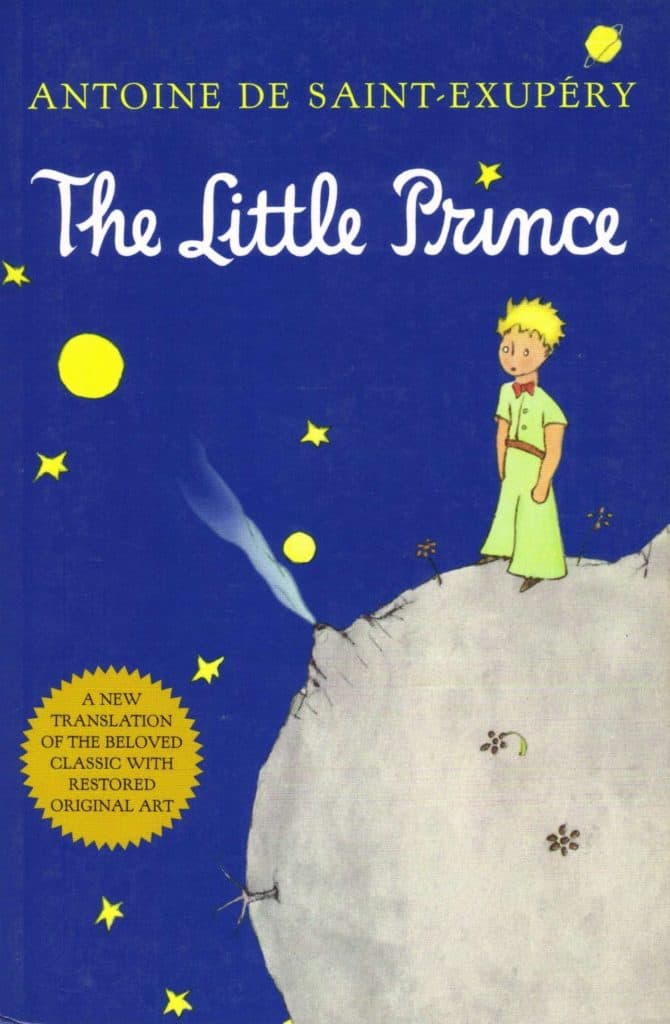
Many moons ago, a very intuitive adult named Peggy Jones handed me a worn, torn copy of “The Little Prince.” I devoured the book in a weekend, sat through endless hours in the library trying to understand the more metaphorical parts of it, and asked question after question of Miss Jones. The book consumed me that impressionable freshman year, and I made Antoine de Saint Exupery my French project in the spring semester. It earned earned me a distinguished medal in the shape of a French cross and a much coveted “A” for the year.
English Lit 101 was a year of discovery for me. Miss Jones passed book after book to me from her private library—texts which spoke to me about life beyond the four walls of the classroom. She tried her best to convince me to become an English teacher. “You have the drive, you have things to offer, you would be perfect.” Unfortunately, I, much like the Little Prince, desired to travel the globe rather than stay on my small planet.
I carried the book with me throughout the travels, reading it in airports and hotel rooms late at night. I always had an inkling I’d follow Miss Jones’ suggestions. I had things to fulfill in myself , though, before I could think of tending other roses. I had to plant to my own garden, and did so, just as The Little Prince does in the story. Eventually, just as he decides, I realized one day I was complete enough to share myself with others.
And so it would be decades later that I would walk into a classroom, bringing with me volumes upon volumes of books collected from my journeys. Some texts spoke of the magical harbor of Hong Kong, some told colorful tales of the building of Versailles, some regaled the teas of the island that was once Ceylon. And among these, tucked away safely, was my prized copy of “The Little Prince.” The pages are dog-eared. There is writing in the margin and more than a few question marks that have been answered as I encountered life.
When I meet my class for the first time each year, sizing up the myriad faces and talents that lay before me, “The Little Prince” quotes flow through my mind : “All grown-ups were once children… but only few of them remember it.” And so I begin each year, looking for the best in each student, a spark of something not found in the data sheets and EOG scores that I receive before I meet them. They are all roses, but they are all unique.
I meet them where they are, with what they have to offer, because “What makes the desert beautiful,’ said the little prince, ‘is that somewhere it hides a well…” Over the next 360 days we learn to trust each other, demand the best from ourselves, and create a community of learners whose foundation is built firmly upon respect. I use literature to help them expand their world, to better connect the marginalized among them to a community where they are welcomed, and to guide them along their own journey to self acceptance and realization. The words of the Fox remind me to see what is really important, and reinforce my belief that the relationships we cultivate with these glorious young people will continue to bloom long after the school year ends.
Like the prince to his rose, I remain loyal to my students, following them long after they leave my classroom. Many come back to visit, or call my name out as I make my way through our community on weekends. They eagerly tell their own tales of adventures, successes, and losses. They are forever emailing me to edit high school papers, write a letter of recommendation for an internship or a college scholarship, or come by after school for a shoulder to cry on.
They know without a doubt that I am there for them. The most important lesson I learned from this beloved text is that what one person gives to another is more important than what is given back in return.
“You become responsible forever for what you’ve tamed. You’re responsible for your rose.”