
Lots going on: Demographics, the budget, and dropout and discipline reports

Dramatic demographic shifts are in store for North Carolina schools, according to a report presented during Thursday’s State Board of Education Meeting.
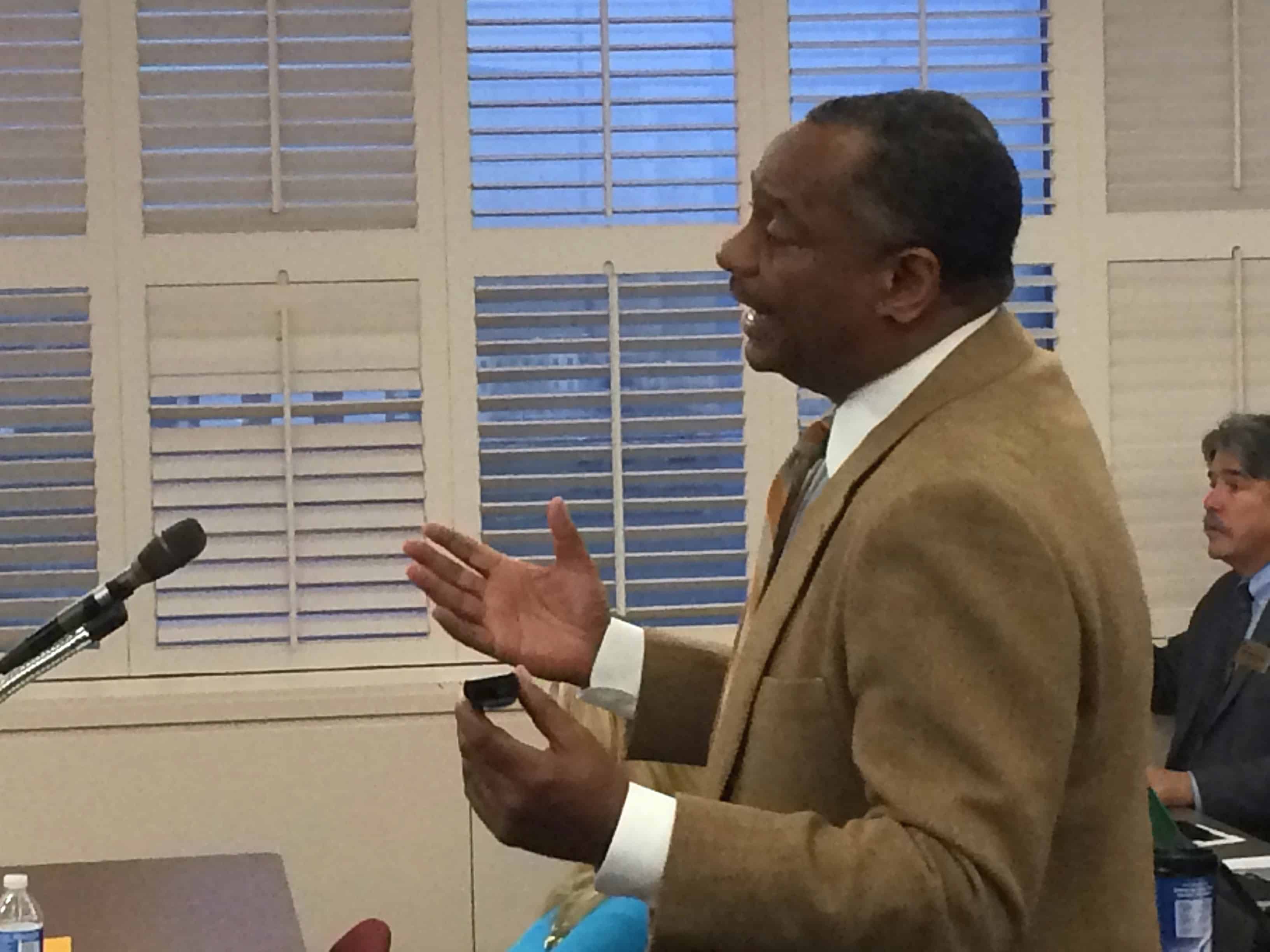
James H. Johnson from the Institute of Private Enterprise at the University of North Carolina at Chapel Hill Kenan-Flagler Business School presented to the board on the changing face of the population in North Carolina and its impact on the school system.
“It’s our challenge…to figure out how to deal with this issue,” he told the board.
He noted that in 2011, the immigrant population in the country was 40.4 million, a 5.2 million increase from 2005. Almost 47 percent of the foreign born population in 2011 was Hispanic, which is a dramatic shift. Before 1965, immigrants to the country were visibly similar to the American population and had an easier time assimilating. In a sense, he said, they were invisible. But since 1965, the immigrant population has become what he calls visible minorities: people from Asia, Latin America, and the Middle East.
“We’re talking about a profound color shift in our society,” he said.
The shift is due in part to fertility rates. He said that the rate needs to be about 2.1 births per woman for a a racial or ethnic group to replace itself. Hispanics (2.99) and blacks (2.13) are the only groups achieving that. Asians are coming close at 2.04.
These numbers are mirrored in North Carolina where Hispanics have experienced the largest growth in population between 1990 and 2007 — 829 percent. And blacks and Hispanics have the largest net change in growth in North Carolina schools between 2000 and 2009. The number of blacks increased 13 percent, making up about 32 percent of the net change in students. Hispanic students increased about 171 percent, making up about 60 percent of the net change.
These demographic shifts, coupled with another issue that Johnson called “The Graying of America and NC,” mean significant changes in resources around the country and state.
He noted that every day 8,000 baby boomers turn 65, and will continue to do so for the next 20 years. In fact, between 2000 and 2010, the number of residents 45 and older was going up, while the number of residents ages 25 to 44 was going down.
“If you’re losing prime working-age people, you can’t pay your bills,” he said.
As the state tries to meet its responsibilities, the working tax base will be smaller while the retirement base will grow. Baby boomers must rely on young workers paying into the social security system in order to support them as they come of age. But they far outnumber the working-age population in the state.
“That’s why we call it the silver tsunami,” Johnson said.
Board Chairman Bill Cobey said these changes in population will guide the work of the board, while member John Tate said he worries about what they will mean.
“For me, the pressure on the infrastructure of the state is enormous,” he said.
In other news from the State Board of Education, the board also heard a presentation on dropout and crime statistics for state schools.
Dropouts in North Carolina schools are at a record low. Last year, 2.28 percent of high school students dropped out. The year before, the number was 2.45 percent. Meanwhile, crime, violence, and suspensions are down for a third year in a row.
While the board met, Gov. Pat McCrory released his proposed $21.5 billion budget for the state. The budget includes a raise in starting pay for teachers to $35,000, and an overall increase of K-12 funding by $235 million. One-third of new spending in the first year goes to Pre-K and K-12 education. McCrory says his budget fully funds enrollment growth and will “support hiring” of more than 1,400 teachers over two years.
Check out this factsheet on K-12 education in the budget.