On a Wednesday morning in late February, a classroom at Durham Charter School was buzzing with something you don’t often feel at a professional development session: genuine urgency. Not the manufactured kind that comes from a countdown clock, but the kind that comes from practitioners who believe that what they’re practicing today will matter for students on Monday.
I had been invited to observe a session of the “Want More? Do More!” Instructional Leadership Cohort, a training program run by the creator of Henderson Collegiate, a K-12 charter school in Vance County. Over nearly a decade, the school’s leaders have channeled their instructional approach into a coaching program designed to spread what they’ve learned to school leaders across the state.
 Sign up for the EdDaily to start each weekday with the top education news.
The cohort didn’t start this way. Barb Roeder, one of the program’s architects, told me the team had first tried one-off professional development (PD) days.
“It wasn’t sticking,” she said. “We didn’t have time to build the depth we wanted in just one or two days — we wanted more touch points.”
So they built something longer and more relational: a year-long engagement, now heading into its ninth cohort, built around the belief that sustainable coaching requires sustained practice. Schools enter through conversation, not application forms.
“We sit down, have a call with the leader, and make sure we’re aligned,” Roeder explained. “We want to make sure they have dedication, mindset, and commitment.”
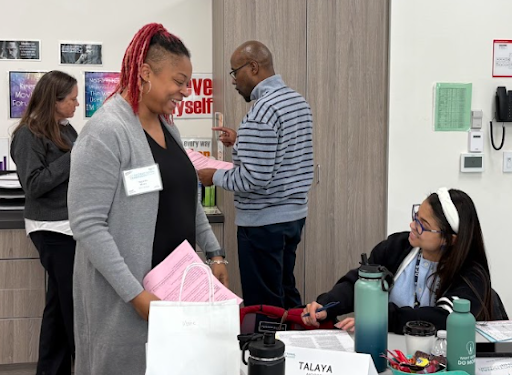
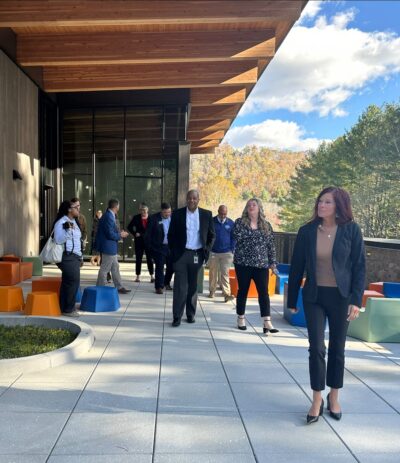
Durham Charter, one of the program’s longest-standing partners, was both host and proof of concept for the day.
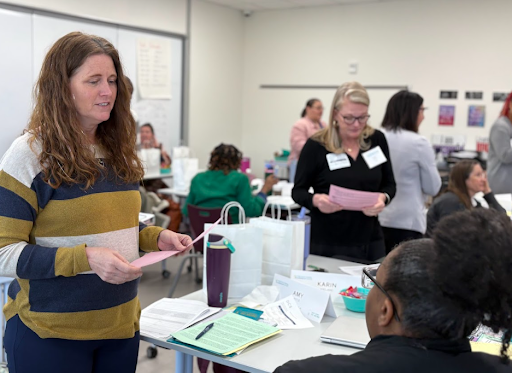
The morning centered on Henderson’s “Living the Learning” framework — their approach to designing and delivering effective PD. The cycle is straightforward: see it, name it, do it, reflect, share out. Participants don’t just hear about effective teaching moves; they watch them, practice them, and get feedback. Then they do it again.
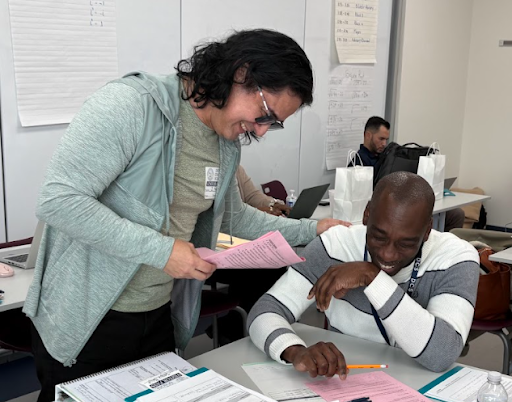
Facilitator Ashley Johnson ran the room with warm precision — itself a model of what she was teaching. Before each practice round, she gave the group time to prepare, not just react.
“We’re not giving the feedback yet,” she reminded them during one setup. “We are just making sure we are prepared.”
Participants used a structured feedback protocol built around two anchors: “It was effective when…” and “Next time, try…” The goal was to move beyond vague encouragement toward language precise enough to actually change practice.
The feedback culture in the room was both intensive and genuinely collegial. When someone noted that pausing the group to name a shared gap was a strong facilitation move, Johnson agreed but added a push: “A pause can also say, ‘Hey, you nailed it.’ So just make sure you’re noticing great things — lift that up, too.”
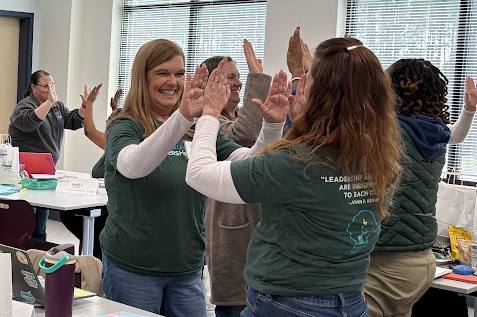
Johnson summed up the purpose of structured feedback sheets: “To build a culture of feedback, you want to help push people past the easy feedback of ‘good job.’ That’s not helpful. Give me something precise so I can replicate it.” Reps, reflection, and specificity were the currency of the morning.
After lunch, Eric Sanchez, co-founder and CEO of Henderson Collegiate, stepped in to facilitate a panel discussion with Durham Charter’s instructional leaders. Sanchez brought both executive perspective and grounded candor to the conversation, framing the discussion around what instructional leadership actually looks like day to day — not in theory, but under pressure, with real staff and real constraints.
Durham Charter’s leaders were candid about their ongoing challenges: falling behind in pacing in some areas, figuring out how to get kids to productively struggle with the highest-leverage part of the lesson, and the constant pull of operational demands away from instructional focus.
“It’s easy as a leader to get distracted by the managerial aspects of the role,” panelist Melissa Altemose said. “Instructional leadership means stamping that this is a priority — and doing everything within your power to protect it.”
Alex Quigley, executive director of Durham Charter School, spoke plainly about budget choices. Investing heavily in instructional coaches is a deliberate call, one that not every school will make the same way. “The only way we get academics first,” he said, “is by investing in the people doing the coaching.”
Quigley drew out a thread that ran through the whole afternoon: the danger of drift.
“We know what works,” he said. “The temptation is always to develop your own theories, to try something unproven. And sometimes I look around and think — we’ve drifted. We’ve canceled coaching cycles for three weeks because something else came up.”
It was a refreshingly honest admission from a school leader. His point wasn’t that they had everything figured out, but rather that maintaining a system requires vigilance, and that vigilance is itself a form of leadership.
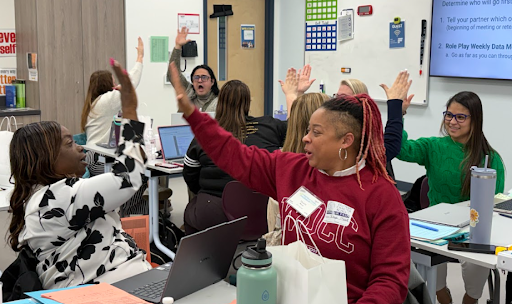
The panel also surfaced a moment of real warmth. One of Durham Charter’s instructional coaches, Hannah Warren, was cited by a school leader as an example of what intentional development over time can produce.
Warren responded: “I am the teacher I am today because of Durham Charter and the people who work here.”
It was a reminder that what’s being practiced in these cohort sessions — the feedback, the reps, the honest naming of gaps — has a long tail. It shapes people.
By the time the afternoon wrapped, the cohort participants — coaches and emerging leaders from schools across the state — were still comparing notes in the hallway. The sense of community in the room had been palpable all day: not the forced camaraderie of icebreakers, but the kind that builds when people are doing hard work together over time and have enough shared language to be honest with each other. That, more than any particular framework, may be the most transferable thing the “Want More? Do More!” PD is building.
Henderson Collegiate is now accepting registrations for its ninth cohort. If the work described here sounds like something your school needs, you can express interest and start the conversation on the school’s website.

Recommended reading