
Filings in Leandro: Plaintiffs respond to State Board’s motion for relief

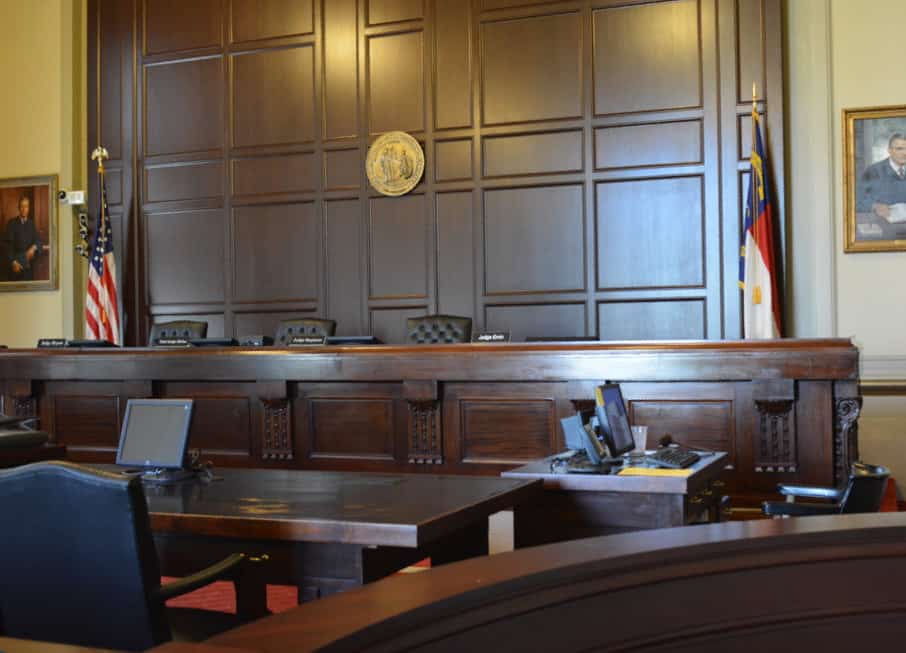
Plaintiffs and intervenors in the landmark Leandro v. State case filed motions this week in opposition to the State Board’s attempt to be taken off the case.
In the motions, plaintiffs argued that the motion is untimely, that the State Board should remain a part of the case until it can prove it has rectified constitutional violations, that the State Board’s motion is inconsistent with its prior statements, and that the court has previously ruled about the State Board’s “failure to meet its constitutional obligations.”
“[T]he State Board is attempting to disavow its past commitments to the Court and the children of North Carolina and to recant its previous statements,” the plaintiff motion states. “In addition to taking inconsistent positions to those it has previously taken in this Court and the appellate courts, the State Board also blatantly ignores prior Orders of this Court and ask this Court to overrule the Superior Court Judge who presided over this case for almost 20 years.”
Plaintiff motion in opposition to State Board’s motion for relief
Back in July, both sides in the Leandro case (Leandro v. State) filed a joint motion that called for an independent consultant to make recommendations on how to ensure quality education for every North Carolina child. At the same time, the State Board filed a separate motion asking to be removed from the case. The motion states that the North Carolina education system is different now and that the original complaints of the Leandro case no longer apply.
“Because the factual and legal landscapes have significantly changed, the original claims, as well as the resultant trial court findings and conclusions, are divorced from the current laws and circumstances…,” the motion states.
The Julius S. Chambers Center for Civil Rights, formerly the UNC Center for Civil Rights, also filed a motion in opposition to the State Board’s attempt to be removed from the case. The Center is an intervenor in the case, meaning they were not initially part of the case but joined with the plaintiffs. In 2005, the Center started representing parents and students in the Charlotte-Mecklenburg school system and the Charlotte-Mecklenburg NAACP in the Leandro case.
“Neither the motion nor any of the supporting documents show that the SBE has remedied the underlying and ongoing constitutional harms,” the intervenor’s motion states. “Additionally there is no basis for the argument that the plaintiffs’ claims have become moot, nor that the continuing exercise of this Court’s jurisdiction is no longer equitable.”
Intervenors motion in opposition to State Board motion for relief
The only other new document included in the filings is an affidavit by Hoke County Schools Superintendent Freddie Williamson describing the current state of education in the district. Hoke County is one of the plaintiff counties and one of the original plaintiffs in the case.
Freddie Williamson affidavit
So far, no official announcement has been made as to who the independent consultant in the Leandro case will be.
Through an executive order, Governor Roy Cooper also created in July a Commission on Access to Sound Basic Education, comprised of 17 members appointed by the governor, to work “in conjunction” with the consultant and come up with strategies to meet the Leandro requirements set out in the court’s final judgment in 2002. The commission has already started meeting.
The Leandro case started in 1994 when families from low-wealth counties sued the state, claiming it wasn’t providing their kids with the same educational opportunities as students in better-off districts.