
LEAD Girls of NC celebrates 10 years of impact in the Triad
Editor’s note: This article mentions suicide. If you or someone you know is experiencing a mental health crisis, call or text 988 or chat with the 988 Suicide & Crisis Lifeline at 988lifeline.org.
Across the country, where a child grows up can have a significant impact on their future opportunities. Winston-Salem is no exception. In fact, it is historically one of the cities where economic mobility has been the most challenging.
In 2015, Harvard economist Raj Chetty co-authored a paper examining the impact of neighborhoods on intergenerational mobility. The research presented in the paper stated that Forsyth County had exceptionally low rates of upward economic mobility, with the exception of a few Native American reservations.
Several organizations were catalyzed by Chetty’s research to create better pathways for economic mobility and growth in Forsyth County — including Learning Everyday Accomplishing Dreams Girls of North Carolina (LEAD Girls).
“We serve girls whose resources do not match their limitless potential,” said Ginger Hendricks, the grants administrator for LEAD Girls. “Our workshops target late elementary and middle school aged-girls attending Title 1 and/or High Focus Schools in Winston-Salem/Forsyth County School district.”
 Sign up for the EdWeekly, a Friday roundup of the most important education news of the week.
Joy Nelson Thomas recognized the need for additional support for girls in her community and decided to take action. In 2016, Thomas founded LEAD Girls with a mission of providing tools and resources for late elementary and middle school aged-girls attending Title 1 and/or other specialized schools to support their development into productive residents and active leaders in their communities.
“It was somewhat mind-blowing to think, my god, some of the girls and people in this community will grow up and die in poverty… What can we do to disrupt the systems? What does that really need to look like?” said Thomas.
Today, 10 years later, former LEAD Girls are attending college and pursuing degrees in law, engineering, and more. Since the organization’s launch, LEAD Girls has served more than 3,000 girls. In late March, the Winston-Salem community came together to celebrate a decade of LEAD Girls and the organization’s continued impact in Forsyth County.
“It is our shared responsibility to uplift and encourage the young women in our city, ensuring that they have the support, confidence, and experiences they need to grow into strong leaders. When we invest in our girls, we are investing in the future of Winston-Salem,” said Denise Adams, Winston-Salem city council member and mayor pro tem.
A higher calling
While Chetty’s research was a factor in the creation of LEAD Girls, there were several other contributing reasons. Thomas, a woman guided by her Christian faith, notes three reasons that led her to create the organization. First, she is a first-generation college graduate who understands the challenges that come with being the first in a family to pursue higher education.
Second, Thomas also became a young parent, which opened her eyes to challenges she hadn’t previously been aware of. One of her brother’s friends had a daughter and was unable to care for her consistently at the time. Thomas stepped in and raised the young girl from seventh grade through college.
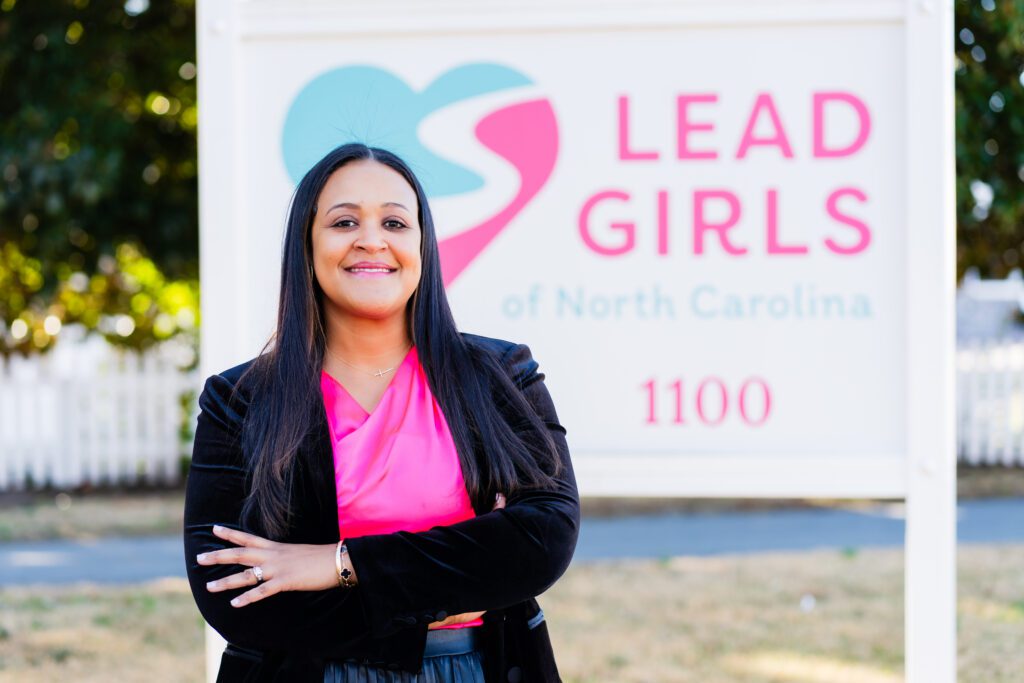
“I was a college student raising a middle schooler and… it was very eye-opening to see the challenges that we had in our community,” said Thomas.
Lastly, Thomas felt called to serve her community in a more meaningful way. While attending a service at her church, which she did regularly, she was moved by the story of a girl she witnessed on that particular Sunday.
“I remember being in church one Sunday, and there was a little girl standing in the middle of the pews asking for prayer because her friend tried to take her life the night before and was in the ICU,” said Thomas.
After sharing that, dozens of people joined in prayer, and most of them were other girls from the community. Thomas was deeply moved by the experience and felt called to respond. That year, she left her burgeoning corporate career to start developing the organization that is now LEAD Girls.
Evidence-based programming
LEAD Girls uses an evidence-based curriculum to mentor girls in their pursuit of academic, emotional, and creative success. The curriculum is the One Circle Foundation’s national program called Girls Circle, which is “evidence-based, culturally responsive, trauma informed, gender-expansive, and strength-based,” according to their website.
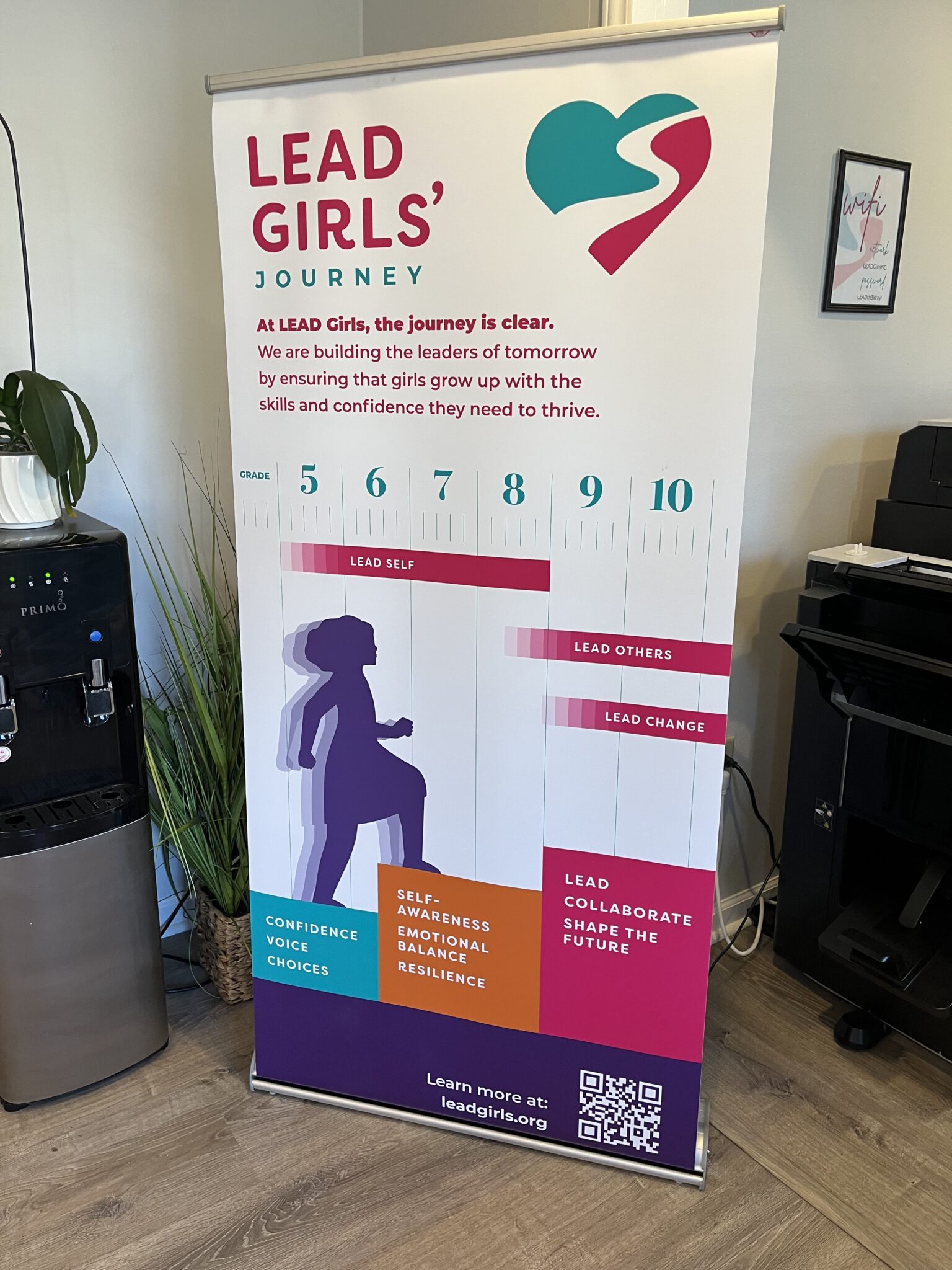
The organization offers a variety of programs for girls in Forsyth County ranging from fifth grade through 10th grade. Several programs are offered in elementary and middle schools in Winston-Salem Forsyth County Schools, where the bulk of the programming happens during the school day.
Their partner schools include Academy at Middle Fork, Clemmons Middle School, Cook Literacy Model School, Anderson Academy at Crossnore, Flat Rock Middle School, Main Street Academy, Mineral Springs Middle School, Paisley Magnet, Walkertown Middle School, and Wiley Middle School.
“I wanted to build a very solid board and team from the beginning. I’m not a researcher, but I knew I wanted an evidence-based curriculum, so I built out a team of researchers,” said Thomas.
Dr. Naomi Hall-Byers — an applied social psychologist whose research focuses on psychosocial, sociocultural, and contextual factors associated with health disparities and inequities among youth and young adults of African descent — was foundational for Thomas in her pursuit of finding an evidence-based program for LEAD Girls.
The programs offered by LEAD Girls include their flagship LEAD program, STEAM program, fashion summer camp, and Girls Rising Expo. The flagship LEAD program runs over the course of a semester and is offered at their partnering middle schools, downtown office, and via Zoom. During the flagship program, the participating girls are guided through an evidence-based curriculum focused on four core fundamentals: awareness, communications, leadership and perspective. You can learn more about the other LEAD Girls programs here.
LEAD Girls in action
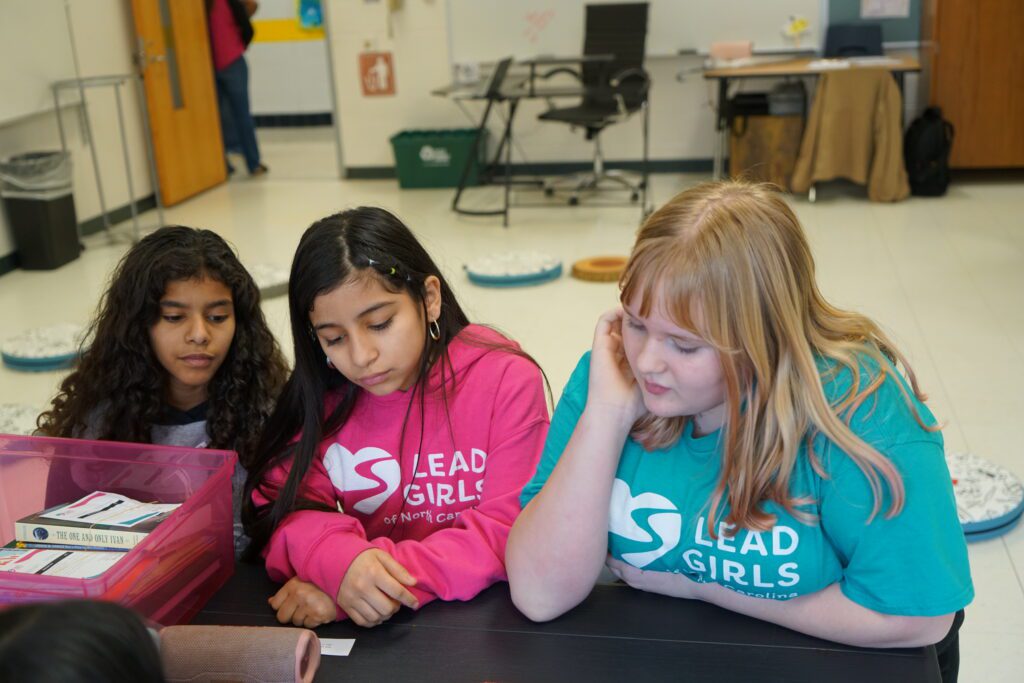
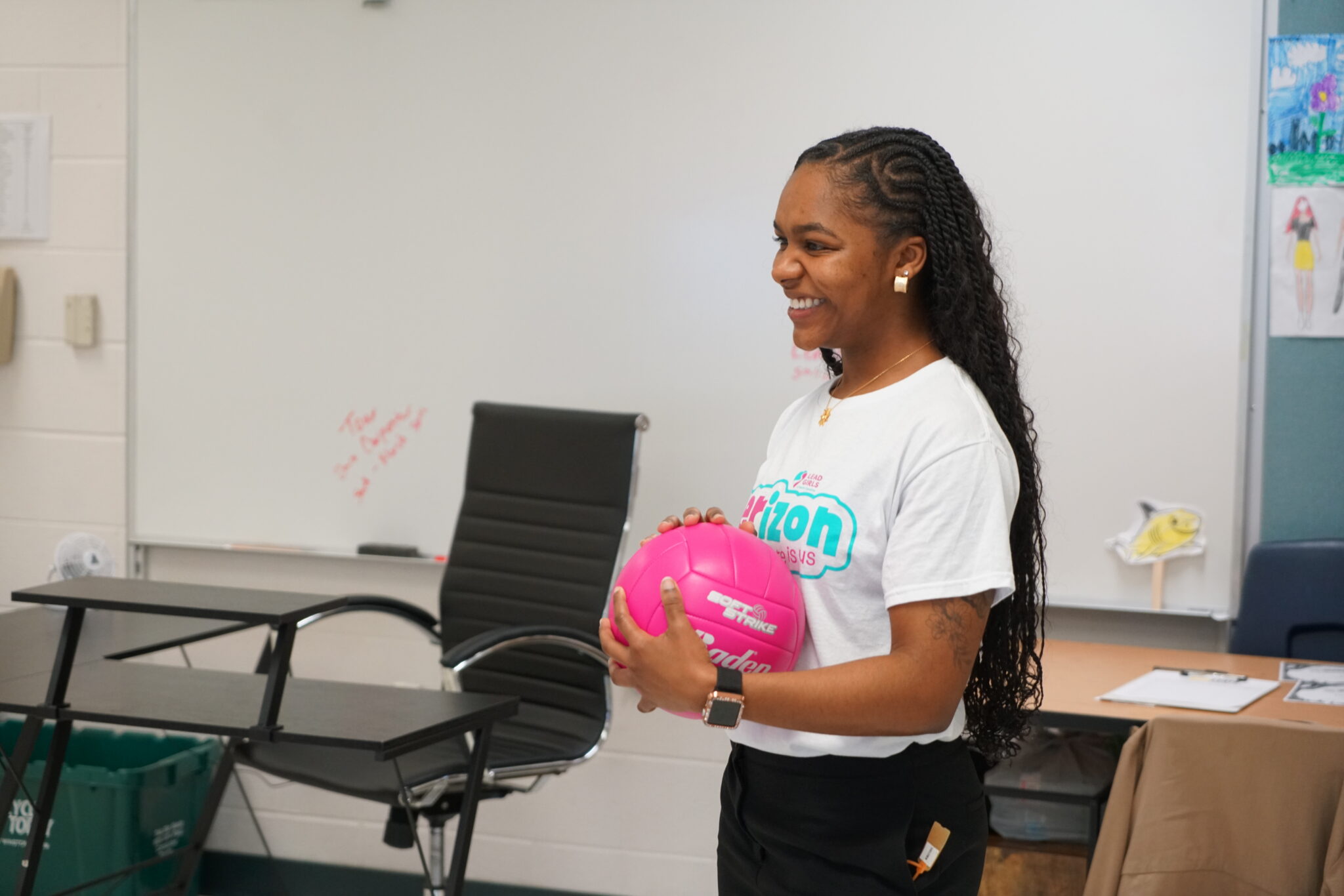
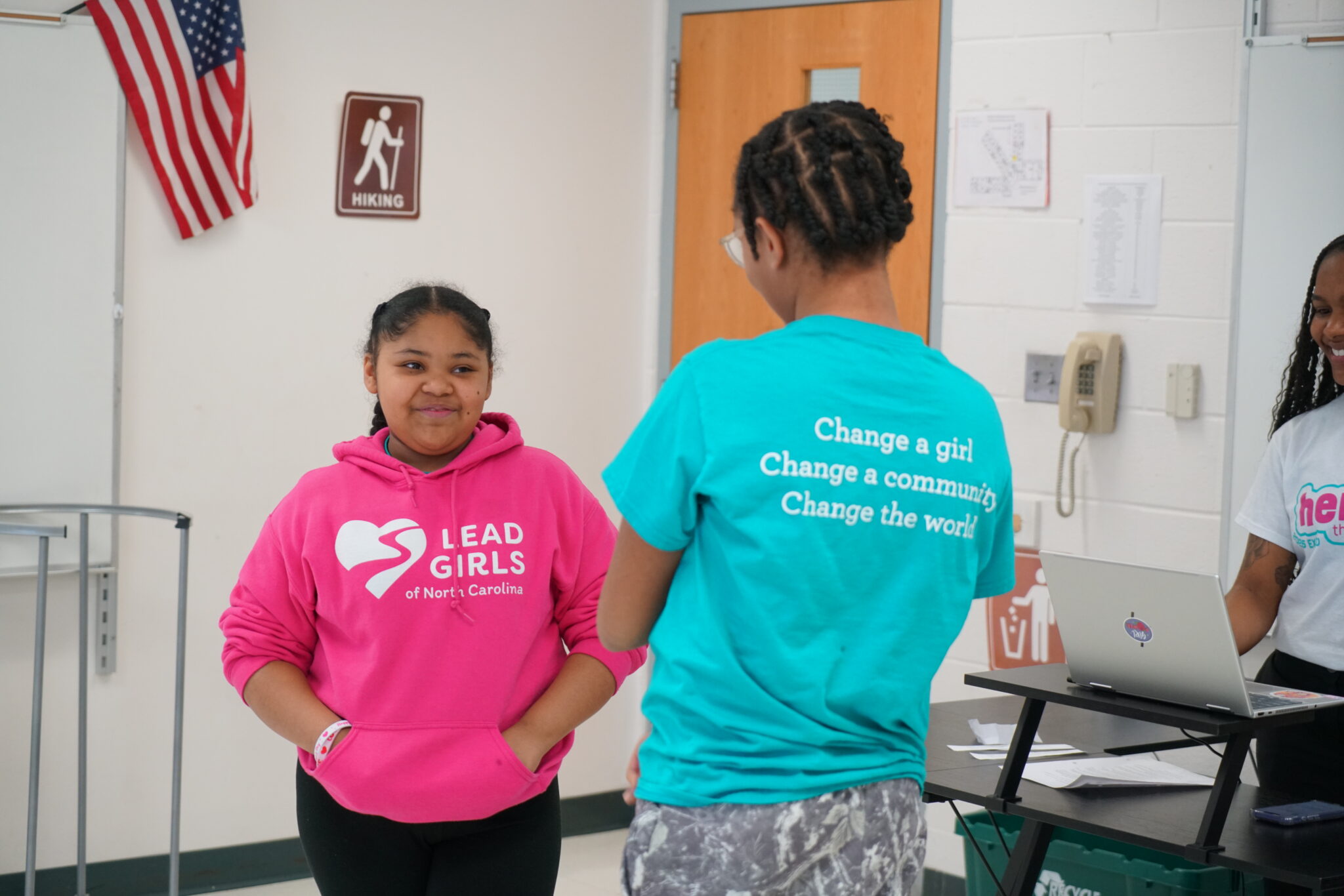
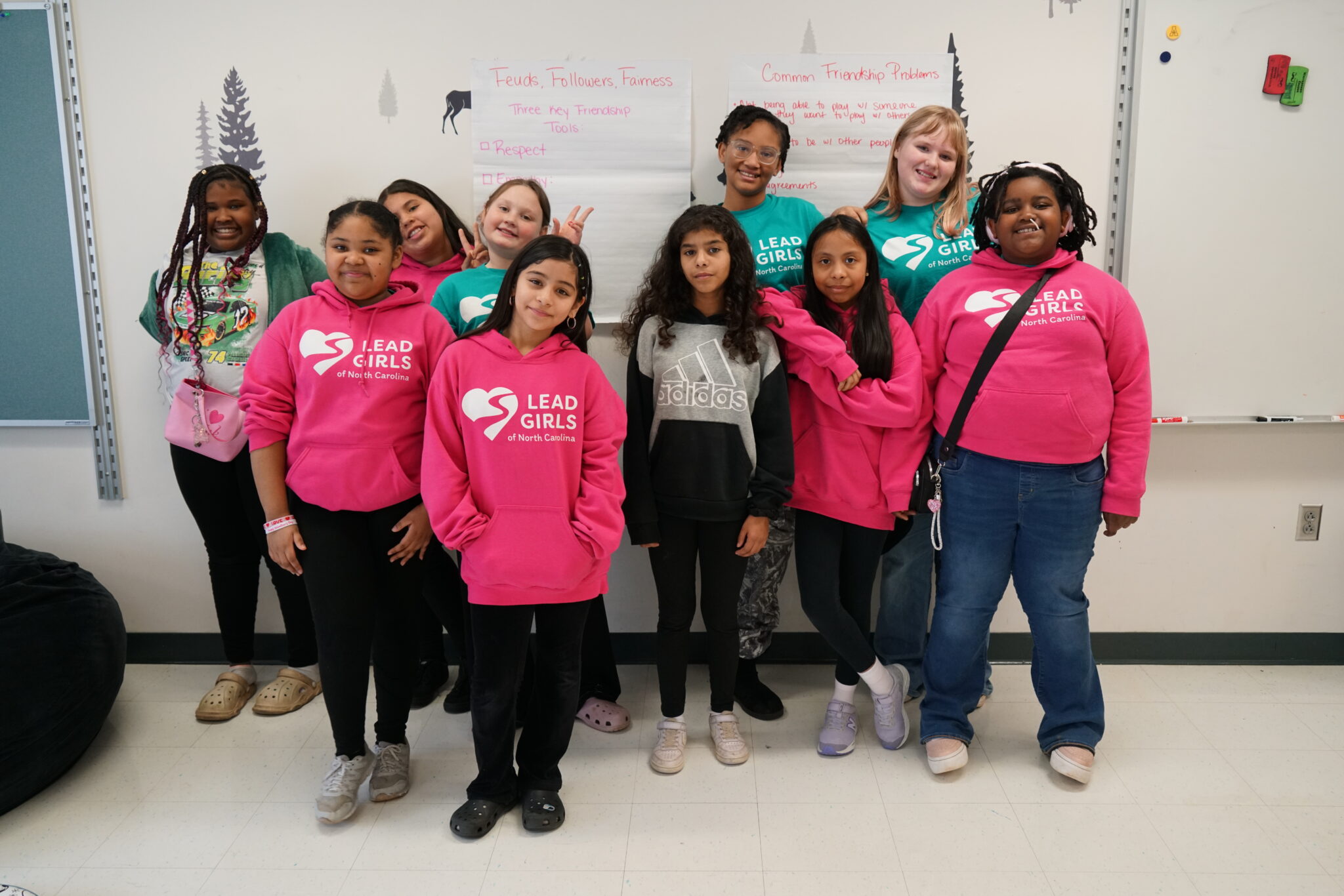
EdNC recently visited The Appalachian State University Academy at Middle Fork to see the flagship LEAD program in action. Jasmynn Blackshear, a program facilitator for LEAD Girls, started the session with the fifth grade LEAD Girls by asking them how they were feeling and to show their favorite dance move. The answers were all across the spectrum of emotions, with one girl saying she felt “a little sad,” another girl sharing that she was “a little sleepy,” and finally one saying she was “feeling good.”
The session for the day focused on common friendship dynamics present in late childhood and adolescence. Through role-playing activities and small group discussions, the girls identified typical friendship challenges, problem-solved creatively and collaboratively to develop response strategies, and practiced incorporating emotionally intelligent values into their interactions.
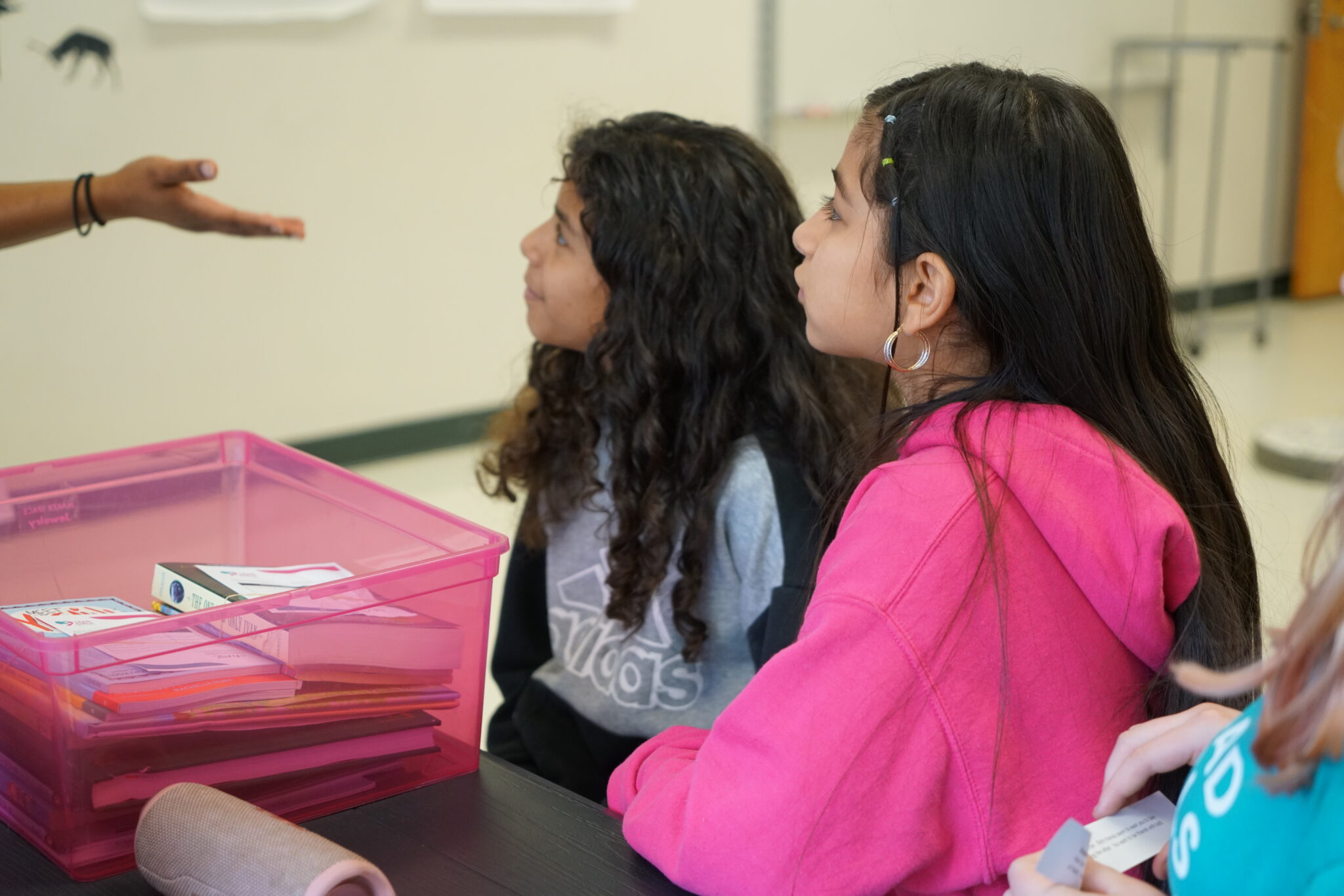
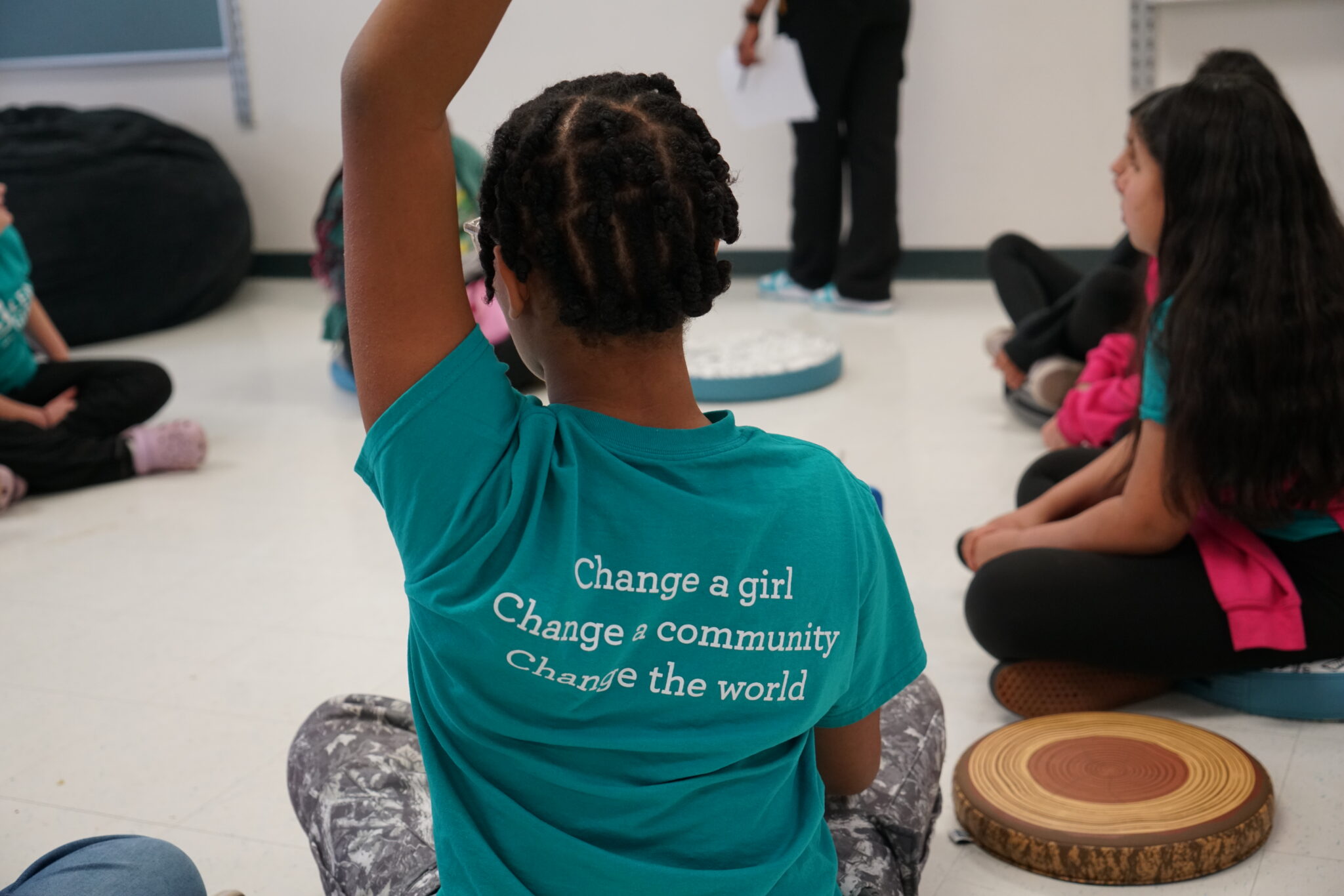
“I love having the opportunity to pour into their toolbox and give them little tools that will help them throughout their entire life and develop those interpersonal skills that they may not get otherwise,” said Blackshear.
The common goals of the LEAD Girls curriculum include teaching communication skills and leadership skills, which are skills they think need additional time outside of academic classroom instruction. With these sessions, Lead Girls hopes to develop their girls abilities for goal setting, future planning, and problem solving. Blackshear has been involved with LEAD Girls since she began as an intern while pursuing her bachelor’s degree in social work. After she graduated, she became a full-time program facilitator for LEAD Girls.
“My favorite session is the growth and self care session because it’s hands-on. It’s really allowed them to understand who they are… I think that one is my favorite one, just seeing them pour into themselves and identify like all the greatness that’s within them,” said Blackshear.
LEAD Girls is preparing for their 2026-27 flagship program, where they hope to serve more than 350 girls across Forsyth County. You can learn more about that program and how to apply here.
Lessons from HQ
The LEAD Girls’ headquarters in downtown Winston-Salem makes space for their mission to come to life beyond the classroom. For girls who do not have access to the LEAD program in their school, the same evidence-based curriculum is available on the first and third Saturdays of each month.
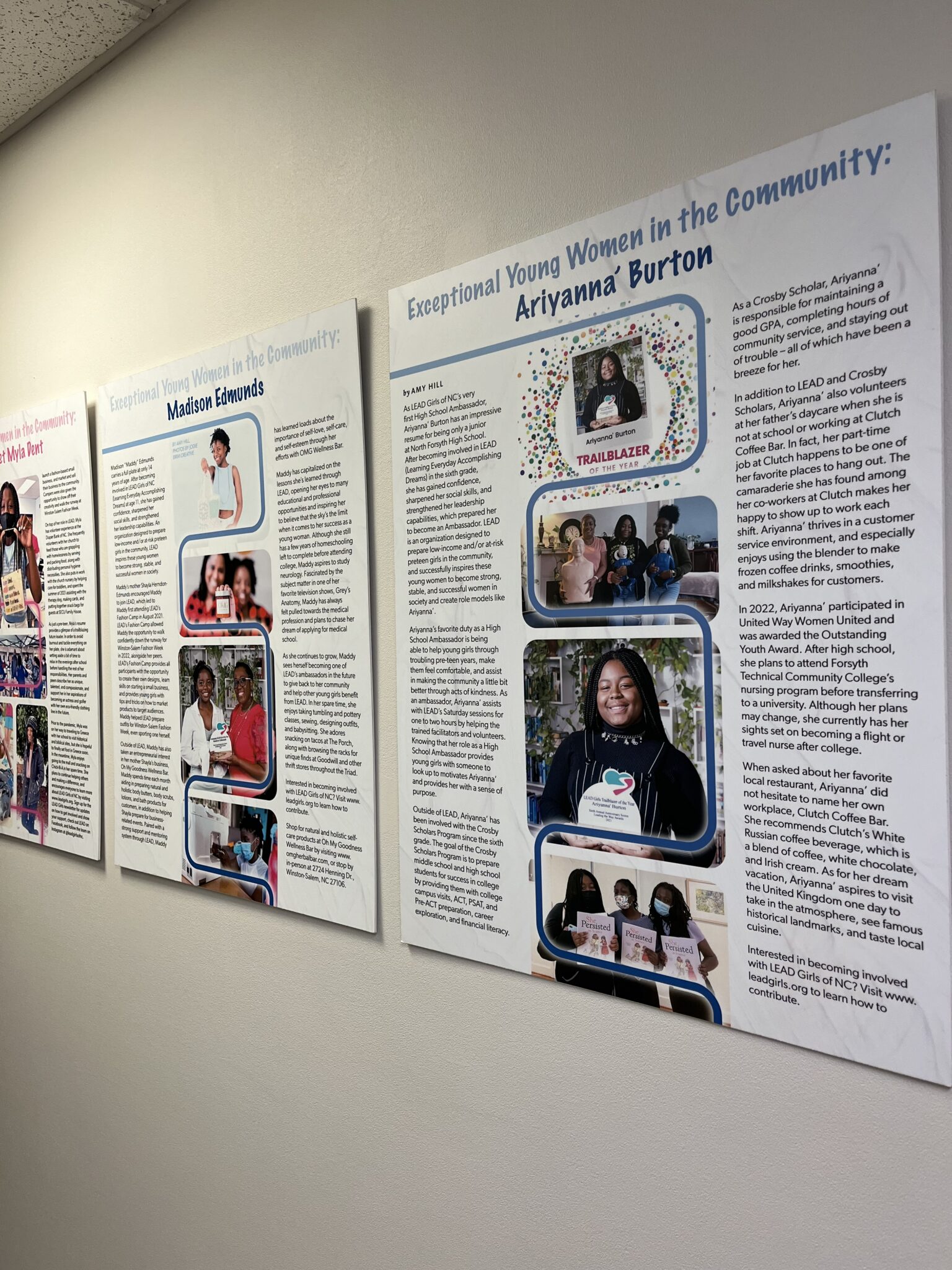
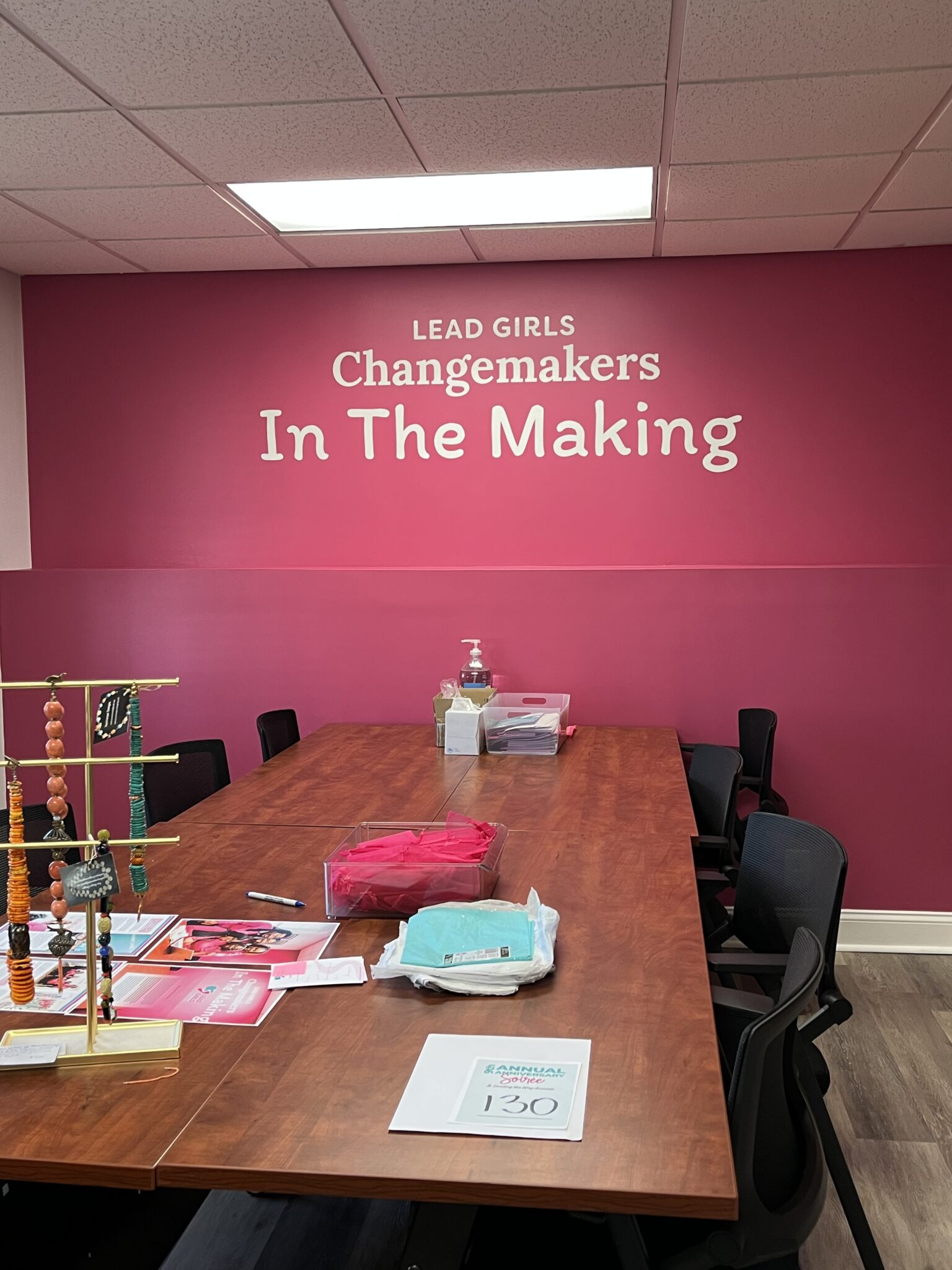
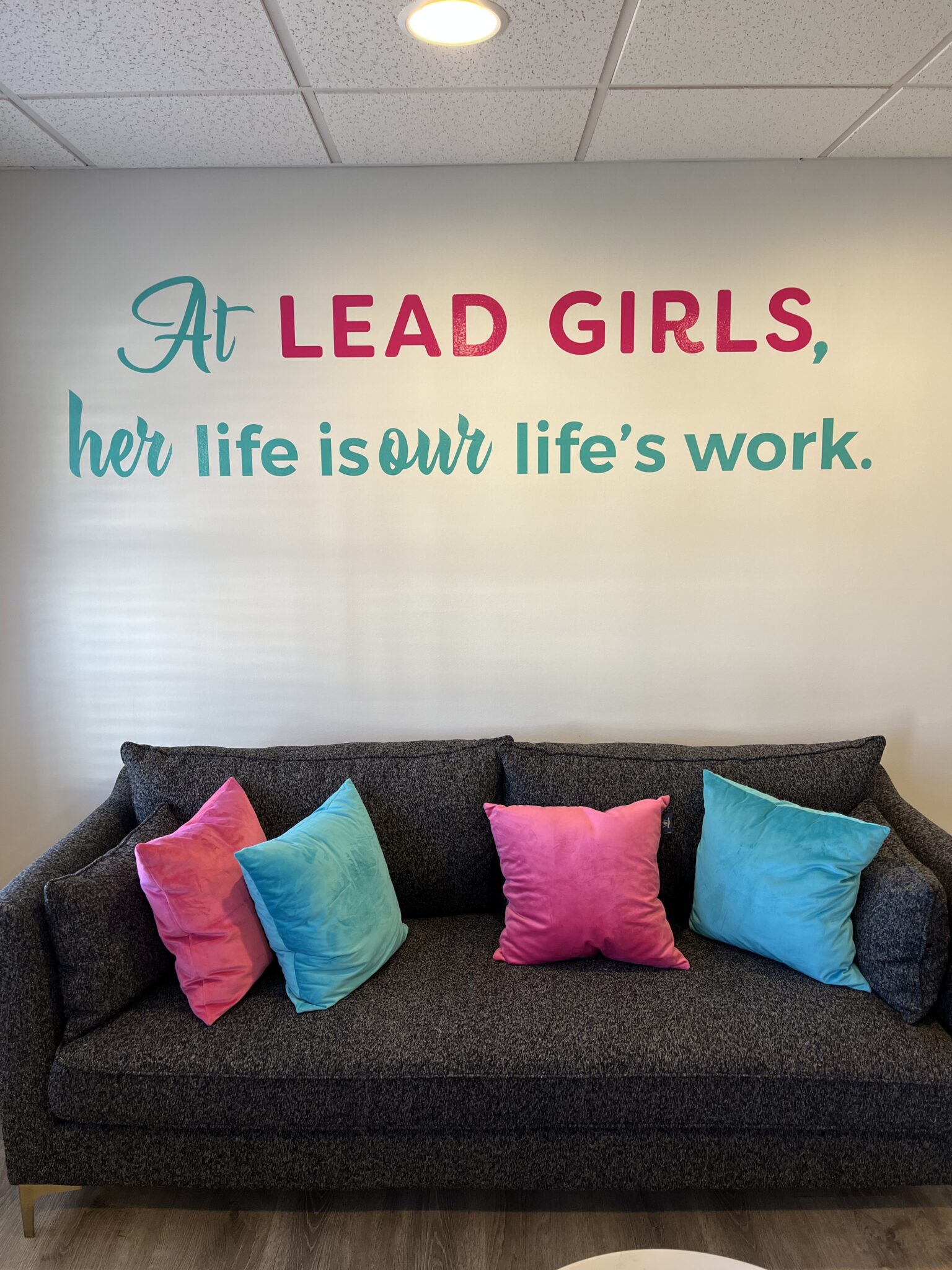
Their STEAM program, held on the second Saturday of each month, consists of 18 girls and gives them hands-on experience and exposure to science, technology, engineering, arts, and math through project-based learning.
Each year, programming is rooted in a different theme. In the past, girls explored engineering through partnerships with North Carolina A&T State University and technology with Forsyth Technical Community College.
This year, the program’s focus is the arts, reflecting Winston-Salem’s recognition as the city of arts and innovation.
Through a curriculum developed by Smart Girls HQ, the girls practice identifying real-world problems, learning the history behind them, and creating solutions. After this process, they engage in projects and attend site visits that connect their learning to the workplace.
Recently, girls explored biomedical engineering by learning about accessibility and designing assistive tools. Using coding and 3D printing, they created prototypes and visited the Wake Forest Institute for Regenerative Medicine. During this visit, they witnessed how similar technology is used to make human tissues and organs.
Providing these kinds of opportunities requires more than curriculum support, but also relies on community investment and partnerships.
“We have diverse funding streams,” said Britney Dent, director of programs at LEAD Girls.
Support also comes from local foundations such as the Winston-Salem Foundation, as well as monthly donors who support their mission.
“People who support the work, see the vision, and want to support girls are important for us to keep doing what we do and keep making an impact,” said Dent.
Those partnerships make it possible for LEAD Girls to provide resources, from technology like 3D printers to mentorship opportunities from professionals in STEAM fields.
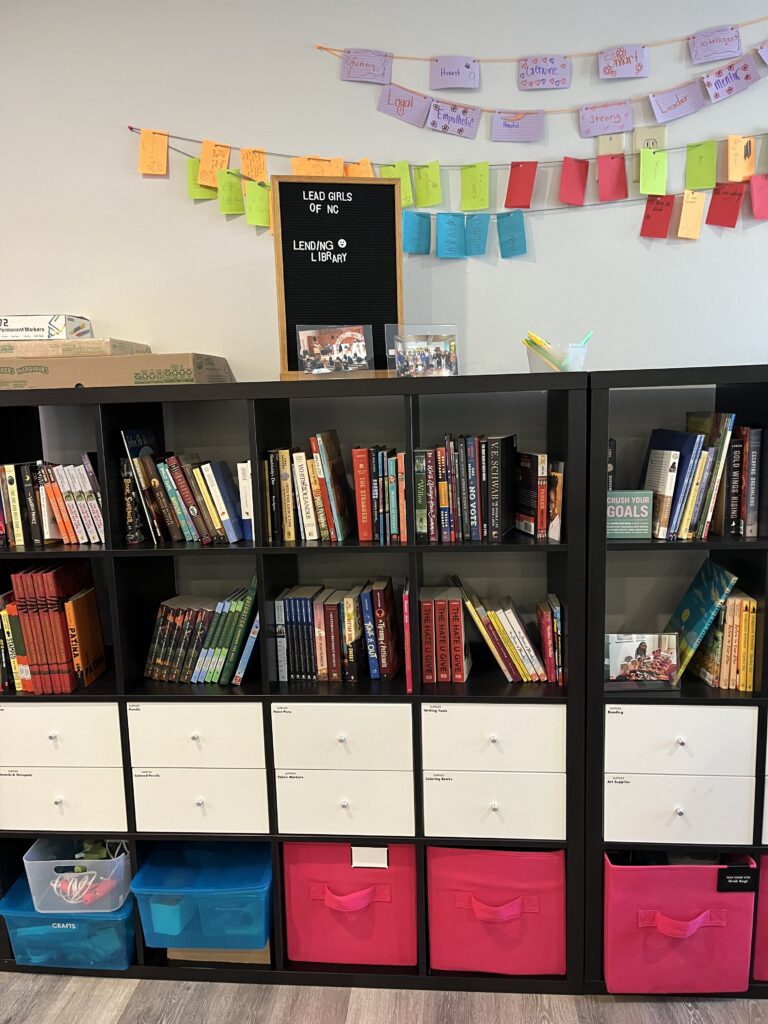
Inside the headquarters, investments are visible in both the programming and environment. A “LEAD Lending Library” with culturally relevant books for girls fills the shelves in the space, encouraging reading and self-expression.
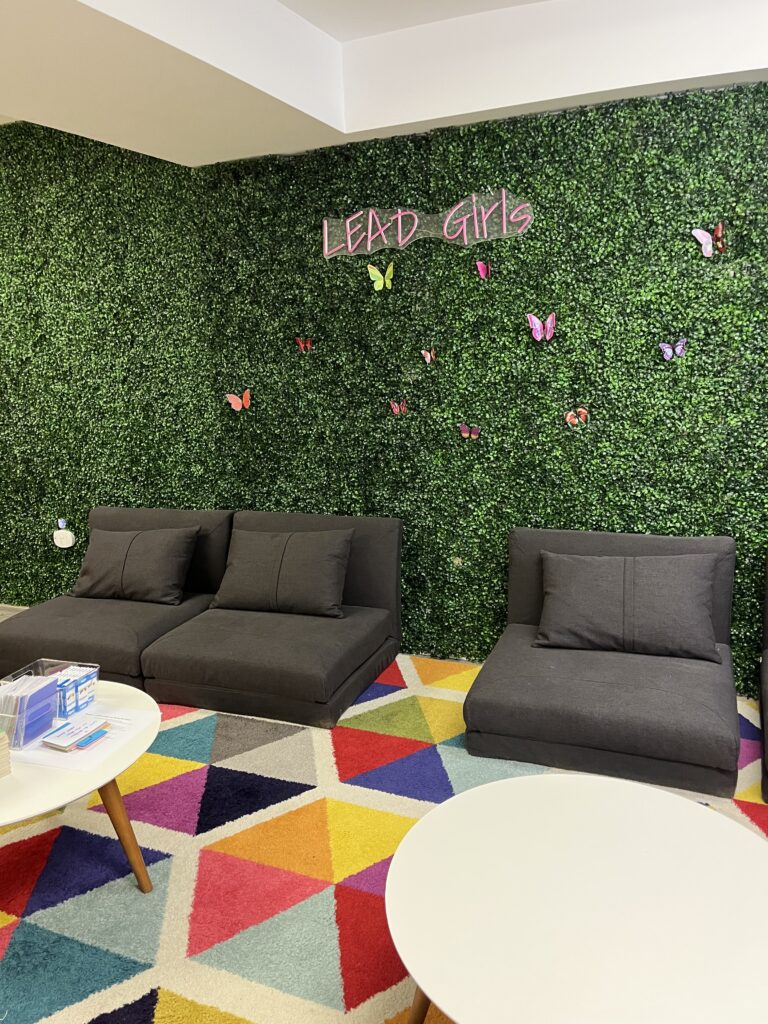
Downstairs, A “Zen Zone” offers a comfy spot for relaxation and a resource closet ensures they have access to hygiene essentials such as feminine hygiene products and school supplies.
Even the design of the space reflects intentionality. Pink and teal walls, chosen by founder Thomas, celebrate girlhood and create a welcoming environment that feels like home every Saturday.
Overall, a “safe, warm, and welcoming” environment is how Dent describes the space that is committed to expanding access and shaping futures for the next generation of girls in Winston-Salem.
Editor’s note: This article was updated to include the correct information about the grade levels LEAD Girls serves and the organization’s current funders.