
It has been 15 years since CMS won the Broad Prize. What is going on in this district once called ‘a model for innovation in urban education’?
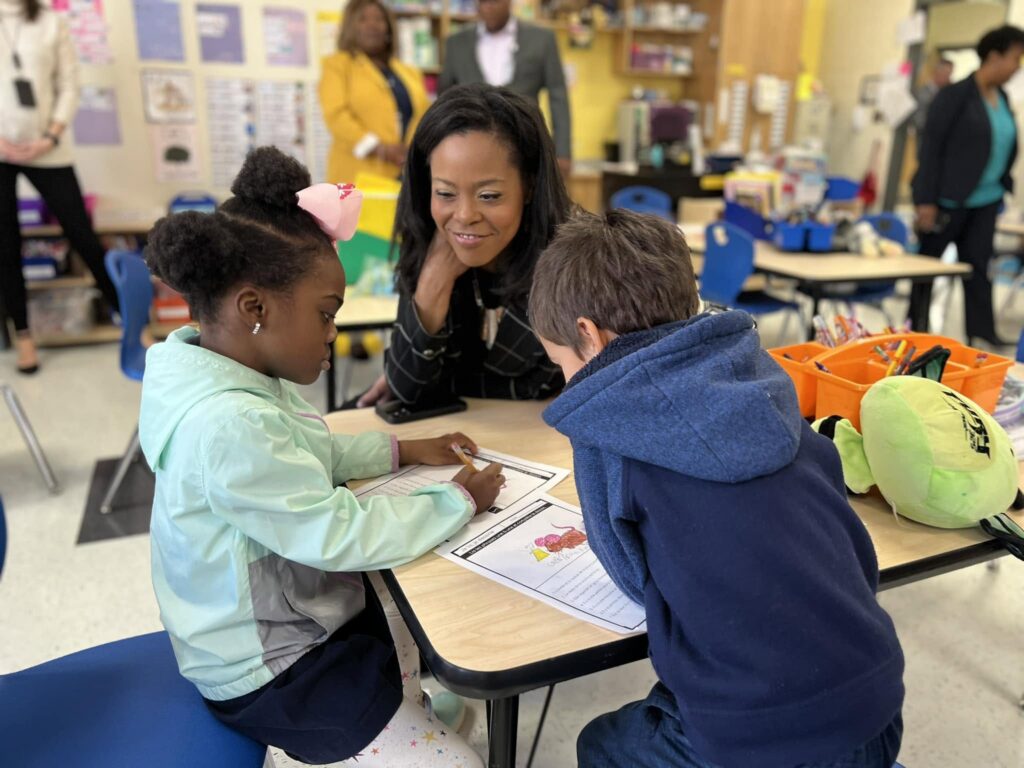
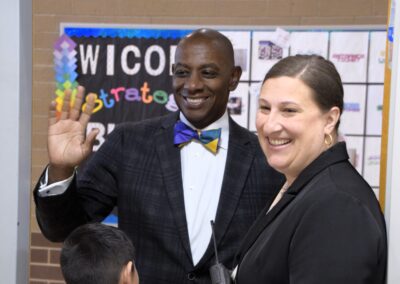
Just after the school year ended, the Charlotte-Mecklenburg Schools Board of Education “placed Superintendent Dr. Crystal Hill on temporary leave with pay, pending an investigation into matters involving administrative and operational oversight” on June 17, according to a statement provided to local news outlets.
The Board said Deputy Superintendent Dr. Melissa Balknight will “take on additional responsibilities to ensure the district has steady leadership during this period.”
Hill responded with a statement on June 19, which is reprinted at the bottom of the article, which indicates that she does not know what specific concerns prompted the review, how the process will work, or the timeline.
 Sign up for the EdWeekly, a Friday roundup of the most important education news of the week.
Under Hill’s leadership, on Nov. 7, 2023, Mecklenburg County residents voted to approve a $2.5 billion bond initiative for district schools.
In April 2026, Hill was named the 2027 Southwest Education Alliance Superintendent of the Year. According to a district press release, “The award highlights Dr. Hill’s dedication to student success, her focus on strengthening school communities, and her leadership in one of North Carolina’s largest and most diverse school districts.”
Since Superintendent Dr. Peter Gorman left the district in 2011, there have been now eight different leaders of the second largest school district in North Carolina.
| Hugh Hattabaugh | Interim from June 2011-April 2012 |
| Heath Morrison | 2012-14 |
| Ann Blakeney Clark | 2014-17 |
| Clayton Wilcox | 2017-19 |
| Earnest Winston | 2019-22 |
| Hugh Hattabaugh | Interim from April 2022-November 2022 |
| Crystal Hill | January 2023-June 2023, interim July 2023 – currently on leave |
| Melissa Balknight | In charge while Hill is on leave |
In 2011, Charlotte-Mecklenburg Schools (CMS) won the Broad Prize for Urban Education, which between 2002-14 was awarded annually to a large, urban school district with “the greatest overall performance and improvement in student achievement while narrowing achievement gaps among low-income students and students of color.”
Fifteen years later, it is time to remind ourselves why CMS won the Broad Prize.
It is also time to better understand the challenges and opportunities of leading large, urban school districts today.
Why did CMS win the Broad Prize in 2011?
Districts cannot apply for or be nominated for the prestigious Broad Prize, which instead was awarded by a bipartisan jury of seven leaders from government, education, business, and public service, including three former U.S. secretaries of education.
According to a press release from the Broad Foundation, CMS was awarded the prize because the district narrowed achievement gaps, narrowed the gaps faster, boosted the percentage of low-income students performing at high levels, and demonstrated strong college readiness.
A brochure released by the foundation said “CMS closed 100 percent of African-American achievement gaps across the board.”
“Charlotte-Mecklenburg is a model for innovation in urban education,” said then-U.S. Secretary of Education Arne Duncan. “It has taken on the tough work of turning around low-performing schools, created a culture of using data to improve classroom instruction, and put a laser-like focus preparing students for college and careers.”
According to the press release, “The selection jury evaluated quantitative data on the finalists, consisting of publicly available student performance data compiled and analyzed by MPR Associates, Inc., a leading national education research consulting firm. In addition, the jury evaluated the four finalist districts’ policies and practices, based on site visits, classroom observations, and interviews with administrators, teachers, principals, parents, community leaders, school board members and union representatives. The site visits were conducted by a team of education practitioners led by RMC Research Corporation, an education consulting company.”
In this fact sheet, the foundation lifted up these four exemplary practices related to student achievement:
- The district focused on strengthening and energizing personnel and leaders.
- The district built a strong accountability system tied to specific strategic plan goals and bases decision-making on rigorous data.
- The district creatively allocated resources, whether money or effective personnel, where needed most.
- Parent University provided a wide variety of supports to help parents support their children’s academic growth.
According to the foundation, CMS also was utilizing a federal grant to pilot a performance-based pay system, rewarding teachers for high student growth.
More information about why CMS won the Broad Prize can be found here.
The role of Superintendent Pete Gorman in winning the prize
Gorman graduated from the Broad Superintendents Academy in 2004.
According to the district’s history of CMS, he became CMS superintendent in July 2006 after serving as superintendent of Tustin Unified School District in Tustin, California.
Gorman quickly launched a four-year plan for the district, titled, “Charlotte-Mecklenburg Schools Strategic Plan 2010: Educating Students To Compete Locally, Nationally and Internationally.”
The district’s curriculum was revised and more authority was distributed to schools, “partially decentralizing CMS.”
Gorman was a fundraiser, and he recruited philanthropic partners for the district, including the Bill & Melinda Gates Foundation, the C.D. Spangler Foundation, the Michael & Susan Dell Foundation, and the Wallace Foundation.
He also strengthened the district’s partnerships with Teach For America and Communities In Schools.
While Gorman led the district, CMS faced significant challenges as early as the five months following the announcement of the finalists for the prize.
The Hechinger Report reported in 2011:
Reports in July said that Charlotte-Mecklenburg failed dismally in meeting its academic targets for the 2010-2011 school year. Emily Dalesio of the Associated Press wrote on July 21 that “preliminary schoolhouse data show fewer than three of 10 Charlotte-Mecklenburg Schools met the targets set for them in the academic year that concluded in June.”
And in June, Newsweek’s list of America’s Best High Schools had only two Charlotte schools on it, down from 13 last year. (Newsweek used stricter criteria this year, which might help explain the drop.)
— The Hechinger Report
Gorman resigned in June 2011 to accept a job with News Corp’s education division just before the Broad Prize was announced in September 2011.
Lessons learned — and why this isn’t easy
Much has changed since CMS was awarded the Broad Prize across the PEST factors — political, economic, societal, and technological — all of which have been exacerbated by the pandemic. The public perception of testing has changed. The labor market for experienced teachers has changed dramatically.
What hasn’t changed is the need to have a strong superintendent with the support of a board of education in all districts, but especially in large, urban districts.
The need for districts to use data to effectively tell their story also still matters.
That wasn’t easy for Gorman, and it hasn’t been easy for any of the superintendents who have led the district since his tenure.
Stable leadership and stabilizing the public narrative is complicated because regardless of school setting — traditional public, charter, private, or homeschool — in any education system here or abroad, there are always some schools that are good, some that are not so good, some that are getting better, and some that are getting worse.
Those trajectories are influenced by a lot of factors, including the leader of the district, but also the support of the board of education, the leaders of the schools, the experience and quality of the educators, whether leaders have the buy-in of parents and teachers, the demographics of the students served, the adequacy of resources to support the instructional process, and on and on.
That’s true for any system of businesses.
Within that dynamic, public school districts like CMS are managing an unprecedented abundance of choice for students and parents: year-round, charter, language immersion, single sex, early college, career academies, virtual academies, alternative schools, lab schools, many magnet options, newcomer schools, and more.
These school districts also provide an abundance of support for students, including counselors, nurses, support for developmentally disabled students, support for the hearing and visually challenged, nutrition, and more.
On top of all of that, districts are also increasingly providing support for students served by other educational sectors.
Related reads

Seeing school districts as big business and superintendents as CEOs
In 2025-26, according to CMS, the district’s 19,000 employees served about 140,000 students in 185 schools and facilities. Those students come to the district from 158 different countries of origin speaking 201 different native languages. CMS is diverse: 34% of students are Black, 32% Hispanic, and 24% white, with 10% identifying with other races and ethnicities. School buses transport those kids 99,500 miles per day and more than 17 million miles a year. The students are served 115,000 meals daily.
That makes CMS the second largest district in the state and the 16th largest in the country.
The third largest employer in the county, CMS has more employees than Bank of America in Charlotte.
Its operating budget is $1,938,748,587. That’s right, $1.9 billion.
When economists calculate the economic impact of public schools, they look at the number of people directly employed by the state department of education and the school districts. They look at the purchasing of goods and services by the state department of education and the school districts as well as the personal spending of those employed. Both lead to the creation of additional jobs. Then they look at the income generated for those workers, and they look at the taxes — income, sales, and property taxes, for example — that are paid by those employed in the industry.
Additionally, the spillover effects of investing in public schools are well documented, from less unemployment and reduced dependence on public assistance, to reduced crime and increased health outcomes, to greater political and civic engagement.
The schools and the district are a huge community asset and driver of the local economy.
Within districts, superintendents serve as the CEOs of the education industry.
It is a job with long hours and broad responsibility requiring a large toolkit of skills.
Superintendents serve six constituencies: students, parents, educators, their school boards who hire and fire them, their county commissions who fund them locally, and the public who entrusts taxpayer dollars to the public education enterprise.
They have to know how to manage assets and cash flow, building up fund balances which operate like savings accounts and raising money for foundations.
They have to understand strategic staffing.
They have to know how to build new schools, which can now cost more than $100 million.
Superintendents have to understand how all kids learn so they can ensure instructional practices employed in classrooms and schools serving very different populations of students are deployed with fidelity.
They have to be able to lead on the good days but also on the worst of days, when there is a student suicide or school shooting.
They serve for salaries that don’t come close to the salaries of CEOs in private companies of similar size.
Read more

And increasingly, it is a job that comes with little respite, as email, text messaging, and social media have changed our norms around communication, and access is now expected 24 hours a day, seven days a week, 365 days a year.
The job is further complicated by the partisan nature of school board elections, how culture wars are finding their way into our classrooms, equity and how to serve all students better, the influence of social media on the public’s perception of our public schools, inadequate school funding, and the educator pipeline.
In her statement, Hill said, “I respect the Board’s responsibility to ask questions and to ensure accountability across a district of this size. That is their job, and I support them in doing it well.”
One purpose of the Broad Prize was to increase the public’s confidence in public schools by highlighting successful districts.
Regardless of the outcome of the investigation, the students, parents, educators, and taxpayers in Mecklenburg County deserve for the superintendency to stabilize so the district can once again chart a course to be “a model for innovation in urban education.”
Here is Superintendent Crystal Hill’s July 19 statement:
When I accepted the responsibility of leading Charlotte-Mecklenburg Schools, I did so with a single commitment: to put the students of this district first in every decision I make. That commitment has not changed, and it will not.
I want to be clear with the families and staff of CMS about where things stand. The Board has initiated a review of administrative and operational matters and has asked that I step back temporarily while that review is completed. I respect the Board’s responsibility to ask questions and to ensure accountability across a district of this size. That is their job, and I support them in doing it well.
To this point, I have not been told what specific concerns prompted this review, nor have I been given information about how the process will work or how long it is expected to take. I am not raising that as a complaint; I trust the Board will share those details, but I want our community to have an accurate picture of what I do and do not yet know. What I can say plainly is this: I welcome this review, I will participate in it fully and openly. I am not aware of any conduct on my part that falls short of the standards I have held myself to across twenty-eight years in public education, and I am confident that a thorough and objective process will reflect that.
I also want to thank this community for the trust it has placed in me. The work we have done together over the past three and a half years, for our teachers, our staff, and most of all our students, has been the honor of my career. That work is not finished, and the needs of our children do not pause for a process like this one.
I look forward to the conclusion of this review and to continuing to serve the students, educators, and families of Charlotte-Mecklenburg Schools. Out of respect for the integrity of the process, I will not be commenting further at this time.