
How one community college is making access to health care easier for its students
A simpler way to receive health care is now available to Rowan-Cabarrus Community College (RCCC) students and their families returning to campus this fall.
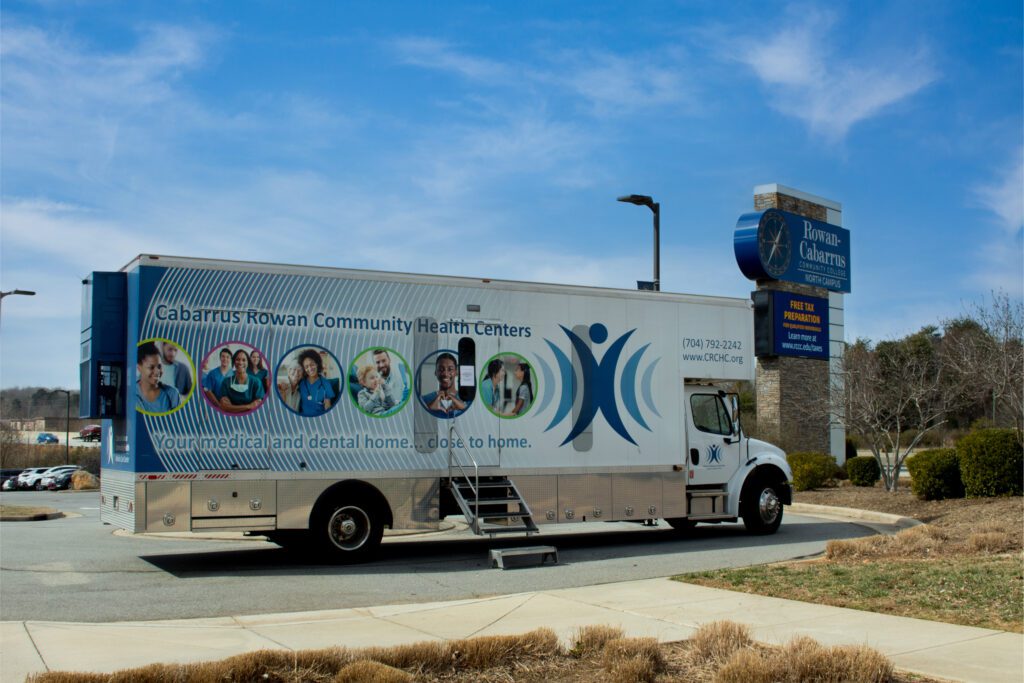
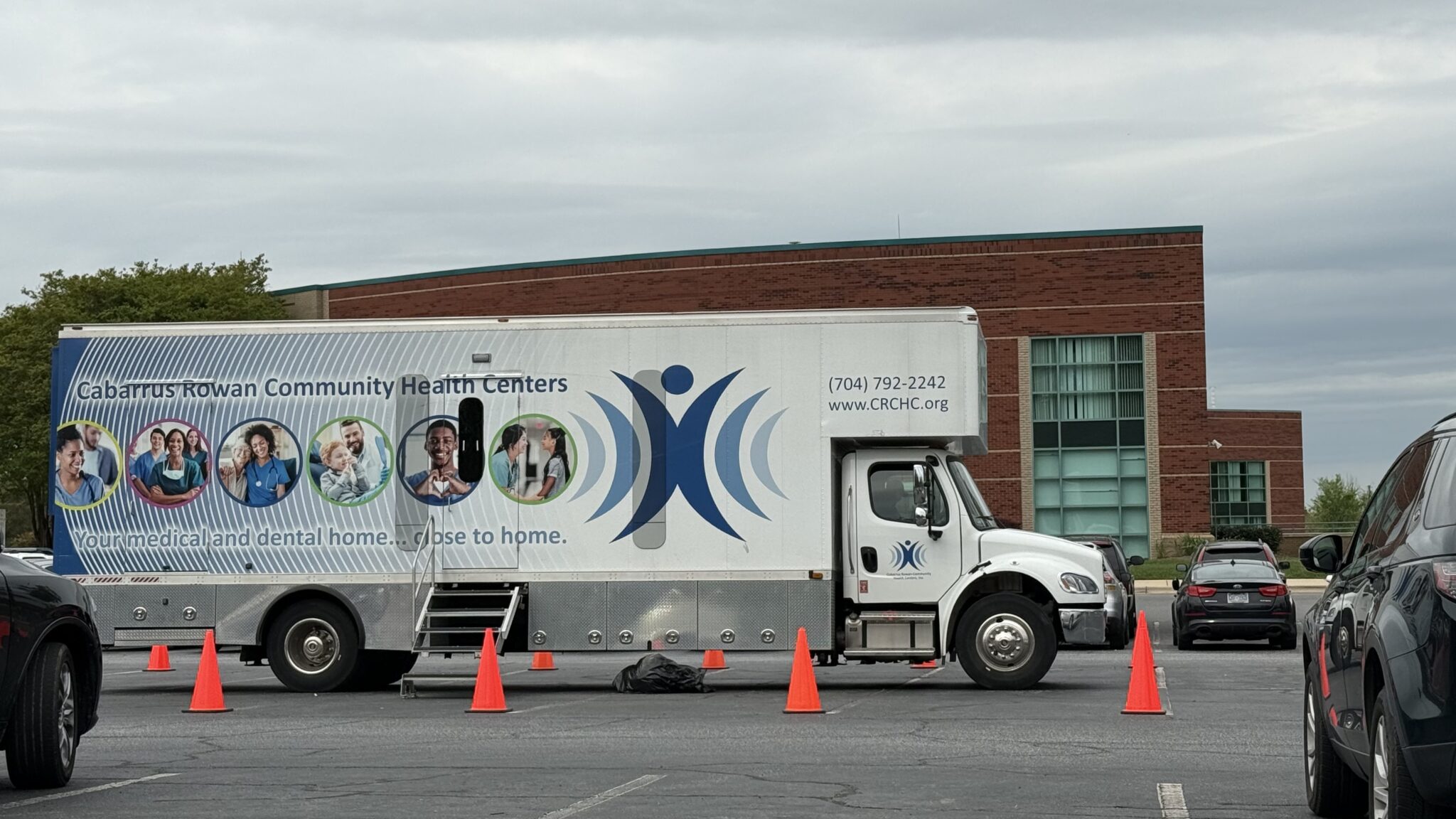
Thanks to a new partnership between the community college and Cabarrus Rowan Community Health Centers (CRCHC), a mobile health unit is alternating weekly between RCCC’s North and South campuses to provide medical and therapy services to the college community.
According to a press release from the college, the unit’s services include primary care, prevention and wellness, chronic disease management, adult medicine, pediatric services, and counseling and treatment services. Students and their families can find the mobile unit on a RCCC campus every other Tuesday from 9 a.m. to 3 p.m.
 Sign up for Awake58, our newsletter on all things community college.
Dr. Natasha Lipscomb, RCCC’s vice president of student success services, said that bringing the mobile unit to campus was a direct effort to address one of the most common reasons students reported needing to withdraw from classes — illness.
“We started to think about ways in which we could provide some intervention there,” said Lipscomb. “We want to meet them where they are, and if they’re on this campus, we want to just find a way to get those medical and mental health services to our campus.”
In addition to removing transportation as a barrier to health care, the mobile health unit provides its services at little to no cost to the student.
Dr. LaRhonda Bryson, who oversees RCCC’s student wellness center as the director of student support services, explained that paying for the services should not be a barrier for students. Students can use their health insurance, pay the clinic’s sliding scale fee, or talk to Bryson and her team at the wellness center about other payment options. For example, the wellness center has a basic needs grant for students.
Bryson, who is also a licensed clinical social worker, emphasized that meeting students’ basic needs is a prerequisite to their thriving.
“There can be a gamut of reasons why they don’t go to class. But if you look at Maslow’s hierarchy of needs of what you need to feel safe, what you need to survive, that’s the things that we’re trying to hit,” she said.
One way the mobile unit aligns with this mission for holistic wellness is through the services it provides. In addition to physical health care, the unit provides behavioral health services, such as on-site therapists for students to meet with.
Additionally, each week, the same CRCHC staff members will operate the mobile unit.
“So when the students start trying to build that relationship with the therapist or the doctor, it’s the same person,” said Bryson.
Beyond addressing immediate needs, the mobile health unit is an opportunity to set students up with resources they need to be successful after they leave RCCC. For example, during kickoff events for the mobile health unit on Aug. 19 and Aug. 26, CRCHC staff will also sign students up for health insurance.
Mobile health units can play an important role in making access to quality health care the norm for people regardless of where they live. While it’s not a new concept to North Carolina or the state’s community colleges, RCCC leaders say the collaboration with CRCHC is a promising way to directly connect community college students with holistic health care without duplicating efforts in an already strained health care system.
“We didn’t want to pull from our community resources,” said Lipscomb. “We wanted to partner.”
So far, Lipscomb said the unit has been able to serve about 50 students since its trial phase began in February 2025. RCCC leaders say they’re hoping to see that number grow this fall.
“It takes everybody. A caring campus is what we have,” said Lipscomb. “I’m going to circle back around and look at those withdrawal numbers, and it’s my expectation that we see less students indicating illness as a reason for leaving a course.”