Editor’s Note: EdNC is covering the launch of Boost, North Carolina’s accelerated college-to-career program. This article is part of a series of profiles on each of the eight community colleges in the 2025-26 cohort. You can find all of EdNC’s Boost coverage here.
Amy Bruining, vice president of student affairs and Boost lead at Central Piedmont Community College, has been at the college for more than 25 years. She began in the college’s graduation office, and helping students finish their academic journey has been a passion of hers ever since.
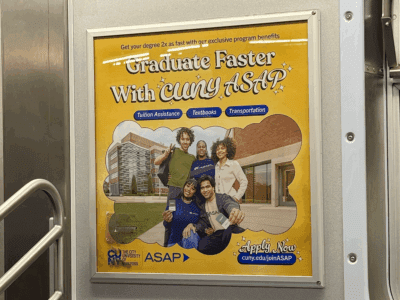
Having studied the outcomes of the CUNY ASAP model during her dissertation, Bruining said she was excited when she learned about the opportunity to join Boost, North Carolina’s new accelerated college-to-career program and the first statewide replication of CUNY ASAP.
“I immediately went to our president and said: ‘Can we please apply for this? Because I think this would be wonderful for our students,’” she said.
In the summer of 2025, Central Piedmont’s Boost director, Kelly Herman, and Boost coach, Jerena McNeil, both began their new roles. After attending a two-day training on Boost in July, they returned to the college’s campus in Charlotte and began the rapid, intense work of standing up a new program.
Their efforts quickly paid off. The first Boost students at Central Piedmont were enrolled in August, and by Oct. 1, the college met its goal of enrolling 150 students in Boost — there’s now a waitlist.
Boost 101
What is Boost? Boost is North Carolina’s accelerated college-to-career program, funded by a grant from Arnold Ventures. It is the first statewide replication of the CUNY ASAP model, a nationally acclaimed and evidence-based program that has proven its ability to increase three-year community college graduation rates. Fifteen N.C. community colleges will implement Boost, beginning with eight colleges in the 2024-25 school year and seven additional colleges in the 2025-26 school year. See the full list of participating colleges here.
Who is eligible? In general, students must receive the Next NC scholarship, have no more than 24 program applicable college credits when they apply, and be enrolled in a degree program aligned with Propel NC, the N.C. Community College System’s proposed funding model that prioritizes “high-wage, high-demand” jobs. Check individual college websites for specific eligibility guidelines.
What support do students receive? Boost students receive frequent interactions with a dedicated Boost adviser, cohort activities with other Boost students, up to $600 per academic year for textbook costs, and a $100 monthly stipend for meeting with their adviser. Tuition and fees are covered by the Next NC scholarship.
Each of the eight community colleges in the first cohort of Boost is implementing the program to best meet the needs of their unique student population. At Central Piedmont, that includes an emphasis on building student belonging through personalized coaching, accelerating students on transfer pathways to meet local workforce needs, and ensuring the program can scale to support more students.
Ultimately, leaders at Central Piedmont hope the program will not only increase retention and completion rates, but develop the human capital of students, ensuring they are able to lead meaningful lives and make an impact on their communities.
 Sign up for Awake58, our newsletter on all things community college.
Building student belonging through personalized coaching
At Central Piedmont, the Office of Mentoring and Coaching houses the Boost program alongside other initiatives focused on student success. This is separate from academic advising, which is located in a different department.
Coaches at the college work with students to meet their holistic needs and ensure they have access to wraparound supports, including tutoring, career services, and more.
“Boost was just a natural fit,” said Katrina Johnson, executive director of student life at Central Piedmont. “It’s going to help us scale up the amazing work coaches are doing in that office to really reach our campus community as a whole.”
When students first join Boost, they are placed in a “high” tier of support, requiring seven contacts with their coach each semester, three of which are in-person coaching sessions no shorter than 30 minutes, according to McNeil.
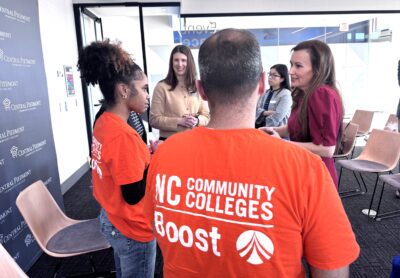
In her first coaching session, McNeil said she focuses on building rapport and connection with students to increase their sense of college integration and belonging, which is a core part of the CUNY ASAP model. McNeil said this session often lasts 45 minutes to one hour, allowing students to “let out a lot” that they haven’t been able to share in other spaces.
“Just being able to listen to them, hear them out, and then also from my own lived experience, being able to relate and see myself where they are and have grown through that, I can relate a bit better to understanding their different circumstances,” she said.
McNeil said that building belonging is particularly important for first-generation or low-income students, as it can help give them a sense of what the college experience entails and what is expected of them.
“You should be developing yourself not only academically, but also socially and professionally,” she said.
In her second session, she focuses on how the academic plan students create with their academic adviser aligns with both their “desire and reality,” recognizing that many community college students are balancing additional responsibilities beyond school, such as work or family obligations.
McNeil pulls in the exact requirements for the degree the student is pursuing and maps out their pathway to graduation so that “they can create a clear vision, that tunnel vision, and know exactly what they have to do each semester to get to that end goal.” She works to create a realistic plan for each student relative to their personal situation and connects students to relevant supports to help them complete their degree.
To stay in touch with all 150 students on her caseload, McNeil said she meets students where they are, including through phone calls, email, and in-person coaching sessions. She’s also prioritized being clear and transparent with students about the requirements they have to meet to ensure they qualify for their $100 monthly Boost stipend.
Read more
Accelerating transfer pathways to meet local workforce needs
Boost is the first replication of CUNY ASAP tied directly to workforce needs — to be eligible, students must be enrolled in an associate degree program that is aligned with Propel NC, the NCCCS proposed funding model that “prioritizes connecting students to high-wage, high-demand jobs.”
In a large metro area like Charlotte, transfer pathways are a key part of meeting the workforce needs of local employers. During the 2024-25 school year, more than 3,000 Central Piedmont students transferred to four-year institutions. A focus on transfer is also reflected among Boost students, about half of which are on transfer pathways, according to Bruining.
“I don’t want us to forget as educators and as a system, when we talk about workforce development, transfer is workforce development,” said Kandi Deitemeyer, president of Central Piedmont.

The Charlotte region’s largest employers include health care and financial services companies like Atrium Health, Wells Fargo, Bank of America, and Novant Health. In that context, Deitemeyer said meeting the needs of the college’s local business partners has to include “multiple levers,” from certificates to diplomas to degrees.
The increasing need for workers with baccalaureate degrees holds true nationwide. A 2024 report from Georgetown University’s Center on Education and the Workforce found that bachelor’s degree pathways will account for an increasing share of good jobs, reaching 66% of all good jobs by 2031.
“We recognize that a certificate or diploma or associate of applied science can put you right to work, and we’re all for that, but we strongly believe that transfer is also a workforce pathway, and we need to acknowledge that,” Deitemeyer said.
Scaling to support more students
In addition to having a waitlist for Boost, there were more than 450 Central Piedmont students who expressed interest in enrolling in the program but were not eligible. Johnson said that was largely due to the program’s requirement that students have no more than 24 program-relevent credit hours when they apply to Boost and restrictions on eligible degrees (for example, pre-health degree programs are not yet eligible).
“There are people who want to be part of the program — and it wasn’t because they were getting any of the other bells and whistles, it was because they were getting a coach — and they were not eligible, so that was hard for us,” said Johnson.
As of fall 2025, Central Piedmont enrolls more than 34,000 students across curriculum, continuing education, and basic skills programs. Given the college’s size, Deitemeyer is already thinking about how to scale Boost support to more students across the college’s six campuses.
“What if we’d have had 300 slots?” she said. “150 is great — but … I always think about the students that would have been eligible that aren’t getting the benefit.”

Deitemeyer believes the key to the Boost model is developing interpersonal relationships between advisers and students through in-person, one-on-one meetings, so that advisers can understand what holistic support each student needs. Offering that level of support to all students at Central Piedmont would require hiring an “army of coaches,” she said.
Under Deitemeyer’s leadership, the college tries to avoid participating in pilots, she said, because it’s difficult to end a program once you’ve started it. Instead, she prioritizes phased implementation of new programs to help build capacity over time.
To scale Boost successfully, Deitemeyer said the college will draw on learnings from scaling similar programs in the past; strong leaders who understand the ins-and-outs of the program, including the large body of research on CUNY ASAP; and an understanding of how to best meet the needs of Central Piedmont’s students.
“All community colleges have similarities, but our community is very different, and our students are different — they have different needs,” she said.
Measuring success as building human capacity
Based on the research that Bruining and her colleagues have done on the success of the CUNY ASAP model, they feel confident that Boost will increase retention and completion rates at Central Piedmont. Beyond traditional student success metrics, leaders at Central Piedmont are interested in the impact the program will have on students well after graduation.
“The whole point of calling it Boost is that it’s given them a Boost toward completion,” said Bruining, adding that part of the point of the model is that the “coach has played a hand in developing them as a successful person and productive member of our Mecklenburg County workforce.”

Deitemeyer said she is particularly interested in measuring the impact of the program on students’ “human capacity.”
“How will a student feel impacted from the interpersonal and trust connection that they’ve built with somebody who’s poured into them over a period of time?” she said. “Do they know how to engage in an interpersonal conversation and talk about their needs, and by the way, be good listeners and critical thinkers?”
She hopes to go back to students three or five years after graduation to understand the impact of Boost on them as a person and the “life skills” they’ve built, including if they’ve given back to their community.
“Those are things that I don’t think we measure enough, and that’s more valuable,” Deitemeyer said. “Are we going to really look at how we changed and transformed the person?”
Editor’s note: Arnold Ventures supports the work of EdNC.

Recommended reading