This story originally appeared in Duke Today, as part of Disaster 101, a series that looks at how communities recover from extreme natural disasters and ways Duke experts are focused on rebuilding better.
After Hurricane Helene hit western North Carolina nearly one year ago, Duke University psychologist and trauma recovery expert Dr. Robin Gurwitch says that she was often asked whether everyone in the region would develop PTSD.
“I told people a small percentage will,” said Gurwitch, emeritus professor of psychology and behavioral sciences. “But most will be OK because of what we do to provide emotional support.” Yet with Helene’s anniversary around the corner, Gurwitch said that those feelings might be elevated. “It’s not as an intense for people as it was during the flood, but it might be more so than, say, a month ago.”
There are the physical efforts to prepare communities for a natural disaster, to communicate during response, and to mitigate damage — and to learn from the things that went catastrophically wrong. But there are less visible ways that people are impacted by disaster: our health, both mind and body.
Gurwitch and other Duke experts are national leaders in bringing attention to and studying how communities, from North Carolina to around the world, are coping with these effects of extreme events — weeks, months and years out — and what can be done to help. Below is a sampling of this work.
 Sign up for the EdWeekly, a Friday roundup of the most important education news of the week.
Changes in the brain following storms
For his research on how these extreme weather events are affecting mental health, Dr. Rajendra Morey, professor of psychiatry and behavioral health at the Duke School of Medicine, looked at data showing increased symptoms of depression and PTSD following major storms in Miami-Dade and Broward counties in Florida.
Morey and co-researchers predict that with rising sea levels and the threats of stronger storms, more people will be affected mentally.

“You can’t stockpile mental health services,” Morey said in a School of Medicine Magnify article. “But alongside efforts to rebuild infrastructure, economies, and provide medical care, we should be including mental health services in our disaster preparedness and responses.”
Historically, FEMA has had a mechanism in place to provide mental health services for communities following storms. However, with significant changes to the federal agency under the administration, those services are under threat.
Twenty years after the tsunami
Researchers have studied stress associated with disasters in the long-term too, by looking at how the 2004 Indonesian tsunami affected the well-being of survivors.
Duke researcher Dr. Duncan Thomas; Dr. Elizabeth Frankenberg, sociology professor at UNC-Chapel Hill; and Dr. Cecep Sumantri of SurveyMeter in Indonesia focused on coastal Aceh and North Sumatra, the areas that suffered the most damage in the tsunami. Their study has followed over 28,000 people for almost 20 years, starting before the tsunami.
In the years after the tsunami, researchers found high levels of post-traumatic stress symptoms among not only those directly affected by the tsunami, but also those in nearby communities. Some participants also gave hair samples so the team could measure cortisol, the hormone that regulates the body’s response to stress.
Working with Duke undergraduate Ralph Lawton, researchers found that those who reported persistently high post-traumatic stress symptoms had lower cortisol levels. The lower cortisol levels indicate “burn-out” of what’s called the HPA-axis — the biological system that regulates immune function, stress, mental health, metabolism, and more.
Sustained chronic stress after the tsunami made these people more susceptible to other health conditions, including cardiovascular and metabolic diseases.
“The stress of a natural disaster doesn’t just affect how we feel. It can change how our body functions,” said Thomas.
Related reads
Living in harm’s way in Pamlico County
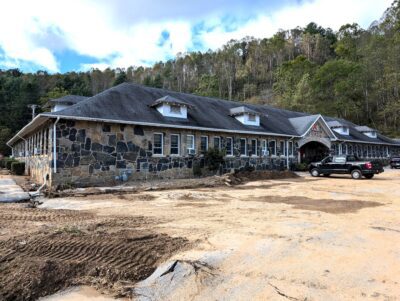
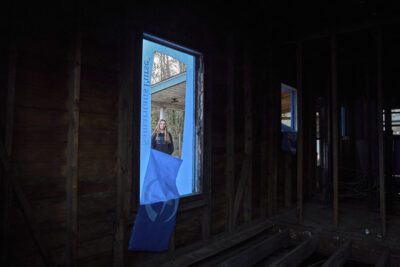
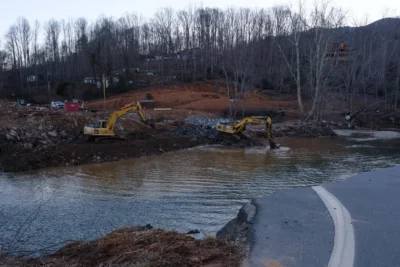
On North Carolina’s coast, Pamlico County is frequently hit by hurricanes, resulting in extensive home damage and mold exposure. Duke is exploring how that constant threat influences people mentally.
Student teams with the Duke Global Health Institute and Bass Connections, led by adjunct professor of global health and Pamlico County resident Dr. Diana Silimperi, have been conducting research on the county’s natural disaster challenges, in partnership with community organizations. While the partnership has typically focused on physical rebuilding and cleanup, this summer they’ve been exploring the human element.
“No one talks about what it’s like to live in mold, or how the floors of their homes have become soft. What’s the impact of that mentally on people?” said Bob Fuller, resident and chair of the Disaster Recovery Coalition in Pamlico County.
Duke students surveyed residents over the summer to find out.
Fuller hopes the survey will erase some of the stigma associated with mental health. Pamlico residents have a “pull up your bootstraps attitude,” said Fuller, but he believes that the students’ research will show that being in harm’s way has changed their quality of life.
“The ability to diminish some of the stigma comes with data,” said Fuller. “People aren’t alone.”
Duke researchers plan to collaborate with local partners to help develop mental health interventions.
“The issue here, as in many rural coastal counties, is that we have minimal local mental health resources,” said Silimperi.
Meeting people where they are
To help address the emotional distress after disasters, and to connect survivors with coping strategies, Gurwitch employs Psychological First Aid (PFA). There continues to be stigma associated with mental health services, and, as PFA is not therapy, most people are receptive to help that will reduce their distress, said Gurwitch. PFA can be delivered by licensed mental health survivors or anyone who has received the training.
Gurwitch was invited to Asheville a few months after Helene to train people in the community to use PFA. (“You don’t just show up if there’s been a disaster,” says Gurwitch. “There’s an organized chaos for disaster relief.”)
PFA works by helping to connect people with resources, such as emotional support and tools to cope in the short- and mid-term.
“We have to recognize that not everyone is the same. Our job is to listen, ask and understand what people need, and then help them take the steps to meet their needs,” she said.
As anyone who has suffered any sort of trauma knows, grief is not linear.
“Part of our work is identifying when things are activated: a year anniversary, a graduation, another major storm,” said Gurwitch. “When we’re talking about grief, we don’t bounce back. We have to marry the terms of resilience and healing.”
Gurwitch advises people to recognize activators associated with the traumatic event or the loss they’ve experienced. When these intense feelings get activated, Gurwitch encourages them to use the same coping skills they’ve been using.
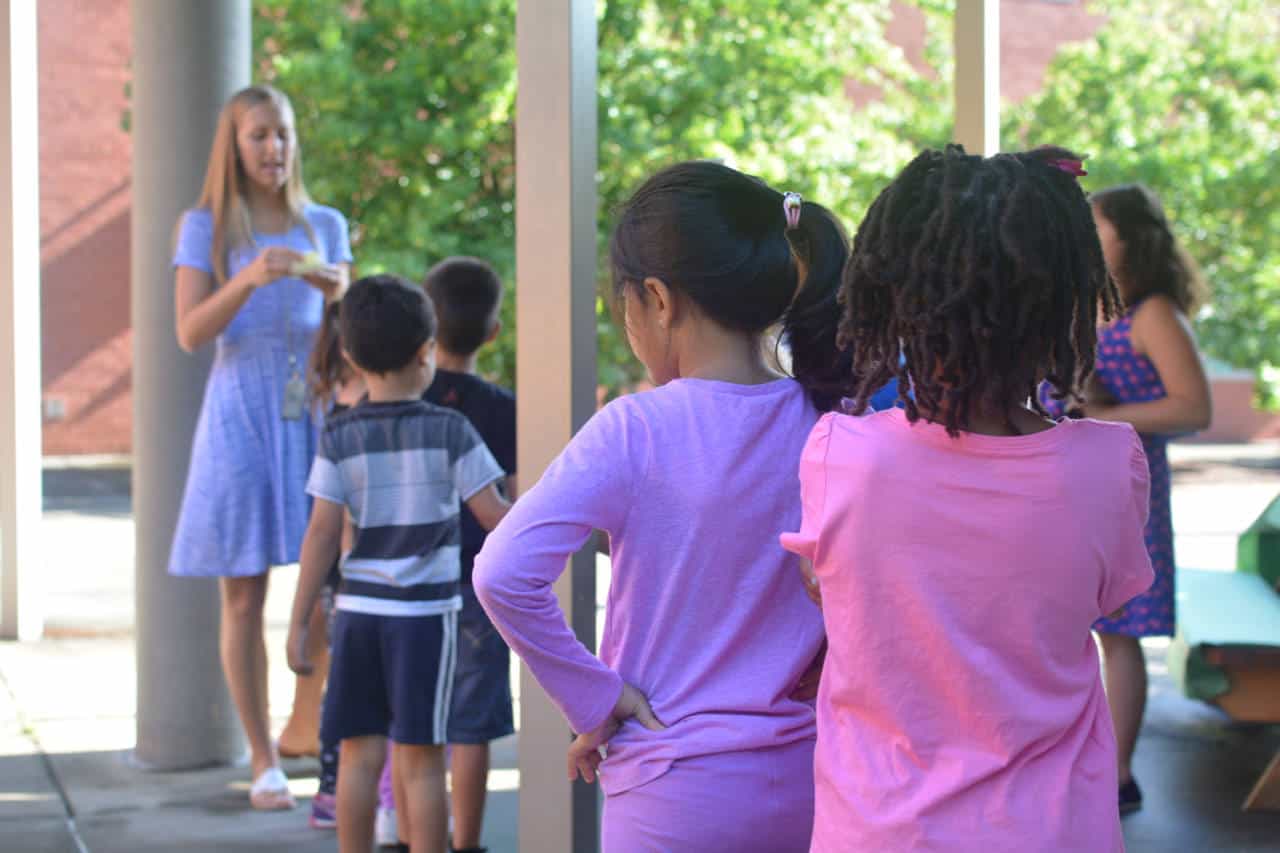
“Children may need extra attention and patience during these times,” she said.
Teaching Resiliency in Schools
A school curriculum, developed by Duke experts with North Carolina teachers, focuses on ecological, personal and community resilience. Called Ready, Set, Resilience, the standards-aligned curriculum is designed for middle school students but can be modified for different educational settings and learners.
At the heart of Ready, Set, Resilience is a collection of illustrated fables with animal and plant protagonists that must face and overcome environmental challenges. The idea is that learning what makes nature resilient can help kids navigate stressful periods or events — be they hurricanes and other natural hazards, or social struggles — in their own lives.
Led by Dr. Liz DeMattia, lead research scientist for the Marine Lab’s Community Science Initiative, and Dr. Kathryn Stevenson, director of the North Carolina State University’s Environmental Education Lab, Ready, Set, Resilience grew out of a need to support Carteret County students and teachers in the wake of two hurricanes and during the pandemic. Following Hurricane Helene last fall, teachers in western North Carolina began implementing the curriculum to help students cope with the devastation.
– Julie Leibach
Healing as a journey

Jerusha Neal, Duke Divinity School professor and Baptist pastor, points out the importance of honoring — and not trying to move on quickly from — grief. Neal was living in Fiji and working at a pastoral training school with her husband Wes Neal when a devastating cyclone hit.
Jerusha described the feeling as one of “weariness, loss and depression. Things came to a standstill.”
The Neals wanted to offer a space where community members could share what they were going through. That’s when Wes Neal put into practice a program to help people identify their trauma and move toward healing. The program, developed in the wake of communal violence in central Africa, asks participants to think of trauma as a journey away from the traumatic events, through imagined villages of “denial and anger” and “no hope,” moving toward a village of “new beginnings.”
“The idea is to help people identify the trauma and process it — not bury one trauma under another,” said Wes. The program is designed to be used six months to a year after a precipitating event.
“I do think there’s something about being honest and… naming it, and saying, ‘I’m not quite sure how to go through this.’ …In communities we were working with, it was helpful to find the language,” said Jerusha, who wrote about the experience in a book.
While there is a village structure in Fiji that the U.S. does not have, the Neals stressed the power in communal storytelling.
“There’s a recognition that the village will not be the same (with a trauma). That the world will be different now,” said Wes.
Jerusha added, “People just wanted to tell the story of what happened.”

The Hidden Health Risks
Disasters come with their own, often unforeseen long-term health risks.
Cancer risk and firefighters: A recently launched study seeks to better understand the cancer risk of firefighters based on their exposure to certain harmful chemicals while fighting fires. The Nicholas School of the Environment and the Duke Cancer Institute have partnered with fire service members across the country to recruit and track firefighters’ exposure to chemicals, and poor air quality in fire stations, over a 30-year period. Participants will be contacted every two years for health updates.
Floods and fungi: In Helene-affected buildings in western North Carolina, where mold is present, people have experienced symptoms of coughing and headaches following exposure. Duke’s Climate and Fungi research team went to Black Mountain, N.C., to collect fungal samples with the aim of better understanding the health risks that come with floods, and how to prevent them.
The team is working to identify which fungi are common indoors following flooding, as well as the kinds of allergens and toxins they are producing that may make people sick. In partnership with PreMiEr, a National Science Foundation-funded engineering research center at Duke, their findings could lead to improved building materials and HVAC systems that better protect against mold and adverse health effects.
For other stories in this series, go to the series page.

Recommended reading