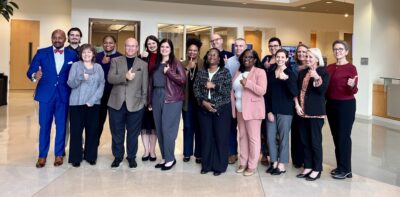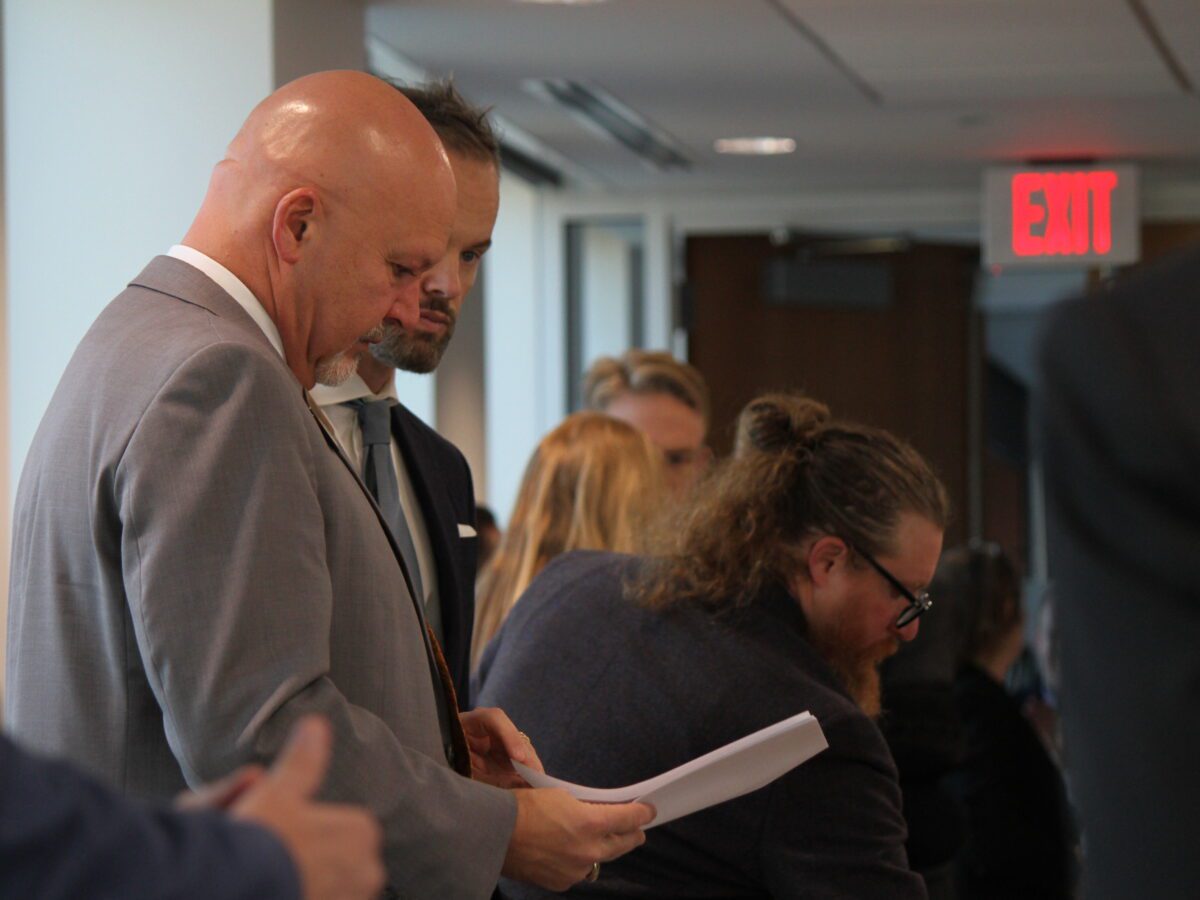
The governor’s Council on Workforce and Apprenticeships convened on Thursday in Raleigh to discuss and vote on strategies that were drafted to achieve 11 goals related to workforce development in North Carolina.
In a previous meeting in September, the council discussed the goals, which were first announced in June.
A slew of strategies were approved in a voice vote that will be packaged into a comprehensive report to be sent to Gov. Josh Stein by Dec. 15. But “that does not end our work on this council,” said N.C. Secretary of Commerce Lee Lilley. All strategies that were presented at the meeting were approved.
The workforce goals are all on a four-year timeline, and the council will submit annual progress reports for the next three years. Lilley said the goals are time-limited, actionable, and measurable.
“Those reports will measure the progress we’ve made on all of these goals,” he said.
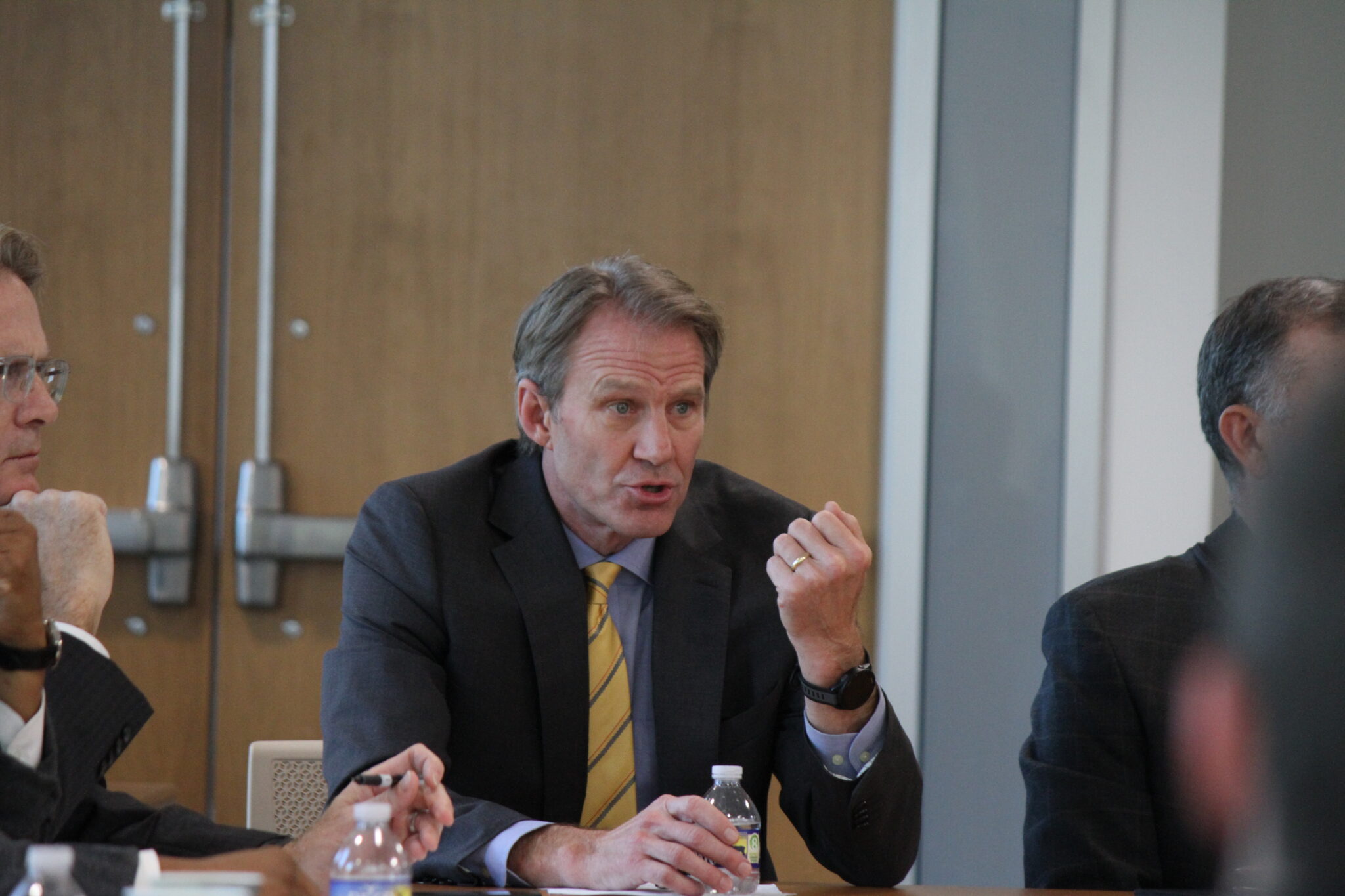
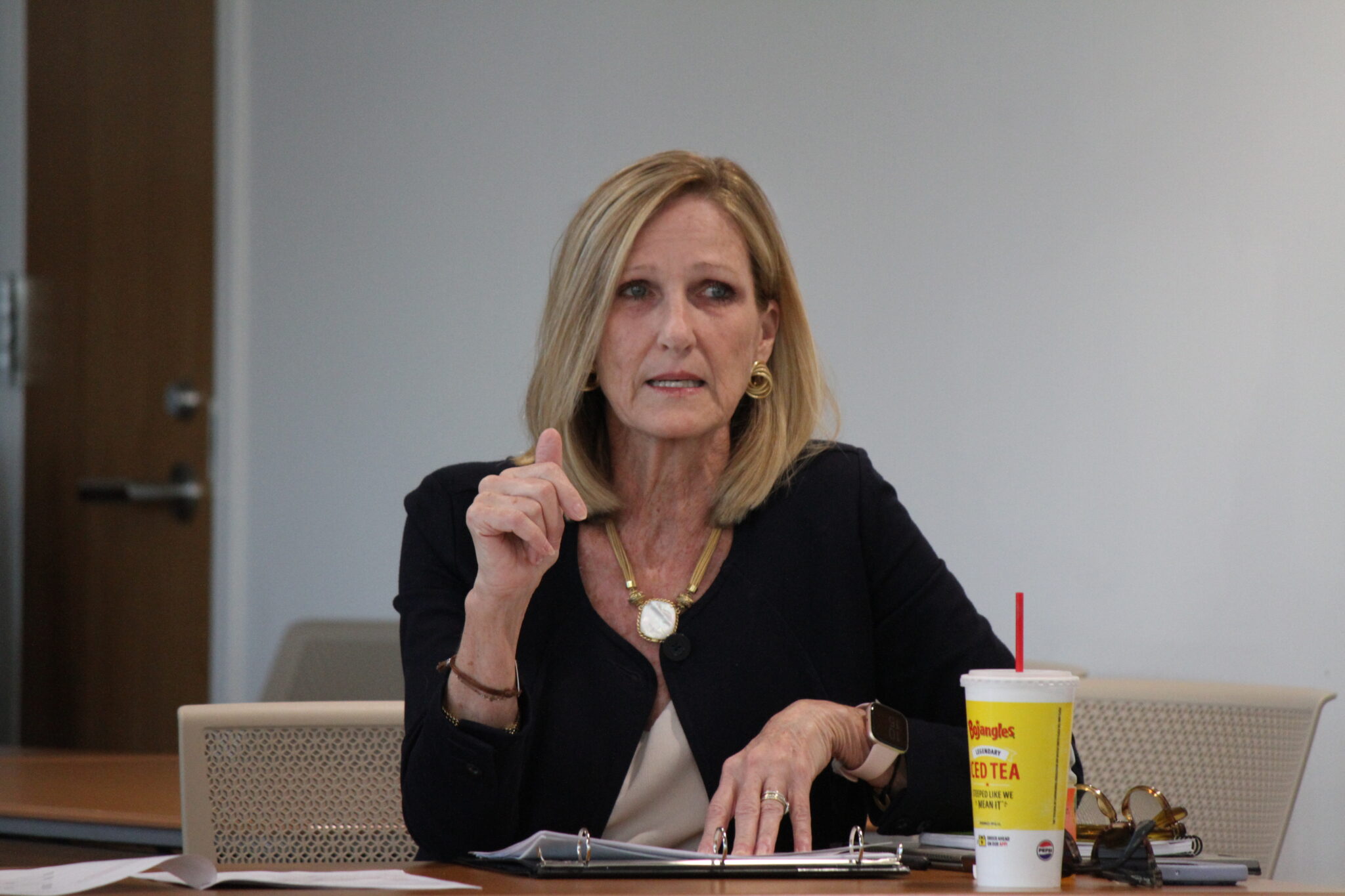

A presentation that contained reports on the strategies put together by the council’s subcommittees reiterated the vision for the council’s efforts.
North Carolina is committed to building a seamless continuum of education and workforce development — in which all partners on the workforce continuum are working together to fuel our state’s continued economic growth, ensure employers have the talent they need, and expand pathways to careers for North Carolinians that support thriving families and communities across our state. The purpose of this continuum of service is ultimately to prepare all learners and jobseekers, including, but not limited to, people in rural communities, justice-involved people, people with disabilities, and veterans and their families, to prosper throughout their lives.
— Vision statement, governor’s Council on Workforce and Apprenticeships
After the strategies were approved, myFutureNC presented a proposal for a “Workforce Act,” a framework that would also contribute toward the goals outlined by the council.
Below, find an outline of the strategies approved by the council to meet its workforce goals, which are categorized by the following groups:
- Education and credential attainment,
- Work-based learning and apprenticeships,
- Employer and sector partnerships, and
- Governing and aligning a future-ready workforce.
 Sign up for Awake58, our newsletter on all things community college.
Education and credential Attainment
Goals:
1. Ensure 2 million North Carolinians ages 25-44 will have earned an industry-valued credential or degree.
2. By graduation, every high school student will have completed coursework that results in transferable credit or credentials/certifications in preparation for the postsecondary pathway of their choice. The coursework includes dual enrollment, Career & Technical Education (CTE) concentrator, Junior Reserve Officers’ Training Corps (JROTC), Advanced Placement/ International Baccalaureate, and work-based learning courses.
3. For graduating high school students, increase postsecondary enrollment, employment, or enlistment in the military within 12 months of high school graduation.
To address those goals, the council approved the following strategies:
- Continue to develop and expand an interoperable data system (e.g., digital transcripts), that allows for real-time, seamless transitions across education, workforce and licensure pathways, along with robust tracking to understand and evaluate learner-level outcomes.
- Further align the state’s industry-valued credentials list with employer demand and expand access to relevant credentials. Leverage the list to support implementation of Workforce Pell.
- Strengthen and coordinate programs that ensure learners are on track and reengage adults who stop before finishing a credential or degree. Create clear and consistent ways to give credit for prior learning, military service, and work experience.
- Align and strategically expand funding and partnerships to support learners with essential needs like child care, transportation, food, and housing, especially for people in rural communities, justice-involved people, people with disabilities, and veterans and their families.
- Promote awareness and increase uptake of NC College Connect, Next NC and the NC Need-Based Scholarship to provide direct admission to North Carolina colleges and universities and financial aid to support the cost of attendance, making financial aid more flexible to cover tuition, credentials, and licensing costs — especially in high-demand career fields.
- Review and adjust high school course quality points system, encouraging parity across prioritized course types (Advanced Placement/International Baccalaureate/Cambridge International Education, Career and Technical Education, and Junior Reserve Officers’ Training Corps).
- Ensure every K-12 student develops a meaningful career development plan, supported by well-trained advisors across schools, colleges, and workforce programs. Expand successful advising models, such as Advise NC and the NC Career Coach program, to more high schools, so all students receive high-quality guidance as they explore and prepare for their future.
- Increase the number of school counselors to ensure that North Carolina meets the American School Counselor Association student-to-counselor ratio of 250 to 1.
Cecilia Holden, president and CEO of myFutureNC, commented on the strategies as she presented them. Referring to the data system to transition students across education, workforce, and licensure pathways, she said the current systems are “disparate.”
She also said that employers say not all credentials have equal value, and that the state should prioritize higher-value credentials.
Work-based learning and apprenticeships
Goals:
4. Double the number of registered apprentices.
5. Increase participation in work-based learning.
6. Engage 50,000 employers to partner with the governor’s Council on Workforce and Apprenticeships on achieving its goals.
7. Establish and expand coordinated partnerships between education and workforce agencies and employers to increase alignment of resources to better address current and projected employer needs.
To address those goals, the council approved the following strategies:
- Develop an employer-centered model for shared training and education of talent, to create a unified, statewide, tiered employer engagement system that incentivizes varying levels of employer participation.
- Leverage existing state and local business councils, professional associations, etc. to identify barriers to the expansion of apprenticeships and work-based learning, build strategic partnerships, and recommend incentives for pre-apprenticeships, apprenticeships, and work-based learning opportunities.
- When possible, embed credentials and degrees into apprenticeships and pre-apprenticeships programs.
- Explore opportunities to strengthen and integrate Perkins V K-14 Business Advisory Councils and local area workforce development boards to formalize commitments and shared goals among education and workforce partners.
- Across agencies, review policies and procedures to reduce regulatory burdens for employers and update policies and procedures to foster an aligned multisector ecosystem that supports ApprenticeshipNC and partners.
- Secure stable and sustainable funding to organizations that will expand
apprenticeships and work-based learning to include ApprenticeshipNC, NCWorks, NC Department of Adult Correction, NC Department of Military and Veterans Affairs, and the NC Department of Health and Human Services, to meet the needs of employers as they serve people in rural communities, justice-involved people, people with disabilities, and veterans and their families. - Grow and unify workforce professionals supporting students and engage Community Based Organizations (CBOs) in supporting priority populations and rural populations to address barriers, so that more North Carolinians can gain access to education and training that will lead to advancement opportunities.
- Extend the existing Youth Apprenticeship Tuition Waiver to all apprentices regardless of participation in a pre-apprenticeship program.
The council also approved the following additional strategies:
- Create the Apprenticeship County Match Fund that provides matching funding to counties that support registered apprenticeships by paying the related instruction at community colleges in partnership with companies who pay apprenticeship wages. Funds would be matched on a sliding scale basis based on a county’s Tier designation.
- Implement a tax credit for companies on the wages spent on apprenticeship salaries.
- Launch Apprenticeships UNC that creates new apprenticeship opportunities in areas like industrial maintenance, skilled trades, scientific associate research roles, and health care occupations (where relevant) in partnership with area community colleges.
The additional strategies were raised by J.B. Buxton, president of Durham Technical Community College. When pitching the Apprenticeship County Match Fund, Buxton said that Wake County funds Wake Technical Community College to pay for related instruction for apprentices.
He also noted that because North Carolina is phasing out its corporate income tax, a tax credit for companies may not be necessary.
Employer engagement and sector partnerships
Goals:
8. Create statewide sector-based workforce development strategies for at least three key industries, including, but not limited to, advanced manufacturing, education, and health care.
9. Develop a plan to integrate AI skills development into sector-based strategies and work-based learning in key industries to build a future-ready workforce.
10. Reduce state government vacancy rate to 15%.
To address those goals, the council approved the following strategies:
- Create a governance structure to organize existing industry groups, leaders, and councils within advanced manufacturing, education, and health care to develop and refine statewide sector strategies.
- Equip local and regional stakeholders with the tools, knowledge, and support needed to implement and scale sector-based strategies aligned with statewide sector strategies.
- In collaboration with the North Carolina AI Leadership Council, develop an AI curriculum addressing needs from K-12 to postsecondary that can be integrated into existing coursework to support AI fluency for all North Carolinians, especially people in rural communities, justice-involved people, people with disabilities, and veterans and their families.
- Work with employers to understand and expand the skills related to AI adoption that are most needed by their current and future workforce.
- Improve public perception and attractiveness of state government jobs, by having a dedicated public relations effort to rebrand state government employment, enhancing competitive compensation, benefits, and opportunities for advancement. Expand the partnership with education institutions to create a workforce pipeline into state government.
- Increase use of work-based learning in state government for high-volume, entry-level positions (nurses, CNAs, direct support professionals, correctional officers, etc.) to utilize apprenticeships and trainee pathways to develop talent and fund continuing education opportunities to support retention and advancement.
The council also approved the following additional strategies:
- Charge Commerce and the regional EDPNC research partnerships to develop a comprehensive and regularly updated labor market information tool on job availability and job projections in the target industry sectors by region.
- Create a Good Jobs and Regional Competitiveness Fund to support aligned sector-based initiatives in the research partnership regions. Capitalize the fund with state funding and philanthropic dollars to serve as risk capital or matching funding to invest in a handful of eligible strategies such as supporting apprenticeship and internship funding, employer roundtables, faculty recruitment and retention in key sectors, etc.
- Launch Early College districts aligned with advanced manufacturing, education, health care, and life sciences that allow students at high schools across a school district to complete community college coursework and pathways that lead to credentials with labor market value and prepare them for jobs in target sectors.
- Develop the NC Advanced Manufacturing Credential that is the equivalent to BioWork to create a consistent and demand-side approved credential for advanced manufacturing firms.
- Add life sciences.
The additional strategies were again pitched by Buxton. He proposed adding life sciences to a list of high-demand fields the council has previously highlighted, which includes advanced manufacturing, health care, and education.
After the presentation, Lilley noted that the state’s AI Leadership Council recently met and that the majority of the conversation of that council was about workforce preparedness and “minimizing impacts of displacement.”
Governing and aligning a future-ready workforce
Goal:
11. Launch a coordinated statewide public outreach effort to broaden awareness and participation in workforce development programs by employers, learners, jobseekers, and incumbent workers, with an emphasis on reaching under-tapped talent pools like rural communities, veterans and their families, individuals with disabilities, and justice-involved people.
To address this goal, the council approved the following strategies:
- Fully fund an outreach and awareness campaign, built around a unifying theme related to “opportunity,” seeking to broaden trust and increase engagement in workforce development services across NC, among both employers and jobseekers.
- Create a single user-friendly platform that incorporates NCWorks.gov, NCcareers.org, and other statewide career resources to better assist users through seamless connectivity, elimination of redundancies, shared reporting, and overall improvement of site performance, data/information quality, and customer service.
- Deliver regular, coordinated training across schools, community colleges, NCWorks Career Centers, and community-based organizations to ensure that all counselors, advisors, and career coaches are fully equipped to guide students toward informed, seamless postsecondary and career pathways.
- Expand access to workforce opportunities that bring career services directly to residents, including people in rural communities, justice-involved people, people with disabilities, and veterans and their families.
Following the presentation of these strategies, multiple council members called for an account of all of the organizations currently working on workforce goals in North Carolina.
“I see a lot of different groups, entities — whether it’s individual hospitals, individual community colleges, school districts, community college partnerships — a lot of people are kind of doing this and trying to reinvent the same kind of work streams that we’re talking about. And it strikes me that some of what’s missing is more of a coordinated effort,” said North Carolina Community College System President Jeff Cox.
myFutureNC calls for a ‘Workforce Act’
Following the council’s vote to approve the strategies laid out above, representatives from myFutureNC gave a presentation that projected a shortfall on the first goal — that by 2030, 2 million 25- to 44-year-olds will have completed a high-quality credential or postsecondary degree — as things stand.
That goal, also called North Carolina’s postsecondary attainment goal, is laid out in state statute in Session Law 2019-55.
Holden said the number of North Carolinians with high-quality credentials or postsecondary degrees was 1,664,892 in 2023, and though that figure is rising, it is only projected to be 1,945,174 in 2030. Holden also said that if the state wants to celebrate in 2030, the goal will have to be met in 2029, because the data takes a year to process.
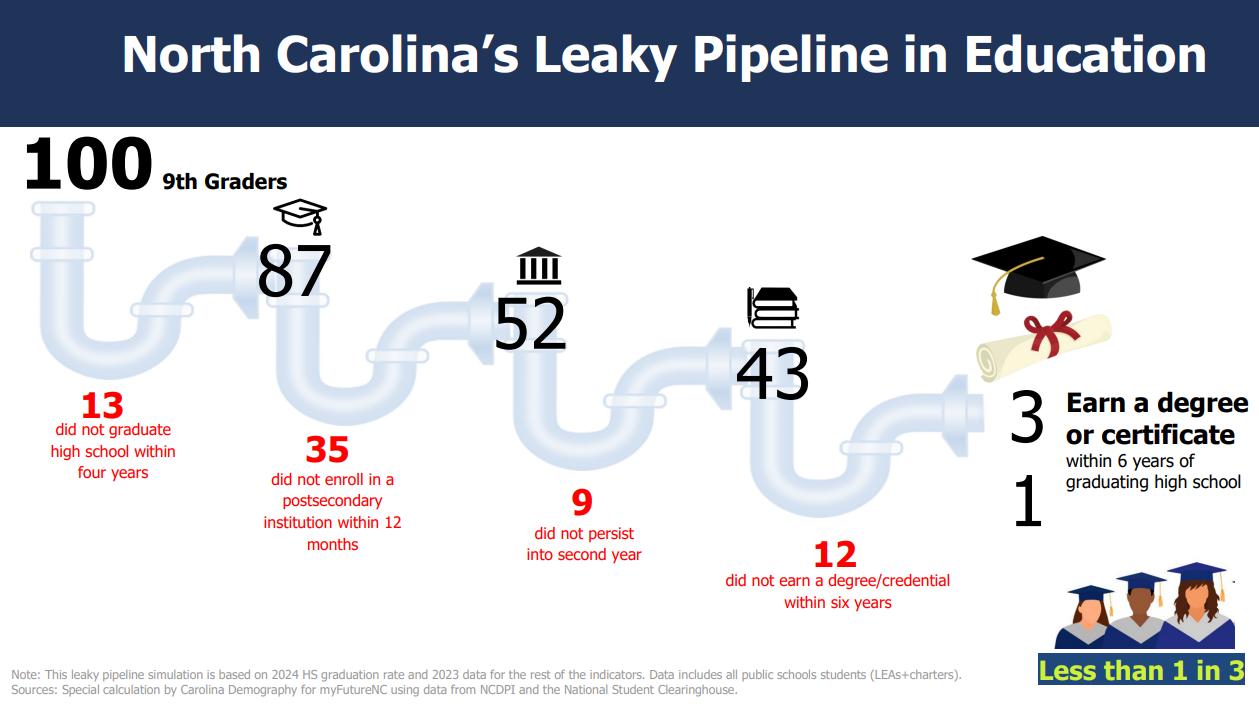
Therefore, myFutureNC called for what would be dubbed a “Workforce Act,” which is a framework that “represents a roadmap, built on the collective input of all of these stakeholders for what North Carolina can accomplish over the next few years to ensure our state and our economy continues to thrive well into the future,” according to the presentation.
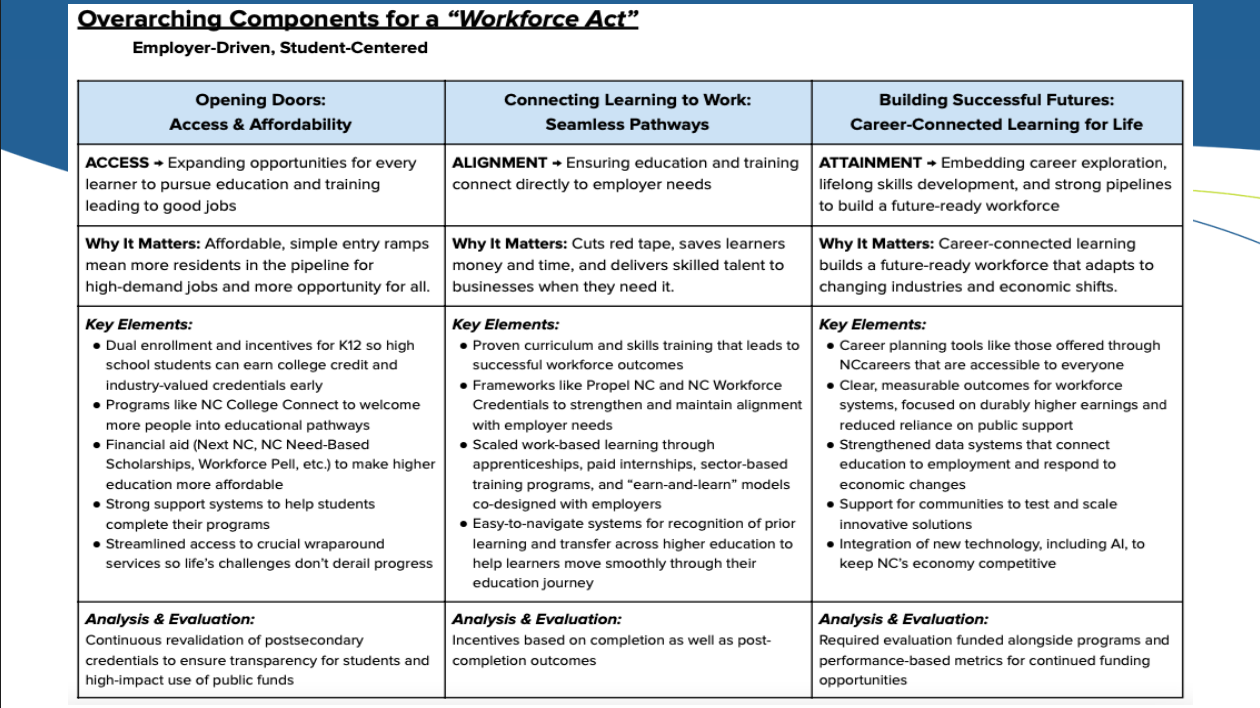
Cory Biggs, director of policy and advocacy for myFutureNC, finished the presentation by noting the importance of robust data collection in order to access the full potential benefits of Workforce Pell Grants, which he called “a transformational opportunity.”
He said North Carolina will have to accurately track job placement and wage outcomes for workers with credentials funded by Workforce Pell.
“The thing that I want to flag for you guys today is the fact that we’ve got to get serious about data to implement Workforce Pell well. Otherwise, we’re going to be leaving money on the table, and nobody in the state wants to do that,” Biggs said.
Future meeting dates
The council plans to meet again on the following dates:
- Feb. 11, 2026 from 10:00 a.m. – 11:30 a.m.
- May 13, 2026 from 10:00 a.m. – 11:30 a.m.
- Aug. 12, 2026 from 10:00 a.m. – 11:30 a.m.
- Nov. 18, 2026 from 10:00 a.m. – 11:30 a.m.

Recommended reading