
Girls on outdoor Adventure for Leadership and Science (GALS) offers new STEM opportunities
Destoni came into GALS wanting to turn her life around. She admitted in her application that she was not the best student and that until recently, she had not tried hard in school. She wanted to prove that she could be more than what her grades said about her and was excited to dive into her favorite subject — science. When the trip began, Destoni was quiet and didn’t participate much. But, by day three, she was asking questions during science lessons, motivating her peers when morale was low, and counting how many snails she could find at each rest break on the trail. She became engrossed in every science lesson and took careful notes in her field notebook.
After mid-session feedback, when we suggested that she was a leader who everyone looked up to, Destoni stepped up even more and took initiative to make sure that tasks were completed and that everyone felt included and comfortable. By the time she had the chance to conduct an independent research project and to present it to her family as well as Duke faculty and staff members, Destoni was confident in herself and her science abilities. The entire room was impressed by how well she described her independent project and the findings. Though Destoni had struggled in the classroom environment, the intimate small-group setting, challenge of the wilderness, and hands-on placed-based science lessons allowed her to succeed.
Savannah came into GALS as the top student in her small, rural school. She had taken every AP class offered and was an A student. But in her small community, she didn’t interact with many other students who were interested in pursuing STEM, especially women. Savannah thrived in an environment where everyone shared a similar interest with her. She enjoyed comparing stories, talking about her career goals, and conducting experiments. She also enjoyed sharing her knowledge of science with some of the younger and less academically advanced participants and gladly took on a mentor role to ensure that everyone understood the content delivered. At the end of the trip, Savannah explained that GALS had shown her that women can become scientists and that scientists can be fun, sociable people.
What is GALS?
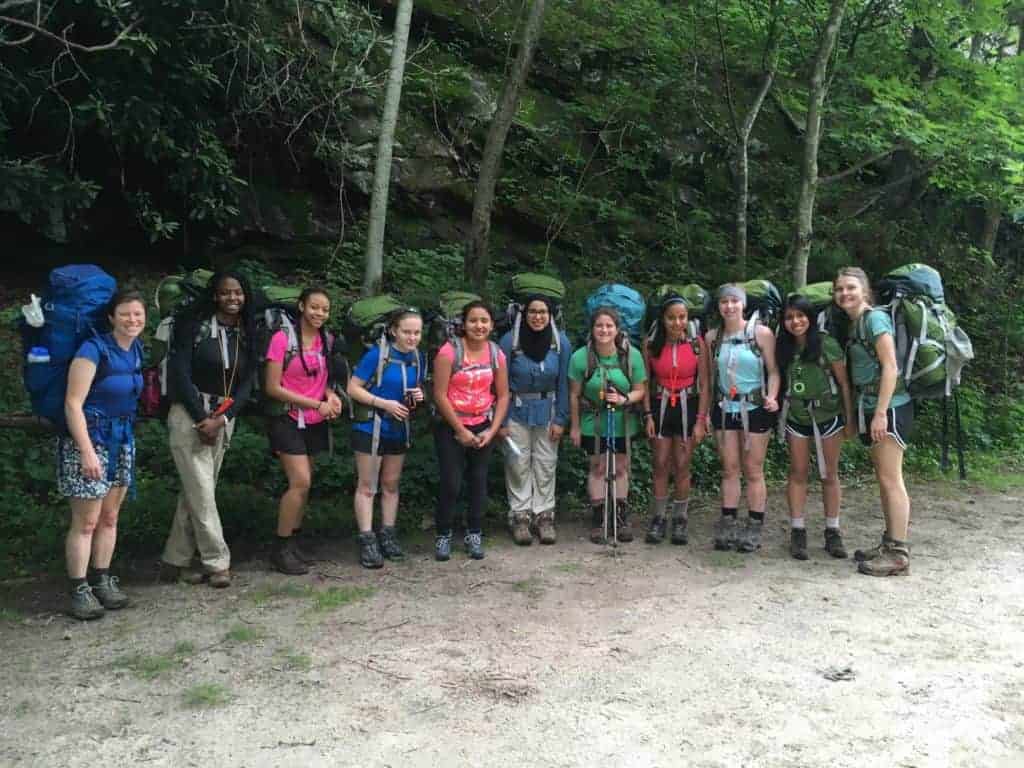
GALS’ vision is to be an entry point to STEM by combining formative life experiences with a formative educational experience. Girls from minority and low-income socioeconomic backgrounds spend two weeks learning ecology, earth science, and chemistry by exploring a North Carolina National Forest with scientists from Duke University. We use the wilderness as our classroom as it not only provides learning material, but also triggers creativity and imagination. Being in a new setting also opens up the opportunity for girls to be leaders.
This summer, GALS will take place from June 12-26, 2018. Applications are currently open and close on March 15, and we encourage any student who could benefit from GALS to apply. Academic performance is not considered and the program seeks those who would succeed in this hands-on, experiential learning environment. Specifically, GALS aims to increase participants’:
- science literacy;
- confidence in their ability to do science; and
- self-awareness, teamwork, and leadership skills.
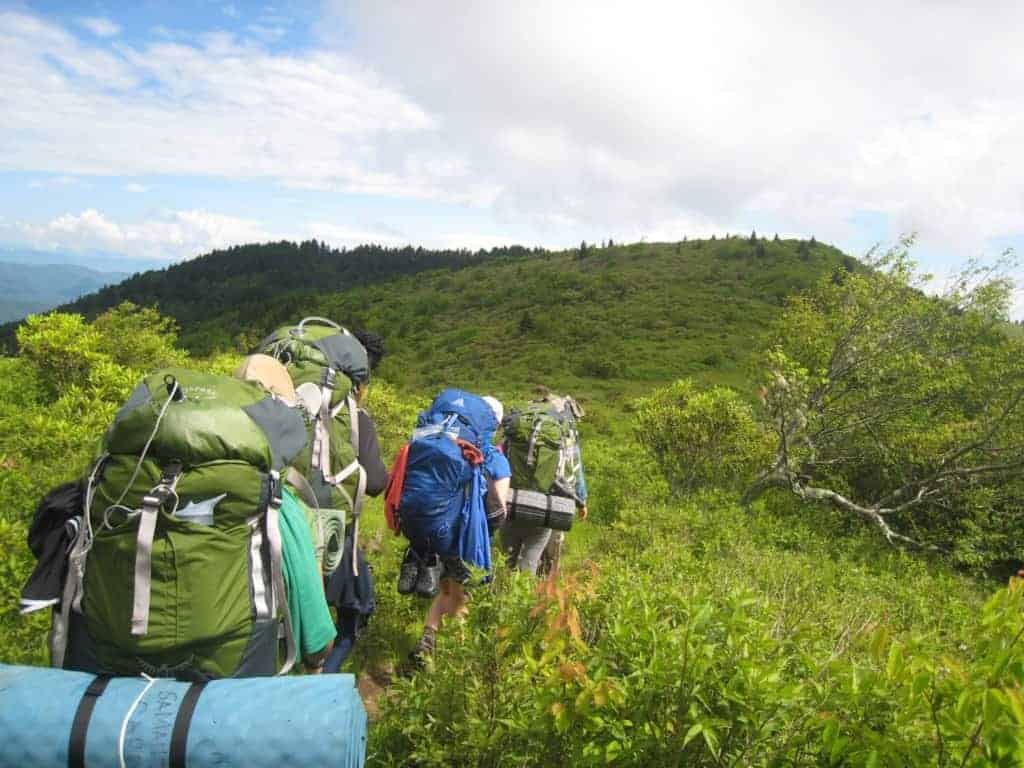
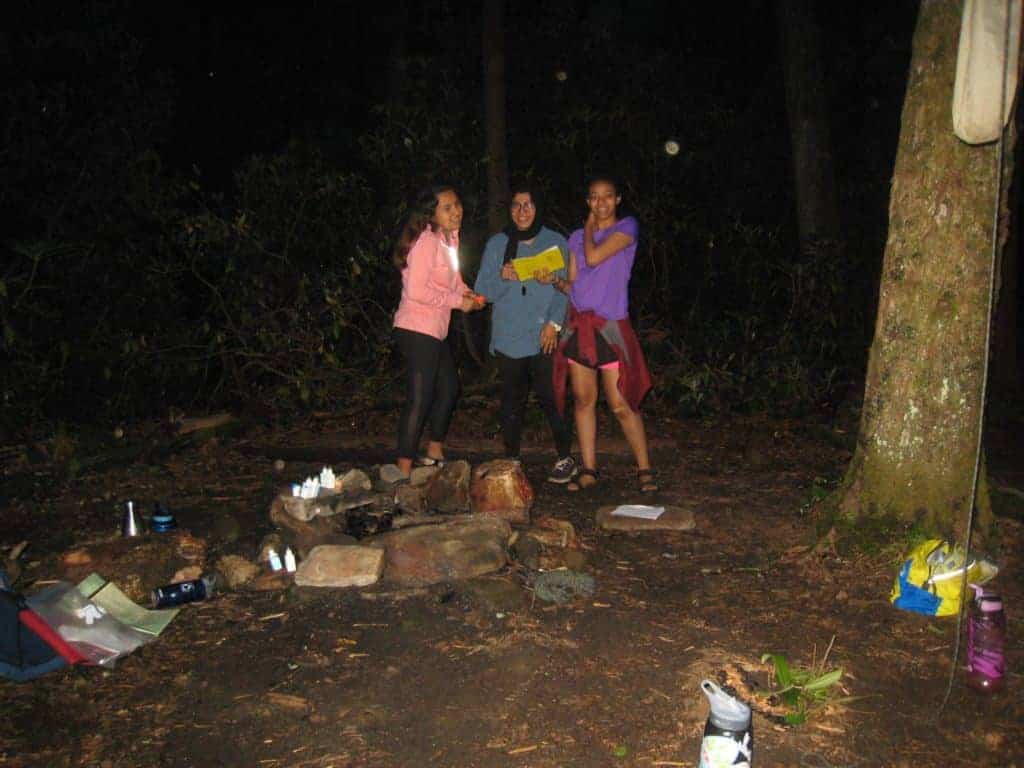
During the program, groups of eight high school girls backpack through North Carolina’s Pisgah National Forest, one of the most biodiverse ecosystems on this continent. We combine formal instruction with informal investigation and experimentation. Every day, the girls do science – making observations, testing hypotheses, learning from mistakes – all with a group that has bonded amidst the first experiences of hiking, sleeping in a tent, cooking on a backcountry stove, and climbing a difficult mountain. This co-experience is critical to empowering them as female leaders and scientists; being in the woods breaks down barriers, while doing science gives purpose to the experience, and builds confidence in their ability to pursue a career in STEM.
Afterward, we support these girls in building student groups at their schools that focus on STEM, leadership, or diversity. Girls also attend two follow-up events targeted at preparing girls for college applications and exposing them to a variety of STEM careers. These follow-up events reinforce their ties and bonds, and position them as leaders in their schools. The goal is not just science and not just outdoors; it is to spark a passion in the girls and provide them with the resources and confidence to achieve it.
Why aren’t more women and minorities in STEM?
There is a paucity of women, minorities, and students from low socioeconomic backgrounds in science, technology, engineering, and mathematics (STEM) programs. While women receive 57 percent of bachelor’s degrees, only 39 percent of women earn a degree in physical sciences and 19 percent in engineering. Additionally, although Hispanic/Latina women and African American women now comprise approximately 16 percent of the US population, these women earn only 11 percent of STEM bachelor’s degrees, 8 percent of STEM Master’s degrees, and less than 5 percent of STEM doctoral degrees. Quite simply, we are not getting women into STEM, particularly minority women.
While they may not go into STEM, if and when they do, women perform equally well as men in these programs. Further, Historically Black Colleges and Universities are more successful at training future leaders in STEM compared to other universities. With the right programming and a comfortable learning environment, women and minorities can excel in STEM.
GALS is targeted at getting girls from minority and low socioeconomic backgrounds into the natural sciences. We are starting with North Carolina, but have a vision much bigger than that.
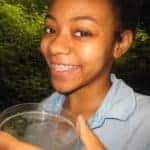
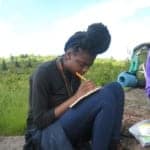
What GALS looks like in action: Summer 2017
On June 11-23, eight girls and three leaders departed for a science adventure in Pisgah National Forest as part of GALS. During these two weeks, the girls learned about ecology, geology, and aquatic chemistry while backpacking nearly forty miles. Though they had never backpacked before, the girls quickly learned to set up their tents, cook on a campstove, and read a topographic map.
In fact, the trip included a lot of firsts and learning opportunities for the girls. Daiana learned how to measure soil characteristics, and Rose found that she could climb mountains while carrying a 40-pound pack. Marwa realized how interesting stream insects could be, while Savannah learned that if you lick a slug, it turns your tongue numb. Briyete found that she could enjoy quietly sitting by a stream; Destoni realized that she’s a natural leader and that the entire group looked up to her. Zyrehia found that a positive attitude and group spirit can make rainy days enjoyable, and Samantha learned to quantify human impact on the environment.
By the end of the trip, the girls had not only learned about the science of the environment around them, but had also developed as a team, pushed themselves beyond what they had done before, and most importantly, grown confident and made new lifelong friendships.
Summer 2017 statistics:
- 39 miles hiked
- 214 granola bars eaten
- 4 slugs licked
- 80 stream invertebrates caught
- 1 tent pole broken
- 5 blisters formed and popped
- 10 friendships made
GALS is currently sponsored by REI, the North Face, and Duke Support for Interdisciplinary Graduate Networks (D-SIGN). Additionally, GALS receives in-kind donations of gear from Duke Outdoor Adventures and current Duke students, faculty, and staff. Applications and details are available at GALS.