
From hog farm to nuclear engineering lab, NC teachers take an energy road trip

Seventeen North Carolina science teachers stood on the flat top of a trash “cell,” a compacted trash mound sealed with soil. In the distance, a line of trucks dumped garbage into a new cell. A handful of gulls flew over the waves of trash and a giant tractor with spiked wheels, called a sheepsfoot compactor, rolled over the incoming waste — the flow of which amounts to 450,000 tons of municipal waste per year.
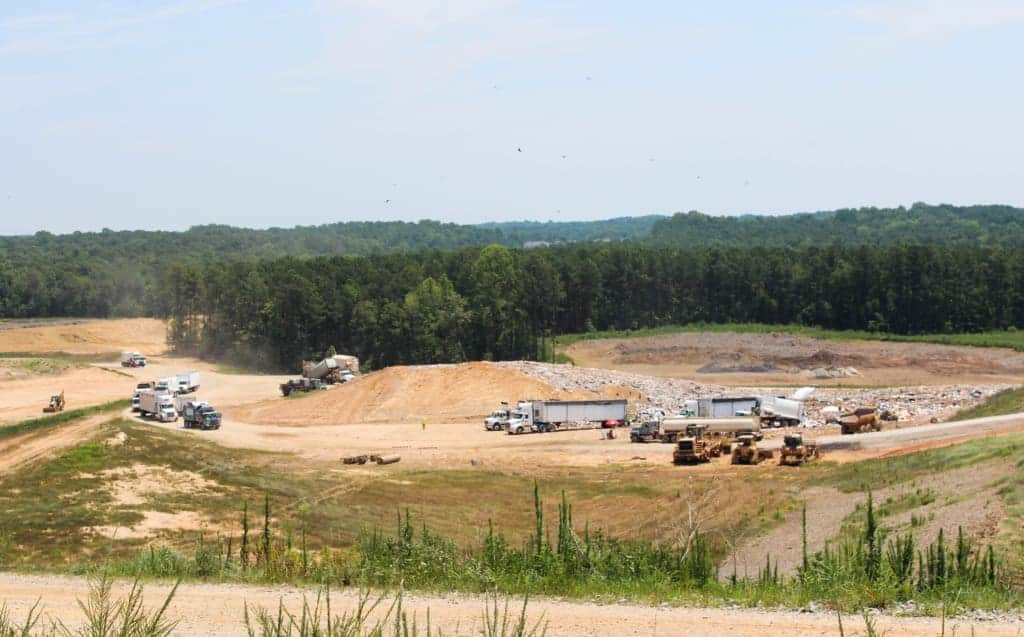
“We’re really good at making garbage. It just keeps coming,” said Sara Davarbakhsh, environmental program coordinator at South Wake Landfill, the last solid waste municipal landfill left in Wake County.
The landfill was the second stop on an “energy road trip” focused on renewable energy for the middle and high school science teachers enrolled in the Energy Literacy Fellows Program. The road trip — which consisted of a visit to Butler Farms in Lillington, South Wake Landfill in Apex, and the PULSTAR Nuclear Research Reactor at NC State University — was part of a three-day professional development workshop hosted by UNC Chapel Hill’s Institute for the Environment and funded by the Duke Energy Foundation.
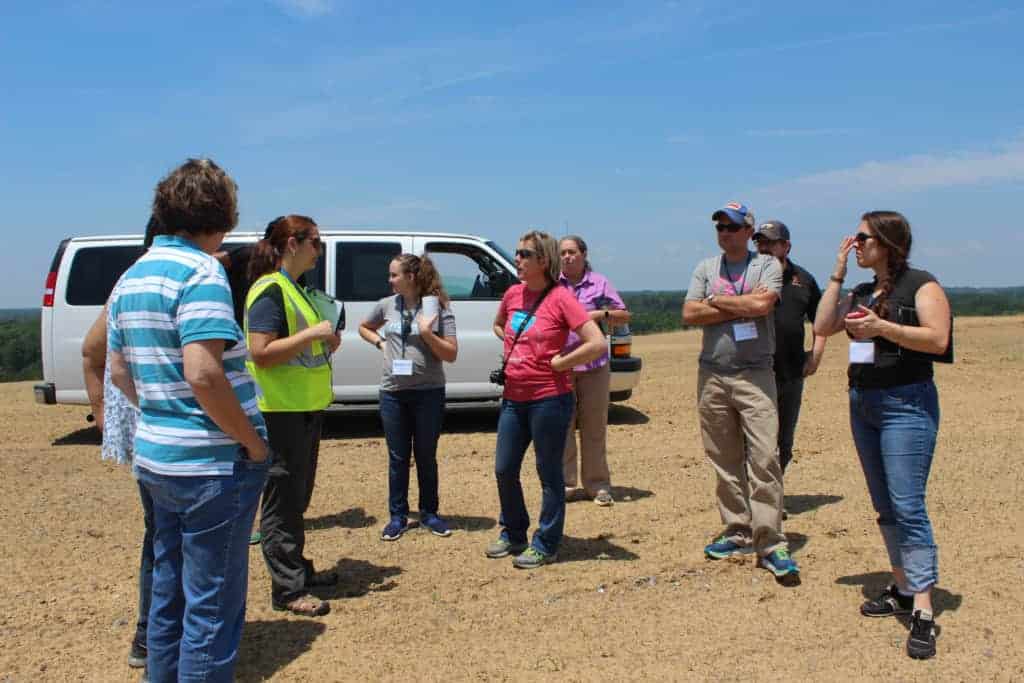
“Today I was introduced to using waste as a starting point for energy,” said Linda Lanier, an eighth grade science teacher at James E. Shepard Magnet Middle School in Durham. “I’m standing there thinking, all that junk we generate, now it’s useful.”
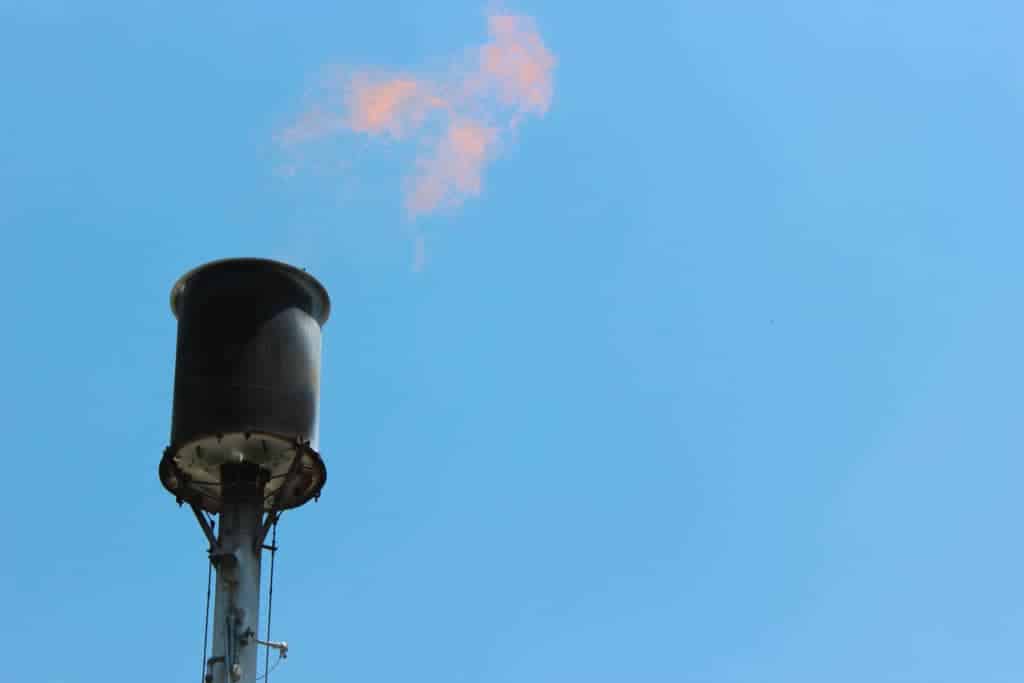
Sized at 760 acres, South Wake Landfill sees about 140 waste trucks per day. All of this organic waste produces gas as it decomposes, including methane and carbon dioxide. Through a contract with Ingenco, South Wake Landfill prevents methane from entering the atmosphere and instead converts it to electricity. In this process, the landfill generates about six megawatts of constant electricity — enough to power 6,000 homes.
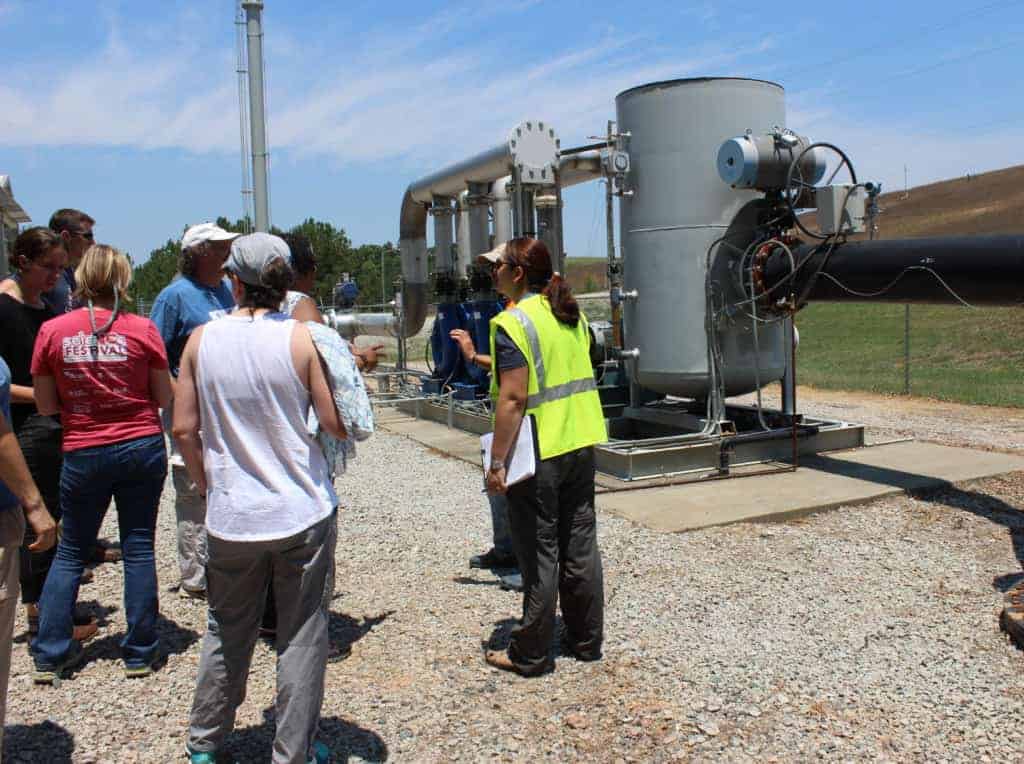
“[These] field trips enable teachers to see energy facilities up close, observe how the facilities impact the land and the surrounding community, and also learn about the people that run these facilities to examine the diverse career opportunities available to their students,” said Dana Haine, K-12 science education manager at the Institute for the Environment.
Teachers also learned what backgrounds their students would need to enter jobs in renewable energy fields. For work in waste management like landfills, a degree in civil or environmental engineering is required.
At NC State’s Burlington Nuclear Engineering Lab, teachers learned about traits that make for successful nuclear engineers. “They love math. They love physics,” said Lisa Marshall, lecturer and director of outreach at NC State’s Department of Nuclear Engineering.
Through a tour of the PULSTAR Nuclear Research Reactor, teachers got to see a working nuclear reactor up close, ask questions, and learn about a top-ranked program that trains students to work in the field of nuclear engineering (the department’s graduate program is ranked fourth in the nation).
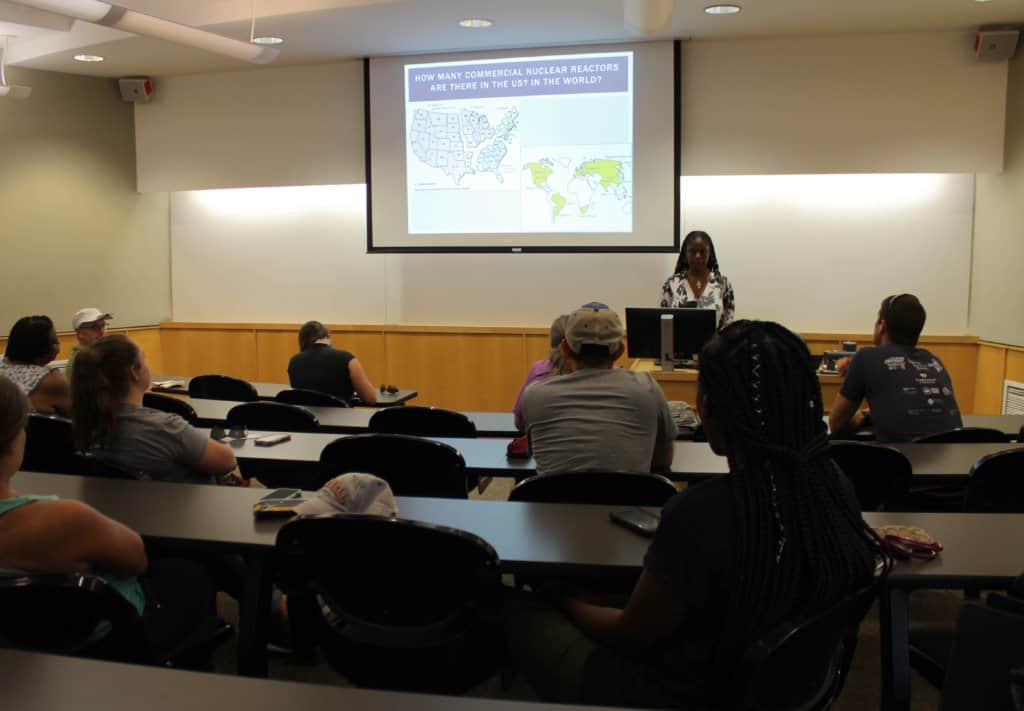
“Energy is a big part of our curriculum,” said David Benson, a chemistry and physical science teacher at Southern Alamance High School.
“A big part of [the energy road trip] is just inspirational,” said Benson. “We are locked in our classrooms with our kids for 10 months out of the year and getting the chance to talk with other teachers, interact with them, and find out what they do … To me that reinforces my teaching and drive to do the best I can for my kids.”