
Friday Institute puts ‘Education in Motion’ during inaugural summit

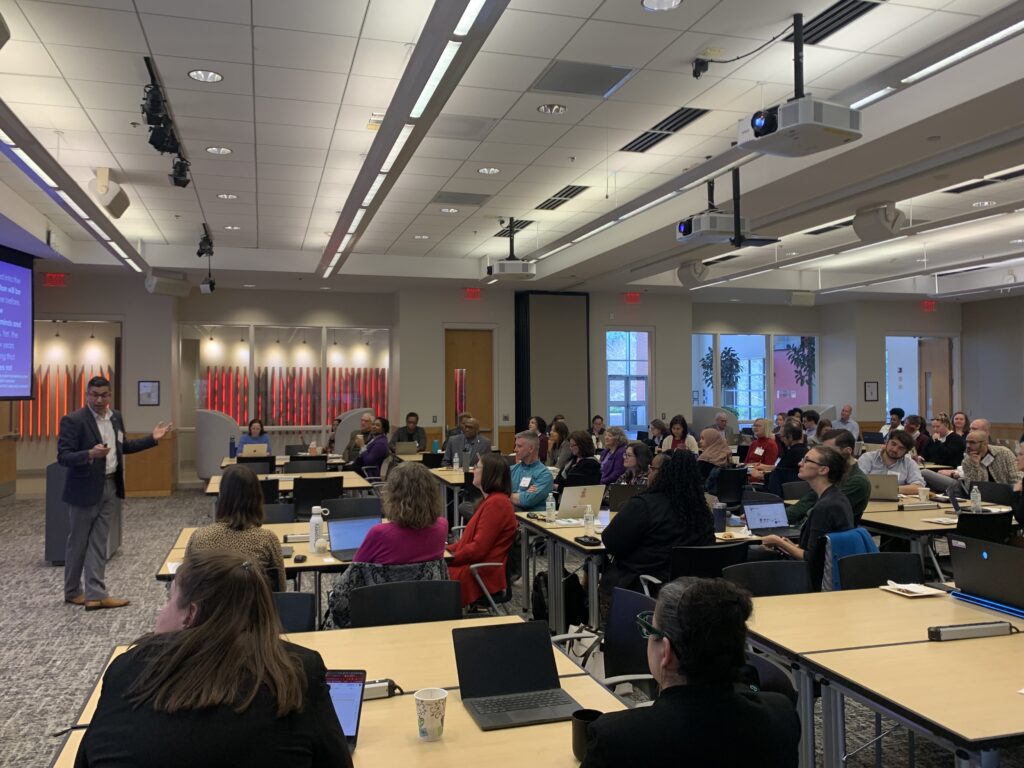
The William and Ida Friday Institute for Educational Innovation hosted its first Education in Motion Summit on Feb. 24 to unite education and technology stakeholders across the country.
The one-day event connected stakeholders in the education space so they could collaborate and align across research, policy, and practice. An end goal was for attendees to find innovative solutions to any common problems they may share.
“I think it’s easy to work in silos and to work in fragments, but a lot of us are doing the same kinds of work,” said Krista Glazewski, executive director of the Friday Institute. “So we wanted to create the opportunity for people to find each other around whatever common cause or thread might bind them.”
 Sign up for the EdWeekly, a Friday roundup of the most important education news of the week.
The power of evidence in education
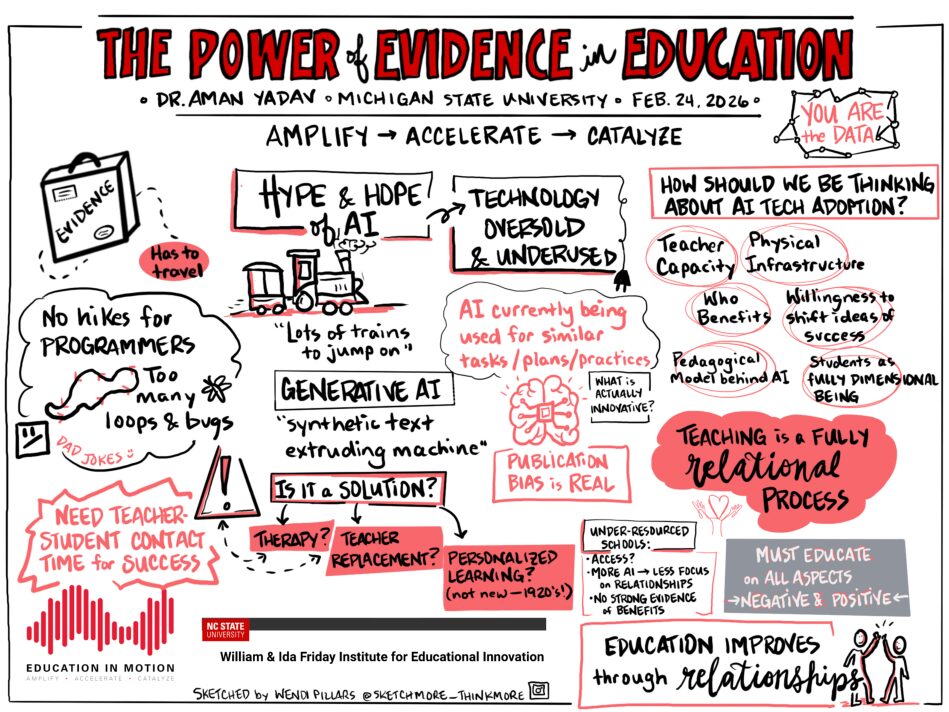
The program opened with a keynote address from Aman Yadav, who has done research in his role as professor at Michigan State University related to artificial intelligence (AI) in education.
While researching AI use among educators in Michigan, many educators told Yadav that they see AI as a solution for less burnt-out staff members. The professor explained how previous research shows technology did not make a difference without any shift in classroom approaches or strong teacher-student relations.
In his remarks, Yadav said that there is still a lot of bias against publishing research that shows AI not having a positive impact on education. When looking at the research corrected for this bias, there is no significant difference, the professor said.
Another point Yadav made was that school districts that already have a lot of resources are not leaning as hard into AI compared to others because their parents are pushing for their students to have less screen time.
“My fear, in the long run, based on what we know about technology that I’ve shared here, is that well-resourced schools will continue to invest in teacher student relationships,” Yadav said. “Under-resourced schools would always fall back on technology.”
Government and industry connections
The summit highlighted collaboration, offering examples of this were with presentations from government and education technology industry partners.
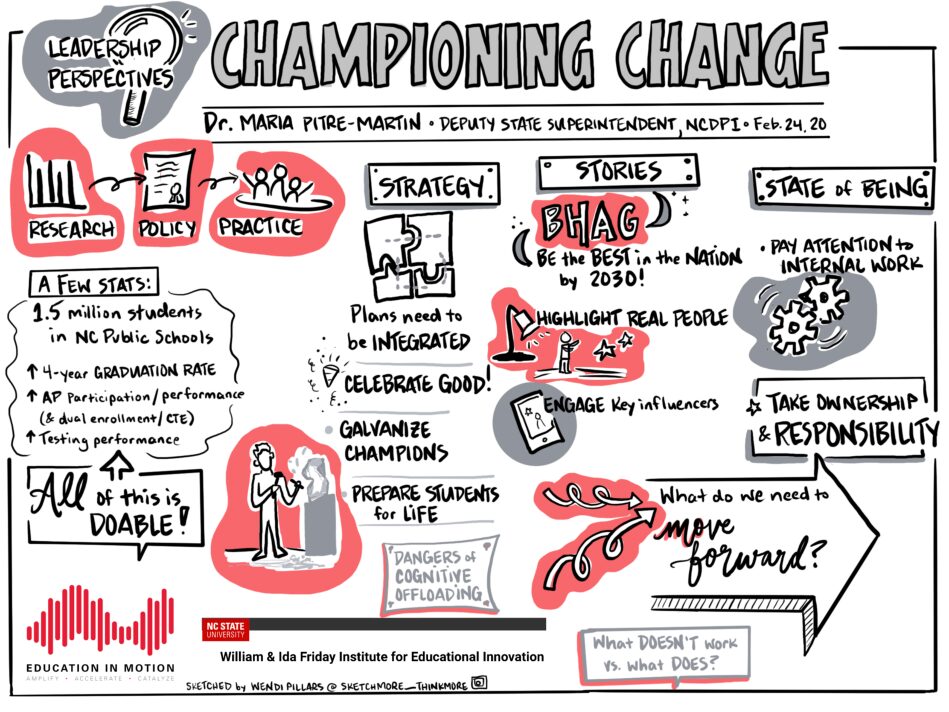
Marie Pitre-Martin, deputy superintendent of North Carolina Department of Public Instruction (DPI), shared a few words about how strategic planning and leadership impact innovation. One point made was that a leader can not be all things for all people.
“So I bring back to you the proposition that not only is strategy important, but the stories and the narratives around our work and paying attention to our internal organizations and state of being are all significant to help us create change,” Martin said.
Maggie Woods, director of the NC Office of Digital Opportunity, said one key to collaboration is a shared definition of success.
“We all want people in North Carolina to be able to afford the internet, have access to computers and devices, and be able to have the skills to use them, right? That is our goal as a group of people,” Woods said.
The Friday Institute also invited representatives from the education technology industry. Nari Carter shared insights she gained as a researcher with Imagine Learning. The presentation talked about DPI’s Portrait of a Graduate and technology influences workforce dynamics.
“North Carolina is one that’s leading out there with really great work, because North Carolina not only has specified the competencies, they’ve also created the ‘I Can’ statements of what it looks like for different grade bands, and then they have the performance tasks as well,” Carter said.
Read more



Forming connections and moving forward
Attendees were given many opportunities to connect with each other and brainstorm ideas. One portion was spent discussing signals, patterns, and trends they were seeing in their respective roles. Many of those conversations centered around school performance grades and priorities that are generally valued in an education system.
Big questions the groups had that were shared out at the summit included, “How can we make schools connected and joyful places for teachers and the students that depend on them?”
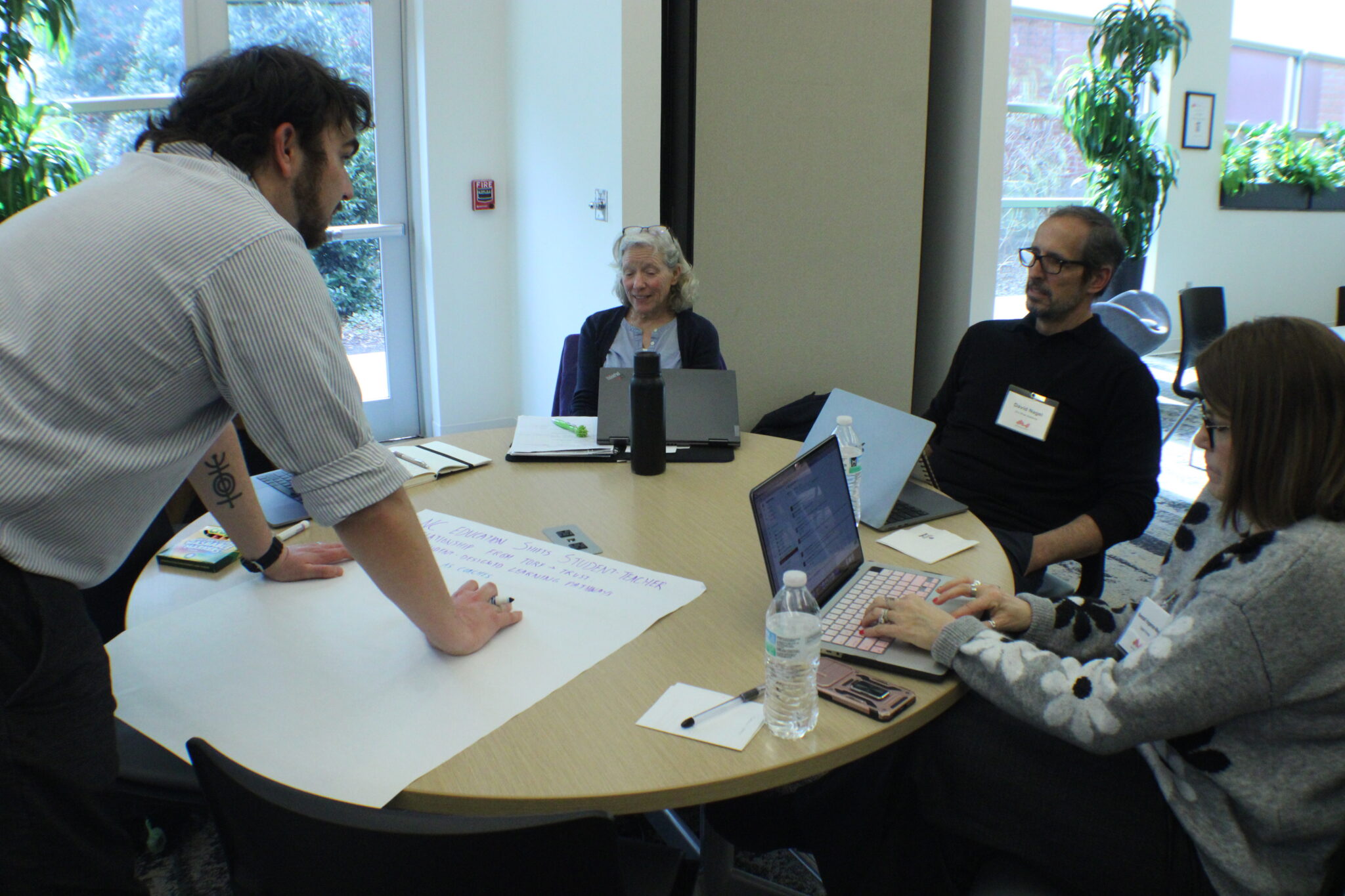
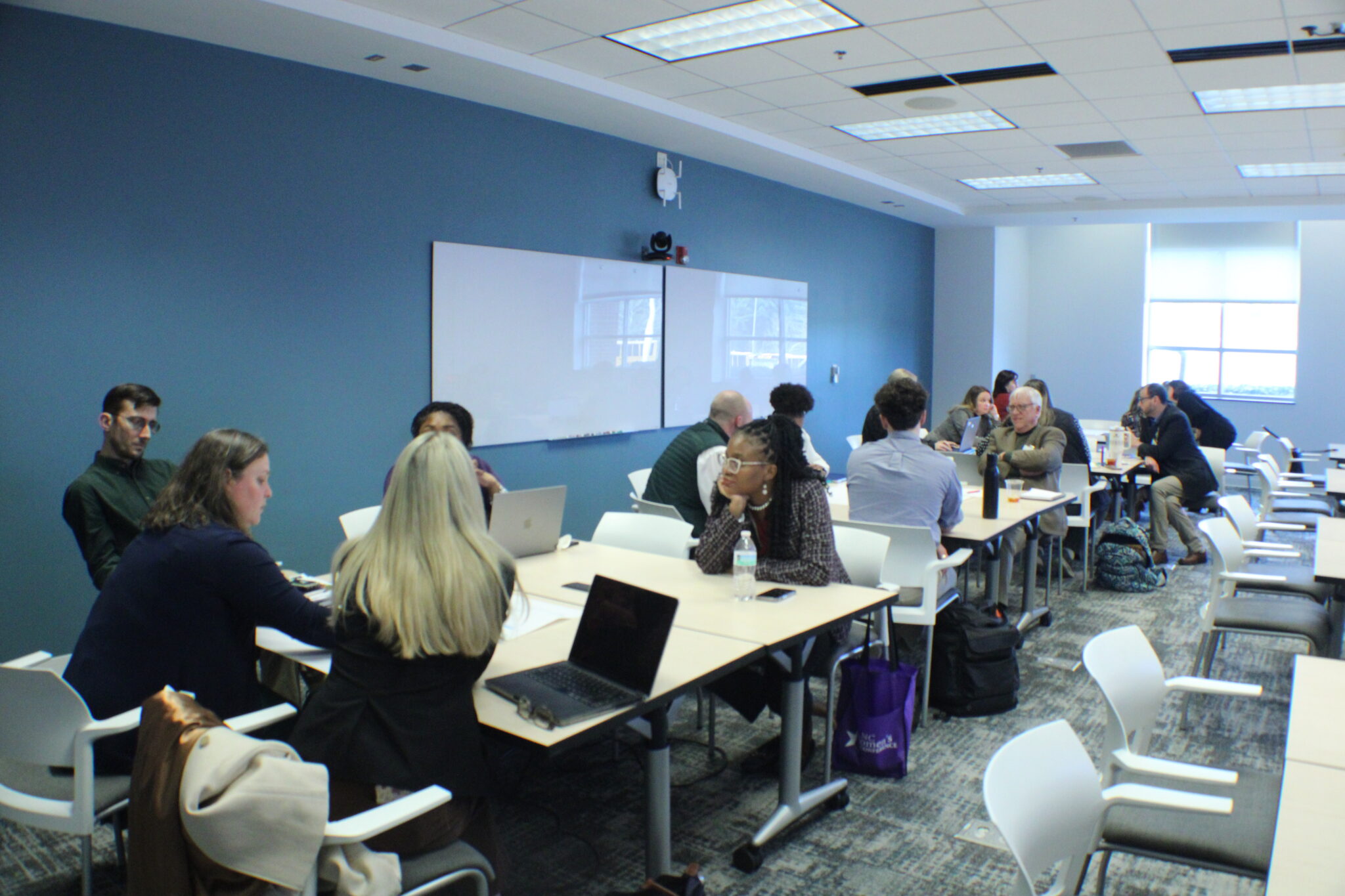

The closing breakout sessions were focused on post-graduation workforce pathways, AI, and policy. At the end of the conference, attendees were asked to brainstorm three “headlines” they would like to see in the future when it comes to education and innovation. Some examples attendees gave were “NC education shifts student-teacher relationship from turf to trust,” and “Students and teachers united.”
Emma Braaten, who planned the summit and serves as the Friday Institute’s digital learning director, said she expects there to be ripple effects from the event due to the connections attendees made. Sometimes the message of the value of good teaching gets lost in negative headlines about technology, she said, but connection can help inspire and motivate educators in the moving forward.
“Good instruction matters. Teachers matter. School leadership matters,” Braaten said. “And at the end of the day, we can all agree that we really want to have successful, happy, productive students.”