Skip to content
EdNC. Essential education news. Important stories. Your voice.

Search ednc.org

An exercise to understand ACEs: Emily’s backpack

Share this story

Our republishing policy

EdNC is a nonprofit, online, daily, independent newspaper. All of EdNC’s content is open source and free to republish. Please use the following guidelines when republishing our content.
  • Our content must be republished in full. If your organization uses a paywall, the content must be provided in full for free.
  • Credit our team by including both the author name and EdNC.org in the byline. Example: Alex Granados, EdNC.org.
  • If republishing the story online, please provide a link to EdNC.org or a link to the original article in either the byline or credit line.
  • The original headline of the article must be used. Allowable edits to the content of the piece include changes to meet your publication’s style guide and references to dates (i.e. this week changed to last week). Other edits must be approved by emailing Hannah Vinueza McClellan at [email protected].
  • Photos and other multimedia elements (audio, video, etc.) may not be republished without prior permission. Please email Hannah Vinueza McClellan at [email protected] if you are interested in sharing a multimedia element.
  • If you republish a story, please let us know by emailing Hannah Vinueza McClellan at [email protected].

Please email Hannah Vinueza McClellan at [email protected] if you have any questions. This work is licensed under a Creative Commons Attribution-NoDerivatives 4.0 International License.

Canonical tag

Please include the following canonical tag in the <head> of the republished story.

<link rel="canonical" href="https://www.ednc.org/exercise-understand-aces-emilys-backpack/">

HTML content

This includes the title, byline, content, and tracking pixel required for republishing this story.

This story is tagged:

This exercise was developed to help people understand adverse childhood experiences (ACEs), and the need for trauma-sensitive learning environments.

Instructions

You will need a backpack, a can of food, a drawing of a dad, a medicine bottle, preschool level books, and a pillow. You will also need a pencil box, crayons, notebooks, and a lunchbox. Print the script cards below.

Place each script card on its item. These items should be placed under random chairs, and the person in that chair will be asked to read the card, bring up the item, and place it in Emily’s backpack. 

Choose a volunteer to be Emily. Emily is silent throughout the exercise.

The presenter reads, “My name is Emily. I am 4 years old, and I go to Kindergarten in a rural county in North Carolina. Let’s talk about some stuff I take with me to school every day.”
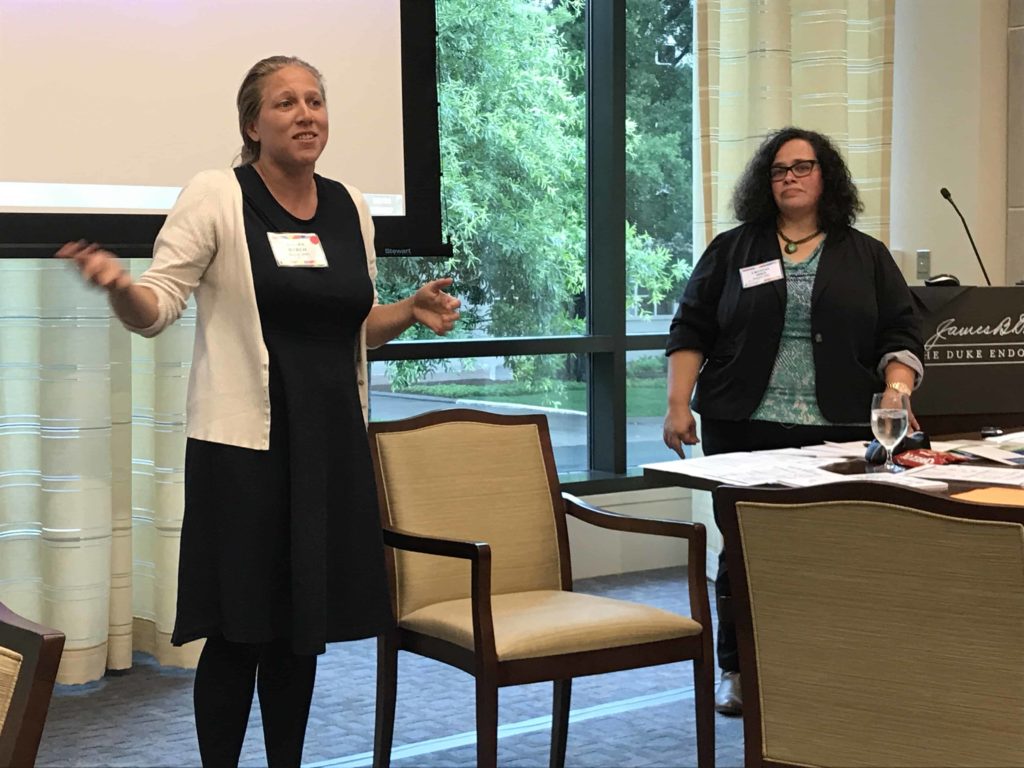
Crystal Imes and Laura Byrch lead this exercise for a conference at The Duke Endowment. Photo Credit: Mebane Rash/EdNC

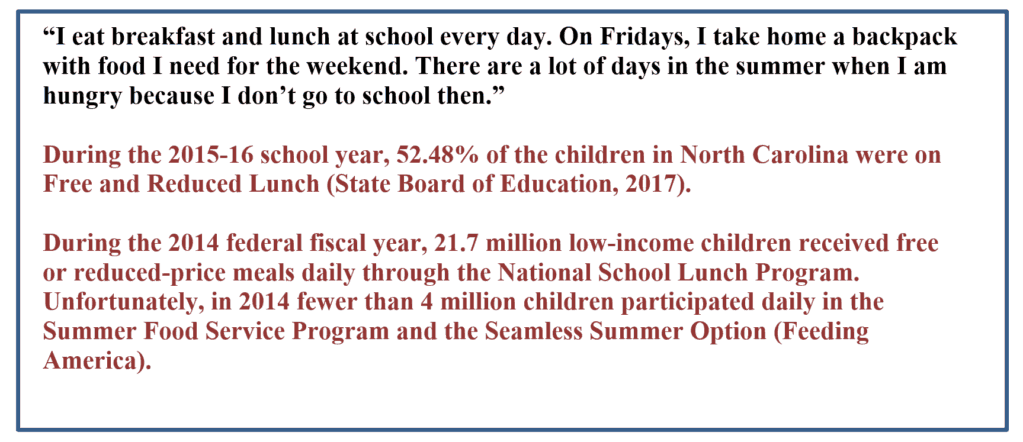
Food insecurity

Item: Can of food


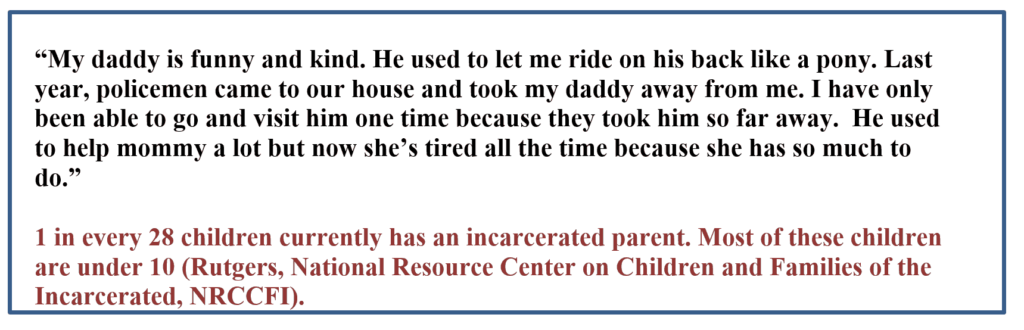
Parental incarceration

Item: Drawing of a Dad
 

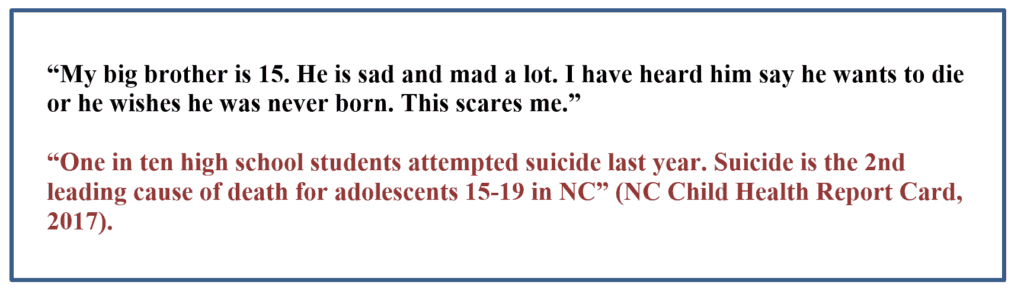
Adolescent mental health

Item: Medicine bottle
 

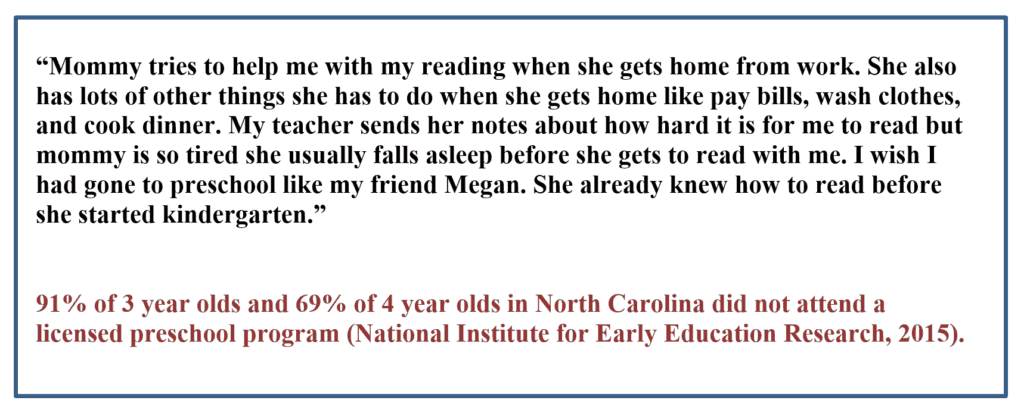
Access to preschool and parental engagement

Item: Preschool books
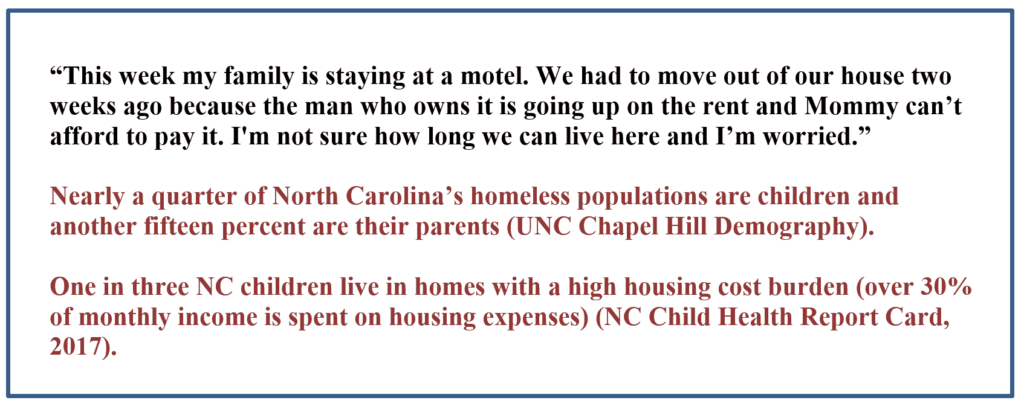
Inadequate housing

Item: Pillow
Conclusion

The presenter says:

Can everyone see Emily’s backpack?

How full is it?

Is there room inside of her backpack for the items most kindergartners would take to school such as pencil box, crayons, notebooks, and a lunchbox?

Have someone in the audience try to add these into the backpack.

The presenter says:

Though Emily may not literally take this backpack filled with these things to school everyday, she does carry it with her everywhere she goes in her heart, mind, and spirit.

How distracting to the learning process do you believe these issues would be for Emily, her teacher, the other children in her class?

Please learn more about ACEs and the need for trauma-sensitive learning environments.

You are the voice for all of our Emily’s.