
Equal access to fun: Inclusive field trips and extracurricular activities
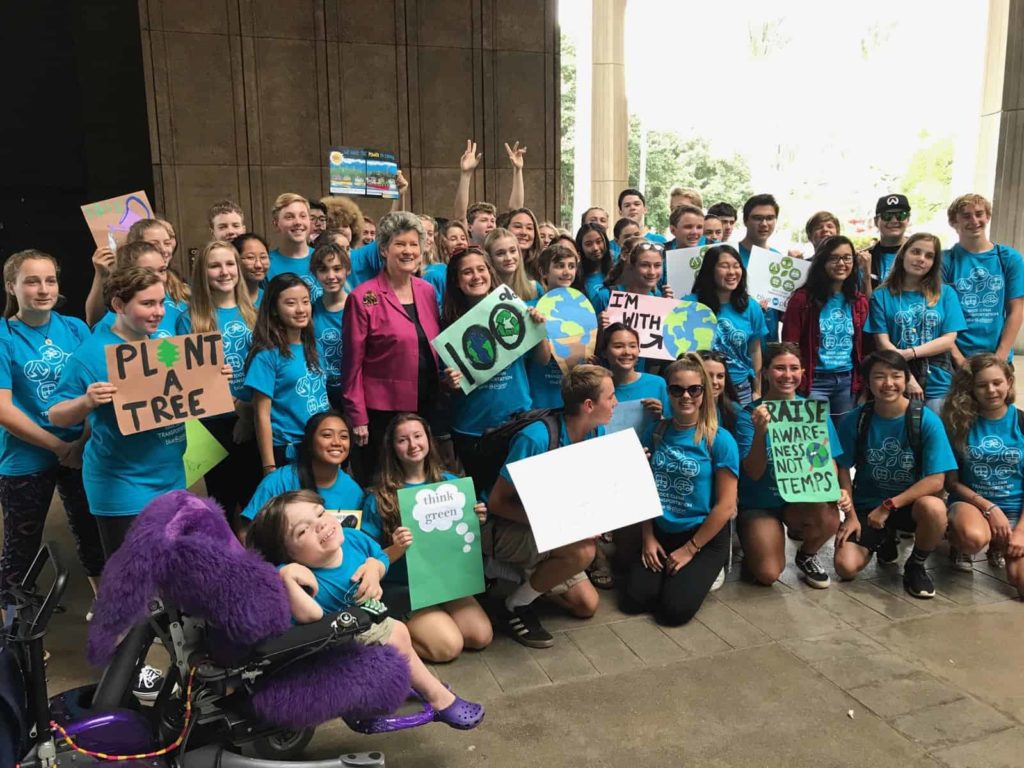

For many students, the best part of the school day is not the time they are in the classroom. It may be the early mornings they spend at swim practice, the afternoons working on the yearbook, or a field trip to the Capitol. Students with disabilities must be included in all the fun.
Field Trips
We can all remember the excitement and anticipation of a school field trip. Ensuring that students with disabilities are invited to and included in field trips is critical to providing them equal access to the full educational experience. Understandably, inclusive field trips may present planning challenges for school staff, but schools must meet those challenges.
Schools must treat a field trip as an extension of the school day. If school staff assist a student during the day, and similar assistance is needed so the student can participate in the field trip, arrangements should be made for school staff to provide that assistance. For example, if the school provides a student with a one-on-one at school, the student should be provided a one-on-one if needed to participate in a field trip. If the school provides a sign language interpreter at school, the student should be provided an interpreter on the field trip.
Schools cannot require parents to attend a field trip as a condition of their child being able to attend. If a parent expresses interest in accompanying their child on the field trip to facilitate access to the activity, schools should first advise the parent that the school will provide all needed assistance. If the parent ultimately chooses to accompany the student, the school must cover the parent’s travel expenses to the extent that it would cover them for school staff. If school staff supervising the field trip are not comfortable with or do not have experience supervising an inclusive field trip, special education staff should be tapped to provide any necessary training to their colleagues.
Some school systems explicitly exclude children with disabilities from field trips — for example, not inviting students in the self-contained sixth grade classroom on the annual sixth grade field trip to Washington, D.C. These policies must be reexamined as they appear discriminatory on their face.
Extracurriculars
Some students with disabilities such as Dyslexia and other learning disabilities may struggle in the classroom but excel on the playing field without any accommodations. Other student athletes may require auxiliary aids and services or other accommodations to participate in extracurricular sports. For example, deaf students may need an interpreter or other visual signals to communicate information on the field.
Students with physical impairments who require adaptive equipment to participate, such as students who use wheelchairs, should be evaluated on a case-by-case basis to determine if they can participate on the regular team or need to be provided an opportunity to play an adaptive or modified version of the sport, such as wheelchair basketball. It should not be assumed that students with mobility impairments or who use assistive equipment cannot participate in sports. Tatyana McFadden, a wheelchair user and highly accomplished Paralympic athlete, famously fought for and won the right to participate on her high school track team. More of her story and her impressive athletic career can be found here.
A 2013 “Dear Colleague” letter from the Department of Education discusses schools’ obligations to accommodate students in extracurricular sports and create new opportunities for participation by students with disabilities in detail. You can find this letter here.
Also, schools should provide accommodations to students with disabilities as necessary for them to participate in non-athletic extracurricular activities, such as debate or Odyssey of the Mind.
Planning Ahead
Parents, students, and schools should discuss the steps the school will take to include students in field trips and extracurricular activities during Individualized Education Program (IEP) and 504 Plan meetings. If schools must provide accommodations, such as interpreters or aides, to enable the student to participate, those items should be noted in the IEP and/or 504 plan.
Field trips and extracurricular activities (despite the name) are not extra. They are essential parts of the school experience, and excluding students with disabilities violates disability rights laws. Field trips have educational value, but they also help students learn responsibility and social skills. Extracurricular activities provide opportunities for leadership development and physical and mental growth. Students with disabilities must not be left out of