
Employers and colleges are working together in unprecedented ways to create lasting good jobs in western NC

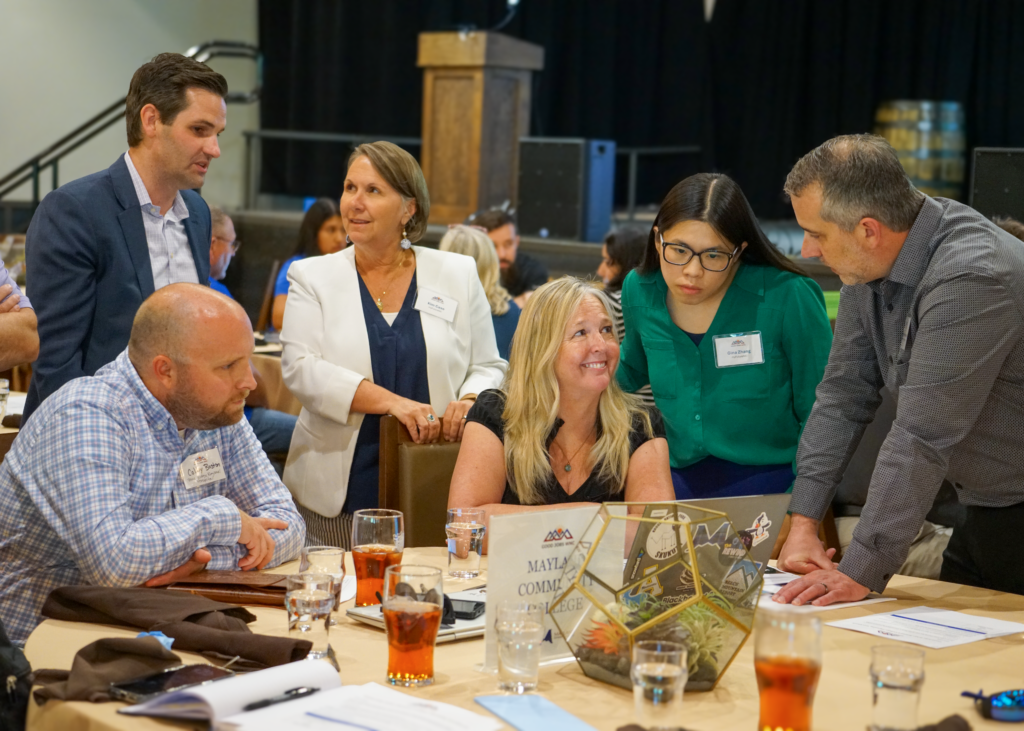
Imagine leaders from community colleges and local industries meeting in person to talk about the demand for good jobs locally, armed with high-quality labor market intelligence, and the opportunity to then submit a grant to build the pipelines together that will lead to real people in western North Carolina securing a good job.
Good Jobs Western North Carolina (Good Jobs WNC), announced in April 2026, is moving forward with new investments and local commitments from employers to do just that. In late May, 30 employers and representatives from 11 community colleges met for Good Jobs WNC’s latest workshop. Designed to create space for employers and community colleges to connect and strategically plan in real time, this latest workshop resulted in progress toward their shared goals.
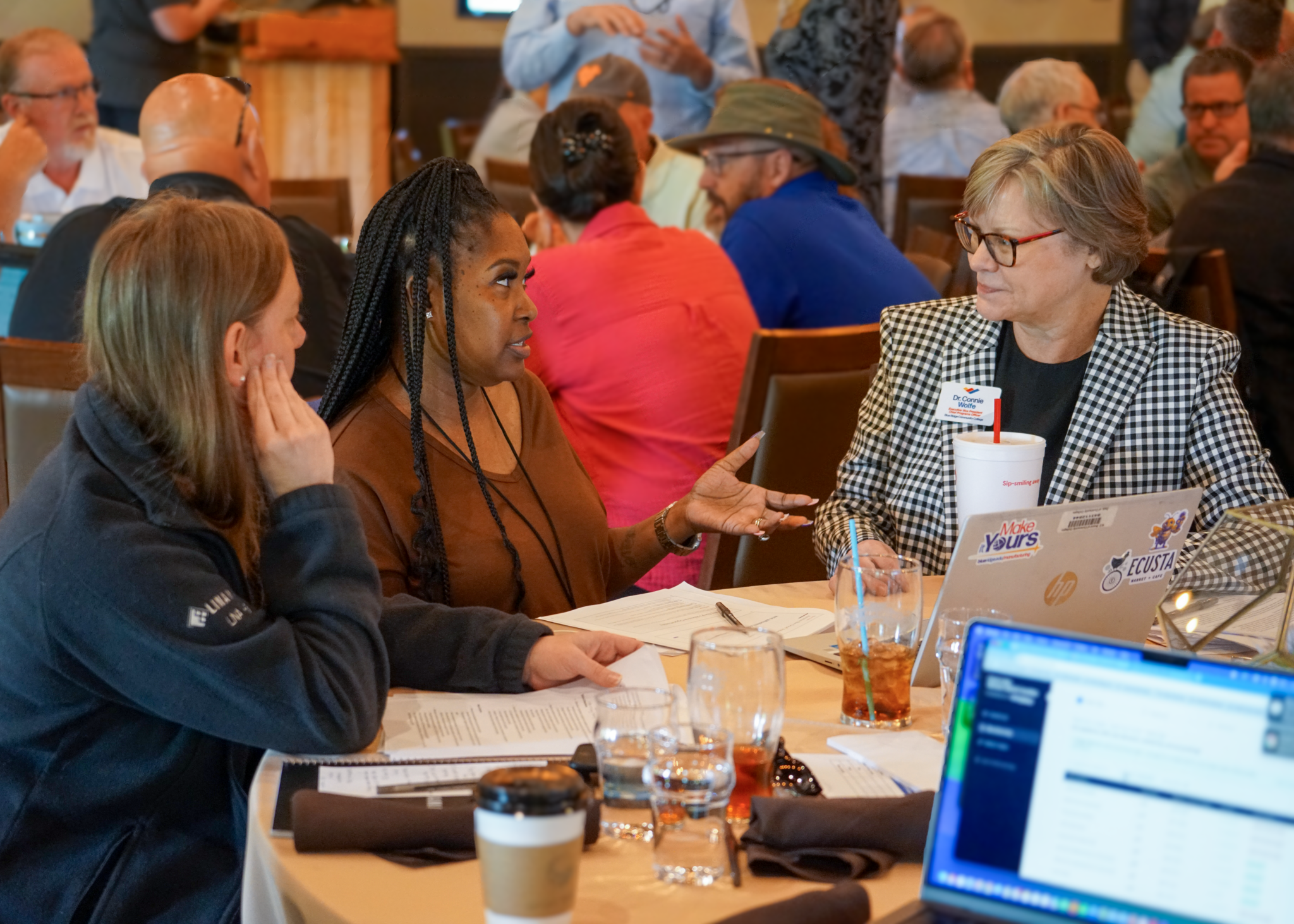
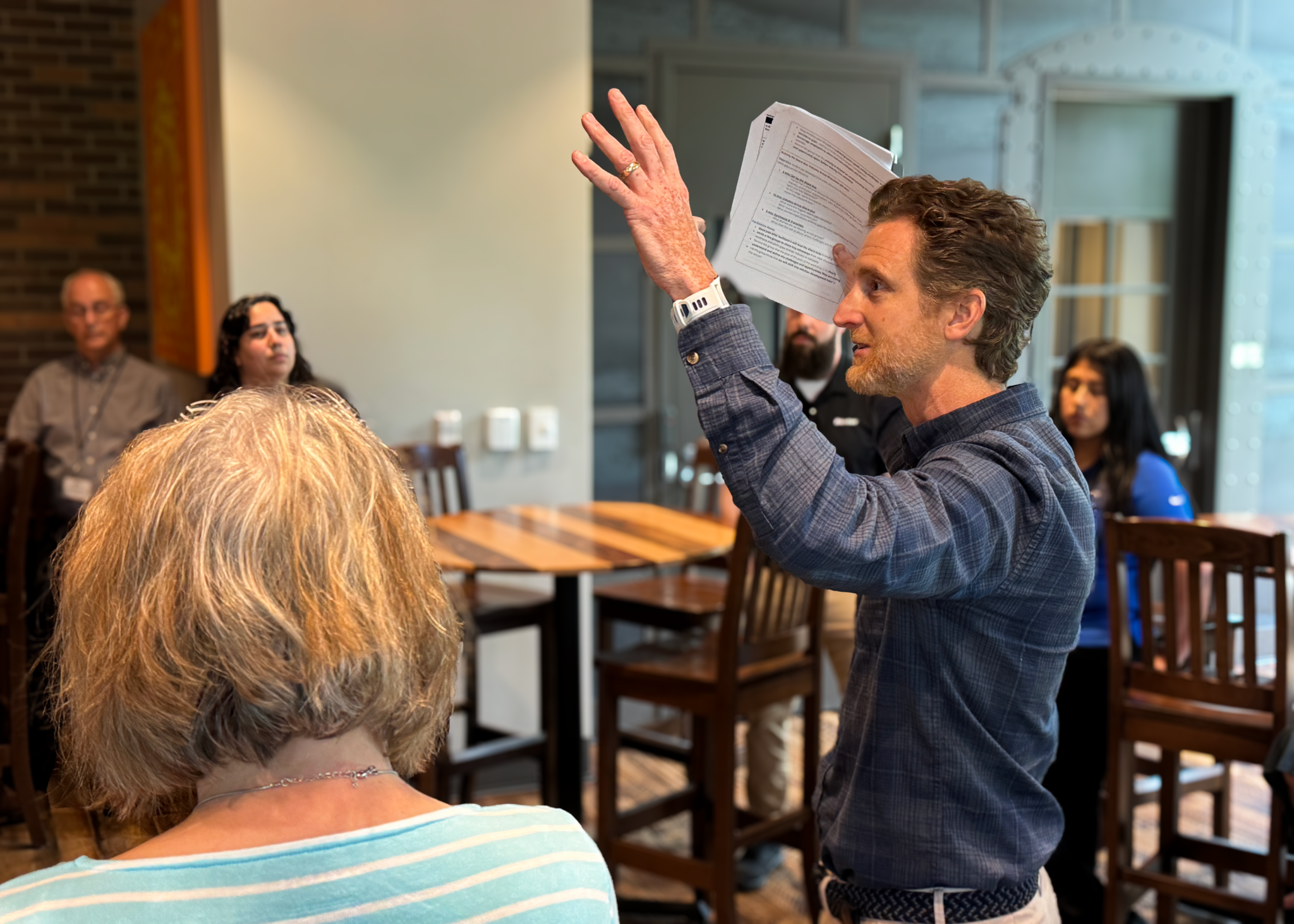
“I think what’s exciting for all of us and for the colleges is that you’re seeing exactly what we thought was possible, which is an employer and college co-designing a process that will lead to good jobs and good job outcomes for more people in their community in the long term,” said Nation Hahn, managing director at the John M. Belk Endowment.
Building on previous workshops, employers and colleges worked together to validate workforce demand and talent needs, co-develop program and partnership approaches aligned to employer input, and advance implementation planning, including goals and outcomes. Employers were able to share their hiring needs, including what kind of occupations they are looking for and the skills needed for those jobs.
The colleges were able to learn how many jobs the employers can offer over the next six months, year, two years, and in the long term. Together, the employers and colleges used data to validate their goals and outcomes.
Good Jobs WNC is a locally led, regionally coordinated, and nationally connected coalition that is bringing together 11 community colleges, employers, foundations, and regional partners around a shared goal of connecting 1,200 residents to good jobs over the next three years in high-demand sectors including health care, manufacturing, and the skilled trades, serving as a prototype for what’s possible statewide and beyond.
“We are aligning our insights here to get clearer on the talent gaps and demand that exist in the region and get some direct input on the training and the pathways needed,” said Zach Barricklow, associate vice president for strategic and rural innovation for the North Carolina Community College System.
 Sign up for Awake58, our newsletter on all things community college.
Data informed planning
The Good Jobs WNC Data Hub was built for Good Jobs WNC by Julius Education, a workforce technology company focused on creating labor market intelligence in partnership with education, industry, government, and regional coalitions. The data hub is a labor market tool that aligns employer demand with local training pipelines.
The data hub shows:
- Hiring employers: Which companies are hiring for key roles and at what scale.
- Career pathways: How roles connect across skill levels and industries.
- Talent supply: How local community college completions compare to employer demand.
The data hub matters for employers because it is able to show the alignment between employers and education providers by clarifying current and emerging talent needs, highlighting opportunities to shape training programs, identifying gaps in the local talent pipeline, and supporting more targeted and effective employer engagement.
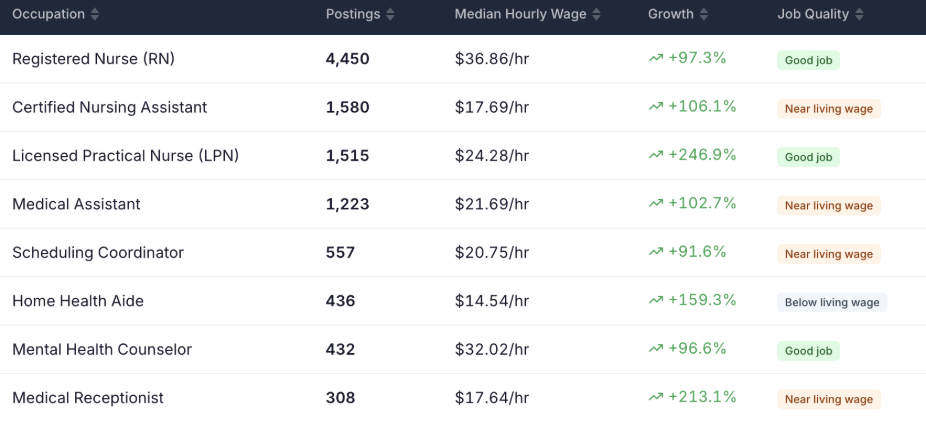
The data was aggregated from a variety of sources, including the Integrated Postsecondary Education Data System (IPEDS) 2024 reporting year, the Bureau of Labor Statistics (BLS), and the MIT Living Wage Calculator, which highlights the different cost of living implications across the region.
“There’s near-term work and long-term work, and the near-term work is for the colleges to complete a proposal by selecting a sector and then mapping that sector to employer needs and employer data by the end of June, with awards going out in late summer,” said Hahn. “Each college has selected something in skilled trades, advanced manufacturing, or health care. What we’ve seen this week is that some colleges are actually pivoting in real time as they validate opportunities with employers.”
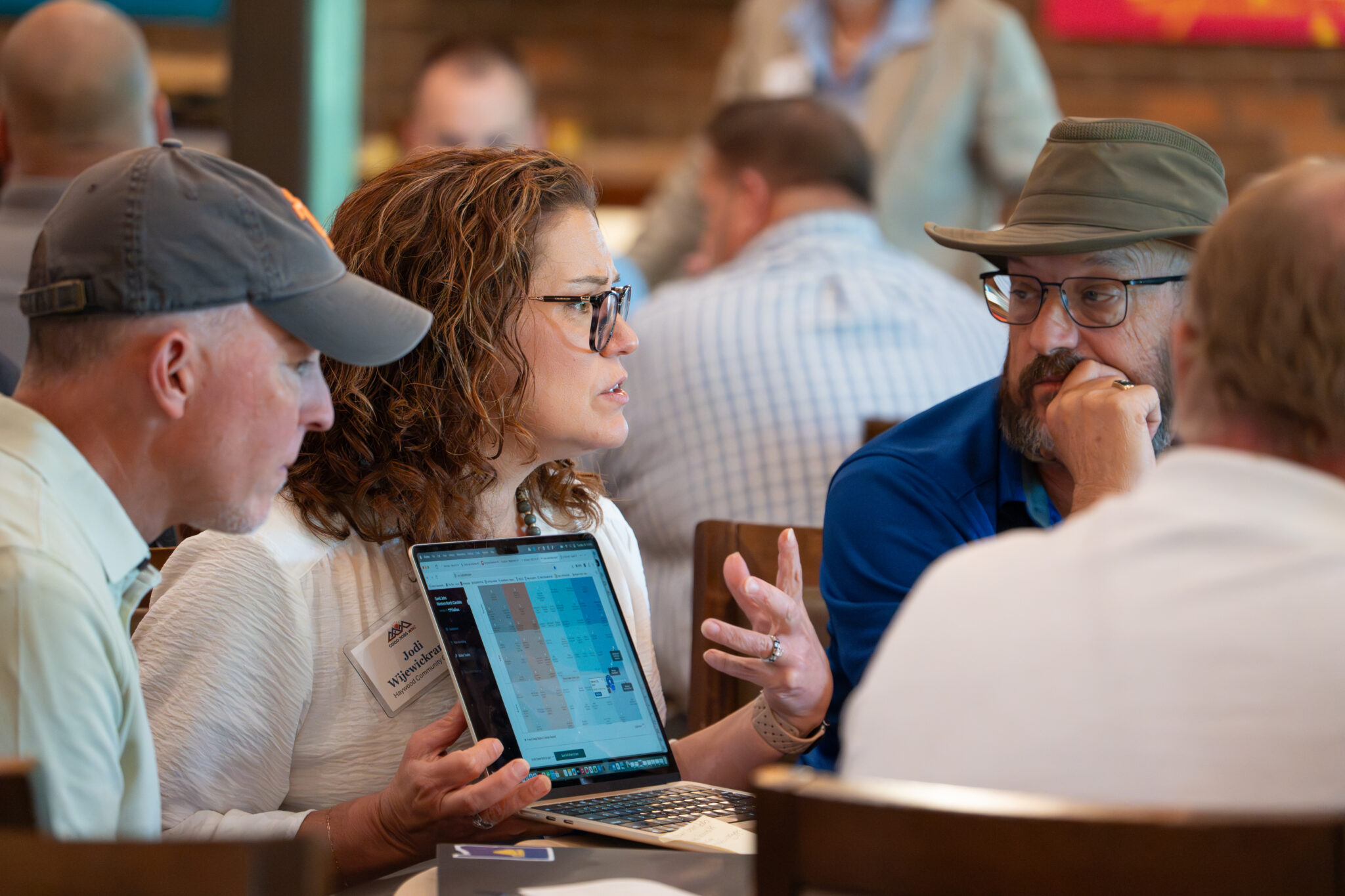
Haywood Community College is one of the colleges that decided to pivot from its initial sector choice. Originally, they planned to have health care as their target sector. However, after more research and conversation with employers, they decided to switch their target sector to skilled trades.
“It’s a very hopeful and forward-looking conversation. We have had the opportunity to revisit and address some issues, and look at how we’ve engaged our involved employers in the past. I think we’ve entered a lot of conversations where we’re the college sharing information just directly with them, and then we save some time at the end for them to give feedback,” said Shelley White, president of Haywood Community College.
I think these conversations have really flipped that script and allowed the employers to really lead the conversation with their needs and challenges, and then we are there to listen and to respond in how we work together on developing programming.
— Shelley White, president of Haywood Community College
Funding news
There is one more workshop before planning applications from the community colleges are due at the end of June. The applications will summarize the key elements of the college’s plan, including their target sector and occupations, program approaches, employer partners, and intended outcomes.
Community colleges may apply for up to $300,000, which can be allocated across one or two years.
As the colleges move forward with their planning applications, several foundations have announced their commitment to invest in Good Jobs WNC. At the workshop, the WNC Bridge Foundation shared that they will invest $50,000. The AMY Wellness Foundation has also committed up to $300,000 for Mayland Community College, one of the 11 colleges participating in Good Jobs WNC.
The Good Jobs WNC steering committee has received several commitments that will be announced soon and continues to actively fundraise to support the colleges plans, as well as to support the mid- and long-term work. The John M. Belk Endowment and The Leon Levine Foundation were the coalition’s earliest investors.
Editor’s Note: The John M. Belk Endowment supports EdNC’s work.