
ECU summer camp merges art and STEM

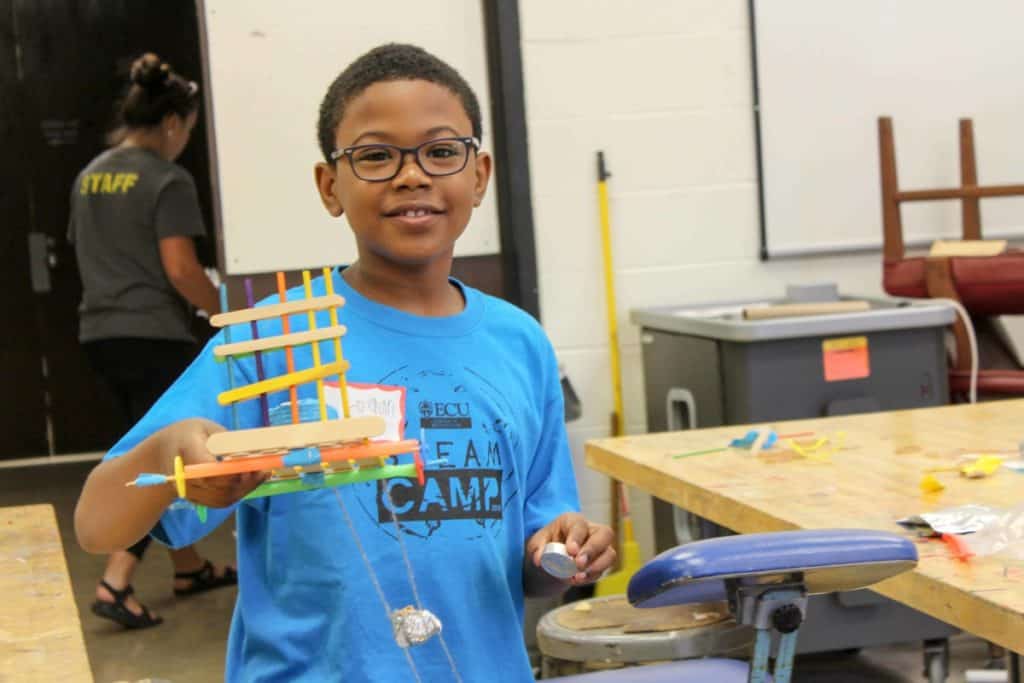
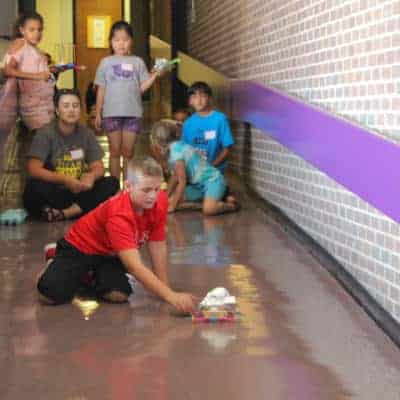
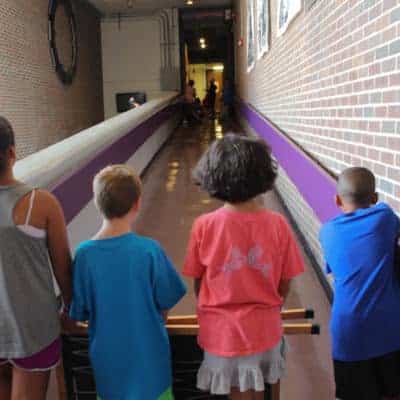
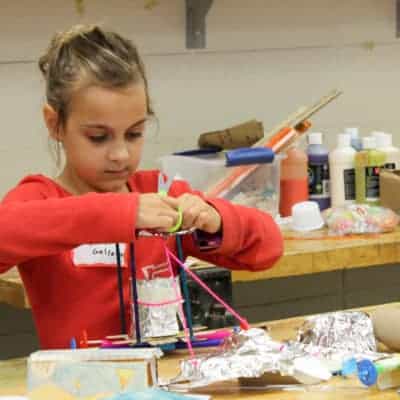
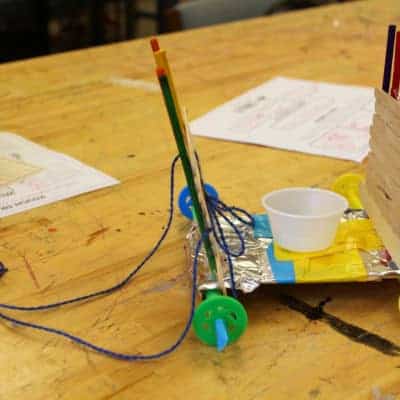
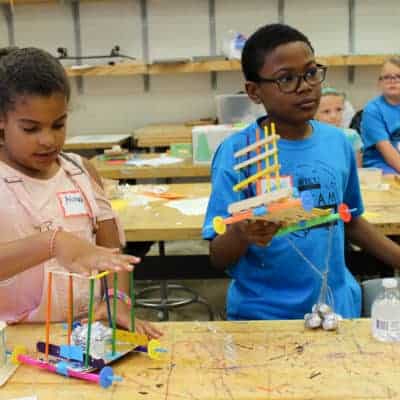
A group of third through fifth graders lined up in front of camp counselor Sydney Gilgo with their egg crash test carts in hand. They were ready to test their creations — if successful, the carts would roll down a ramp while keeping the egg from falling and breaking.
“It’s really cool to see them think outside of the box even if they’re not sure if it’s going to work or not,” said Shannon Briles, assistant camp counselor.

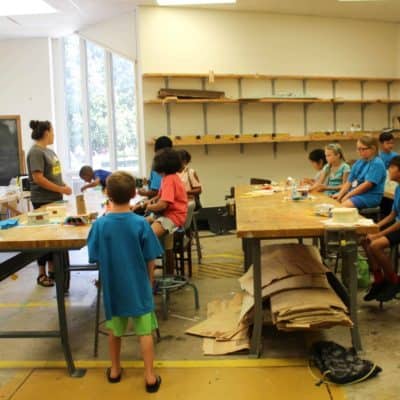
A total of 83 students from grades K-12 participated in the STEAM Summer Camp, a one week (July 23-27) camp at East Carolina University’s (ECU) School of Art and Design. The camp, having wrapped its fifth summer, is run by ECU-affiliated counselors.
“It was really designed as an opportunity for our art education majors to get additional hands-on experience working with the children in the community as they trained to be art teachers,” said Robert Quinn, camp director and associate professor of art education at ECU.
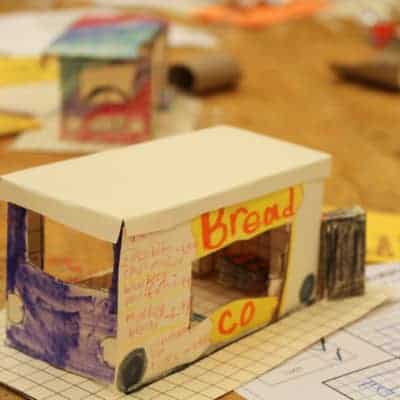
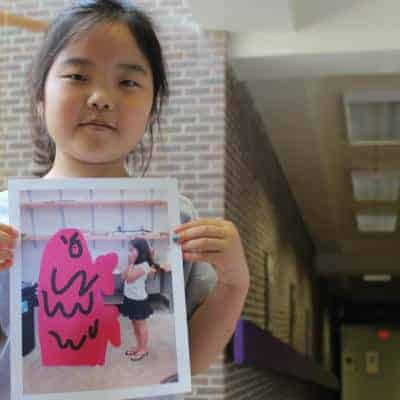
The program is called STEAM (science, technology, engineering, art, and math) for its unique combination of art and science education. Earlier in the week, the third through fifth grade cohort took on a physics activity, combining pendulums and paint to create pendulum paintings. In another project, students incorporated math as they created food trucks out of blue prints, deciding how many units tall each piece of their food truck would be. For their technology-focused camp day, the students worked on animations on iPads.
“They took pictures of themselves and actually used animations to animate a little monster,” said Briles. “They have pictures of them that they got to take home with them.”
“It’s really cool to see that they understand that science does go with art, and that’s not a thing that you get usually as a young person,” said Briles, who graduated from ECU with a degree in science education and is now studying geology.
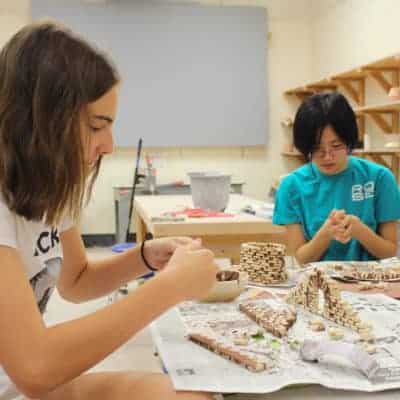
Down the hall, a group of high schoolers worked on a ceramics project under the guidance of camp counselor Rachel Clark. Clark, who has a master’s degree in ceramics, worked to give students insight on the entire building process, down to the clay.
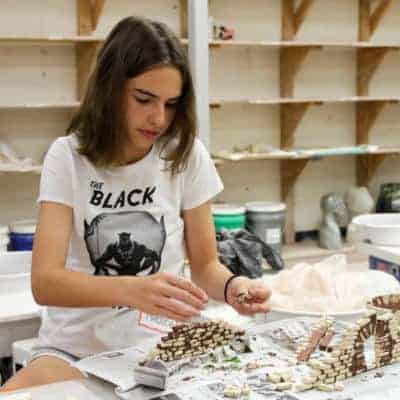
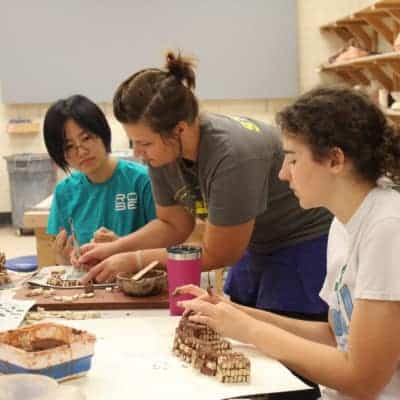
“When I moved here I was really fascinated with the bricks that are used locally. The bricks themselves tell this really interesting story of process,” said Clark. “If you look at them, they’ll have different marks where the fire hit it in a specific way. You can tell where they were in the kiln and what they’re made out of, and you can deduct what part of eastern North Carolina they came from because we have a really wide variety of clays.”
The students used a white clay throughout the week.
“Typically, clays around here are dark red,” Clark explained.
In addition to learning about clays, Clark took students on a field trip around historic Greenville to learn more of the geologic history and see what kind of architecture and building materials were used.
Back at ECU’s Jenkins Fine Arts Center, students used Adobe Illustrator to layout their press molds and create mini bricks for their building projects. Clark took a more hands-off approach and allowed students to apply math and science concepts they had already learned in school to their creations.
“I know they’re going to be looking at college soon,” said Clark. “So I stepped back, and I gave them the tools to figure this out.”
Briles, who used to work with high school students, said she sees a difference between older and younger students in camp.
“In school, they get put into these classrooms that are about science, or into the classroom that’s about art,” said Briles. “I think it’s cool to see them actually engineer their way through an art project.”