
Two new surveys on family well-being
Early Bird readers, hello again. Newcomers, welcome! If you were forwarded this email, you can sign up here to receive it every two weeks, and join our conversation on issues facing North Carolina’s young children and those who support them. If you’re already a subscriber, please help us reach more people by sharing this with your friends and co-workers interested in early childhood education.
Since Early Bird was last in your inbox, I’ve been interested in research related to the relationship between work schedules and family well-being. There are two main reasons the topic is on my radar right now:
- The folks over at Capita released the results of their first Quarterly Insights from American Families survey, a nationwide look at stability predictability, and quality of life for households with children.
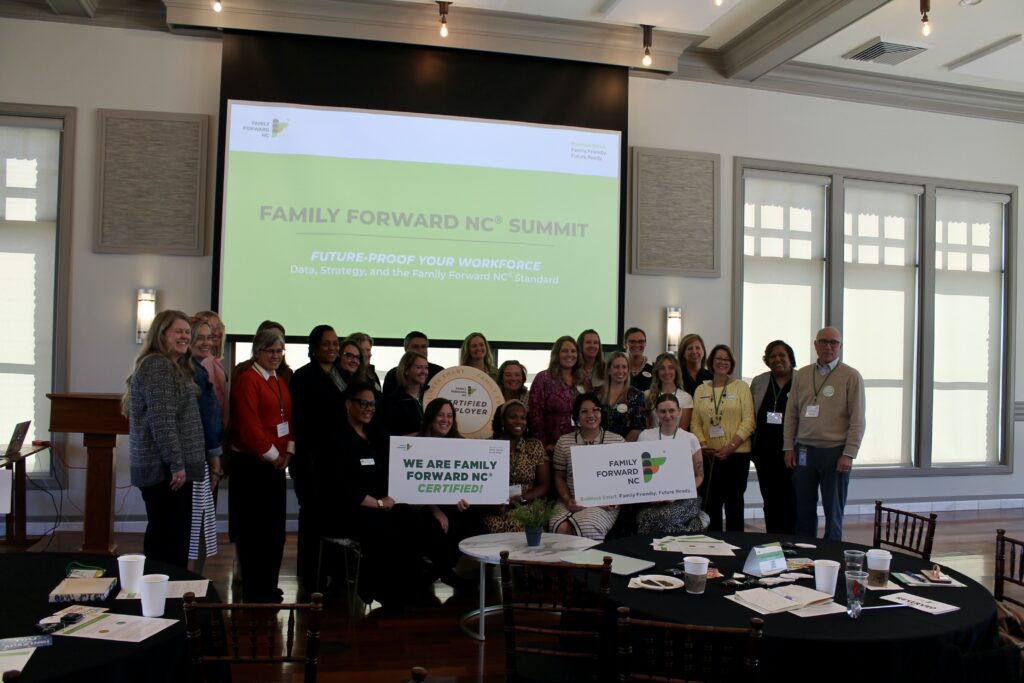
- I attended the Family Forward NC Summit, where the initiative released its first benchmarking report, based on an analysis of family-friendly workplace policies and a survey of North Carolina workers. (Look for EdNC’s article early this week!)
Something that stood out to me from both reports was how important it is for working families to have predictable work schedules.
- In the last month, 25% of respondents to the Quarterly Insights survey said they had a shift canceled, shortened, or extended with less than 24 hours’ notice. The same percentage were required to be “on call” — available without guaranteed hours — during that period.
- Of the nearly 8,000 employees in family-friendly workplaces across North Carolina, 75% reported being satisfied with the predictability of scheduling at their workplace, leaving 25% feeling neutral, dissatisfied, or unsure of their workplaces’ policies.
The scheduling demands of parenthood present challenges to all working families, even for parents working 40-hour weeks at 9-to-5 jobs. In these households, the scheduling conflicts themselves can often be predicted and therefore navigated.
But in households where parents work jobs with less predictable schedules, families simply cannot make plans for how to balance the demands of work and parenting. This presents a slew of challenges, particularly when it comes to child care arrangements. And this can increase stress, an emotion that babies and toddlers pick up on.
A new working paper from Harvard’s Center on the Developing Child outlines the importance of stability in the developmental environment, both during pregnancy and for babies and young children. During this time, brains are “especially sensitive to influences in their developmental environment — the full range of experiences and exposures where they live, grow, play, and learn.”
The authors point to predictability — including in work schedules — as key for establishing stability in the lives of working families and their earliest years.
Getting information about the lives of working families directly from the parents who live and work in our communities is an important first step on the path to developing policies that better support them, and their little learners. I’m grateful for the folks doing this work, and for the opportunity to count myself among them.

More from EdNC on early childhood
National survey of parents identifies barriers to family well-being
A new survey shows households with children under age 18 are experiencing economic strain, with parents suffering from depression, burnout, and hopelessness. Capita launched the new national survey, Quarterly Insights from American Families, in partnership with YouGov. The survey will...Brief | Looking back (and ahead) at the Trump Administration’s education priorities and actions
Throughout the last year, the Trump Administration consistently focused on education by advancing a range of priorities and actions largely unprecedented compared to any prior administration of either party. These actions have significantly shifted the current federal role in education...The big picture for little kids
News & Research
-
Challenging Tri-Share - From The Family Frontier
-
An Uneven Start 2026: Where Child Care Funding Falls Short — And Why It Matters - From ChildCare Aware of America
-
Child care centers tap retirees to fill staffing gaps - From The Hechinger Report
-
An Overlooked Factor of the ‘Southern Surge’: Investments in Early Childhood - From The 74 Million
-
Summary and Recommendations from the Early Childhood Education Workforce Well-Being Research-to-Policy Convening - From Buffett Early Childhood Institute
-
Early Life Stress Effects on Children's Biology, Behavior, and Health: Evidence, Mediators, Moderators, and Solutions - From Annual Reviews
Taking flight! Opportunities to spread your wings
Share Your Input: North Carolina Child Care Provider Survey & Focus Groups - From CandL: Care and Learning
Afton Partners is a national consulting firm that works with communities and state leaders to strengthen education and social systems so individuals, families, and communities can thrive. In partnership with the North Carolina Task Force on Child Care and Early Education, Afton is conducting a statewide Child Care and Early Education diagnostic to help inform strategies for expanding access to affordable, high-quality child care and early education.
As a provider, your perspective is essential to this work. This survey is designed to better understand the challenges early childhood education programs are facing across the state, including:
- Factors contributing to provider closures and future sustainability
- Barriers that prevent programs from operating at their licensed capacity
- How additional funding could best support providers and strengthen the child care system
We invite you to take 5–10 minutes to share your experiences and insights through this survey by April 3, 2026.
We also invite you to register for one of the following 90-minute focus group sessions to share additional insights about the challenges facing early childhood education programs.