Skittle Season
Early Bird readers, hello again. Newcomers, welcome! If you were forwarded this email, you can sign up here to receive it every two weeks, and join our conversation on issues facing North Carolina’s young children and those who support them. If you’re already a subscriber, please help us reach more people by sharing this with your friends and co-workers interested in early childhood education.
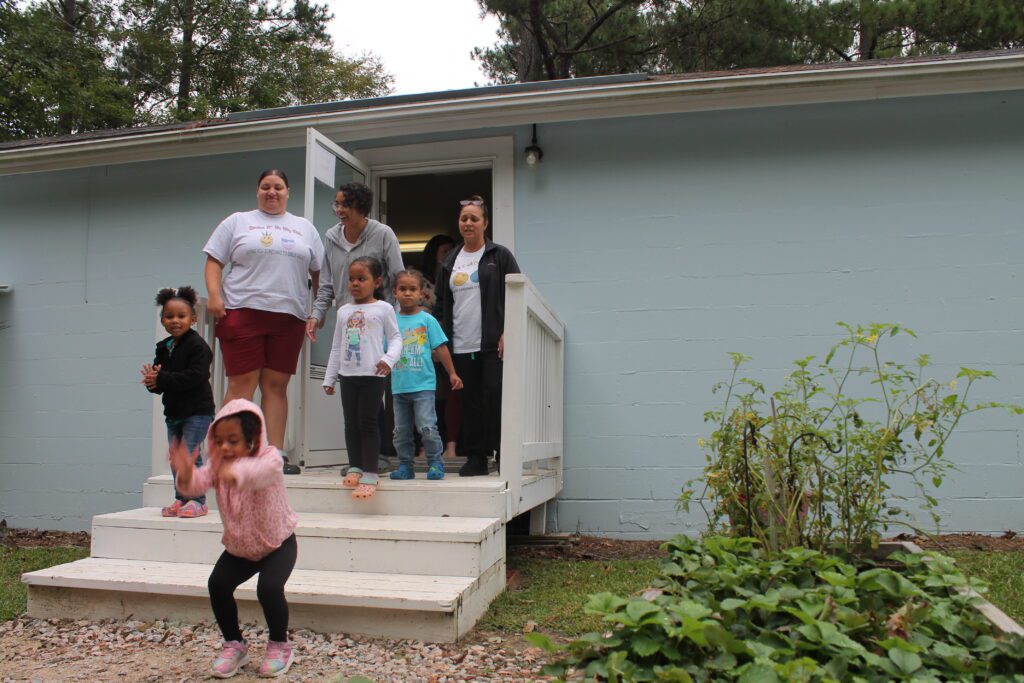
Spring is here again, and it’s my favorite season in North Carolina. I think of it as “Skittle Season,” because there are a few weeks each year in the Piedmont when the trees start budding in the colors of Tropical Skittles. I love the newness of spring, how it reminds us that harsh, unpredictable winters end, bringing warmth and light more reliably into our daily lives.
For folks tied into the traditional school calendar, it’s the end of the academic year, with summer break just around the corner — though we know many of our early childhood educators keep up their crucial work straight on through the year.
In this season of transition, I wanted to highlight a Perspective that EdNC published last week. It’s from middle school teacher Chanel Jones, who teaches social studies and science at Broadview Middle School in Burlington, N.C. She’s also the 2025 Burroughs Wellcome Fund Piedmont-Triad Region Teacher of the Year.
Ms. Jones has shared several Perspectives with EdNC over the last year, and they’ve made me think she’s the kind of teacher I aspired to be during my decade in the classroom.
Her most recent Perspective is about ending the school year with hope, and it hit me and other EdNC team members solidly in the feels. Here are a few snippets that I thought y’all would appreciate most:
- “Over the years, I have come to understand that teaching is not just about delivering content or preparing students for assessments. It is about recognizing the whole child and understanding that learning does not happen in isolation from the lives students are living.”
- “…when we give language to what our students are experiencing, we begin to shift how others see education. We help families, community members, and even policymakers understand that behind every data point is a child with a real and complex life.”
- “When students believe that someone in their classroom believes in them, they begin to believe in their own ability to grow.”
- “Academic growth is visible in grades, projects, and assessments. But the most meaningful growth is often something deeper — confidence, resilience, belief.”
- “As educators, we rarely see the full impact of our work in the moment. The seeds we plant may take years to fully bloom. But at the end of every school year, we are given a glimpse of what hope can do.”
Whether you’re a parent, a family member, or an early childhood educator, I hope you’re able to glimpse the potential of the seeds you’re planting this season.
More from EdNC on early childhood
Family Forward NC® Summit celebrates family-friendly business practices, highlights need for child care support
More than 100 business leaders from across the state came together in High Point on Wednesday to recognize the family-friendly policies they’ve already adopted, and learn more ways they can support working families. The event was organized by Family Forward...The big picture for little kids
Legislative Updates
April 21 is the official start of the legislative short session. State legislators will convene to make budget tweaks and potential policy changes. Before the next edition of Early Bird, look out for an a preview from Liz on early childhood advocates’ priorities, including funding for the child care subsidy program.
The program covers a portion of the cost of child care for low-income working parents. The rates the state provides to child care programs serving children through subsidy vary widely across the state and, according to state officials, cover about half of the actual cost of providing child care.
In recent legislative sessions, advocates have pushed to even that funding out, asking legislators to provide a base rate, or a floor, for programs no matter where they are located. If programs previously received more than the floor, their funding would remain the same.
Some programs are struggling to keep their lights on and doors open due to an inability to pay competitive wages while other costs increase, and families cannot afford to pay higher tuition. Advocates’ aim with higher subsidy rates is to give child care providers serving low-income children more funding per-child, per-month — providing a bit of stabilization to the industry.
News & Research
-
Who Stays in the Early Childhood Programs? Stability Starts with the Workforce - From Buffett Early Childhood Institute
-
State Approaches to Supporting the Community-Based Doula Workforce - From Prenatal-to-3 Policy Impact Center
-
For Children Whose Parents Are Detained or Deported, a Scramble for Safe Harbors - From The 74 Million
-
Following the Funding: Mapping State-by-State Public ECE Investments by Source - From Center for Early Learning Funding Equity
-
Opinion: Mayor Mamdani, Sen. Warren: Everyone benefits from universal childcare - From USA Today
Taking flight! Opportunities to spread your wings
The Early Childhood Blueprint - From The Pre-K Priority
Where: Winston-Salem State University
When: Thursday, April 23, 2026
From the organizers: “Hosted by The Pre-K Priority, Family, Friend & Neighbor Child Care Alliance, Child Care Resource Center, and the BKE Department – Winston-Salem State University, this convening is designed for leaders who recognize that a community’s future is directly tied to how much we invest in our children early in life.
The health and stability of our economy is directly tied to the strength of our early childhood infrastructure. This summit is designed to help leaders learn, engage, and advocate for this critical ecosystem that supports our workforce and youngest learners.
Looking at both local and regional efforts, we will lean into national best practices and models, examine data, learn more about state-level response and advocacy efforts and build community that strengthens all of our efforts. You will leave not only informed on how child care impacts our regional economic development, but also with tools to advocate for the resources and policy shifts required to ensure better outcomes for every child in North Carolina.”
The Public Policy Crisis of ICE Detention Centers for Children and Families - From Center for Child and Family Policy
Where: Virtual
When: 12:00 ET to 1:00 ET on April 30, 2026
From the organizer: “Join us for a webinar panel discussing the current administration’s mass deportation campaign which led to a surge in the number of people being held in ICE detention centers. The administration revived the practice of detaining families, and there are now hundreds of children in these centers-who are usually, but not always, held with a parent. Last year, 32 people died in ICE custody, the agency’s deadliest year in over two decades. Detainees have described ICE detention centers as filthy, with overcrowded sleeping quarters and inhumane living conditions, including a lack of food and clean drinking water and inadequate medical care. There have been outbreaks of measles and COVID. This multidisciplinary panel of scholars will shine a light on the public policy crisis of ICE detention centers, bringing historical, human rights, public health, and psychological perspectives to a much-needed conversation and mapping out a path forward.”
Paid Family Medical Leave Policies – Where We Are Today and How We Move Forward - From National Collaborative for Infants and Toddlers
Where: Virtual
When: 2:30 ET on April 21, 2026
From the organizer: “Paid Family Medical Leave (PFML) is a vital resource for families, but many states have yet to adopt this crucial policy. In 2025, Alabama, Mississippi, and Tennessee moved incremental PFML policies forward. This session will cover a high-level overview of federal policy development, 2025 incremental state successes, research and messaging that resonates with decisionmakers from all political parties; and strategies for implementation that reach diverse audiences. Join presenters including Cynthia Osborne PhD (Prenatal-to-3 Policy Impact Center), Tonya H. Ware (ReadyNation), and Karina Wiggins (WithinReach WA) for an exciting panel and workshop.”