It may sound cliché, but the idea came about during a typical dinner outing in Durham. Duke University professor Dr. Jan Riggsbee and her colleagues at the Trinity College of Arts and Sciences education program talked about how they could make a difference in schools. The conversation swirled around innovation and recruiting and retaining teachers.
During the discussion, one colleague brought up a living space for student entrepreneurs at North Carolina State University.
“I started thinking, ‘You know, teachers are entrepreneurs.’ They’re always creating. They are a profession that truly needs community and collaboration, because it is an isolating profession,” Riggsbee said.
A few napkin scribbles later, and many conversations around the university in 2014, Duke TeachHouse gave the house key to its first group of residents in fall of 2015.
 Sign up for the EdDaily to start each weekday with the top education news.
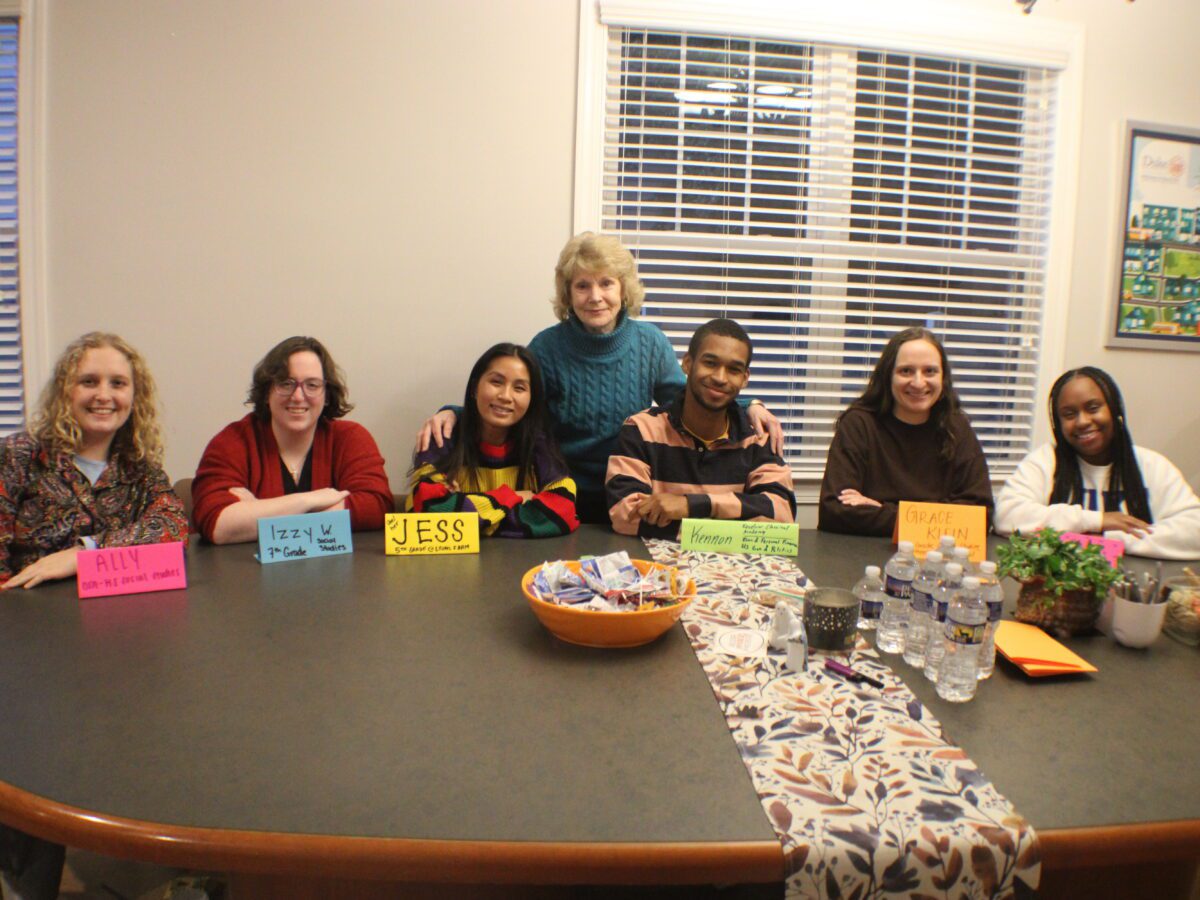
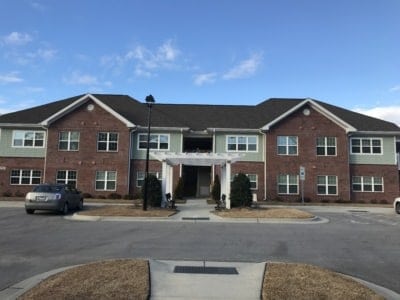
Duke TeachHouse is a living and learning community for early career teachers in Durham. The program currently has 15 residential fellows living in two houses near Duke’s east campus and one in downtown Durham.
For the first time this school year, the program also has 20 nonresidential fellows who do not live in the designated houses but participate in fellowship activities. With support from grants and community stakeholders, fellows receive a stipend for the cost of living expenses.
While living in a supportive space with other beginning teachers, the fellows also collaborate on the program’s eight pillars:
- Teacher Talks — Evening conversations between Duke undergraduates, teachers in Durham Public Schools, and fellows.
- Community Dinners — Informal dinner conversations with policymakers and leaders in the education sphere.
- Equity-Centered Practices — Workshops, seminars, and other types of professional development opportunities about creating equitable change.
- Durham Stories — Excursions related to the community’s culture, history, and resources.
- The TeachHouse Unconference — A convening for educators to determine discussion topics and actions to help solve problems of the practice.
- Teach-Ins — Seminars centered around the Community Schools model.
- Purpose Project — A yearlong series of workshops around purpose, work-life balance, and growing as educators.
- Research In Practice — Grants and curriculum development projects.
Overall, the fellows are offered ongoing weekly professional development opportunities which dive into community-engaged learning, teacher leadership, creative problem solving, self-care, and innovation skills.
According to TeachHouse’s most recent annual report, fellows have served over 11,500 North Carolina students across 44 different public schools since the program’s inception.
 Sign up for the EdWeekly, a Friday roundup of the most important education news of the week.
How the program operates
The fellowship is open to graduates from any N.C. educator preparation program (EPP) who are within their first three years of teaching in Durham Public Schools (DPS).
Fellows commit to living in the house, and to the program, for two years. The first year is spent getting to know the fellow’s school and their community. The second year is spent completing innovation projects and other opportunities within the fellow’s school site to build their leadership skills.
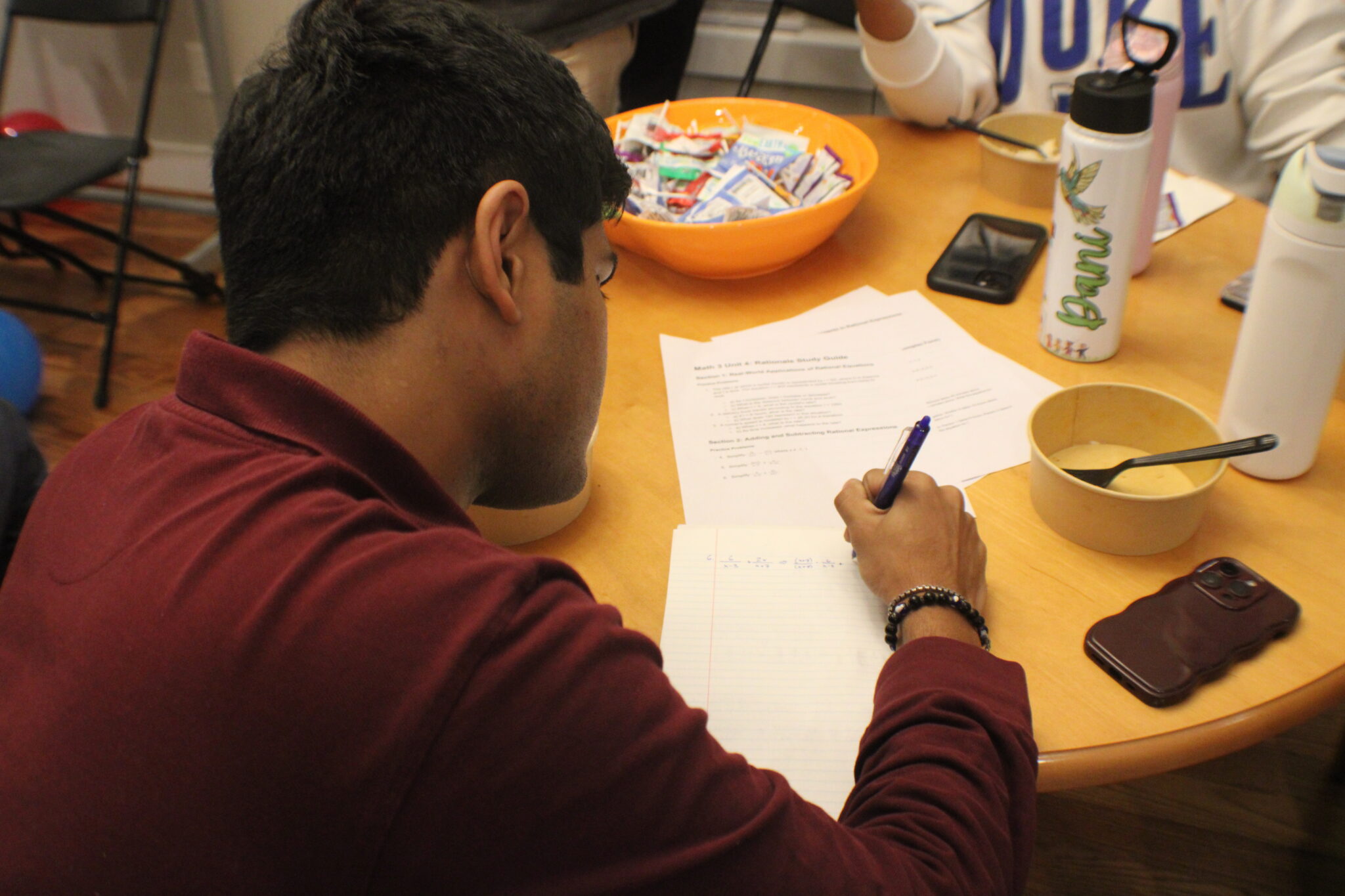
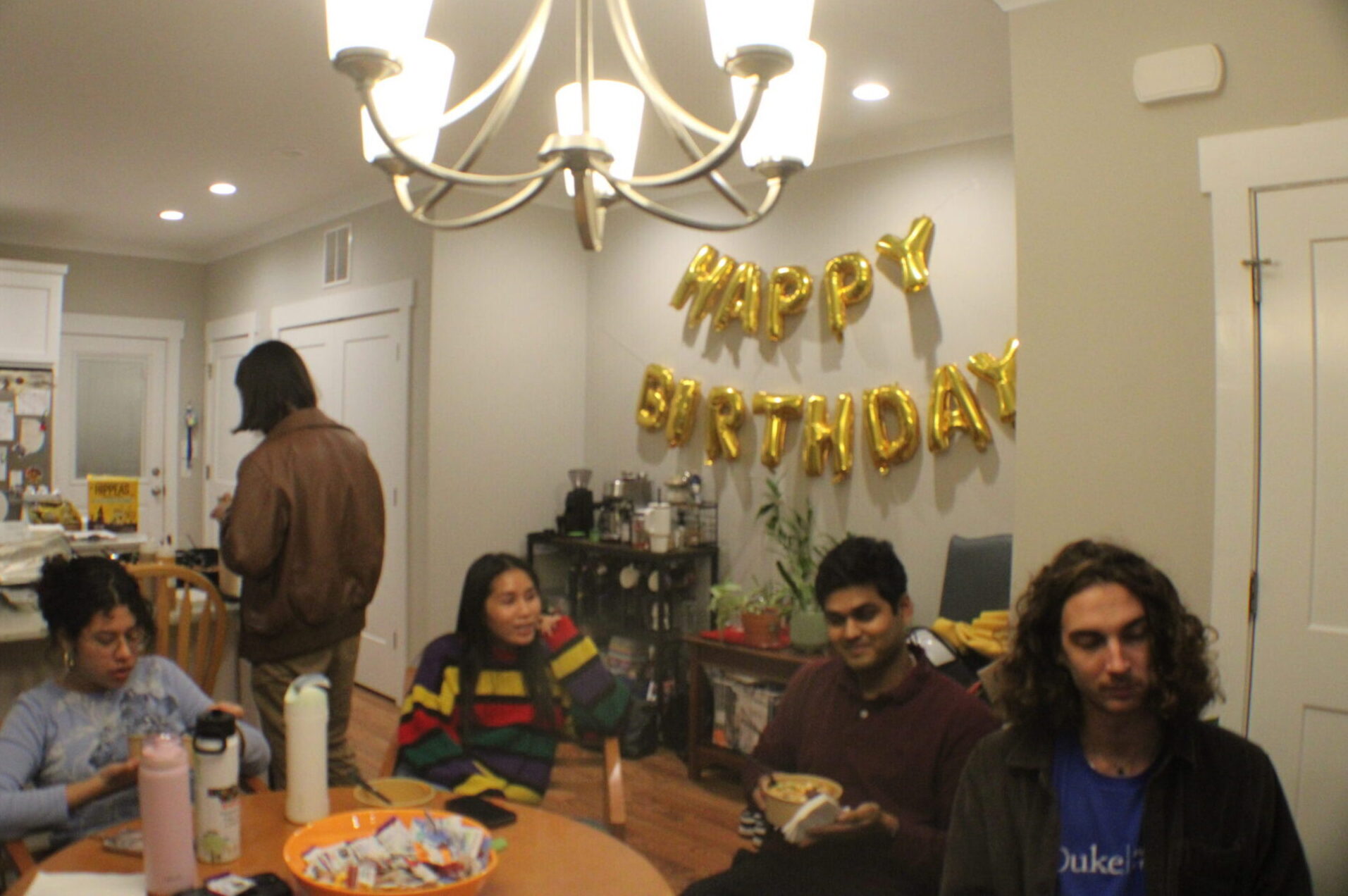
To start, current fellows said that being in TeachHouse helps them get acquainted with an unfamiliar city. Take Jessica On, for example. The Duke graduate is originally from southern California. On talked about being grateful for having her roommates to meal prep with and acclimate her to the winter snow.
One highlight for On was when the fellows went on a walking tour with local Durham historian John Schelp and learned about the Booker T. Spicely Committee.
“Which that was not an opportunity I would have personally sought out myself or been offered by Durham Public Schools, either. So I think that was really, really special,” On said. “Those are two big things that stand out to me in terms of connecting with Durham.”
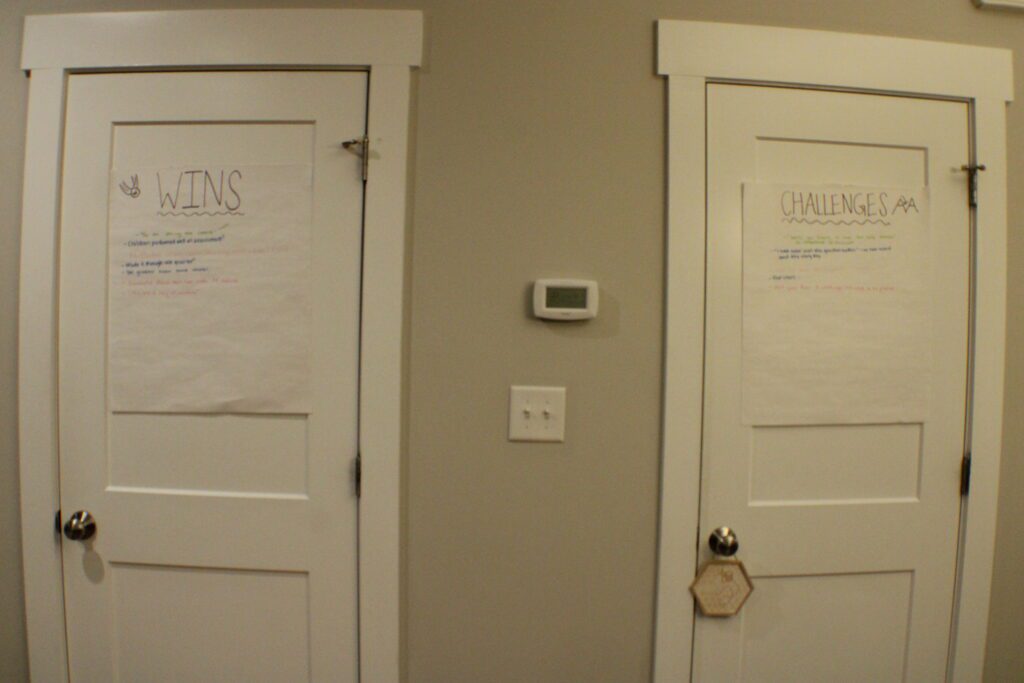
Fellows also talked about being able to support each other when they are facing challenges at their schools. Bre Anna Clinkscales told EdNC that she decided with her housemates to create posters where they would anonymously scribe their “wins” and “challenges” of each day. Other fellows described how they could get input from their roommates or fellows that taught the same subject or simply get together and host game nights.
TeachHouse also presents opportunities for fellows to learn from other educators and stakeholders.
Through a partnership with the North Carolina Coalition for Community Schools, they host several in-person and virtual Teach-Ins. Preservice teachers, undergraduates, and practicing educators are brought for seminars led by national, state, and local experts using the Community Schools model as a case study.
“I think through that, we were able to connect with people who do a lot of grant writing, who work in a lot of nonprofit spaces, who know a lot about community organizing,” On said. “And I think as teachers, we always wonder, like, ‘What can we do? What can we do on a school level?’ So being able to hear about those resources was really empowering for us.”
Current fellow Izabela Willis said she benefited from TeachHouse hosting an event with English Language Learner (ELL) teachers and specialists. She was able to get resources from the speakers on how to adapt their materials so multilingual students in her class don’t feel left out.
Notable guests TeachHouse has hosted for community dinners include Durham’s mayor and the current DPS Superintendent, Dr. Anthony Lewis, Riggsbee said.
“To have 15 fellows and then our community dinner guest is such a nice time to sit and talk and really hear their stories and really think about their vision for Durham,” Riggsbee said. “It feels comfortable, I think, and it’s informal, but formal. We feel it’s conversational, and folks really ask personal questions — hard questions.”
Read more
The Unconference
To expand their online professional learning community, TeachHouse partakes in what they call “unconferencing.” The program hosts one virtual gathering in the fall and an in person gathering in the spring. The next one is in April.
The idea to host an unconference came from the desire to connect with other educators about the expectations and realities of COVID, virtual learning, and its impact on schools, teachers, students, and families.
Their most recent unconference in November included three “EdTalks” or general sessions, and 14 offerings for two breakout sessions. Discussions centered around many topics, including artificial intelligence, creating an inviting classroom, and how age affects the ways that teachers show up for their colleagues and students at school.
Unconference sessions are designed to be participation-driven, Riggsbee said, opposed to long lectures that may be seen at other conferences.
“It’s kind of flipped. It’s not presentations, it’s really engaging conversations and problem solving, looking at timely issues,” Riggsbee said.
Long-term impacts
TeachHouse hopes to make a dent in the demand for teacher leaders across North Carolina, per their most recent annual report. The report maps out three phases of TeachHouse’s path to build capacity.
Phase One — the first six years of the program — was spent establishing its basic model, relationships, and professional development opportunities.
Aside from funding, the report describes the focus of Phase Two, since 2023, has been on deepening relationships with Duke, minority institutions of higher education, and historically Black colleges and universities. They also hope to showcase the program to more decision-makers.
In its third phase beyond 2026, TeachHouse hopes to continue to build on the network that they have and establish more physical TeachHouses in North Carolina and across the country. Riggsbee said that she envisions eastern and western regional TeachHouse hubs.
An important part of TeachHouse’s current phase was the addition of non residential fellows.
Nonresidential fellows — referred to as “Community Practitioners,” are educators who are unable to have housemates but still want to participate in the professional development. Nonresidential fellows will also receive a stipend to apply toward classroom resources or other professional development opportunities. DPS has been supportive in connecting beginning teachers with TeachHouse, Riggsbee said.
TeachHouse is currently partnering with Duke’s Social Science Research Institute to evaluate the outcomes of the program model’s second phase, lasting between 2023 and 2026. The annual report says evaluation will look at their progress and focus on educational integration, partnerships and networks, and its push toward geographic expansion.
Riggsbee has praised the programs’ retention rate. Among the fellows TeachHouse served between 2015 and 2024, more than half of them (58.9%) are still teachers within the Triangle. Even more are still educators across the country, at nearly 77%. Nearly all of the fellows are still educators or in affiliated roles, such as nonprofit work, according to the annual report, at almost 95%.
“I think there’s a lot of power in that — like, your teacher also goes to the same grocery store, your teacher hangs out in the same areas that you go to, because your community is a good community,” Clinkscales said. “And your teacher doesn’t need to drive into your community to educate you, but actually lives in the same place as you.”

Recommended reading