On conditions for early learning, ‘the science is clear’

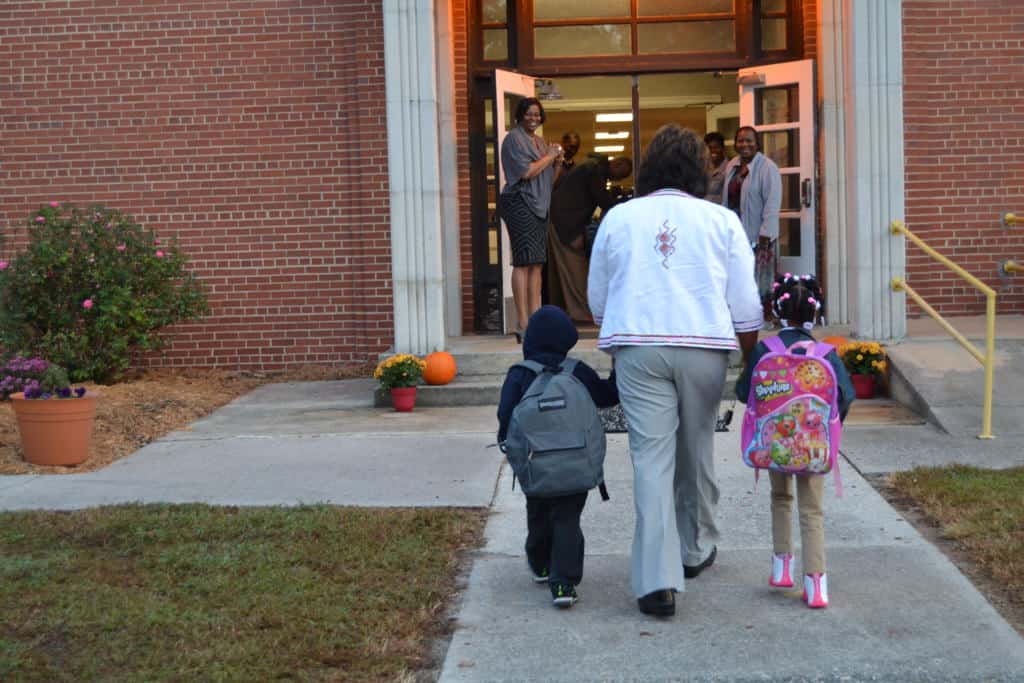
North Carolina’s two mega-metro regions have launched vital, yet difficult, civic crusades: to raise the literacy level of students in the lower grades, especially children growing up in poor households.
These initiatives arise not from state or federal governments, but rather from community coalitions with financial backing from local philanthropy and businesses. What they are attempting is in line with the findings of scholars in early childhood development.
The Duke University Center on Child and Family Policy and the Washington-based Brookings Institution has issued a “consensus statement’’ of the nation’s leading pre-kindergarten researchers.
“The science is clear,” their statement says, “early experiences in the home, in other care settings, and in communities are built into the developing brain and body with life-long effects on learning, adaptive behavior and health…Adverse early life conditions such as extreme poverty, exposure to violence, and parental disengagement disrupt developing brain networks and can undermine a young child’s capacity to learn and to develop healthy relationships.”
As EdNC.org has reported in two series this week, Charlotte-Mecklenburg and the Research Triangle region have developed somewhat different tactical approaches. The “Read Charlotte’’ initiative focuses on teaching adults, including parents, techniques for promoting literacy skills in young children. The Triangle coalition stresses high-quality early care, promoting school attendance and summer learning.
Scores from the National Assessment of Educational Progress (NAEP), known as the nation’s report card, show that North Carolina has made modest progress, while also illuminating the need for the civic crusades in the Triangle, Charlotte-Mecklenburg and elsewhere. On the 2015 NAEP test, North Carolina fourth-graders scored an average 226, slightly above the national average of 221 and up from 213 in 1998.
Still, only 38 percent of fourth-graders in North Carolina scored above the level defined as proficient. Among students, including whites, blacks and Latinos, eligible for free and reduced-price lunches, the average score was 27 points below the average for students in more affluent families.
The “consensus statement,” bolstered by an array of research papers, acknowledges the complexity of developing effective large-scale pre-K programs and that scholars have stronger findings for short-term education gains than for longer-term academic outcomes.
Their consensus holds that children attending state and school district pre-K programs generally are more ready for elementary school than children without a pre-K experience – and that pre-K propels greater improvement in economically-disadvantaged and dual-language children than for advantaged children.
“Pre-K can thus be viewed as powering up early learning, for which the elementary grades need to provide essential charging stations that sustain and amplify the learning gains made by children in pre-K,” says the scholars’ statement. “…Integrating pre-K programs into the broader education system to sustain and expand pre-K gains as young children enter elementary school is among the most important tasks now facing practitioners and policymakers alike.”
Pre-kindergartens are “not all equally effective,’’ says the scholars’ consensus. They recommend pre-K designed according to “evidence-based curriculum,’’ with coaching provided for teachers and efforts to promote “orderly but active’’ classrooms.
What the civic crusades demonstrate and what the scholars conclude lead to several observations and findings: 1) that a potent philanthropic sector continues to enhance North Carolina, 2) that a crucial cohort of citizens recognizes that a child’s learning begins in the home and in the community, not only in the schools, 3) that what Charlotte and the Triangle learn from their efforts should be shared with other communities, 4) that however splendid the work of citizens in their communities, they also need enlightened public policy to provide North Carolina’s young people with sound, basic pre-K and elementary schools.