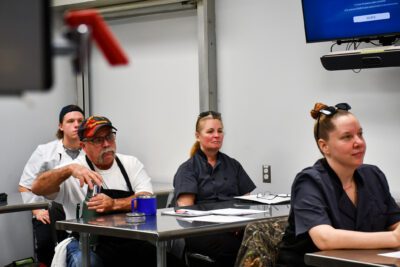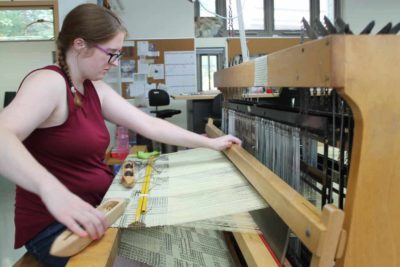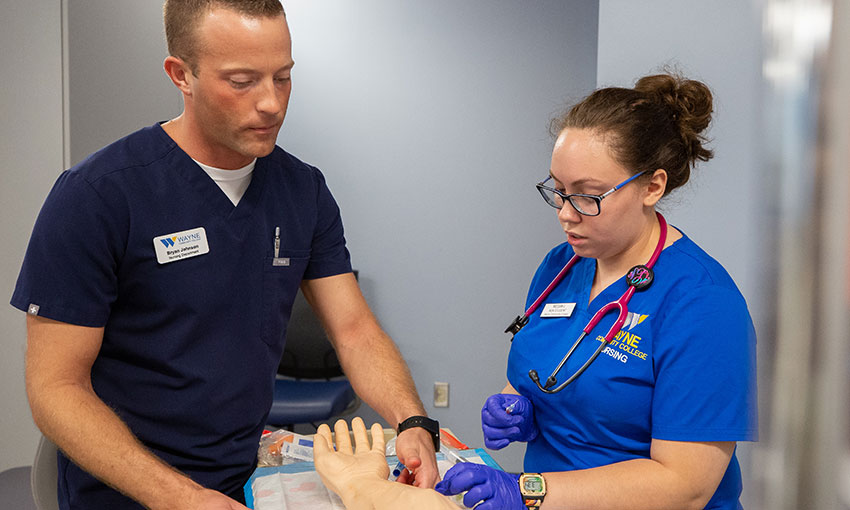
North Carolina’s 58 community colleges employ nearly 18,000 faculty members across continuing education, curriculum, and basic skills programs.
Many of the students these faculty teach are adult learners, or students over the age of 25, which make up more than half of the roughly 630,000 students enrolled at North Carolina community colleges. Adult learners often face unique challenges on their path to attainment, as many juggle jobs, families, and other life circumstances alongside their studies.
NC Reconnect, an initiative of the John M. Belk Endowment, works to engage adult learners with some college but no degree. Since its launch in 2021, the initiative has reenrolled more than 4,000 adult learners at 29 community colleges across the state. In addition to getting adult learners enrolled in community college, NC Reconnect aims to support them toward program completion.
Professional development opportunities for faculty can strengthen instructional practices and help them better support adult learners. However, according to Audrey Jaeger, executive director of the Belk Center for Community College Leadership and Research, only about a third of community colleges in the state have a center for teaching and learning, and among those colleges, only half have a full-time faculty member leading professional development.
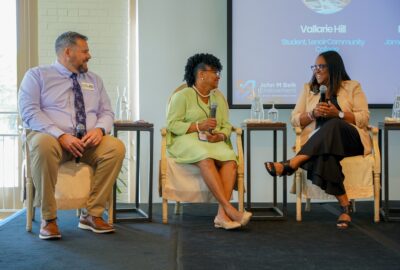
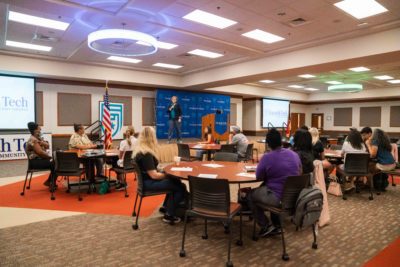
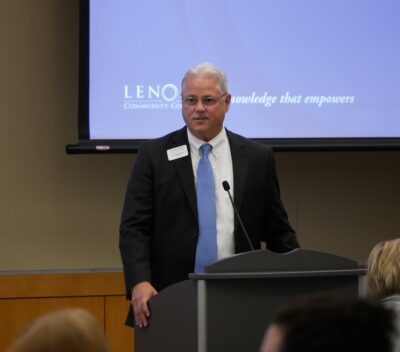
At a “Community of Practice” meeting held on Jan. 21 by the Belk Center, leaders from NC Reconnect community colleges heard about strategies and resources to support community college faculty teaching this critical student population.
Read more about NC Reconnect
Instructors share successful strategies for teaching adult learners
During the NC Reconnect meeting, Andrew Pais, biotechnology professor at Vance-Granville Community College (VGCC), and Kevin Spradlin, advanced technology instructor at Blue Ridge Community College (BRCC), shared that extending flexibility to adult learners has been key to their students’ success.
Holding office hours outside of class time, making sure adult students can easily access their learning materials and complete assignments, and being open to the reality that students’ lives might periodically interrupt their learning are all examples of how the instructors strive to meet their students where they are.
“There’s been countless, countless times where, you know, one of my students will get a call that, ‘Hey, my kid’s sick. I got to go pick them up,’” said Spradlin. “And you’ve got to be flexible with that.”
Pais integrates opportunities to teach students soft skills into his curriculum. Students in his biotechnology courses work through resume workshops, attend meetings with the college’s career services staff, and complete mock interviews.
Adult learners in NC Reconnect’s most recent cohorts have chosen to earn a credential through a continuing education program rather than a degree program, and Pais has observed that this means most students will start in entry-level positions after completing their program. While he’s confident that community college students will graduate with the technical skills they need to excel in these jobs, he has observed that strengthening students’ soft skills goes a long way to ensure their success.
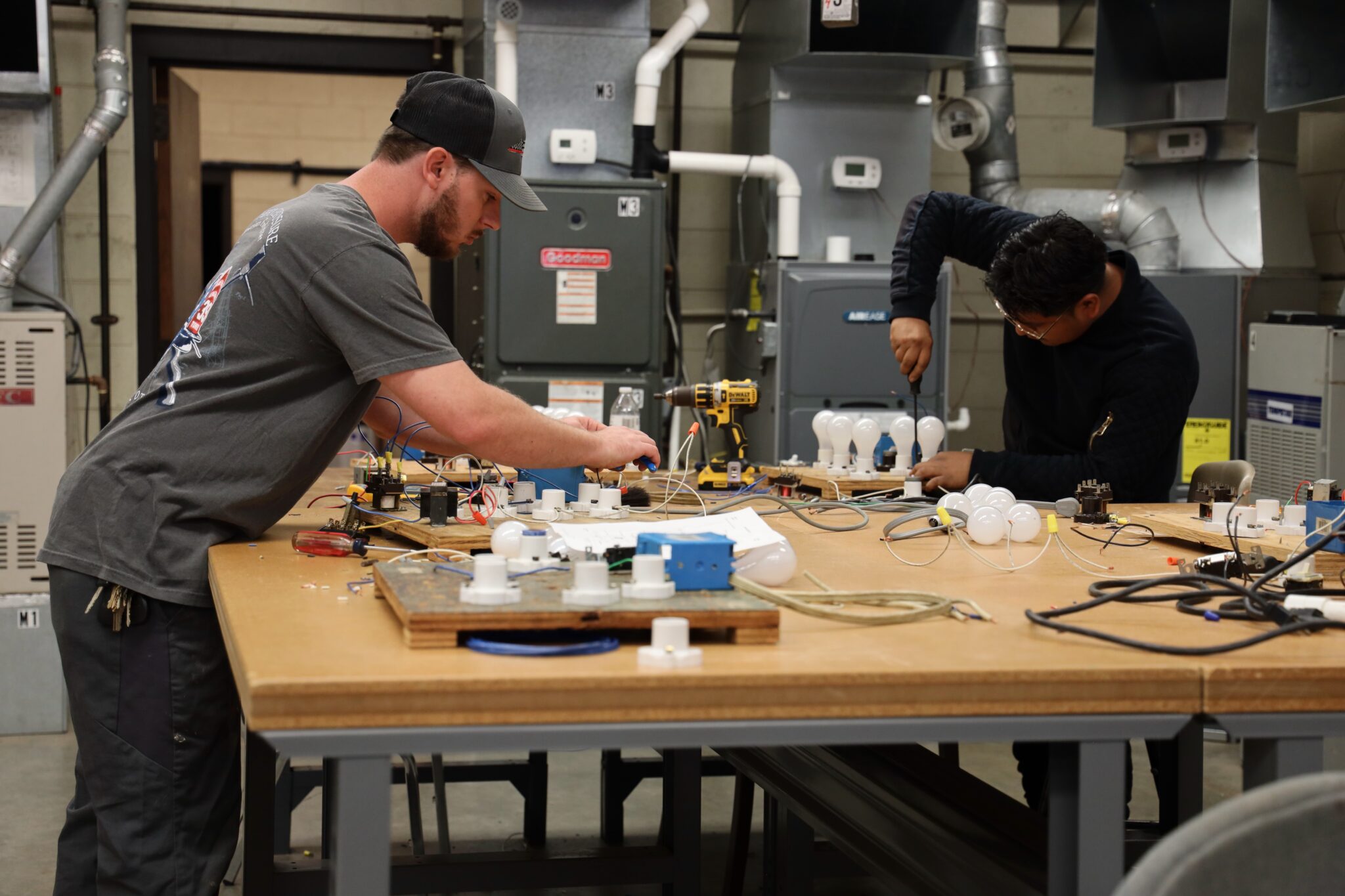
Spradlin, who taught in public education before joining BRCC, added that, in addition to “resume refresh days” for his computer integrated machining apprentices, he draws upon the diverse ages and experiences of adult learners to help teach life skills.
“I kind of lean into my older students to demonstrate soft skills to my younger students,” he said. “Because of their experience, maybe not in machining particularly, but just in life in general, they’re a great resource for that.”
 Sign up for Awake58, our newsletter on all things community college.
Adult learners also benefit from flexible course structures that are not necessarily within instructors’ control. For example, hybrid courses and evening courses make it easier for students to attend important sessions in-person, such as lab classes, and asynchronously work through supplementary course material as their schedules allow.
However, challenges with faculty recruitment and retention, particularly among career and technical education instructors, limits colleges’ ability to offer these options to students. And, as Pais observed, when faculty are stretched thin with teaching responsibilities, their ability to respond to adult learners’ needs decreases.
“There has to be a built in understanding that our instructors, in order to be flexible, have to have that capacity,” said Pais.
Pais and Spradlin said that the way community colleges design programs also plays a role in supporting adult students.
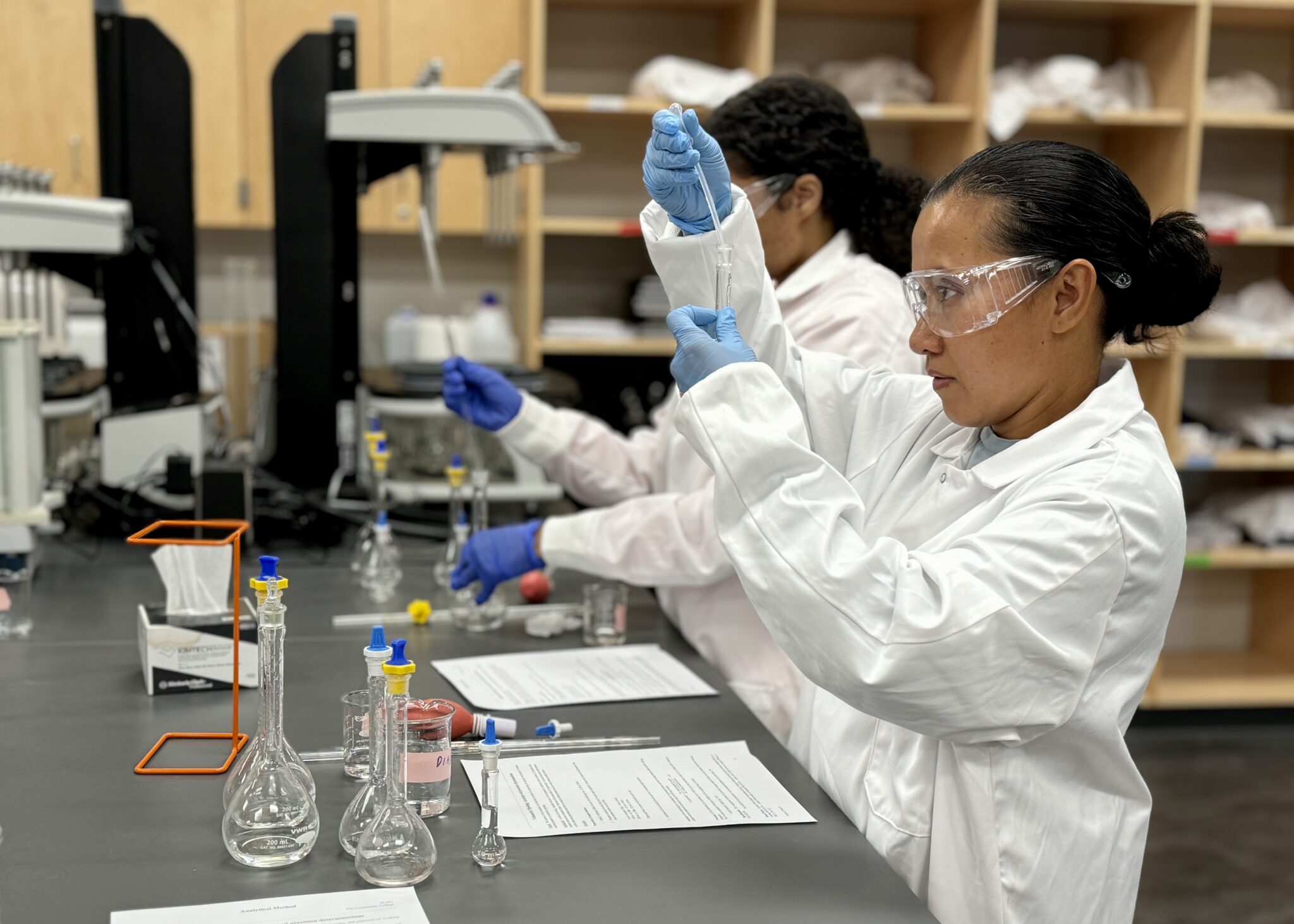
At VGCC, Pais said that the biotechnology program was designed by college leaders to directly support students’ credit momentum and mobility. The college’s BioWork continuing education course, for example, prepares students with a certificate to work as a process technician in a biotechnology industry. Pais said VGCC offers the course as an entry level course for other biotechnology programs at the college, meaning continuing education students can receive credit for the program to put toward other curriculum certificates, a one-year diploma, or a two-year degree in biotechnology.
“So, it can’t all be on the instructor,” Pais said. “It has to kind of be an intentional mission that everybody in the program kind of signs up for.”
Credit pathways like this are an example of how community colleges will continue to connect continuing education and curriculum programs as they prepare to implement Workforce Pell Grants. Among other requirements, in order to be eligible for the grants, short-term, career-focused programs must articulate at least one credit into a certificate or degree program at at least one institution.
Read more about Workforce Pell

A free, on-demand professional development resource proven to improve student success
Community college instructors can access professional development opportunities through their individual colleges and the N.C. Community College System (NCCCS), such as the state’s Master Instructor Certification Program.
At the Community of Practice meeting, community college leaders shared a few reasons why attending professional development opportunities can be a challenge, particularly for adjunct professors. As part-time employees, scheduling limitations, such as other employment, can make it difficult to attend. Additionally, financial incentives are not always available to faculty to participate in professional development.
Another factor complicating instructors’ access to professional development is the difference in the credentials required to teach continuing education courses versus curriculum courses. While NCCCS shares some of the credentialing agencies that provide licensure and certification for specific industries, it is generally up to community colleges themselves to decide specific credential requirements for continuing education staff.
In light of these challenges, resources that can supplement professional development opportunities for community college faculty are the NC Teaching and Learning Hubs. Launched in fall 2021, the four regional hubs provide free, evidence-based, virtual professional learning opportunities for any community college employee.
Eight co-directors from community colleges across the state lead the regional hubs, each offering their own sessions. The website also houses archived trainings sorted by topic, including artificial intelligence, classroom management, and holistic student support.
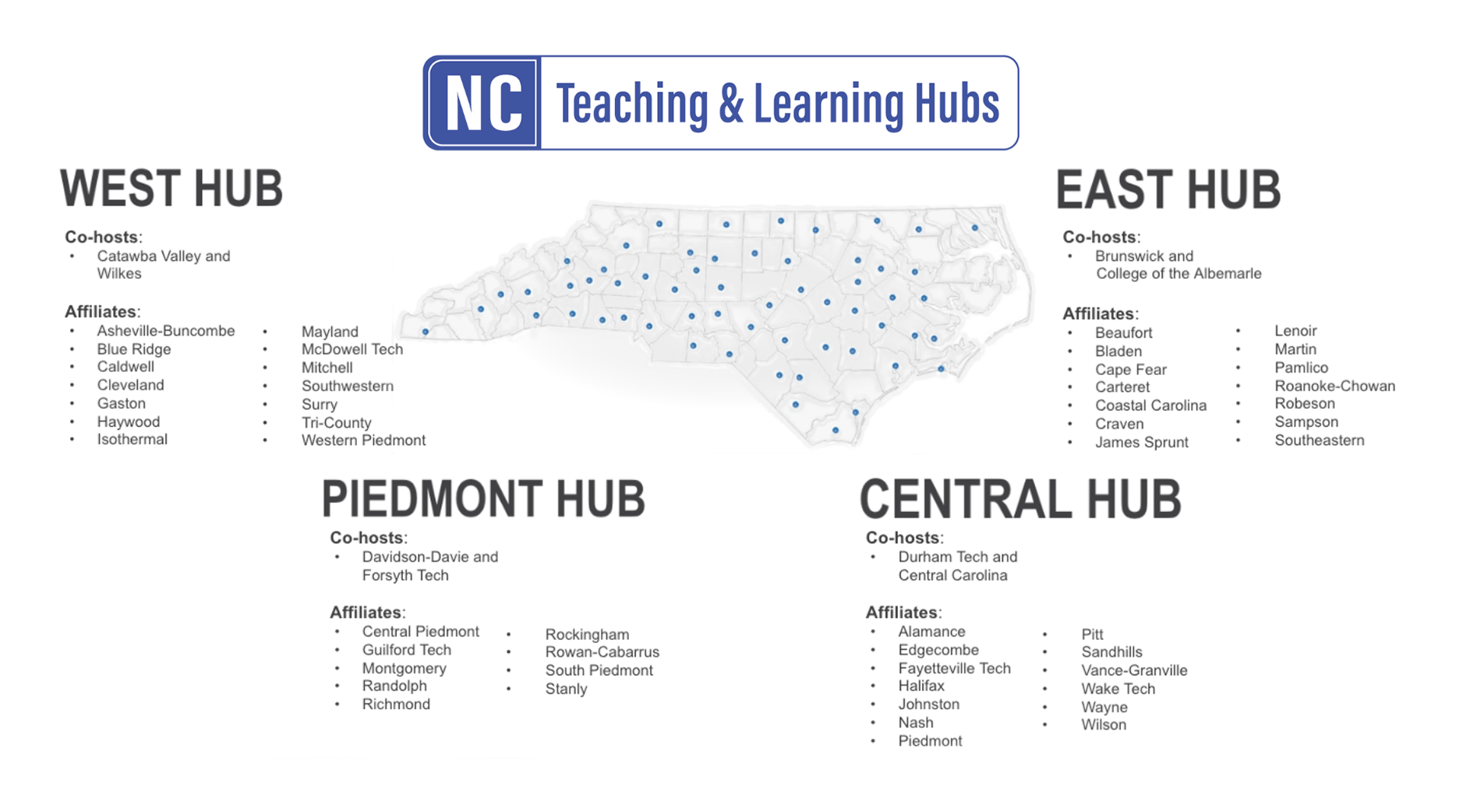
According to Kristin Redfield, co-director of the Piedmont Hub, between fall 2021 and spring 2025, the hubs have offered 257 unique sessions to over 4,300 community college faculty and staff. When considering the students enrolled in these instructors’ classes, this translates to nearly 255,000 students impacted through almost 39,000 unique community college courses.
Redfield also shared data showing that instructors attending these sessions is associated with improved academic progress for students. Since 2021, students in classes taught by instructors who completed at least one hour-long hubs session had higher retention rates than students taught by instructors that did not attend any hubs sessions.
Recent research authored by the Belk Center draws similar conclusions, finding that hub-trained instructors have a positive impact on students’ course pass rates and academic persistence.
“The North Carolina Teaching and Learning Hubs demonstrate the transformative potential of targeted, collaborative professional learning to enhance faculty teaching and improve student success across the state’s 58 community colleges,” reads the research.
Editor’s note: The John M. Belk Endowment supports the work of EdNC.
Recommended reading