
Skip to content
EdNC. Essential education news. Important stories. Your voice.

Search ednc.org

Coding: “We know what’s in the future. And this is it.”

Share this story

Our republishing policy

EdNC is a nonprofit, online, daily, independent newspaper. All of EdNC’s content is open source and free to republish. Please use the following guidelines when republishing our content.
  • Our content must be republished in full. If your organization uses a paywall, the content must be provided in full for free.
  • Credit our team by including both the author name and EdNC.org in the byline. Example: Alex Granados, EdNC.org.
  • If republishing the story online, please provide a link to EdNC.org or a link to the original article in either the byline or credit line.
  • The original headline of the article must be used. Allowable edits to the content of the piece include changes to meet your publication’s style guide and references to dates (i.e. this week changed to last week). Other edits must be approved by emailing Hannah Vinueza McClellan at [email protected].
  • Photos and other multimedia elements (audio, video, etc.) may not be republished without prior permission. Please email Hannah Vinueza McClellan at [email protected] if you are interested in sharing a multimedia element.
  • If you republish a story, please let us know by emailing Hannah Vinueza McClellan at [email protected].

Please email Hannah Vinueza McClellan at [email protected] if you have any questions. This work is licensed under a Creative Commons Attribution-NoDerivatives 4.0 International License.

Canonical tag

Please include the following canonical tag in the <head> of the republished story.

<link rel="canonical" href="https://www.ednc.org/coding-we-know-whats-in-the-future-and-this-is-it/">

HTML content

This includes the title, byline, content, and tracking pixel required for republishing this story.

This story is tagged:

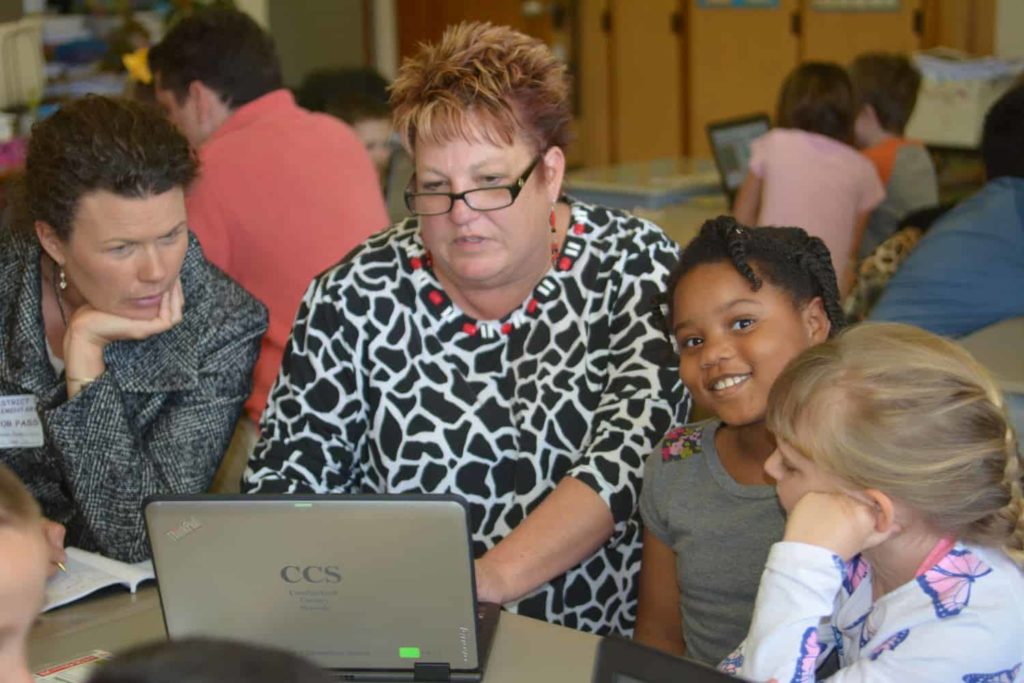
In a second grade class room at District 7 Elementary School in Wade, the mission of a national nonprofit, Code.org, plays out as a diverse group of students learns to code.

Principal Rhonda Hill says, “We know what’s in the future. And this is it.”

According to its website, Code.org launched in 2013, and it is a nonprofit dedicated to expanding access to computer science and increasing participation by women and underrepresented students of color. The vision is that every student in every school should have the opportunity to learn computer science. Schools across the state and nation are incorporating coding into learning as increasingly it is being seen as foundational and fundamental.

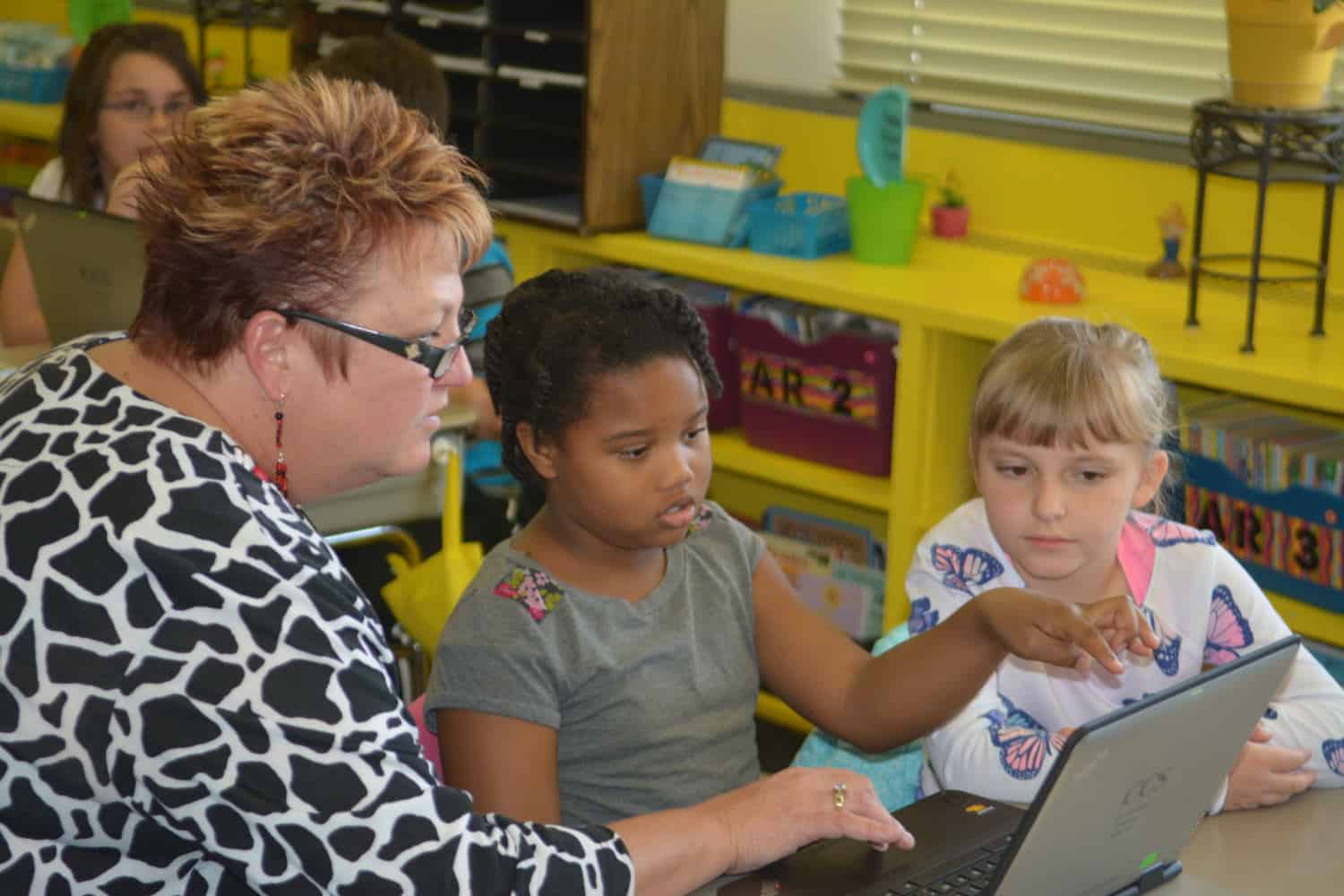
Karen Streubing has been teaching for 12 years. This year, she has been taking classes after school to learn to code from 4-6:00 pm. Her second grade students can’t get enough of it, even choosing on Fun Fridays to stay in and code. She says, “Funny thing is they don’t think they are problem solving. They just think they are playing a game.”
DSC_0164
Students working with teacher Karen Streubing on a computer programming problem.

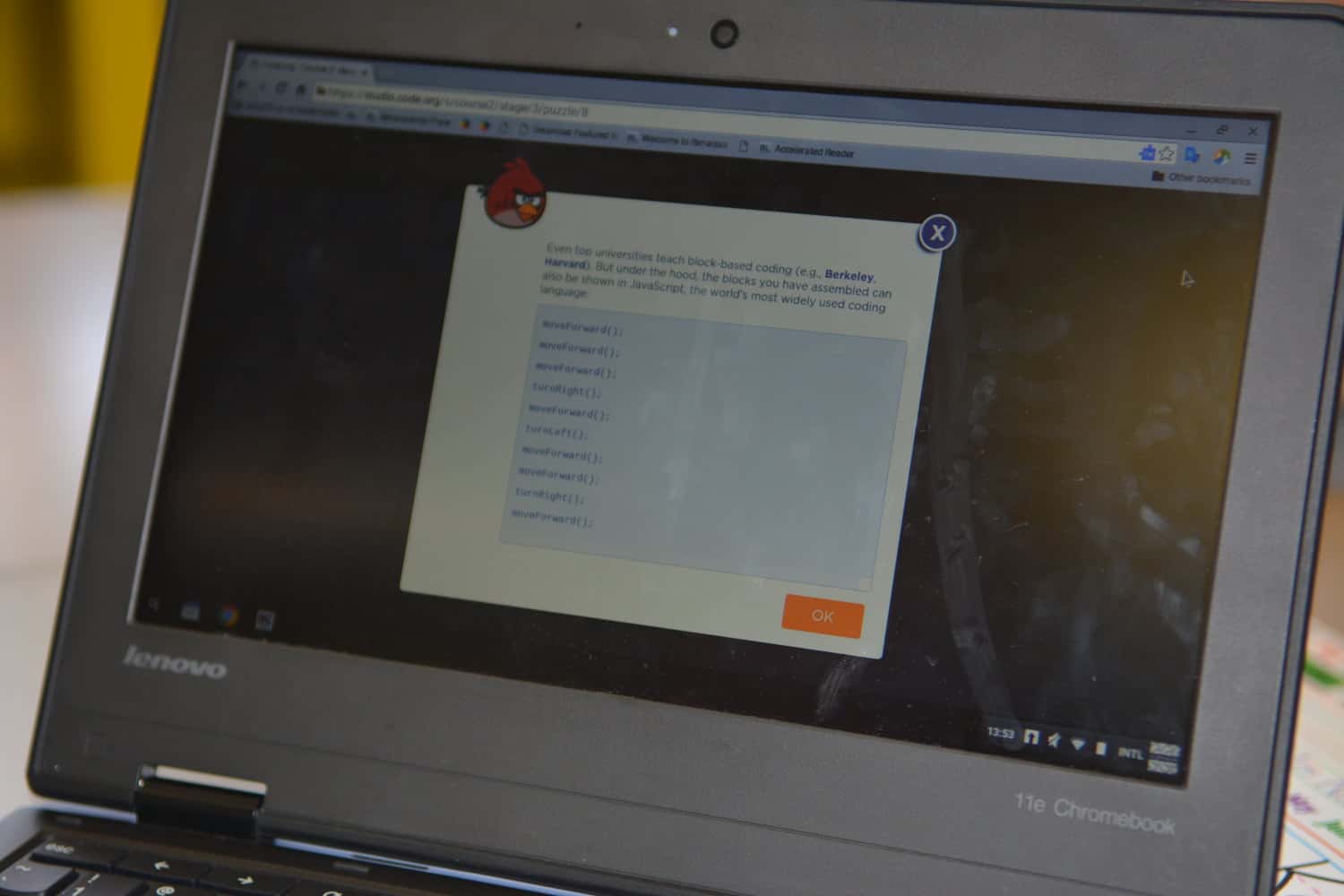
Though the kids interact with it as if it were a game, Streubing is quick to show me how they are learning to go in and look at the actual code they are creating.
DSC_0165
This window shows the code that was assembled by the students through their “game.”

Two teachers at District 7 have learned to teach coding, and at the next staff meeting, they will share their new knowledge with the rest of the staff.

Code.org has developed curricula for elementary, middle, and high school classes. Let us know in the comments if you are using Code.org in your class!