
Built for the tough times: New Emergency Services Training Center opens in Morganton

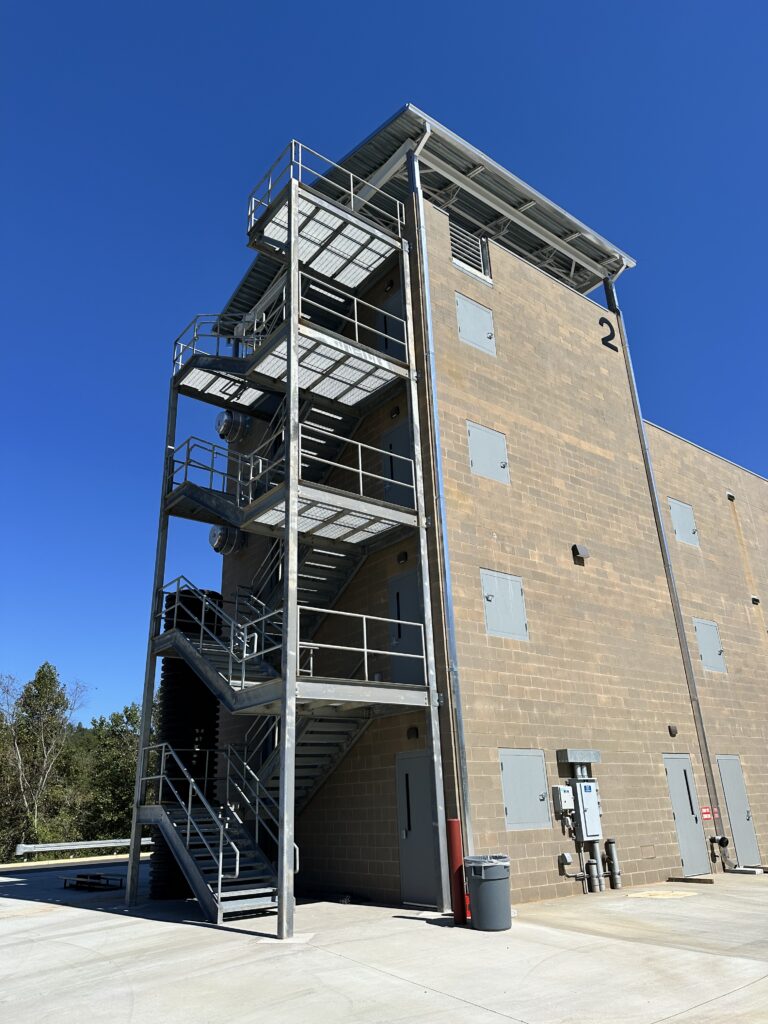
Trey Smith walked up the stairs of the burn tower at a steady pace, talking as he went. At every floor, he stopped to show me something: burn rooms lined with panels rated up to approximately 2,200 degrees and a shaft running from the top floor to the bottom, used to practice pulling a fallen firefighter out of a basement.
Then he pushed open the door to the roof.
It is October in Burke County, and the sky is that hard fall blue. The trees are just beginning to change color. Somewhere beyond them, down the hill, is the Catawba River.
“You will be able to see the river from here,” he said. “In the winter.”
 Sign up for Awake58, our newsletter on all things community college.
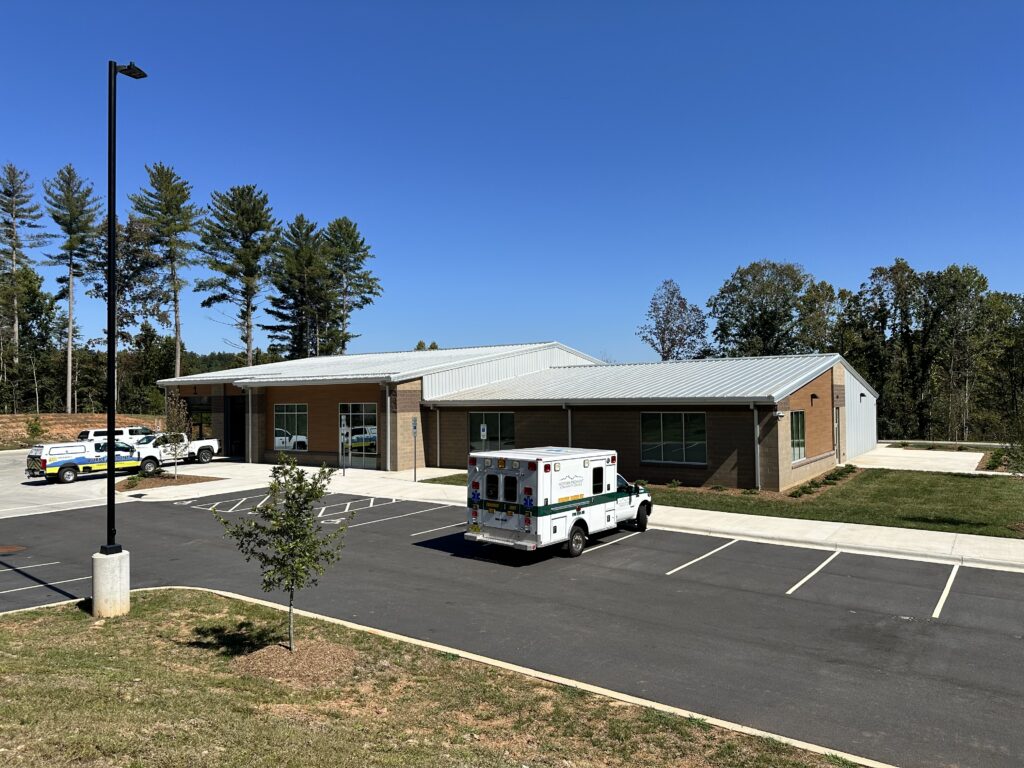
Smith is the director of fire and emergency services at Western Piedmont Community College (WPCC). This tower is the center of its new Emergency Services Training Center, which officially opened on Sept. 11, 2026. A month later, the place was busy.
A City of Morganton crew was taking a lunch break during their rope rescue refresher course, with more to do that afternoon. That night, approximately 100 rescuers from both Carolinas were scheduled to arrive for a three-day water search-and-rescue exercise. They were going to camp across the street and work without cell service, similar to what occurred after Hurricane Helene.
“The best type of training is the most realistic training,” Smith said. “And this is where you find little things like a 50-cent piece of equipment that could shut down your entire operation.”
Why here?
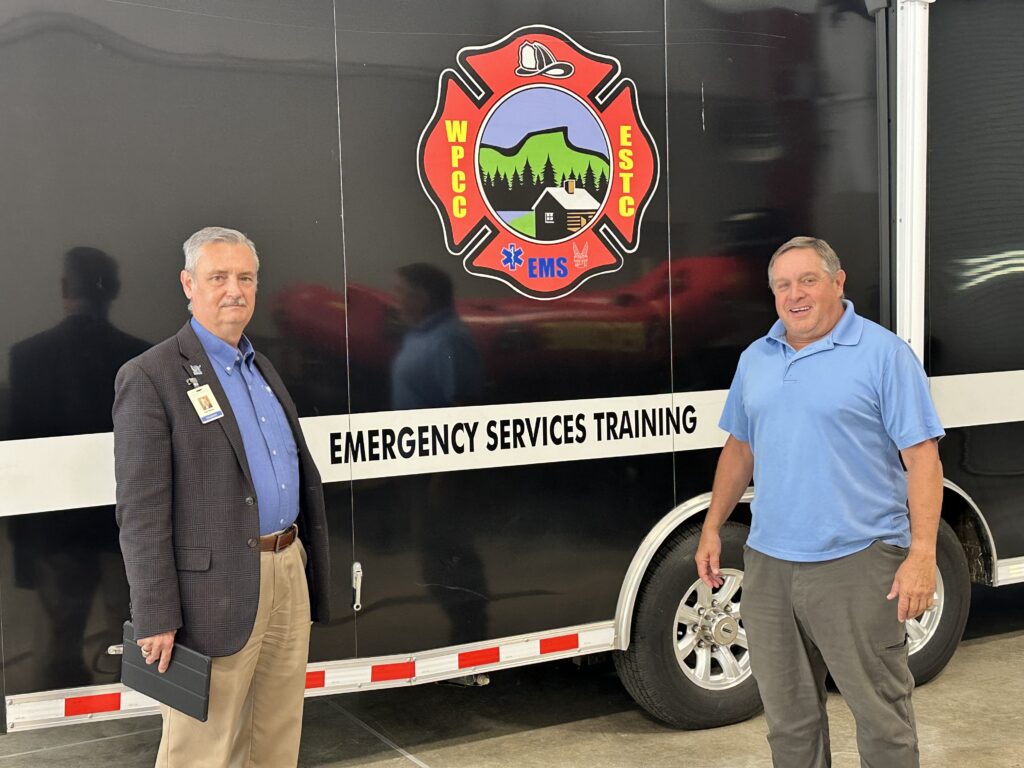
WPCC President Joel Welch provided me with some background information as we drove around the property. The college wanted the river from the start. The City of Morganton owned land near the main campus and wanted a fire station nearby, so they traded — approximately eight acres near the main campus for nearly 30 here by river. The college purchased a few neighboring parcels after that, bringing the site to about 40 acres.
The state provided $15 million, and Welch estimated the total cost of building out the facility at approximately $17 million thus far.
The river was one reason to build here. The county was another.
Burke has the highest per capita rate of search-and-rescue calls in North Carolina at more than 100 per year, according to James Robinson, the county’s emergency services director. Most occur in Linville Gorge and the county’s two state parks, South Mountains and Lake James.
Rugged terrain makes for a great classroom.
“We are the only training facility that is on the river,” Welch said, “so we can do water training on the Catawba.”
Within approximately 45 minutes there is flatwater on Lake James and a channel below it for float training, and the Catawba runs fast enough in some areas for swift water work.
“Our education, our training, our program, our college, has to be part of what the environment is,” Welch said.
Who comes to train?
Smith worked for 37 years with the Charlotte Fire Department and retired as a captain two years ago. Back in the early ‘90s, he got his start at the Burke County Fire College, and he never quite got over how a community this small could put together a training program this large. Coming here felt very much like coming home.
Most of his current students are volunteers. Some are the first in their families to attend college, and some struggle to read, which can prevent them from obtaining certification.
“Having come from Charlotte, you get spoiled because everybody has degrees,” he said. “But when you come to a rural area, it’s a totally different student.”
If a student is struggling, Smith wants to know early. He sends them to a basic skills class first and then brings them back to finish their certifications. A lot of them want to be paid firefighters someday. Fewer people volunteer these days, but his classes keep growing.
When Smith first started teaching at WPCC, he had approximately 20 or 30 full-time equivalent students. Last year, he had nearly 80 full-time equivalent students. Welch taught Smith to say yes and then figure out how to make it all happen later.
Ethan Winkler grew up in Burke County. He began volunteering 16 or 17 years ago and completed approximately one-third of his own firefighter classes at WPCC, where he now teaches. Volunteering locally, he said, is “a good way to determine if this is the right career path.” If students belong to a fire or rescue organization, the classes are free.
“It doesn’t cost the student anything,” Winkler said.
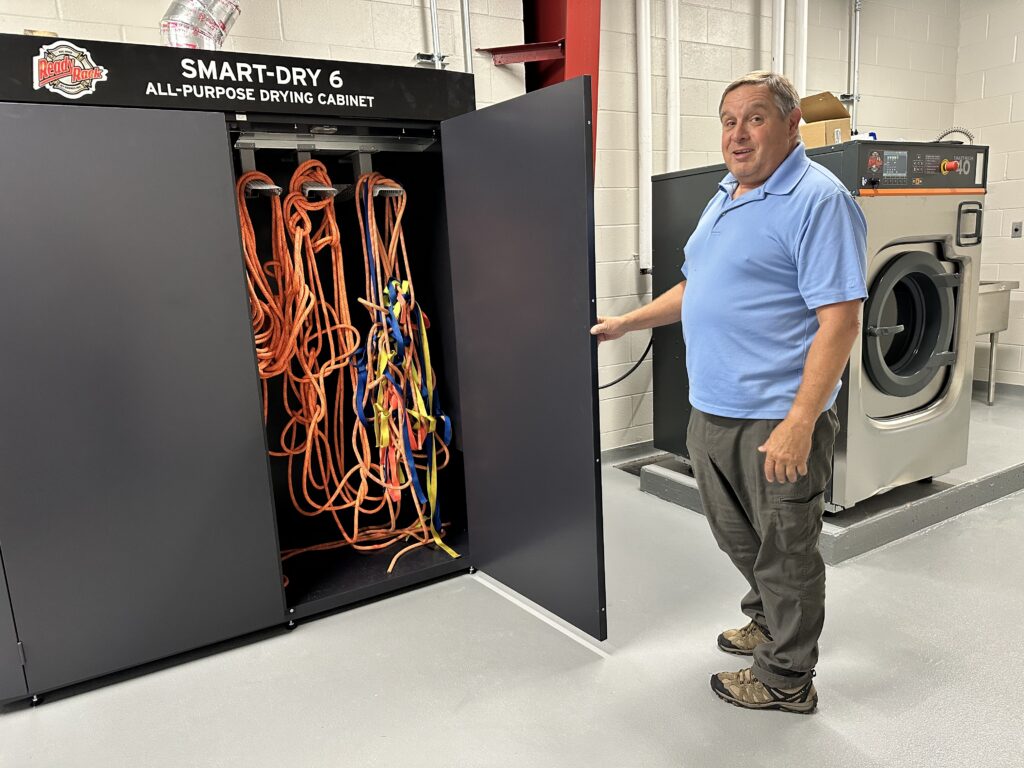
Once they are in the fire service, Smith wants them to remain in it. Firefighters develop cancer at high rates. When he began in 1987, nothing like today’s gear extractors and dryers existed. Now, crews can remove contaminants from their turnout gear onsite, and rope that used to require four days to dry is ready in three hours.
What’s next?
Welch already knows what he wants on the land near the water: a man-made swift water course with a flooded village, utilizing water pumped from the Catawba and returned. He estimates it at $30 to $40 million and has requested support from the state. He acknowledges that one may take time.
More immediately, a fire academy begins in January. The college is also working with Burke County on a backup 911 center. Further out, they are planning a river greenway, including a memorial to emergency responders.
Before leaving, Welch shared with me what it all ultimately represents.
“I hope I never have to interact with our graduates while they are performing their job because if they are working and I am present, that is not necessarily a favorable scenario,” Welch said. “However, when they arrive, I will know they understand what they are doing, that they care about the individuals they are working with, and that they care about our region.”
To schedule a class for your fire or rescue agency, contact Smith at rsmith8@wpcc.edu or 828-448-6708.