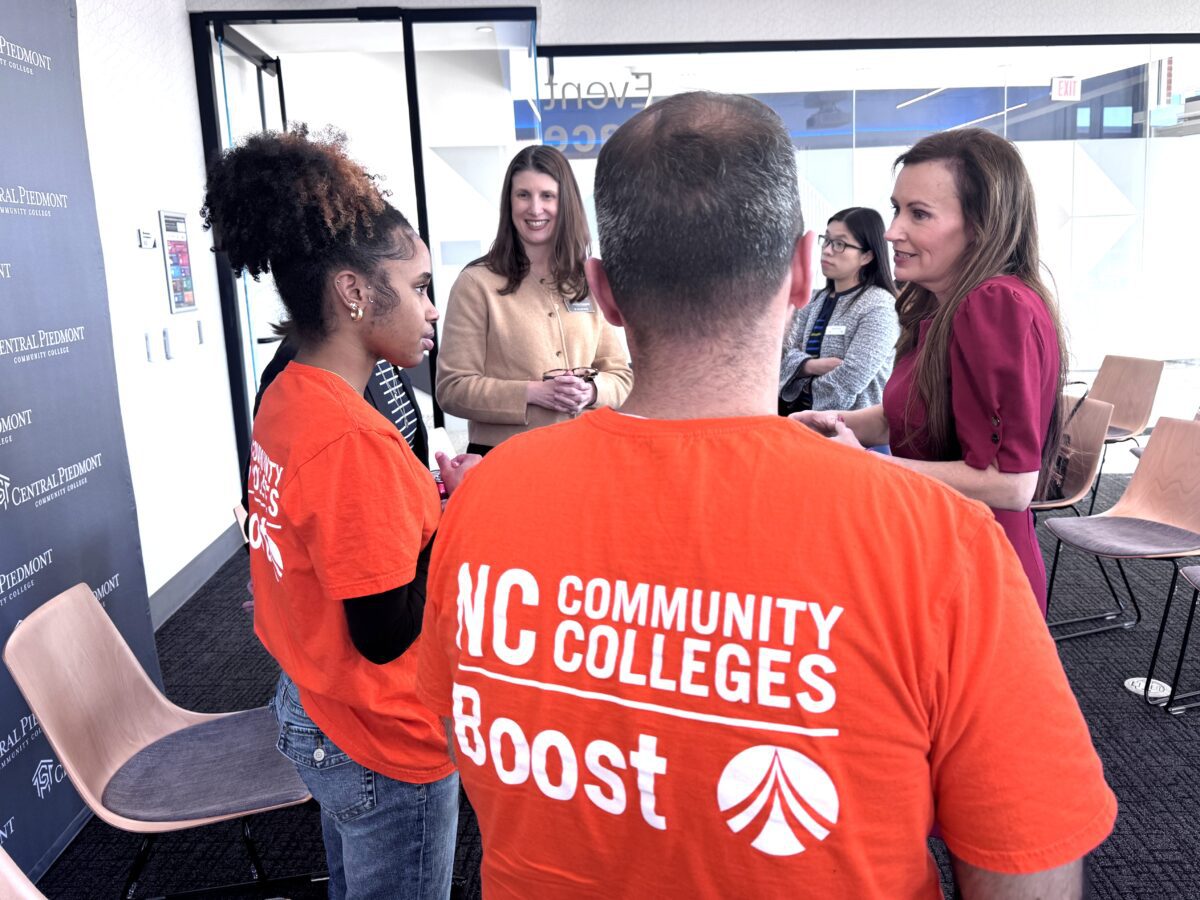
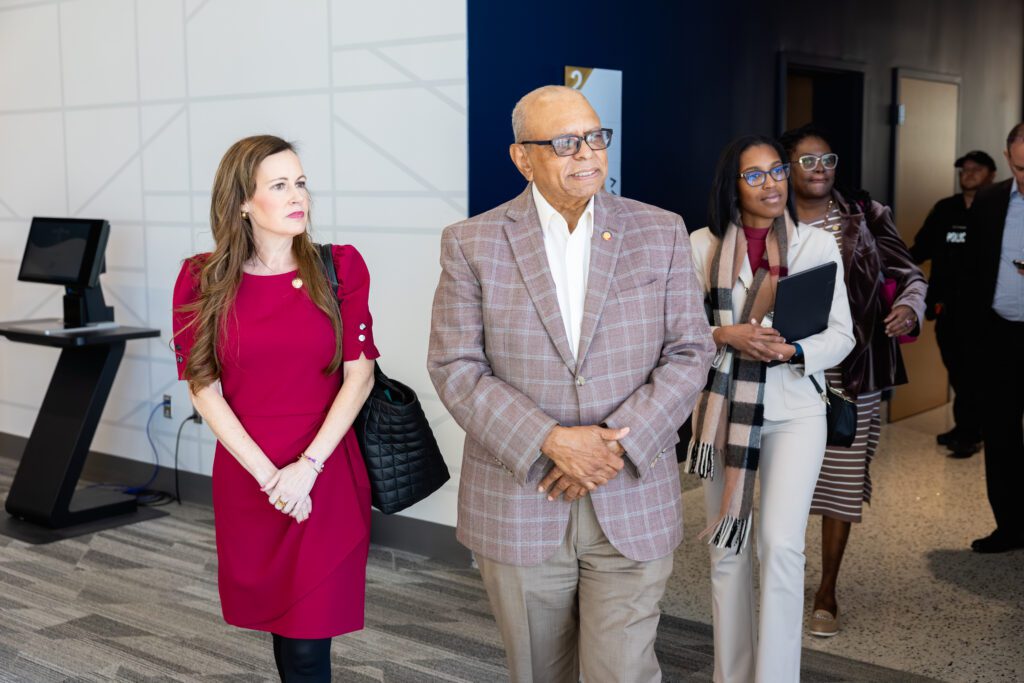
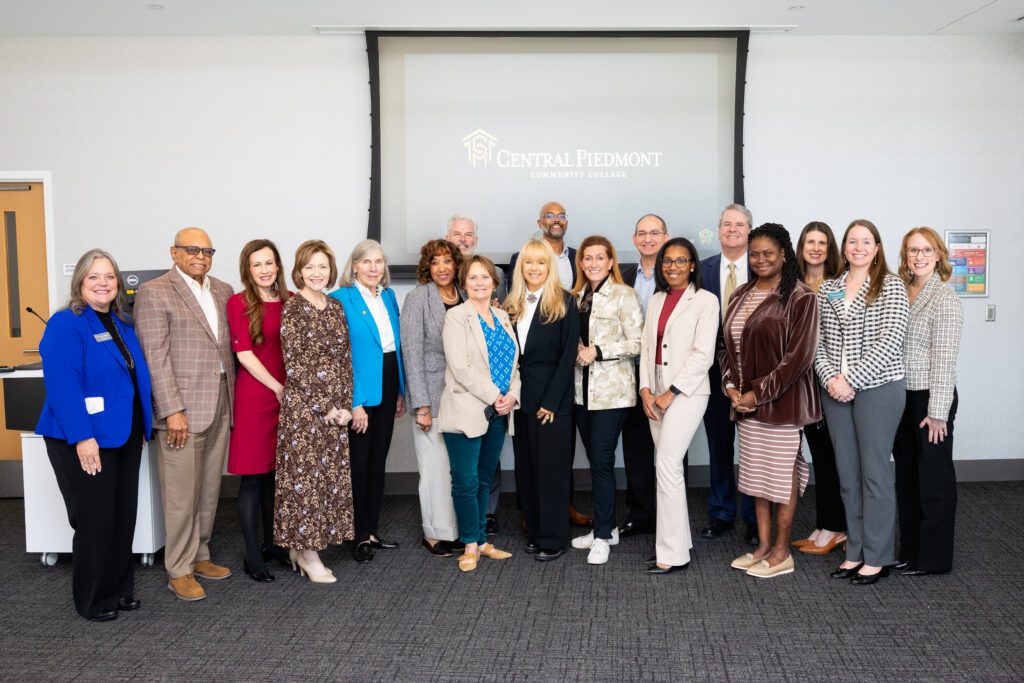
Legislators in the Mecklenburg delegation met with students and leaders at Central Piedmont Community College to learn more about Boost, North Carolina’s accelerated college-to-career program that launched this fall.
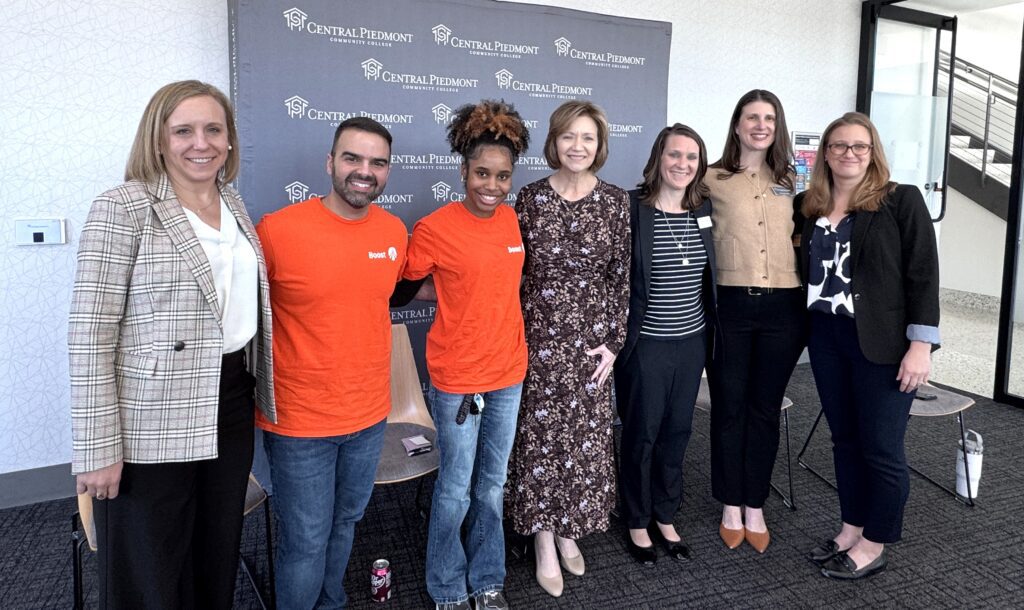
Courtesy of Darnell L. Vennie, Central Piedmont Community College

Central Piedmont has already exceeded its Boost enrollment target with 152 students participating in the first cohort and a growing waitlist for future semesters.
Implementing Boost at a community college requires a systems approach, said President Kandi Deitemeyer.
“We have been at this work awhile,” she said, noting Central Piedmont’s “required advising that’s been in place for four years, the way we do holistic support, the way we do financial aid, using Element 451 for outreach, and individualized mentoring and coaching with cohort groups.”
“So when we bring a program like Boost in, we can take all of the lessons learned from our systems approach, and wrap it all into one, which is why we’ve been able to get to 150 students so quickly,” said Deitemeyer.
Kelly Herman, the Boost director at Central Piedmont, calls the program’s combination of personalized student support and financial support a “winning formula,” and she told legislators that “it’s that winning formula that has been the foundation the Boost program has been built on.”
Meet the Boost students

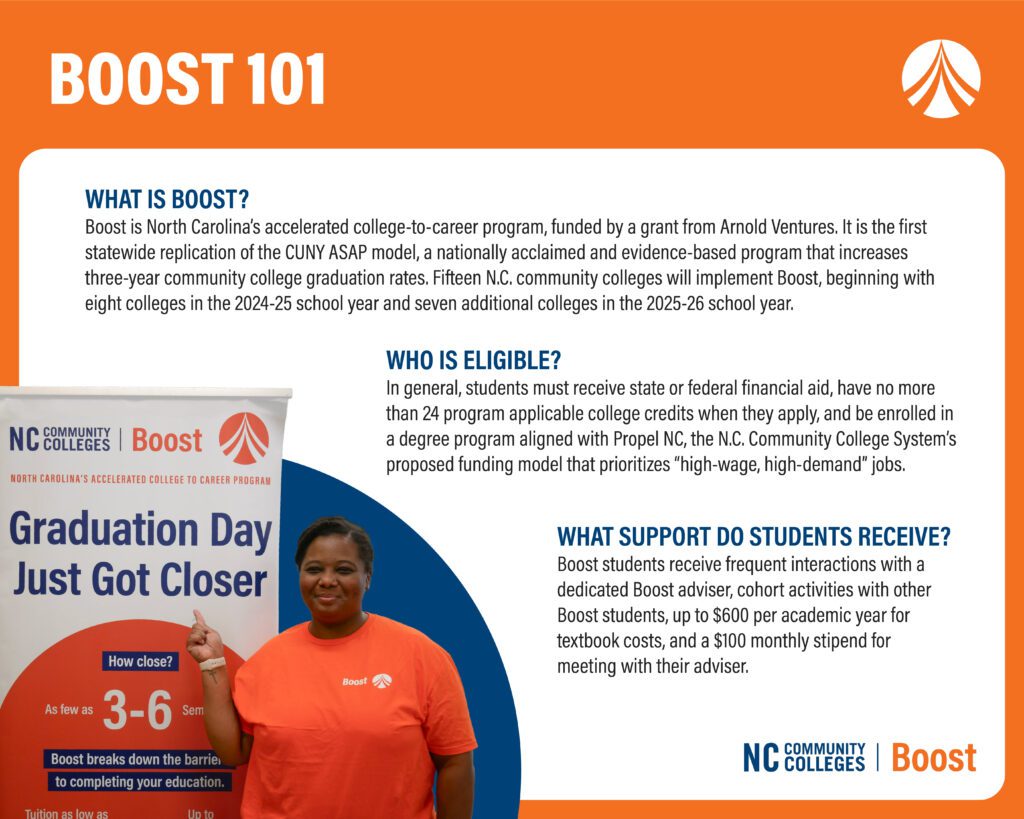
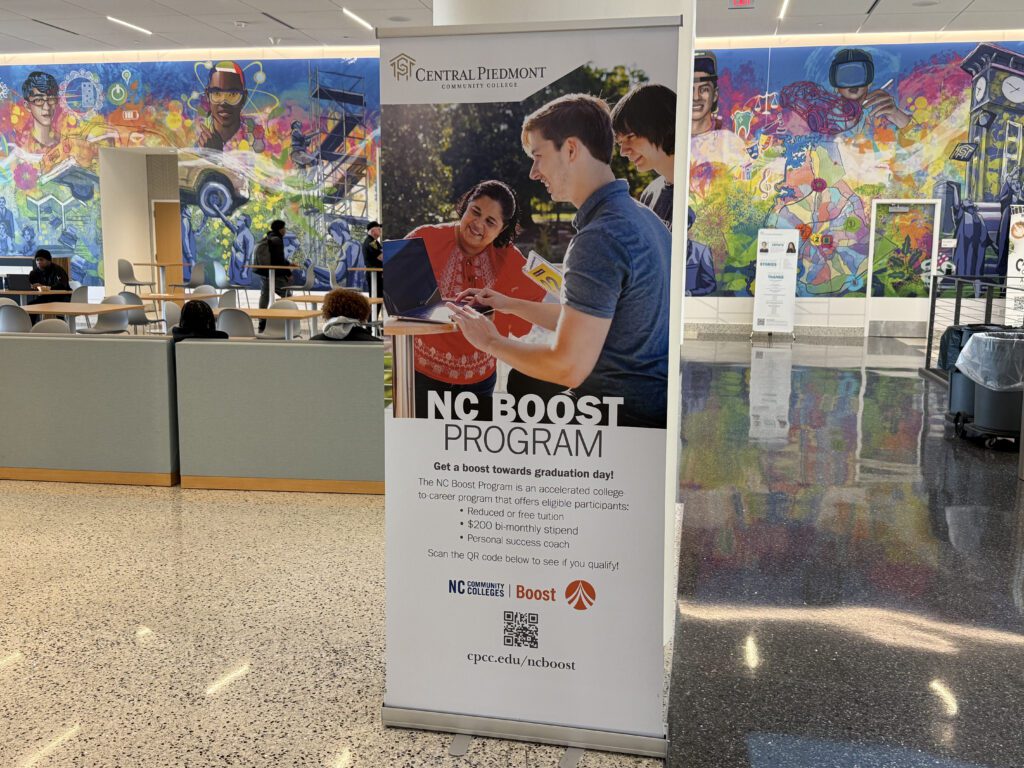
From students just out of high school to adult learners, Boost is serving a wide range of students at Central Piedmont. Here you can see the college’s Boost site, which explains which students are eligible, the benefits, and the pathways.
Gustavo Veras, who is 41 years old and from Brazil, where he grew up speaking Portuguese, is married to an assistant principal at an elementary school in Union County Public Schools. Veras had been taking classes one at a time, but now, with Boost, he has a plan to transfer to Appalachian State University — his wife’s alma mater — for a bachelor’s degree in accounting. He hopes to work for the same school district his wife does after graduation.
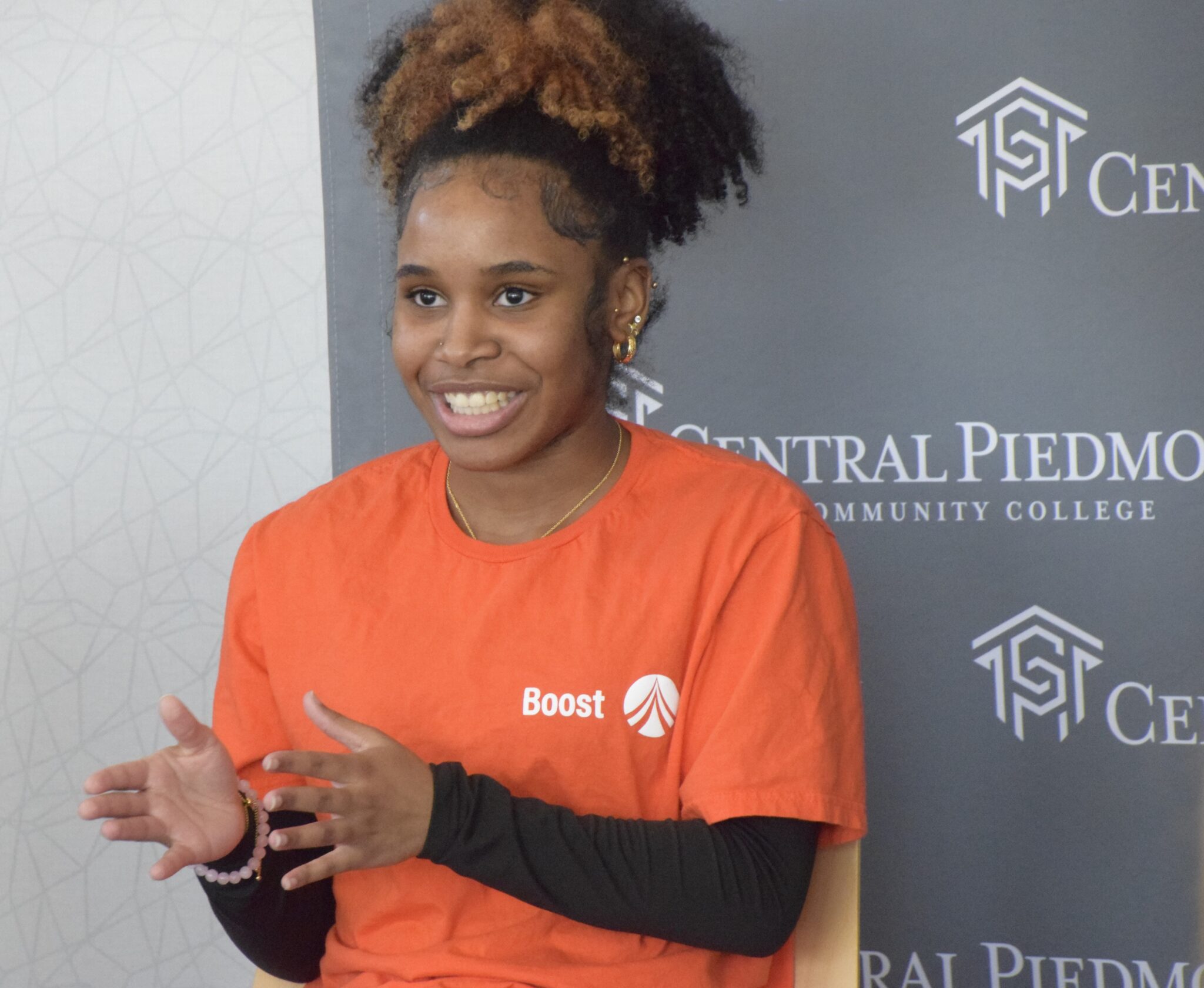
This is Serena Hammie’s first year in college. She graduated from Rocky River High School in Mint Hill, where she learned about the option of going to community college through ROTC. She is a chemistry major who hopes to transfer to UNC Charlotte or N.C. Central University and ultimately aspires to work in forensics in a crime lab.
At Central Piedmont, student support includes enrollment, advising, and coaching
Unique to Central Piedmont among the community colleges participating in Boost, the program is housed within the college’s Office of Mentoring and Coaching — separate from academic advising, which is located in a different department.
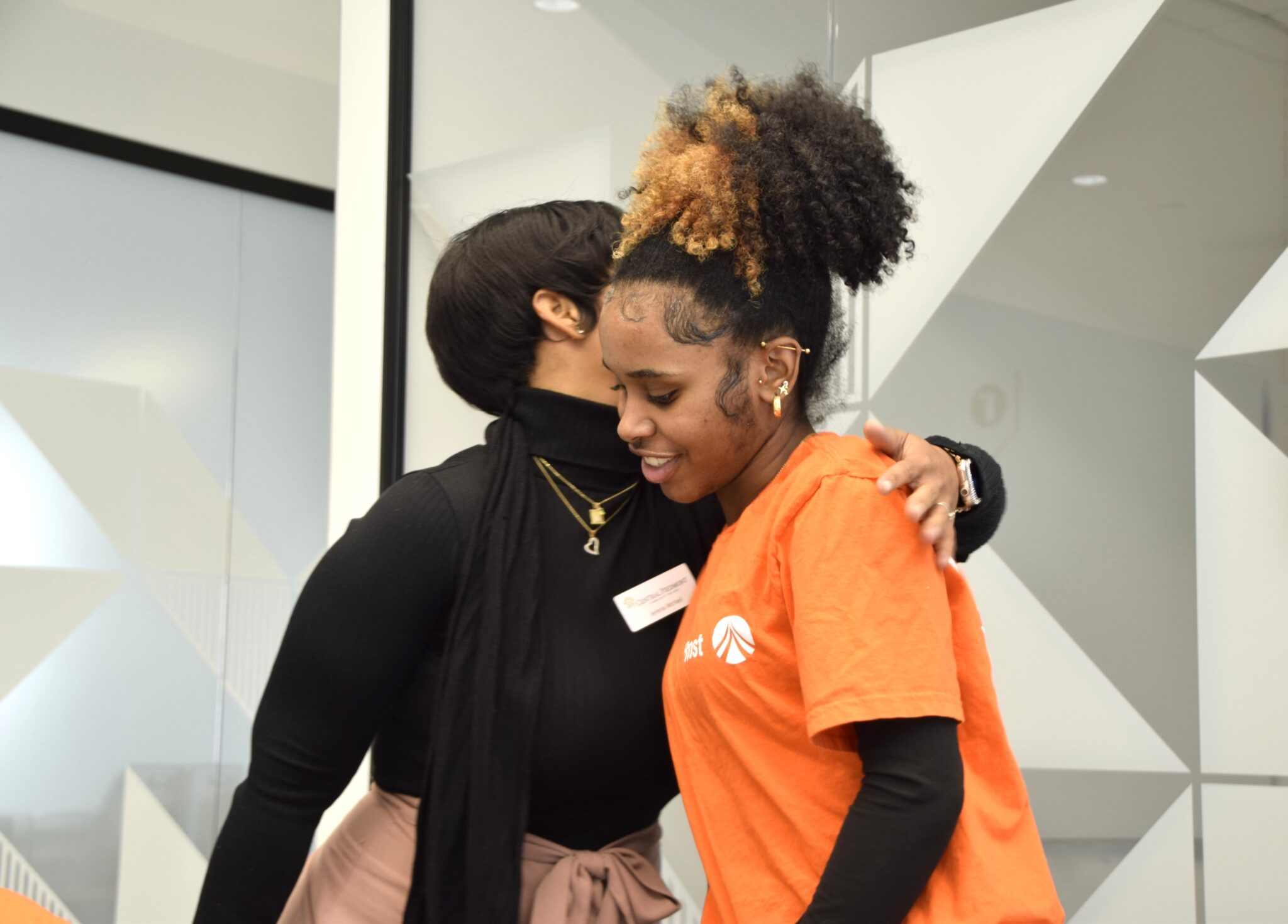
Jerena McNeil, Central Piedmont’s Boost coach, uses evidence-based best practices for student success with those she serves. She said that even this early on, the community college is “really being able to see the impact, see the change, and see the things that we are doing actually work.”
Most of the students enrolled in Boost at Central Piedmont learned about the opportunity through email, including a more personalized follow-up email after completing a student interest form. That strategy, along with classroom visits, 32 information sessions, and information about Boost everywhere you look around campus, helped the college meet enrollment targets quickly.
Veras explained that students can’t even imagine the support they need or that is possible. “For me, I was just taking my classes,” he said. He realized from Boost that “there is more to it. I don’t know if it is just me because I am not from here, but Boost has been really helpful.”
Getting enrolled for the right courses
Both students cited examples of Boost helping them get enrolled in the classes they need for their longer-term college and career goals.
“That’s a big thing that North Carolina Boost actually helped me with — figuring out what classes I needed,” said Hammie.
Prior to Boost advising, Hammie was registered for two math classes that would not have counted for the four-year degree she wants, and Veras took a class that he didn’t have to take.
“I am so glad you know what classes to take and what classes will transfer,” said Gina Zhang, director of strategic initiatives with myFutureNC, a nonprofit that supports attainment.
“I was really grateful for that, honestly,” said Hammie.
“That’s my jam right there,” said McNeil, talking about the need for students to understand which credits will actually transfer. “We have to make sure we have a clear vision, we understand where we are going, why we are doing it, and how we are going to get there.”
Understanding student skills, will, and self-regulation
Once in Boost, McNeil has students in their first coaching session take LASSI — “a 10-scale, 60-item assessment of student’s awareness about and use of learning and study strategies related to skill, will, and self-regulation components of strategic learning.”
Through LASSI, Hammie learned that she needs to prioritize time management and test-taking strategies. McNeil is working with her to integrate the University of Arizona’s eight day test preparation plan into her study habits.
Veras said in addition to coming up with a two-year plan to get to App State, he has learned about himself, including more about his study skills and how his brain processes information. McNeil is working with him on how to identify and prioritize main ideas. Why is that hard? She said students like Veras aspire to be competent professionals which makes them want to learn and know all the things. But given the constraints on their time, learning to identify and prioritize the main idea is really important.
In addition to the class enrollment and financial support, this personalized success coaching is making a difference for Boost students just weeks into being in the program by allowing them to pinpoint areas of growth. Broader programming provided by Boost is helping students learn about local employers — Hammie mentioned Novant and Wells Fargo — with opportunities in the local Charlotte metro area.
Legislators hear from Arnold Ventures, students, and leaders about Boost
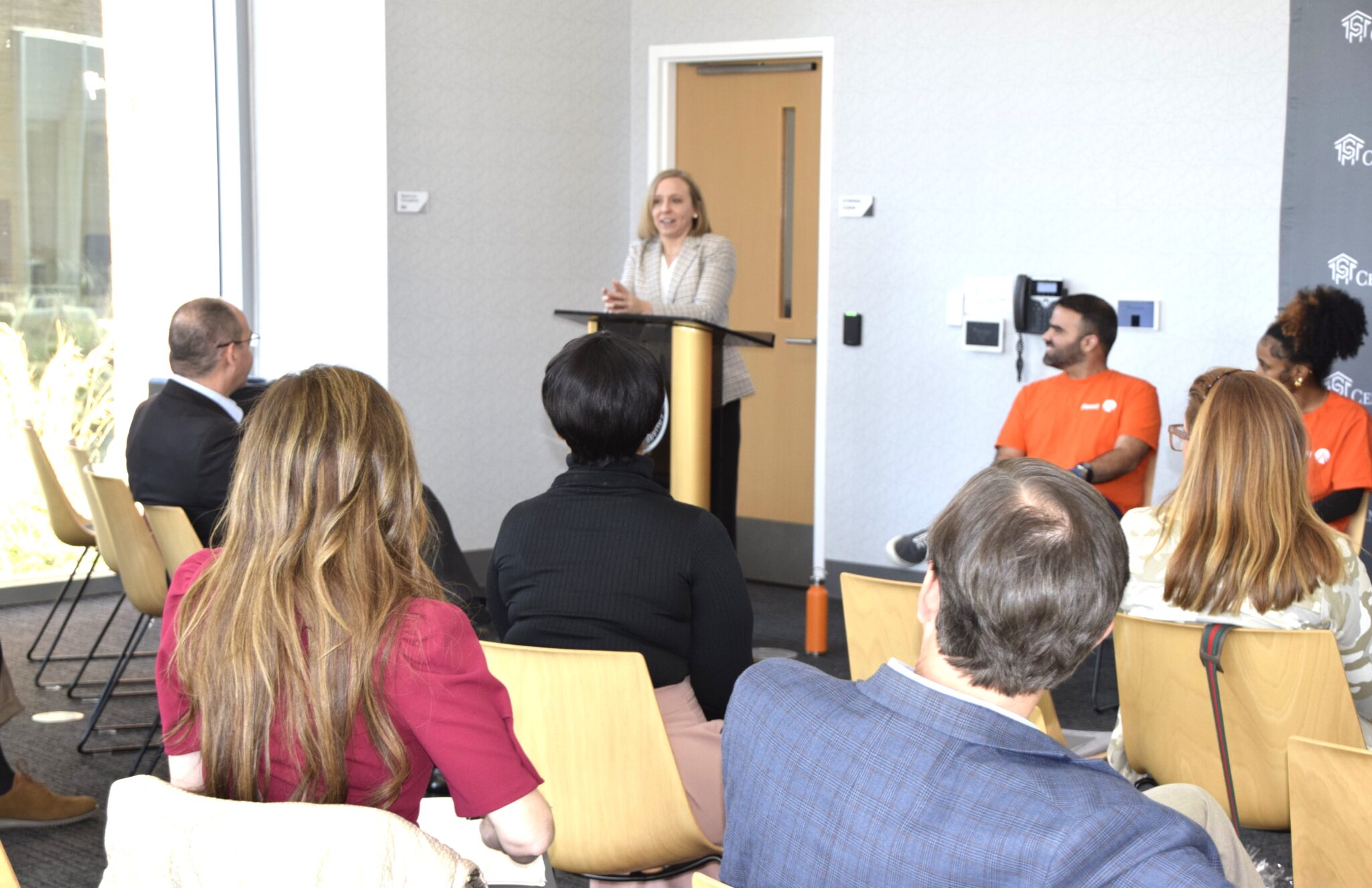

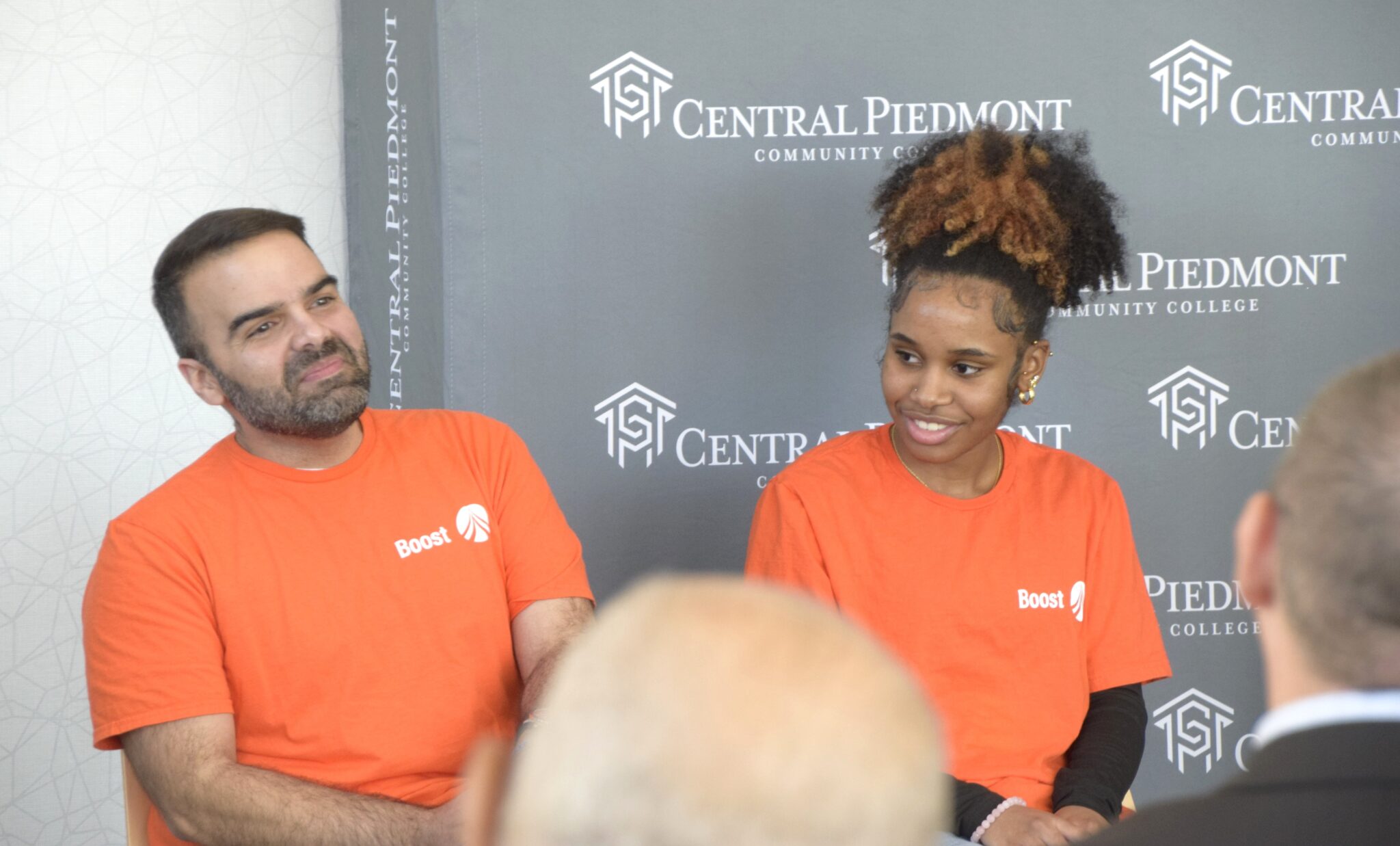
The implementation of Boost at 15 community colleges across North Carolina is supported by a $35.6 million grant from Arnold Ventures, which invests in research and evidenced-based solutions to address some of the country’s most pressing issues. The program is designed to train the workforce that will drive North Carolina’s economic prosperity, according to the press release announcing the grant. It is the largest private grant the N.C. Community College System (NCCCS) has ever received.
“The City University of New York’s Accelerated Study in Associate Programs (CUNY-ASAP) model is the gold standard for increasing completion in higher education,” said NCCCS president Dr. Jeff Cox when the grant was announced. ASAP is highly regarded nationwide for doubling graduation rates. Boost is replicating the program here in North Carolina.
Kelly McManus, who leads the higher education portfolio at Arnold Ventures, moderated a panel for the legislators, which included Nicole Ditillo, Boost program director for NCCCS; Dr. Amy Bruining, vice president of student affairs at Central Piedmont and Boost campus lead; Kelly Herman, Boost director at Central Piedmont; and the two Boost students.
Boost, said McManus, started with one question:
How do we make sure that every student that comes through our doors has economic mobility and opportunity when they leave?
— Kelly McManus, Arnold Ventures
Ditillo said Boost helps students with persistence and graduation, but also with success beyond graduation.
Boost aligns students’ programs of study with Propel NC, said Ditillo, which is the new NCCCS proposed funding model that prioritizes connecting students to high-demand, high-wage jobs, “fueling the economy of North Carolina.” At Central Piedmont, Boost students can be enrolled in transfer programs or the following Propel NC fields: health care, engineering, advanced manufacturing, trades and transportation, information technology, and public safety and first responders.
“Central Piedmont is very intentional about the programs that we undertake,” said Bruining, noting new initiatives have “to align with their institutional values and propel students forward with outcomes.” Bruining studied the CUNY ASAP model for her dissertation along with a replication of the program in Ohio.
“A replication here in North Carolina is a phenomenal opportunity for our students,” she told the legislators.
“The obvious question given that we have legislators/appropriators here is, let’s assume for argument’s sake, that it’s a success here at Central Piedmont: How do we replicate it across North Carolina? Is it a question of funding, a question of buy-in?” asked Gabe Esparza, the North Carolina Secretary of Administration and a member of Central Piedmont’s board of trustees.
McManus said it is a question of funding. “That is the biggest challenge,” she said. “This is best practice. This is what every student should have.”
What excites students most about Boost?
“Seeing us graduate,” said Veras.
“I’m going to be in the stands,” said McNeil, his coach.
Editor’s Note: Arnold Ventures supports the work of EdNC. You can see all of our coverage of Boost here.

Recommended reading