A homecoming.
That is the sentiment that the host organization, Village of Wisdom (VOW), used to describe its Black Genius Festival (BG Fest).
Durham’s Parrish St. stretched its arms once more to embrace the vibrance of Black jubilation during the festival on the very soil from which the city’s historic “Black Wall Street” emerged more than a century ago. In light of this history, BG Fest is a return home.
 Sign up for the EdDaily to start each weekday with the top education news.
The phrase, Black Wall Street, is used to refer to districts across the United States that featured bustling Black businesses and leadership that bolstered thriving Black communities. For Durham, in the late 1800s and early 1900s, businesses like the North Carolina Mutual Life Insurance Company — the first Black-owned life insurance company in the country — served as an anchor for access and economic advancement for the Black Americans in the region. According to Aeran Baskin, VOW’s director of communication, just as the community was the heartbeat of Black Wall Street, it is now the heartbeat of BG Fest.
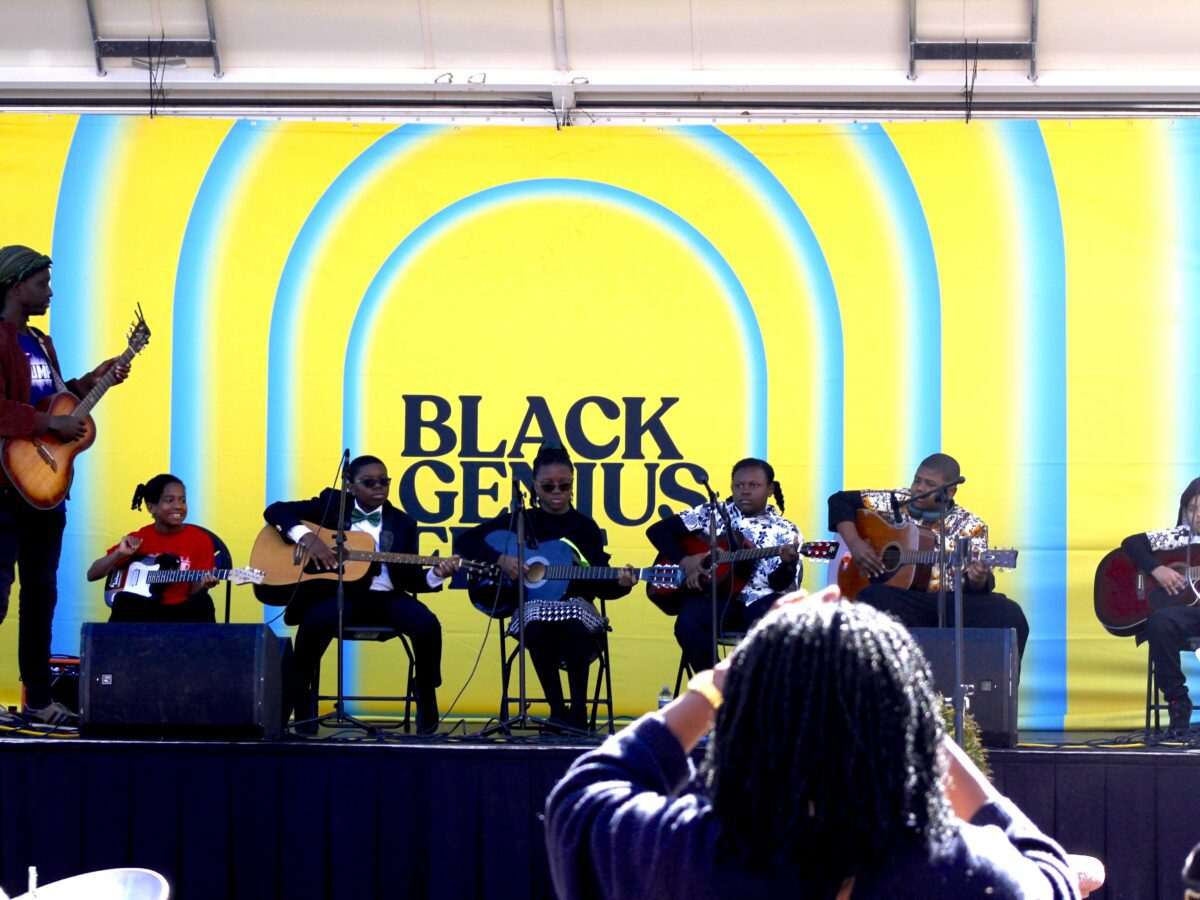
Coinciding with the 100th anniversary of National Black History Week, a seed that ultimately bloomed into an entire month, BG Fest welcomed over 500 families for a powerful day of live performances, immersive learning, and wellness activities on Feb. 28.
Dreaming as an act of liberation
As described on their website, VOW believes that “Black Genius is intrinsic to every Black person. It’s limitless, luminous, full of possibility.” Their mission as an organization is to “build a world that honors and activates individual Black Genius by affirming, protecting, and caring for Black and Brown children through the love and wisdom of their families.”
For more than a decade, the organization has developed a framework and programming that gathers parents, educators, and artists, centering on the journey toward collective liberation.
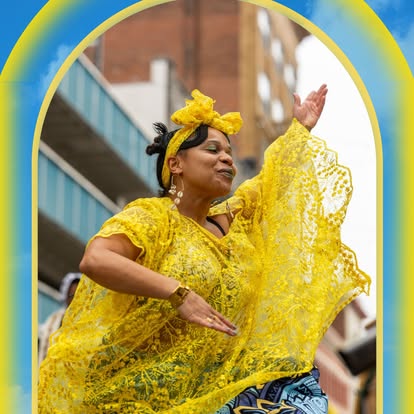
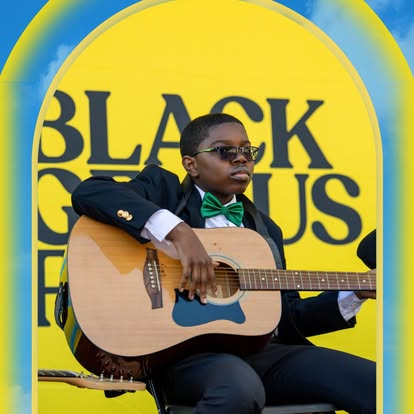
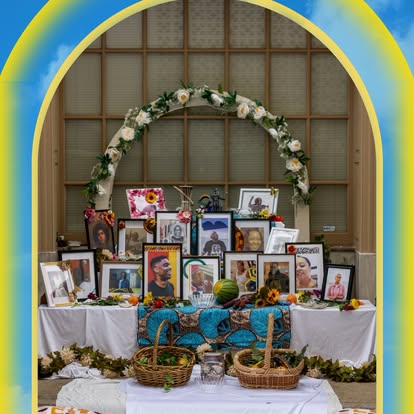
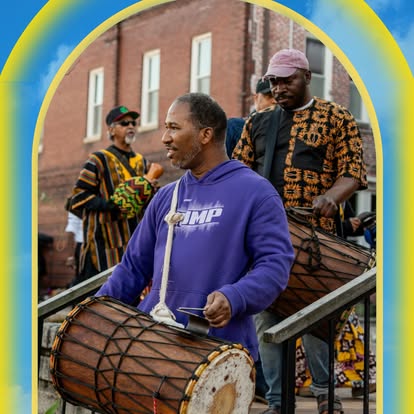
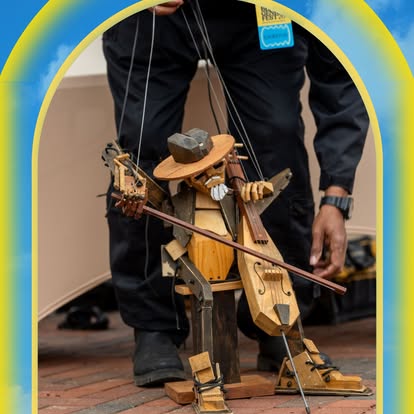
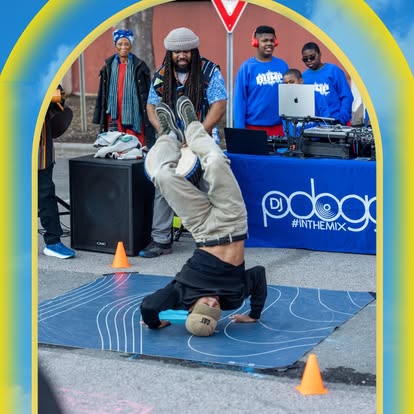
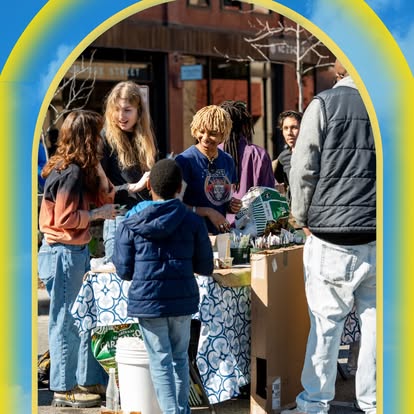

For VOW, dreaming is an act of liberation. “Our dreams have the power to build a better world for our children,” their website states. “We bring our community together to inspire their radical imagination. These dreams become the research and tools that shape learning environments where children thrive.” The festival is one way in which that dream is activated and brought into the physical.
As stated by Malika Graham-Bailey, board chairperson of VOW, “Black Genius is community built.” In alignment, VOW’s founder, William Jackson, added that Black Genius is not just a saying — it’s a framework consisting of six different elements developed from their research with Black parents from their community over the years. The elements consist include awareness, can-do attitudes, racial identity, selective trust, social justice, and multicultural navigation.
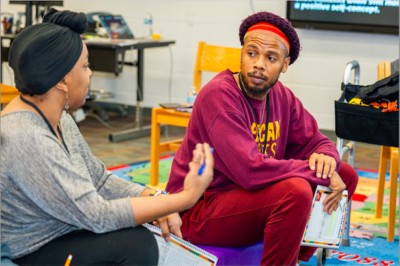
According to Jackson, VOW aims to “create a culturally affirming learning environment in the community outside of the walls of the schools.” Through the contributions of community members, referred to as “architects of the dream,” VOW developed a festival that was organized into six different immersive worlds aligned with the aforementioned elements and used to support Black children and families by deepening their understanding of their Black Genius, said Graham-Bailey.
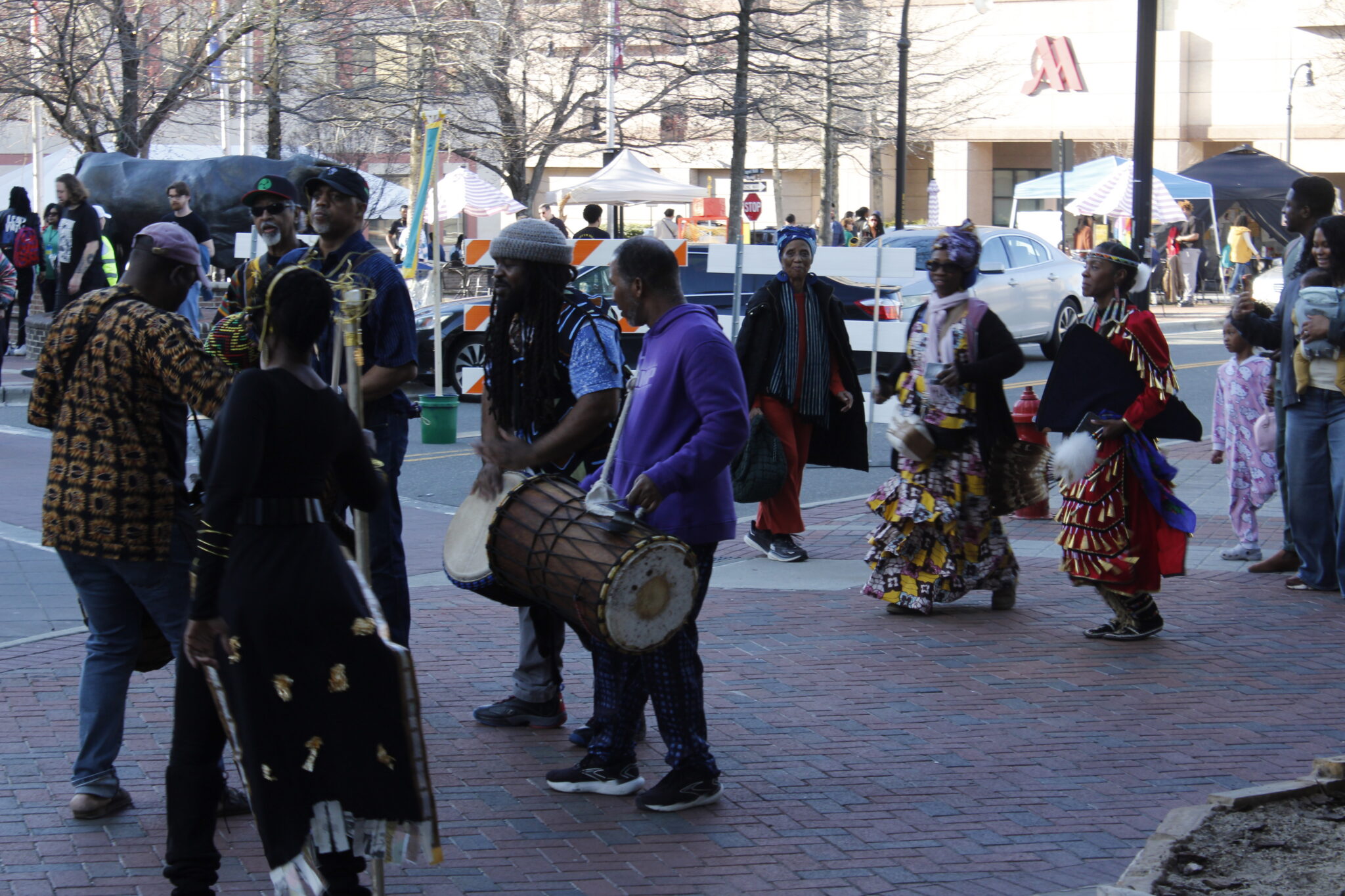
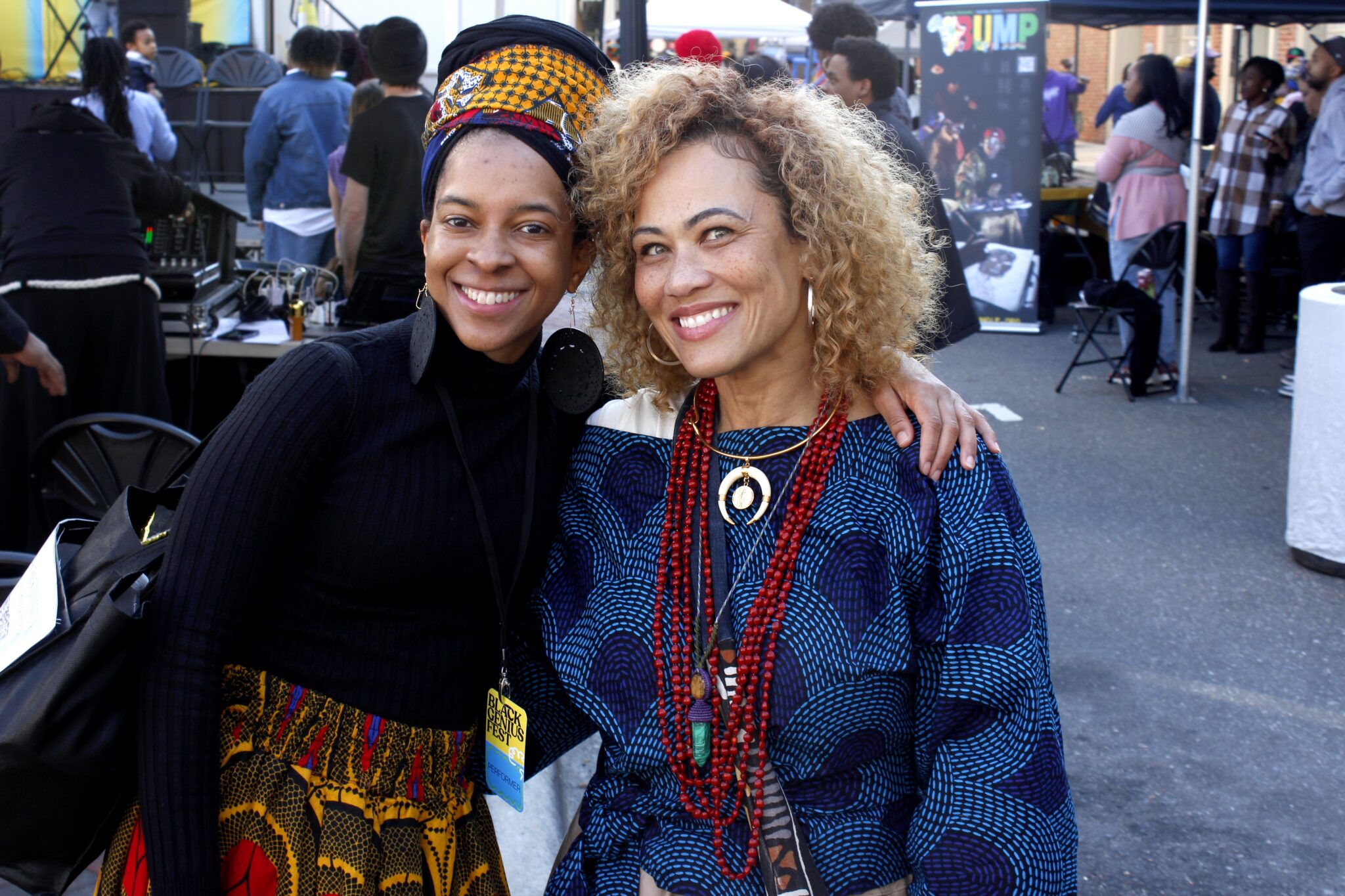
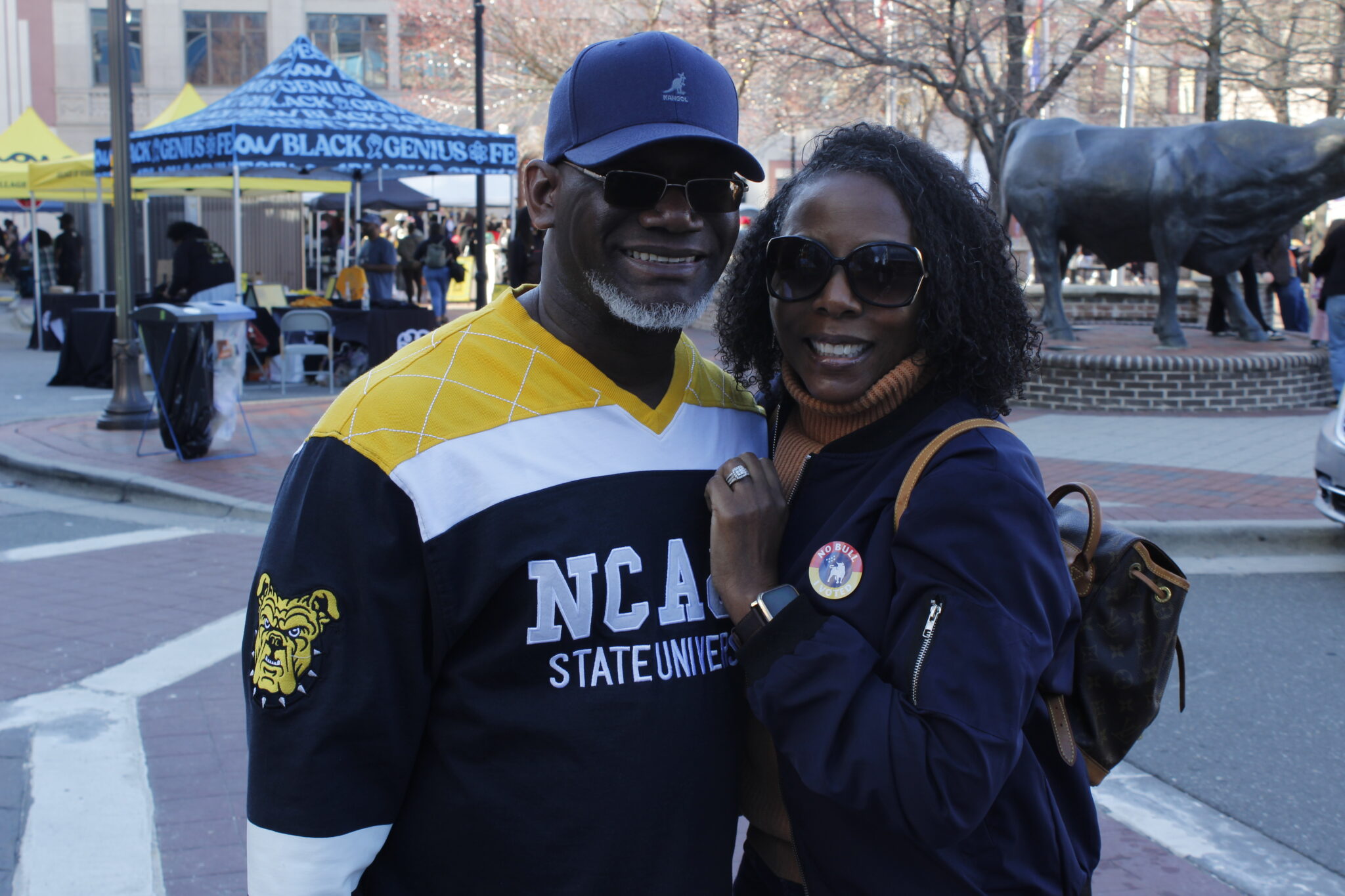
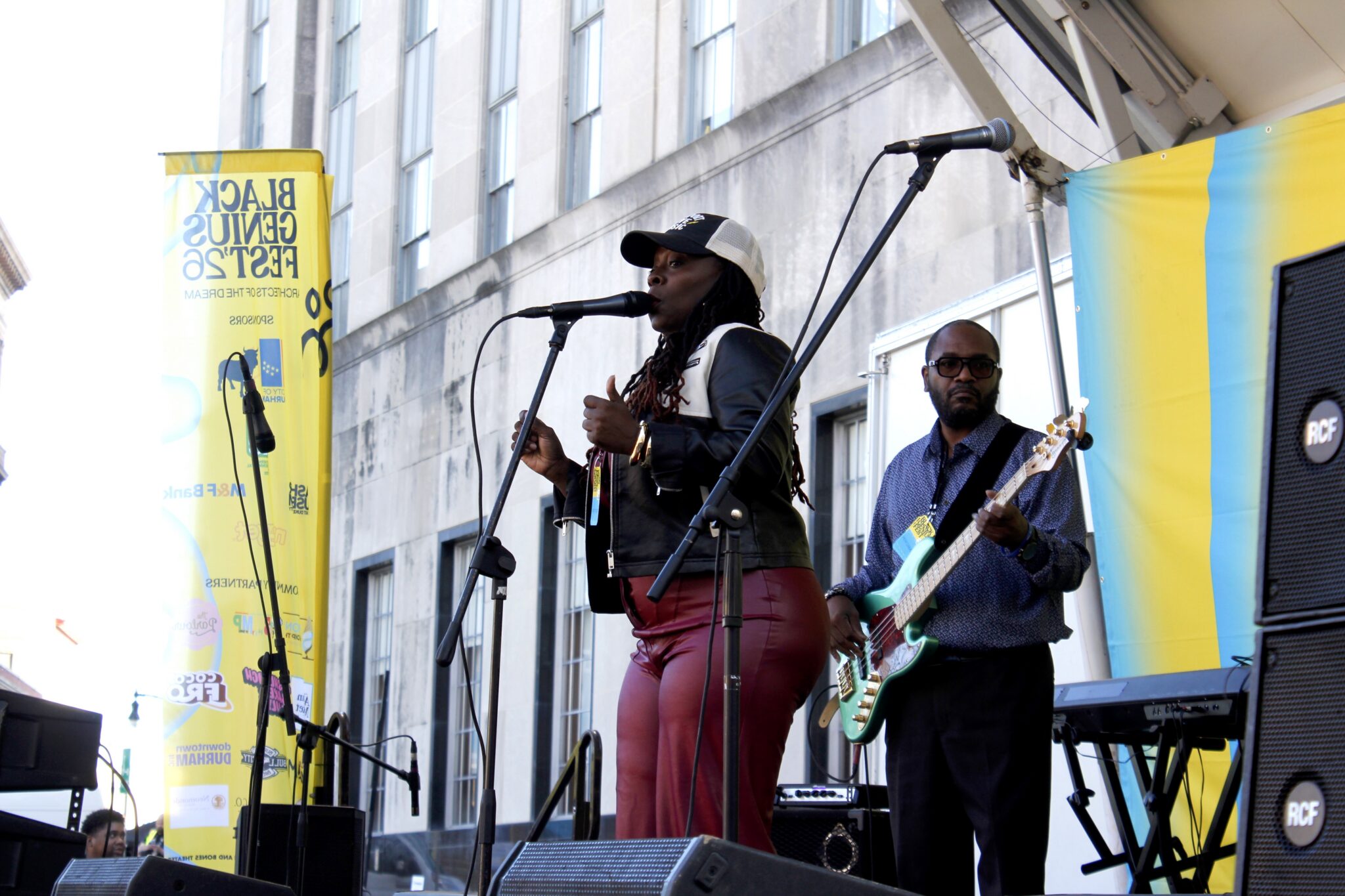
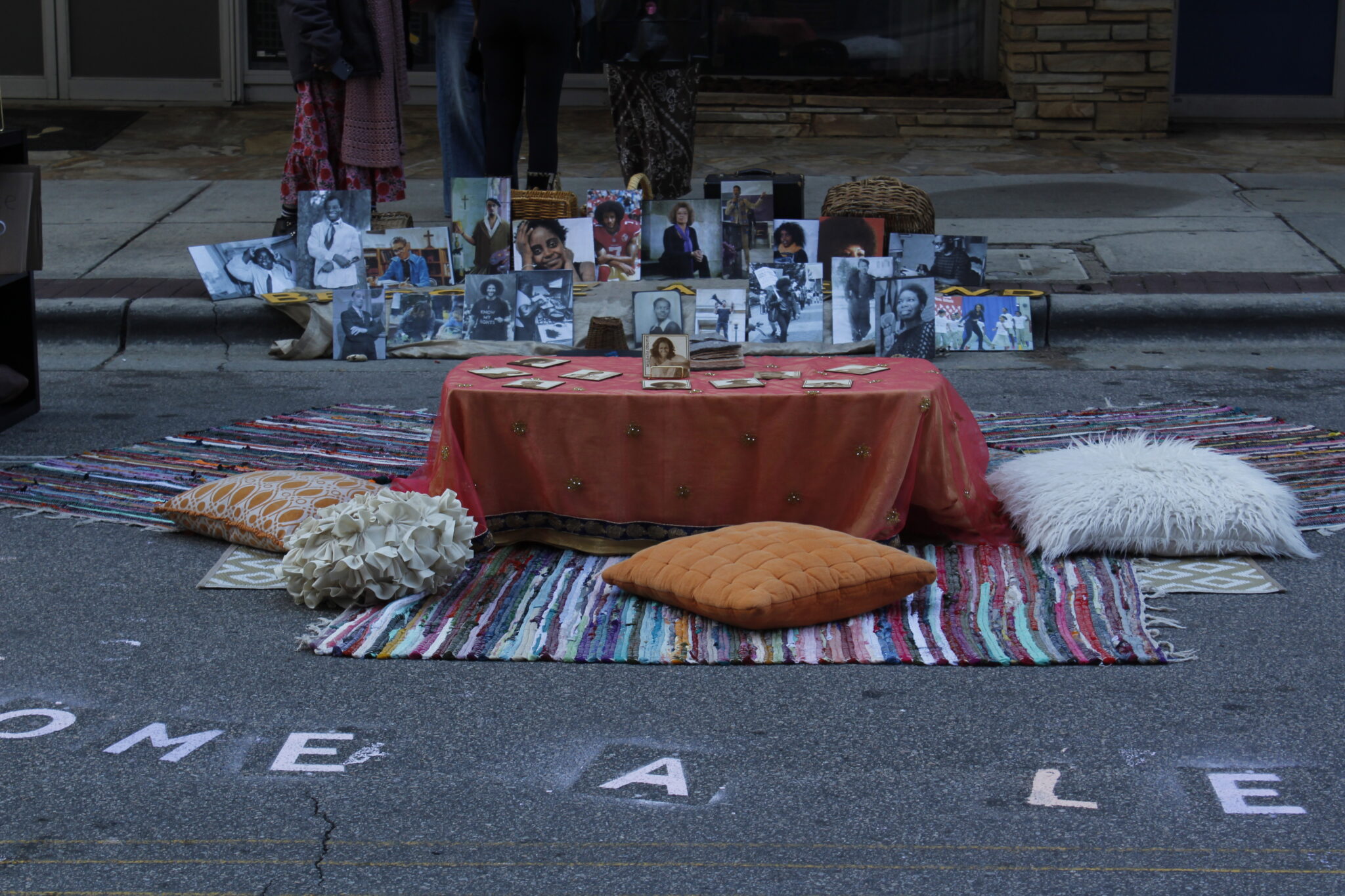
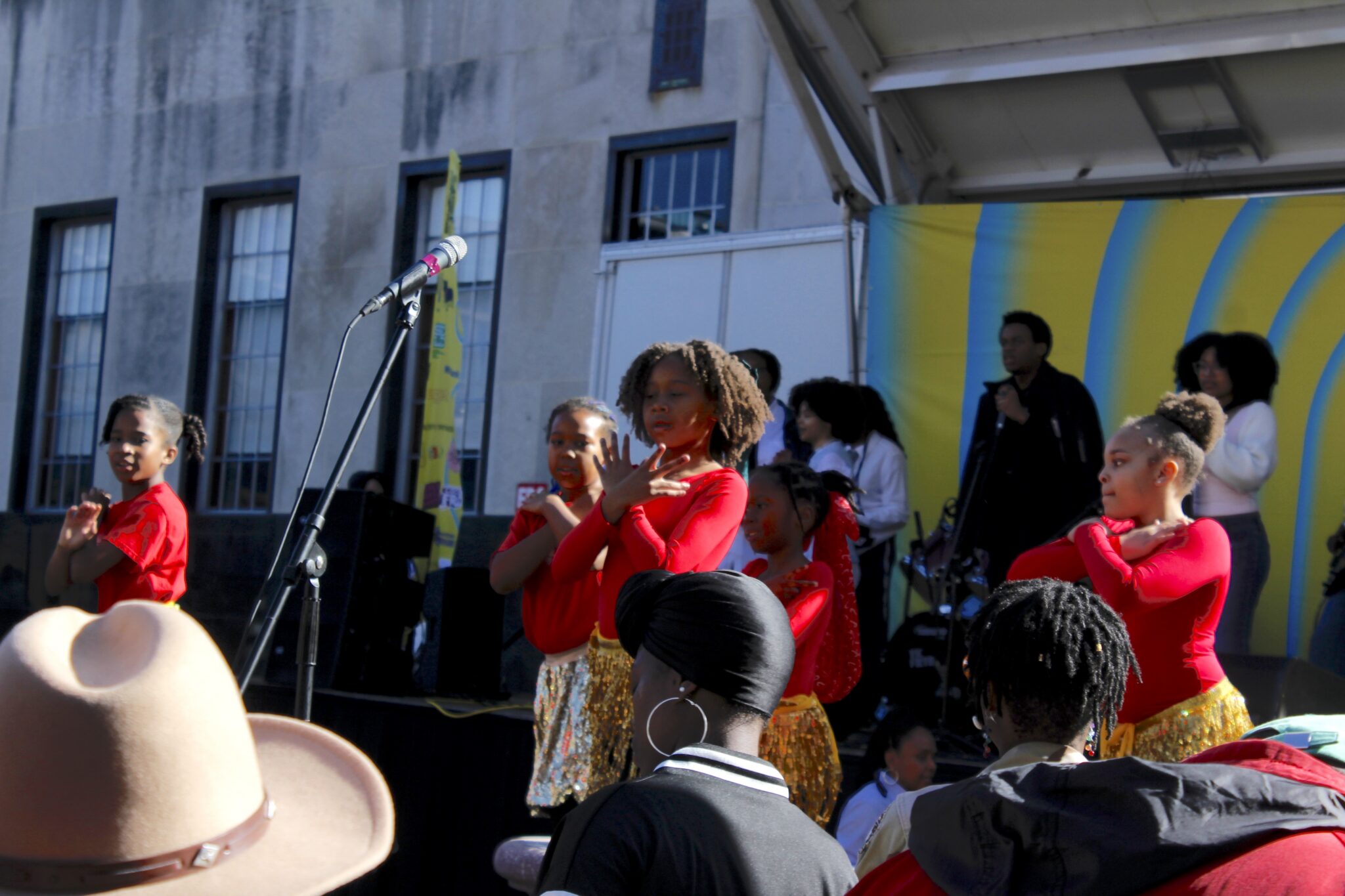
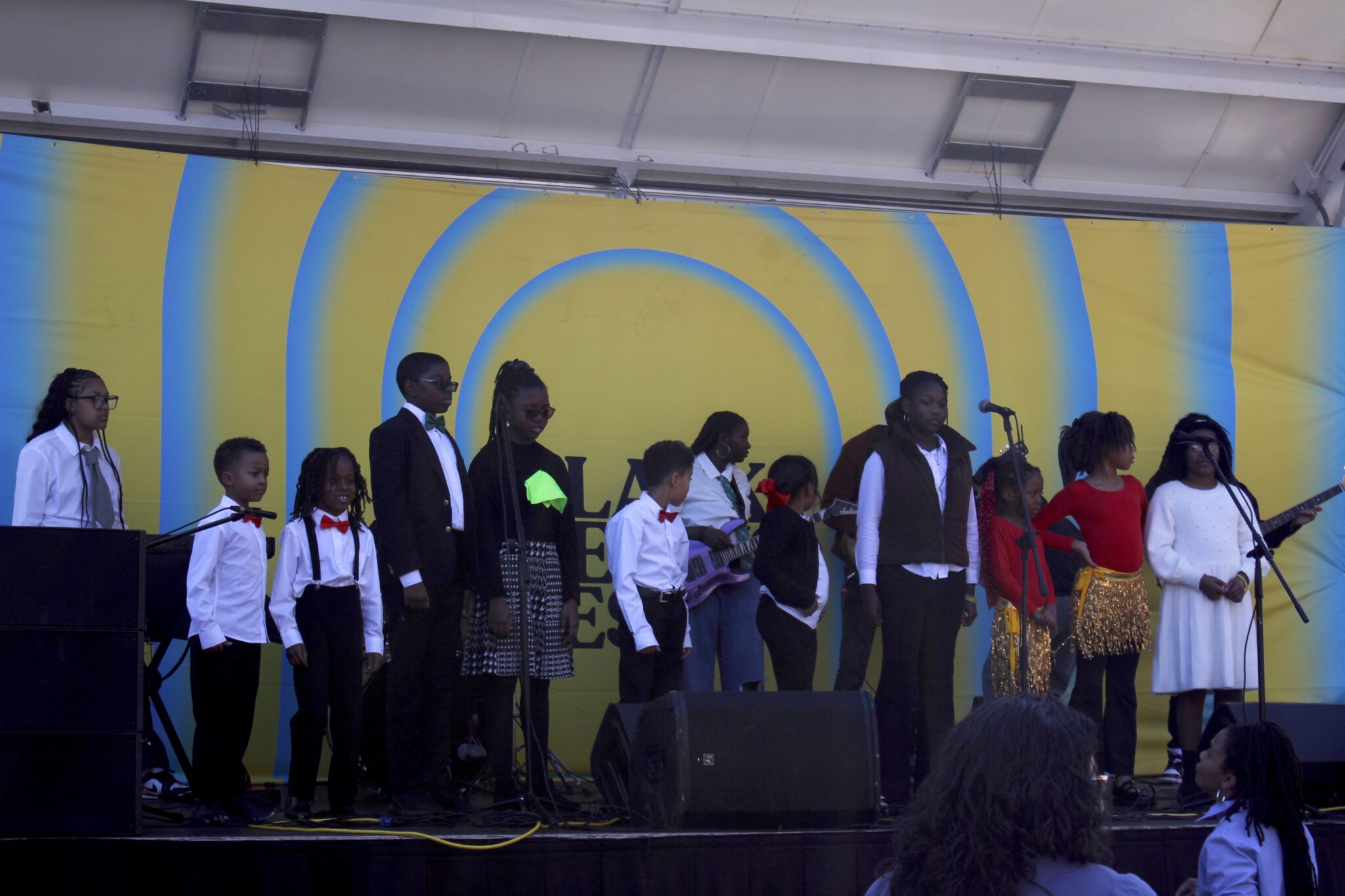
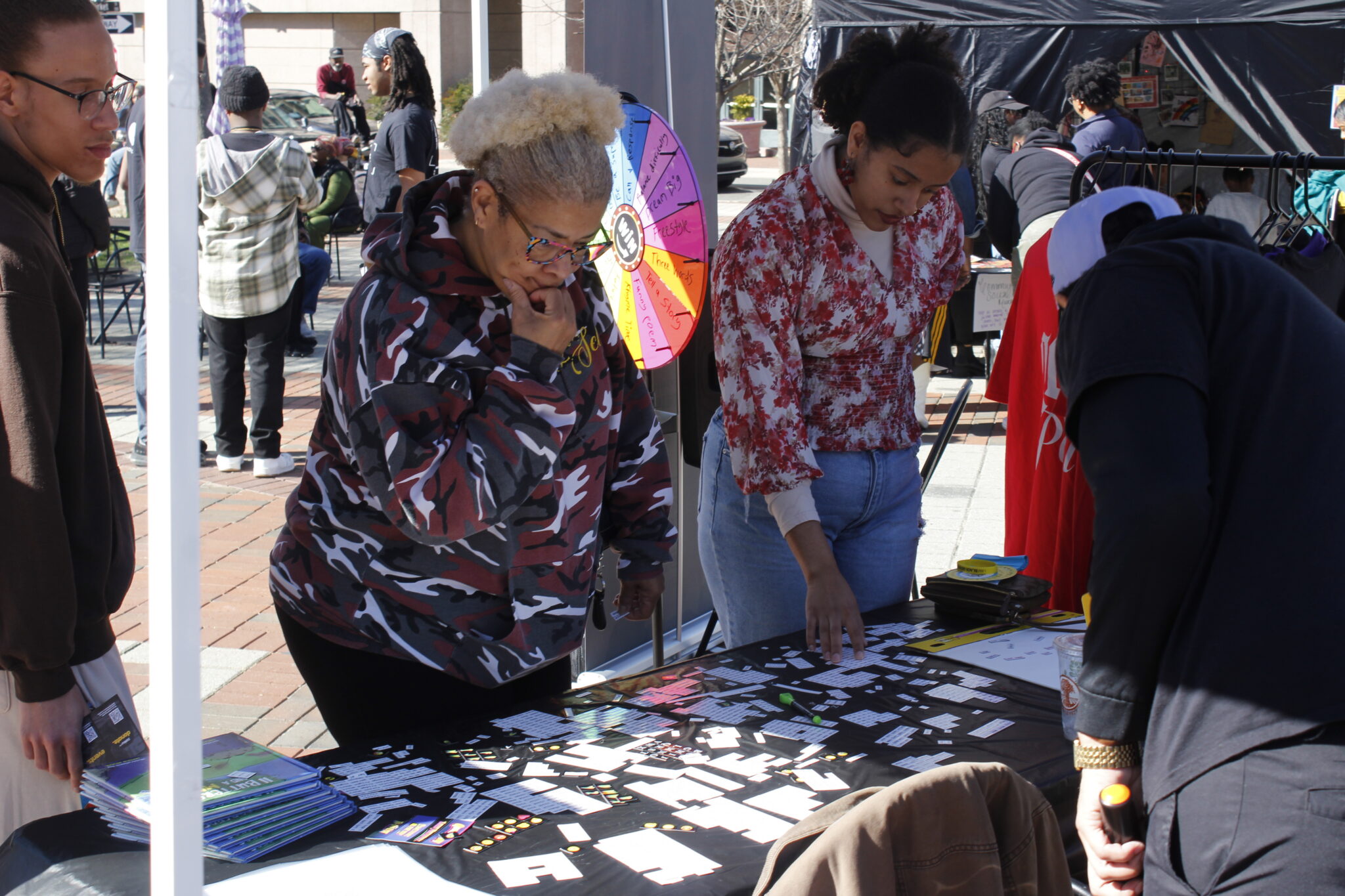
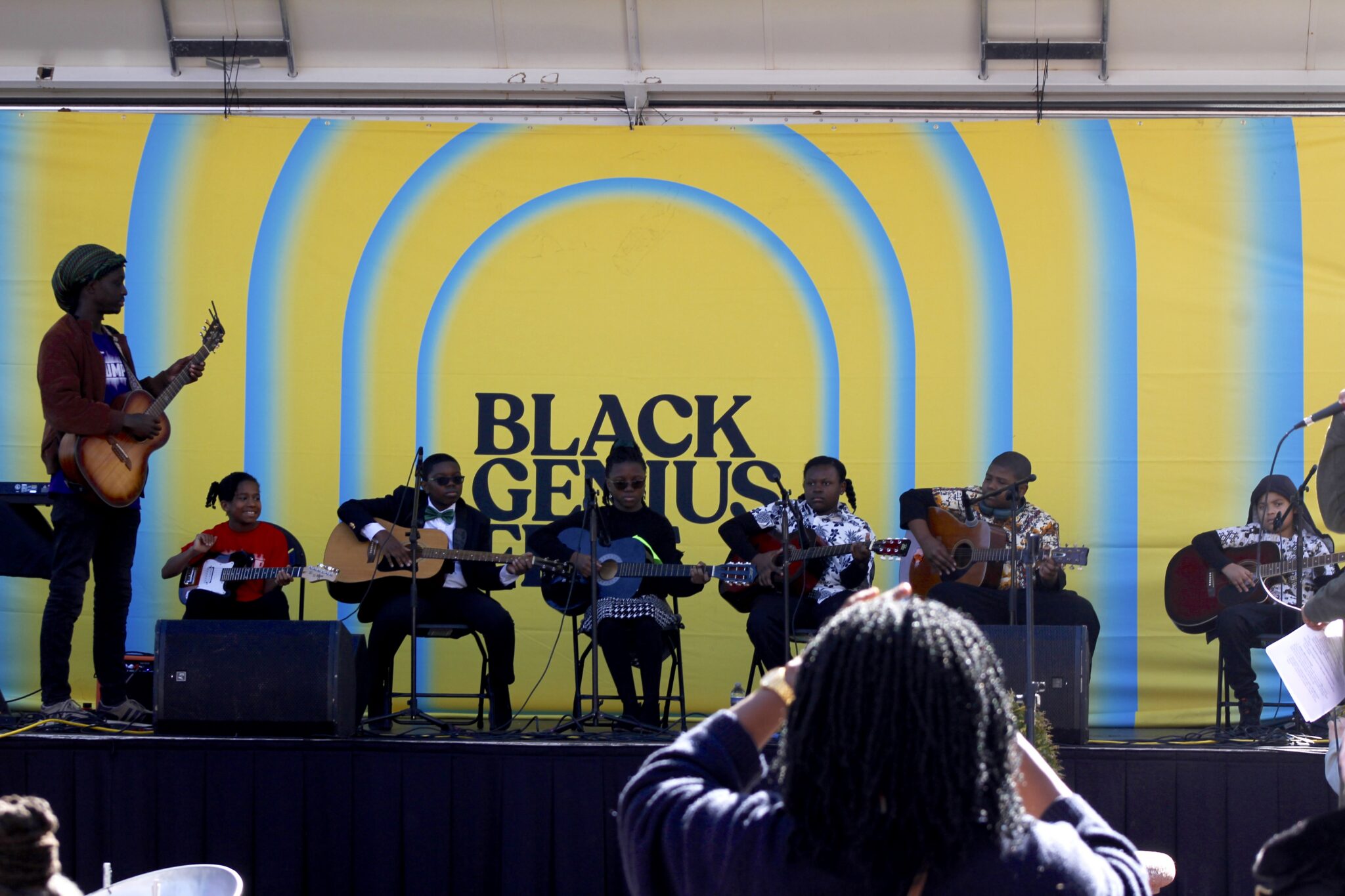
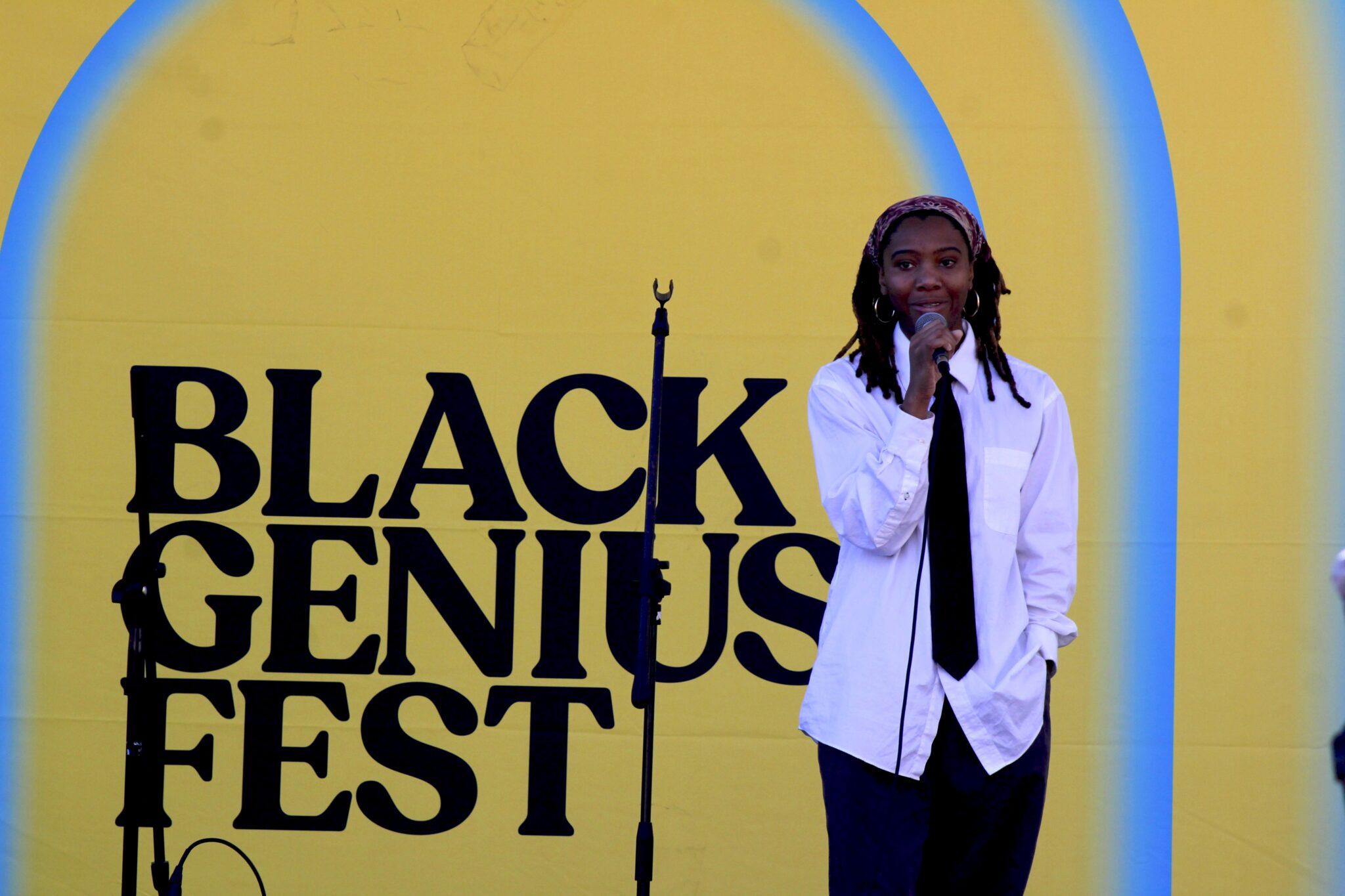
Throughout the festival’s transition from morning into the sunset, the subtle briskness of a 50-degree day was accompanied by the profound laughter of children and the vibrations of various rhythmic music and dance performers alongside engaging hands-on activities for all age ranges.
Architects of the dream
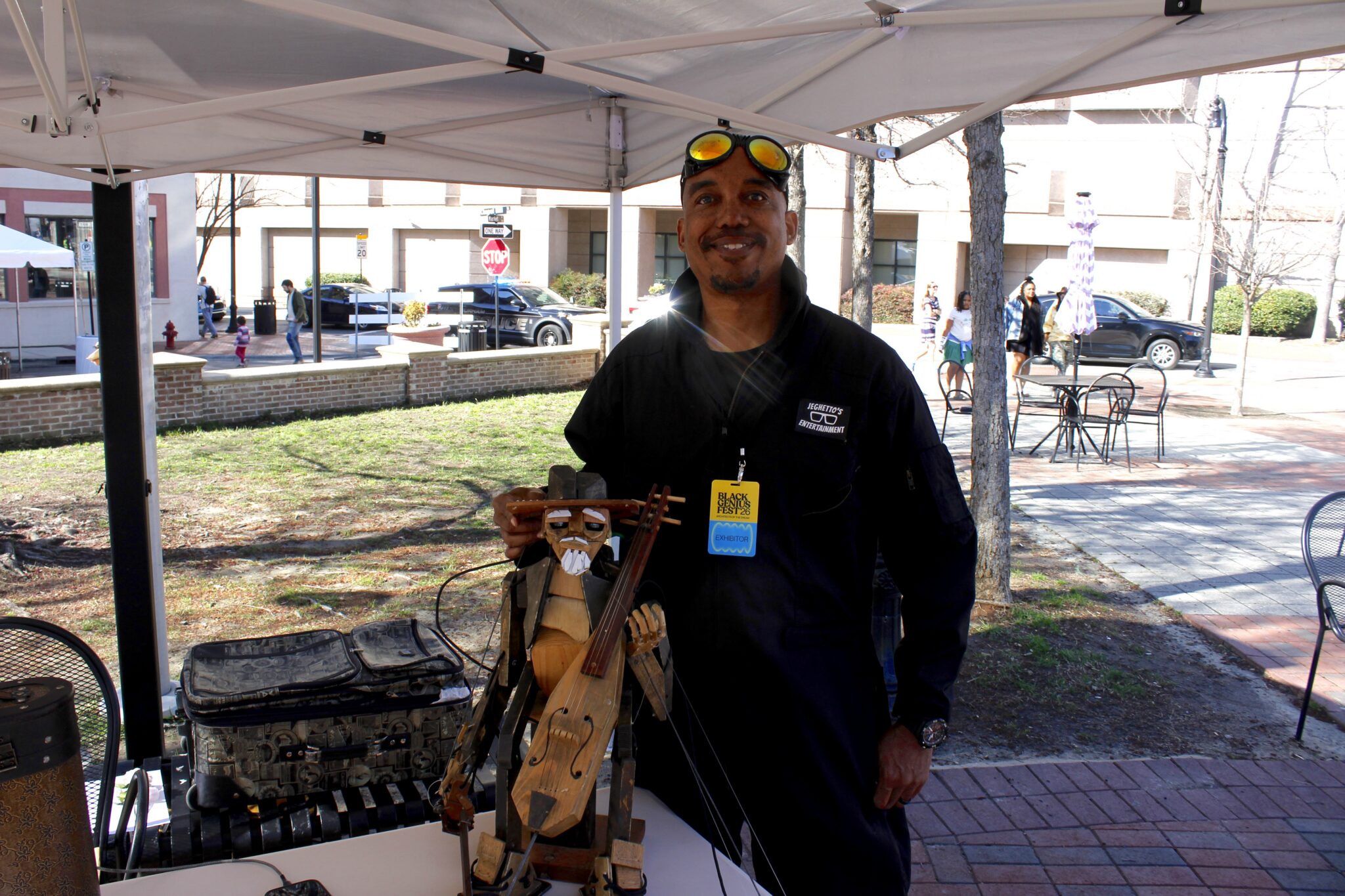
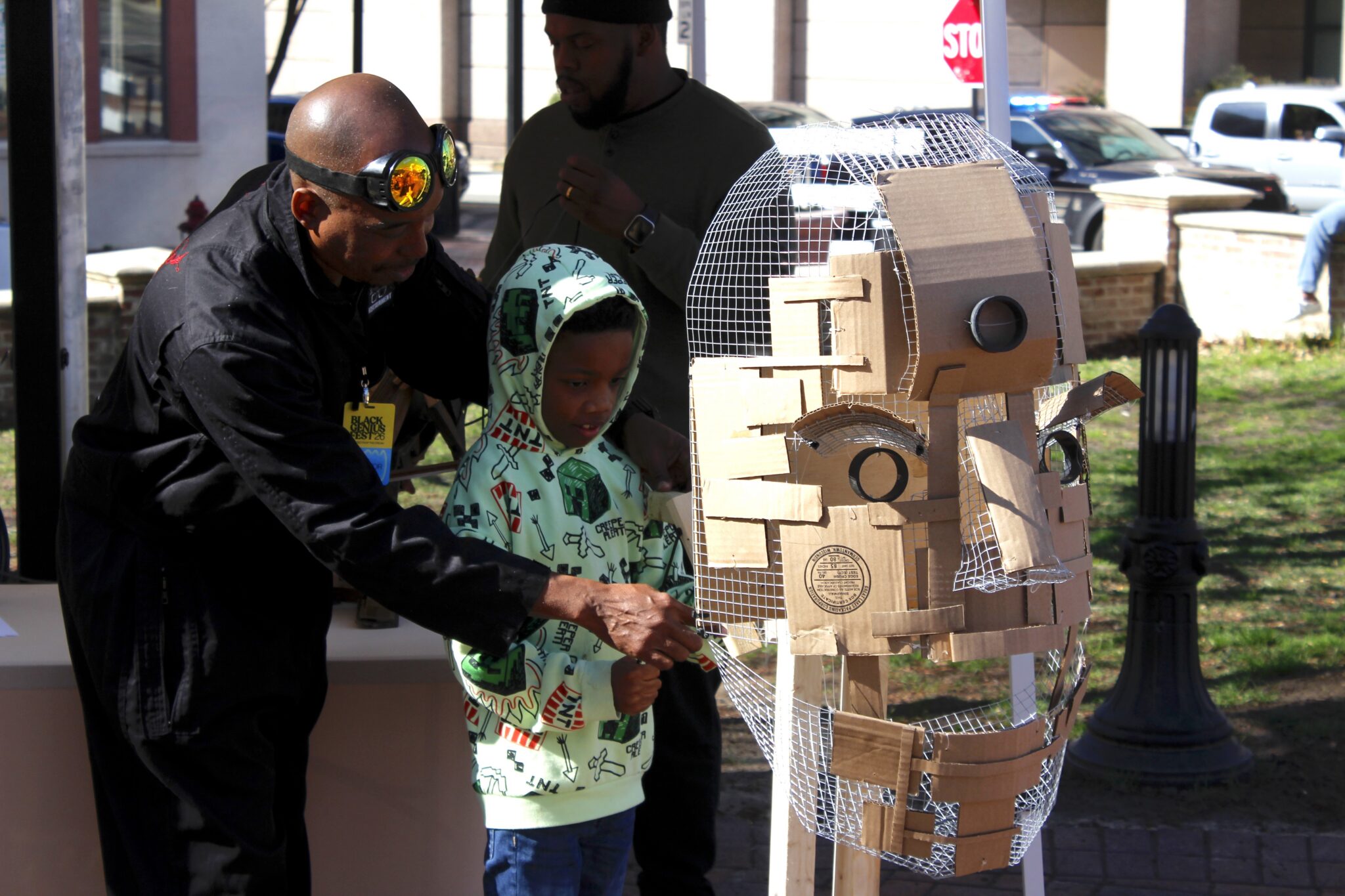
For Tarish “Jeghetto” Pipkins, “Black Genius is necessary.” Pipkins started building and performing with puppets over 23 years ago, and currently tours the country doing stage performances.
Throughout his career as a puppet master, Pipkins has helped give children “a vision of a future without oppression,” while exposing them to a nontraditional art form. Being a puppet master is his method of promoting “artivism,” the belief that “the only way (to) true activism is through art.”
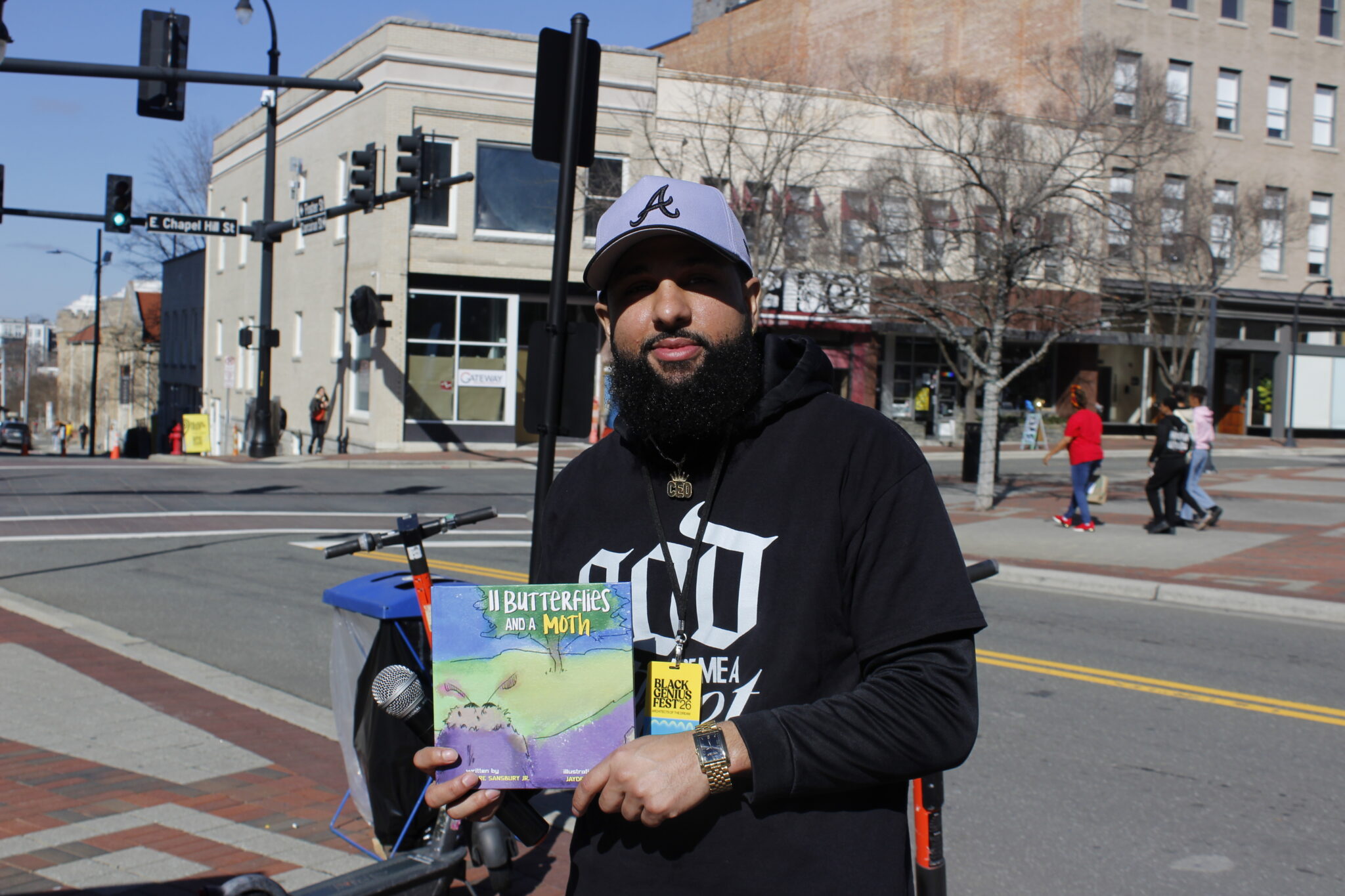
Andre Sansbury is a spoken word artist who believes that “Black Genius is love.” Sansbury expressed that the creativity of the festival exhibits as a collective brought together a community of love.
Sansbury’s “Pull Up Poet Story Circle” exhibit focused on activating the genius in visitors, navigating them through stations that allowed them to craft their own one-line poems, and sharing those poems on a mic if they wished. Sansbury also showcased his children’s book, “11 Butterflies and a Moth,” to highlight his message that “outside qualities regarding beauty are not what make us beautiful as people. What we bring into this world is what makes us beautiful people.”
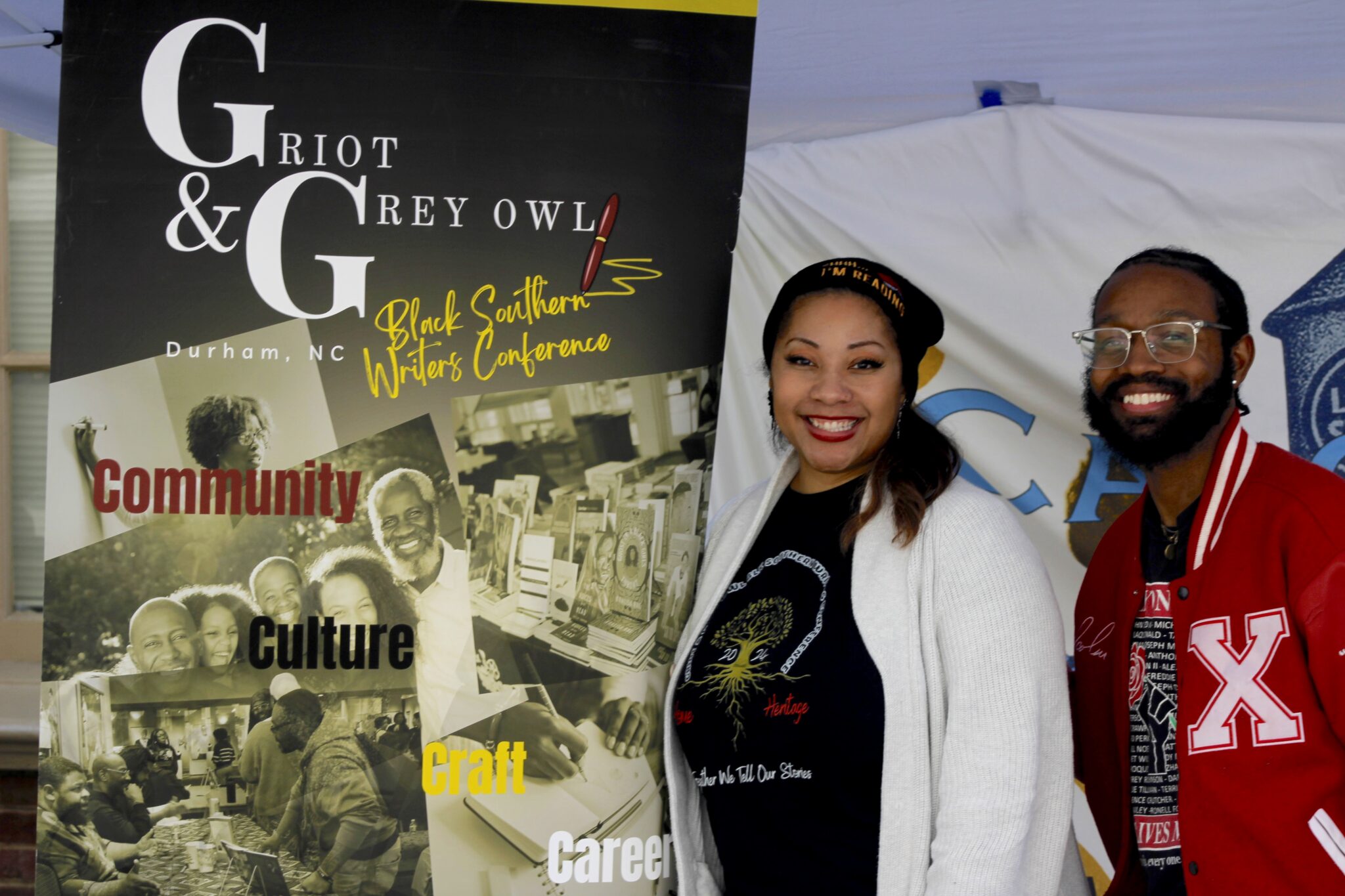
Khalisa Rae Thompson asserts that Black southern writing is a form of Black Genius too. Thompson and her husband cofounded the Griot and Grey Owl Black Southern Writers Conference. It is an annual writing festival dedicated to bringing together emerging Black storytellers and prominent writers as a means of forming a community around writing and storytelling in Durham.
Part of their aim is to train youth and young adults to tell their stories, so that they may also have a forever impact in the Black Genius landscape like Maya Angelou, Nikki Giovanni, and others who have come before them. “Whatever they set their mind to — whether it be visual art, poetry, storytelling, dance ––they are part of the Black Genius,” Thompson stated. This year’s Griot and Grey Conference is scheduled to take place Nov. 13-15, 2026.
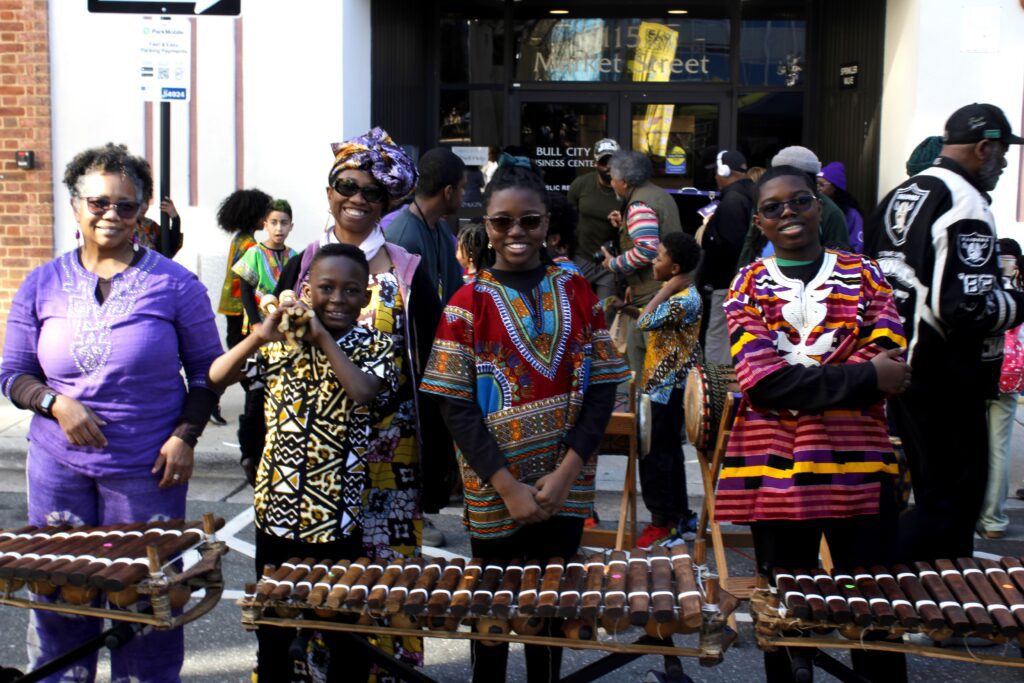
Katie Lawson says that “Black Genius is remarkable.” Though it originally began in Massachusetts as Boston Urban Music Project, the nonprofit continues to operate as BUMP the Triangle in North Carolina.
Lawson, a BUMP board member, stated that the organization started by offering musical education to underprivileged youth, but has since expanded to include visual arts, theater arts, and other musical training for youth ages 5 through 18. Also a parent of a student in the program, Lawson says that instructors have shaped her son’s broad musical talents and he now plays four instruments. As BUMP offered their musical genius to the festival, Lawson emphasized the significance of allowing children to know that it’s okay to be different while creating space for them to show their talent.
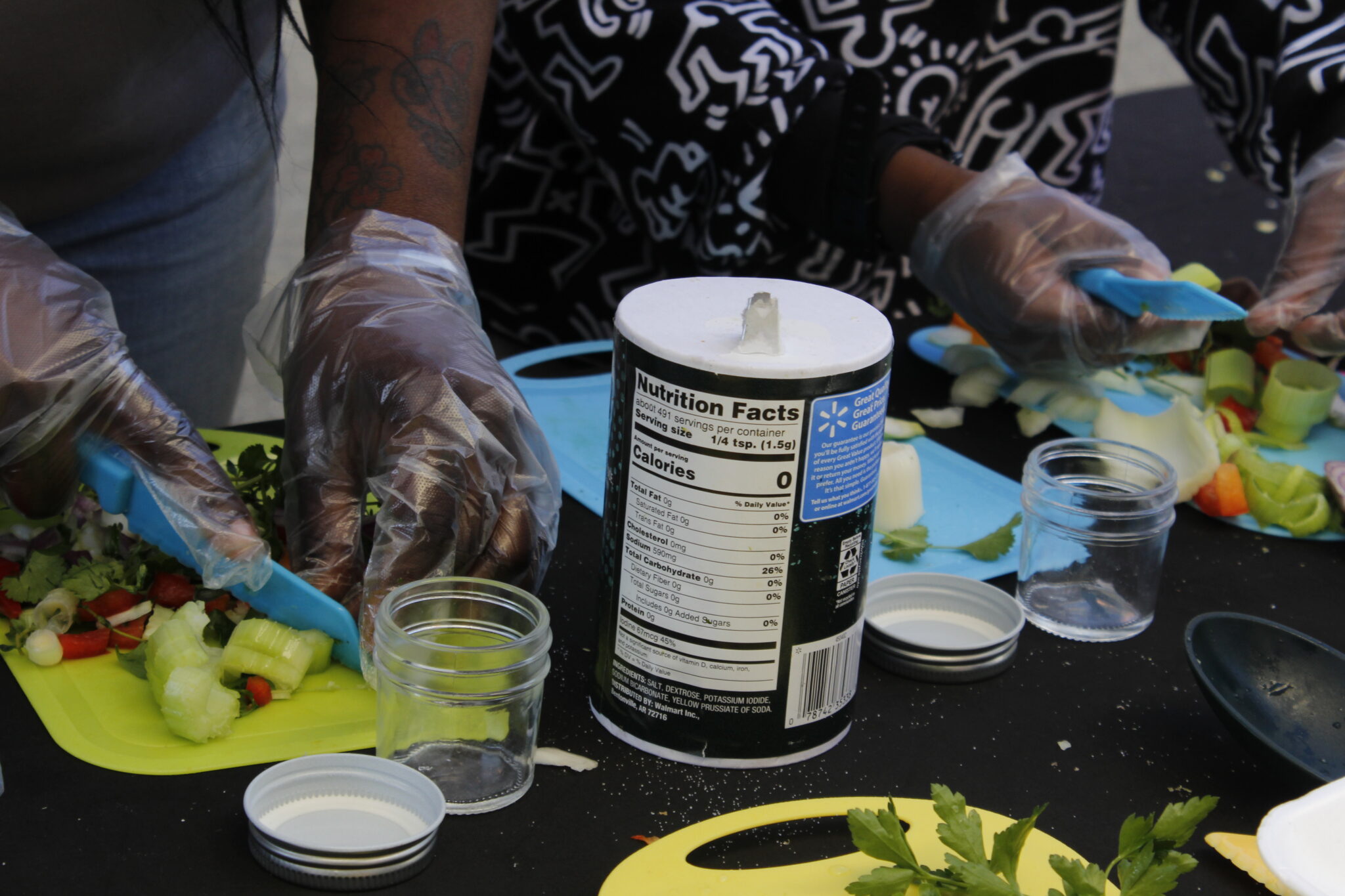
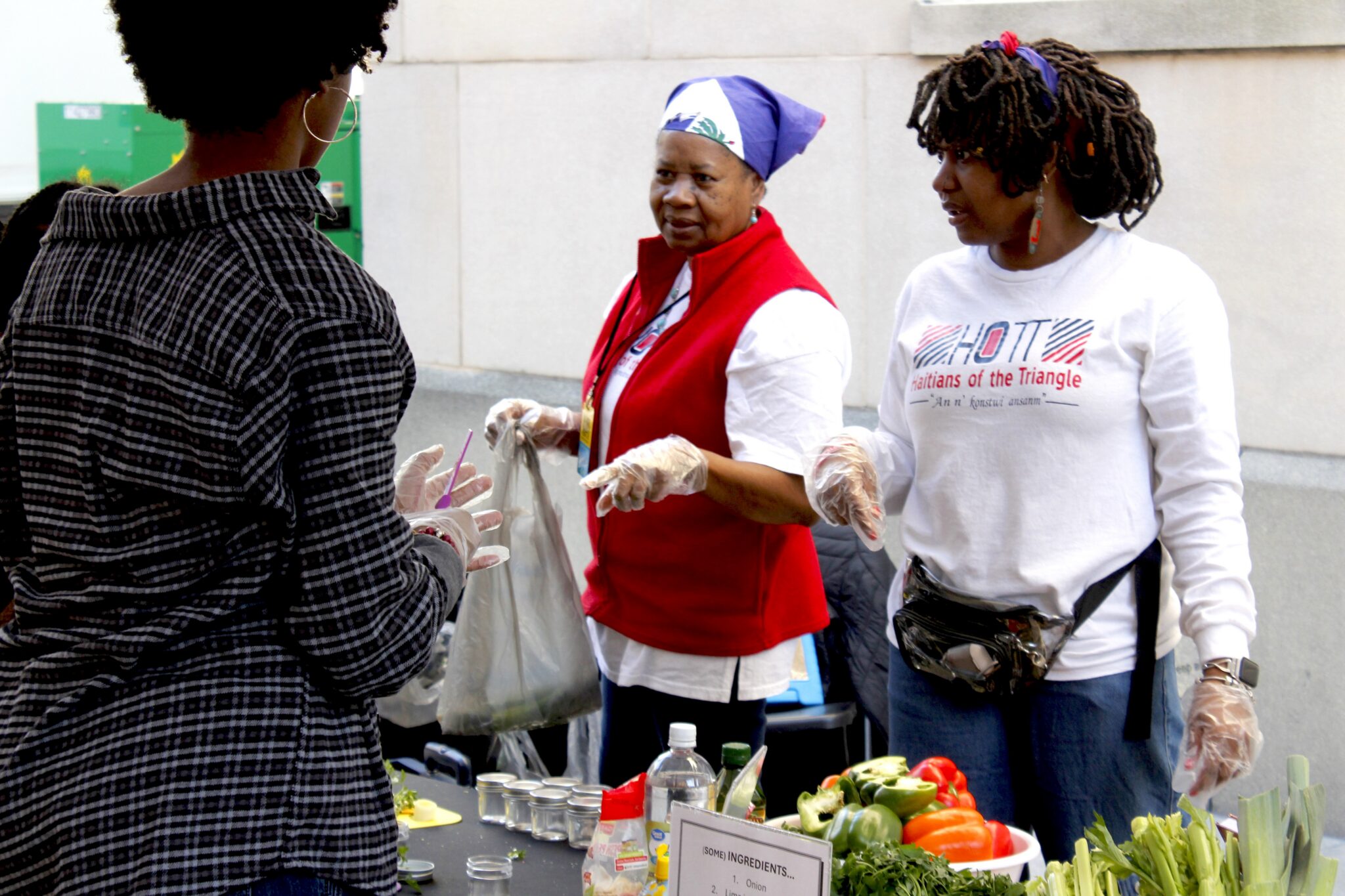
“Black Genius is phenomenal,” says Mirlesna Azor-Sterlin, co-founder and chair of Haitians of The Triangle (HOTT). Azor-Sterlin’s team brought their culinary and cultural genius to BG Fest as they facilitated an exhibit that allowed attendees to make their own epis, which is a spice base used to marinate meats and is incorporated into other recipes.
She emphasized that HOTT is focused on teaching people farm-to-table while also exposing them to how common ingredients in their home can be used to elevate their experience with food. For Azor-Sterlin, the festival was an opportunity to offer representation as she shared Haitian culture with festival attendees.
Bright Black Candle’s CEO, Tiffany Griffin, expressed that “Black Genius is forever.” According to Griffin, the Durham-based company uses scent to share positive stories about Blackness through fragrances that they design in-house. As a trained psychologist, Griffin shared that “you remember 35% of what you smell, but only 5% of what you see, and 2% of what you hear.” Understanding the power of scent, Griffin stated that when she launched Bright Black, she set out to apply it to the socio-emotional lives of Black youth.
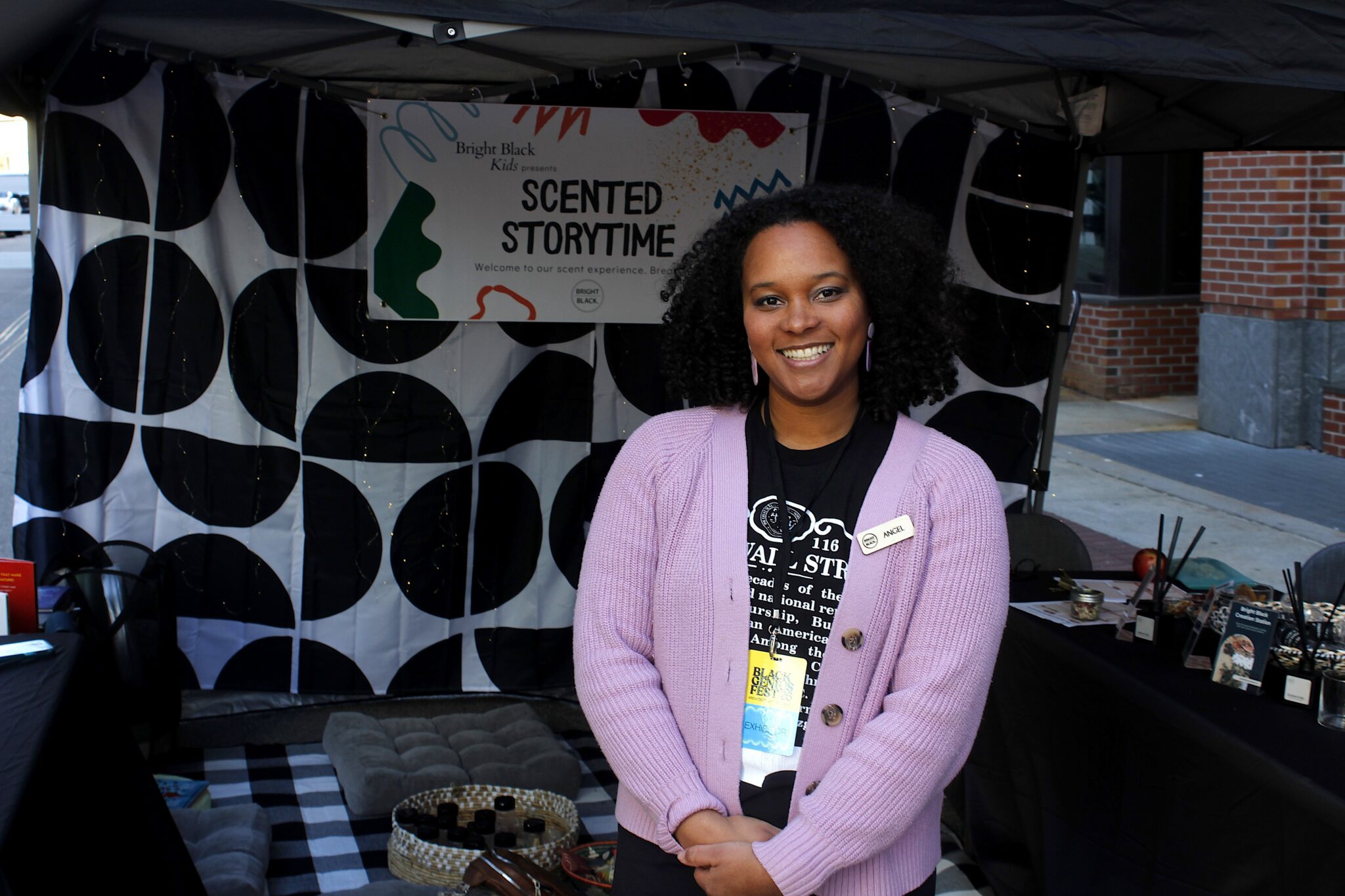
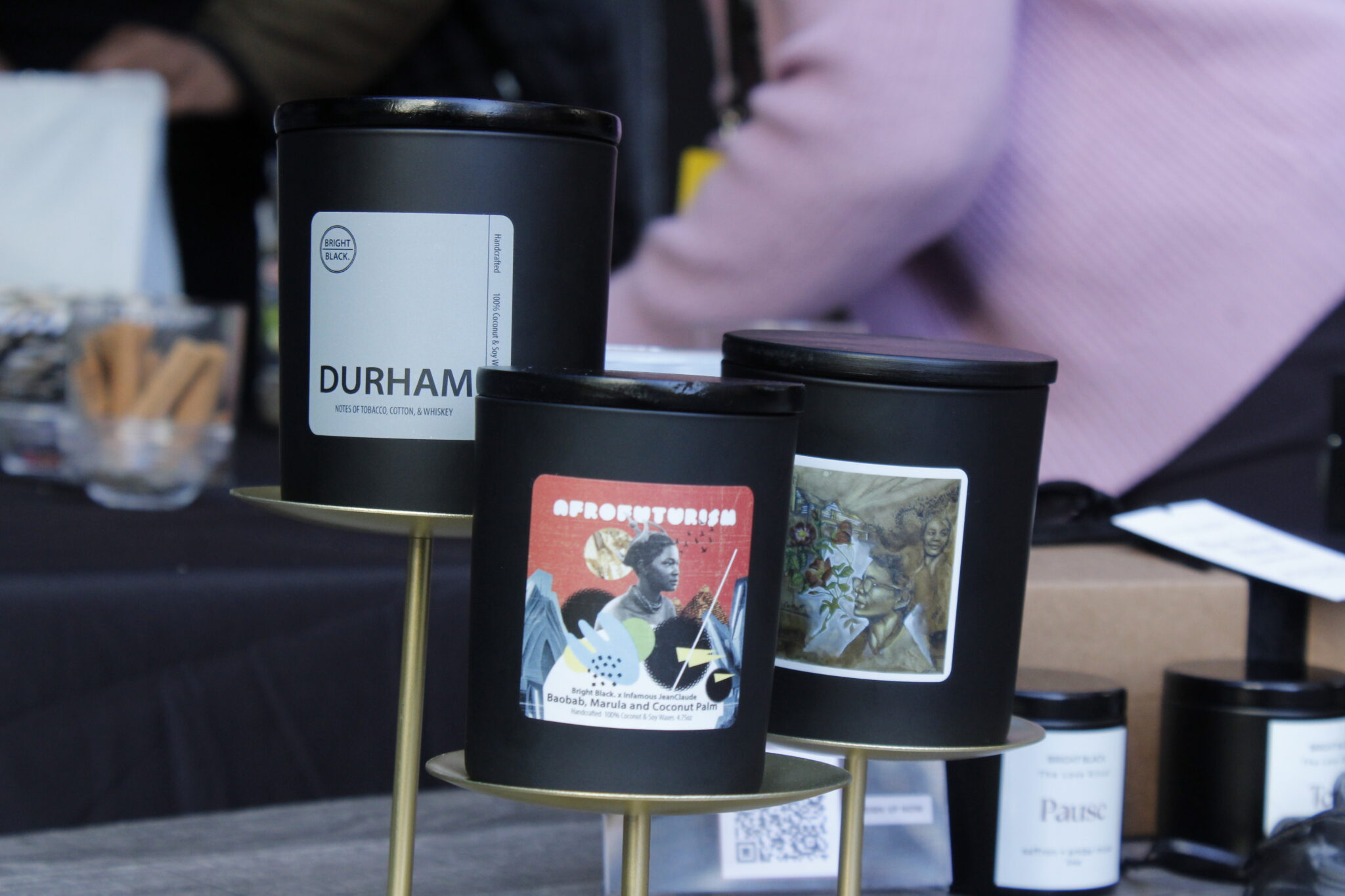
As a storyteller with Bright Black, Angel Brown engaged children in scented story times at BG Fest. Overall, Brown stated that her mission is to introduce books from Black and Indigenous authors and illustrators, plus other authors and illustrators of color. Bright Black is working to integrate scent into the stories while also using it alongside breath work to help students regulate their emotions.
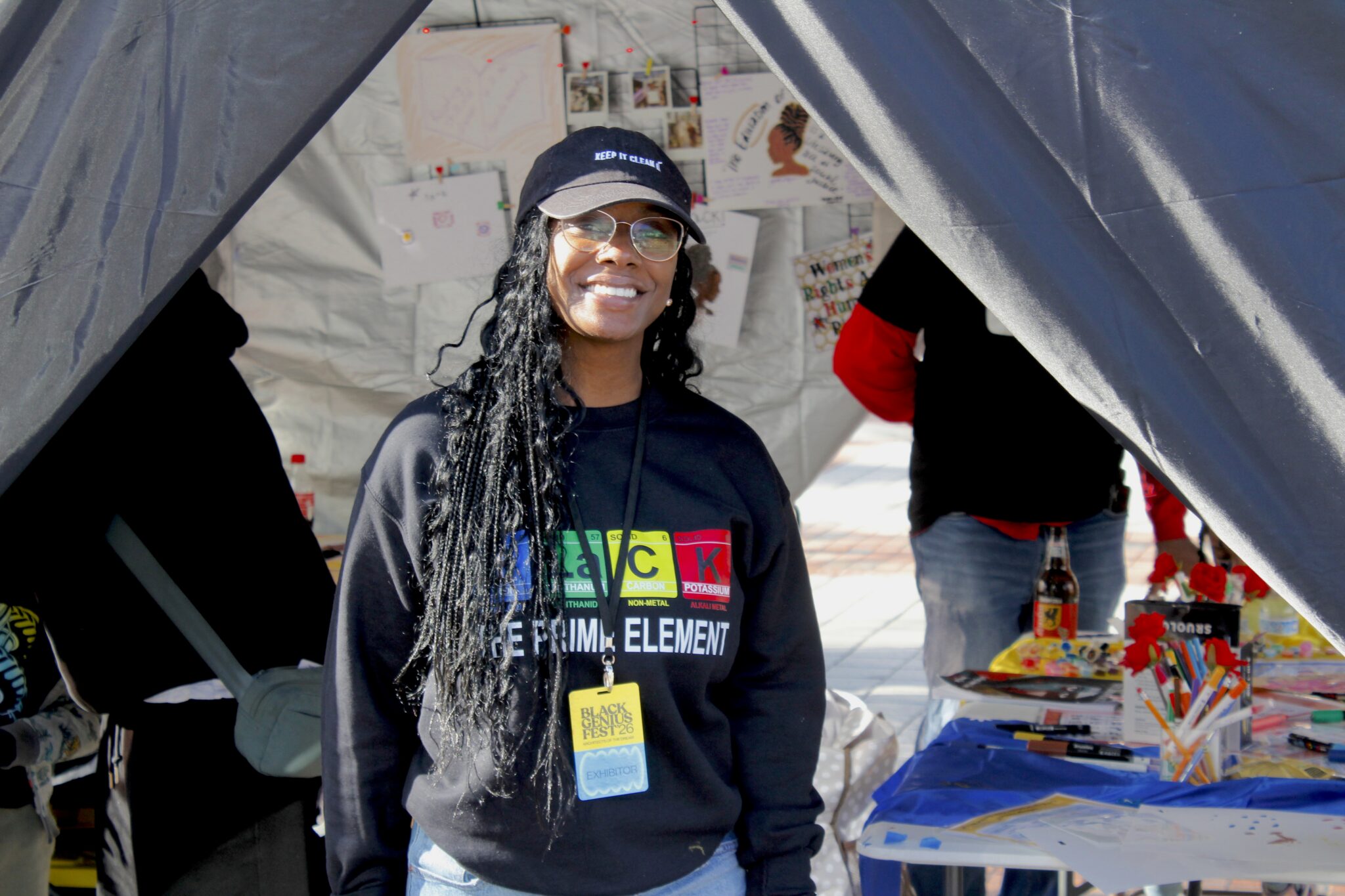
For Crystal Ingram, “Black Genius is everything.” Ingram is both a parent fellow with VOW and also an education law and justice attorney with the Right to Education Project. When speaking about the significance of BG Fest, she said it shows the greater community all elements of the Black Genius framework.
More specifically, she stated that opportunities such as this help students assess their interests, identify things that they want to change in their community, tap into their racial identity, and see themselves in their artwork.
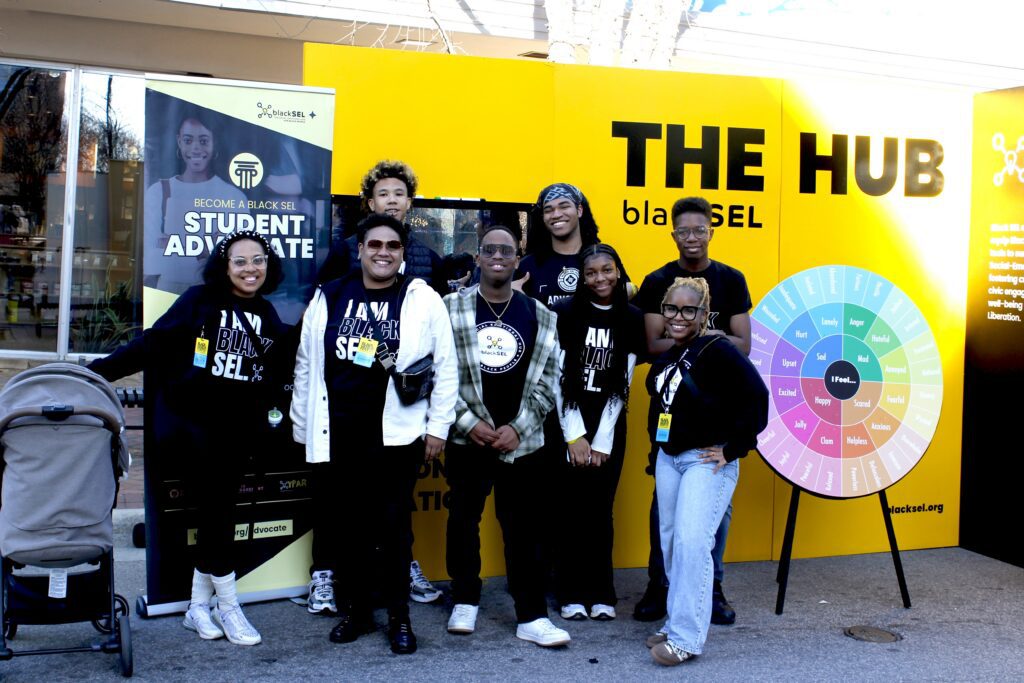
Kristen Hopkins-Vincent feels that Black Genius is cultural memory and emotional wisdom. As the executive director of Black SEL, Hopkins-Vincent shared that the organization’s social-emotional learning hub is embedded inside of a North Carolina high school. Black SEL’s framework focuses on increasing student attendance and belonging, affirming Blackness, and supporting students with developing skills for regulating emotions while building healthy relationships.
This framework then creates a pipeline for students like college senior Olivia Henson, who is now a student advocate lead with Black SEL. Henson says that through the advocacy programming, students learn to advocate for themselves, their community, and on behalf of other Black students.
When reflecting on the significance of BG Fest, Black SEL’s ReSELient program director, J. Sterrett, shared that these types of events “help us to see the beauty and brilliance that is Black people, keep us connected and bring us joy,” especially in resistance to many messages that frame Blackness as a deficit.
“That’s one of the biggest ways that I think we can resist in this moment — to be joyful in spite of,” Sterrett said.
Welcoming the brilliance of Blackness
Black Genius is “intuitive,” says Mya Hunter, co-director of the Black women-led arts and culture organization, SpiritHouse South.
Hunter further described Black Genius as a “sacred technology” that often doesn’t get the recognition that is deserved, particularly in the South. Expounding on the use of the term “technology,” she emphasized the significance of solutions or tools used in everyday life that were derived from the ingenuity and brilliance of Black people. Hunter noted Black people’s ability to build despite being faced with impossible circumstances and to ultimately reign triumphantly.
As demonstrated in its “Remembrance World” exhibition, which allowed BG Fest attendees to write love notes to ancestors, SpiritHouse embraces the belief that the brilliance and genius of ancestors who have transitioned is still innately carried within living descendants.
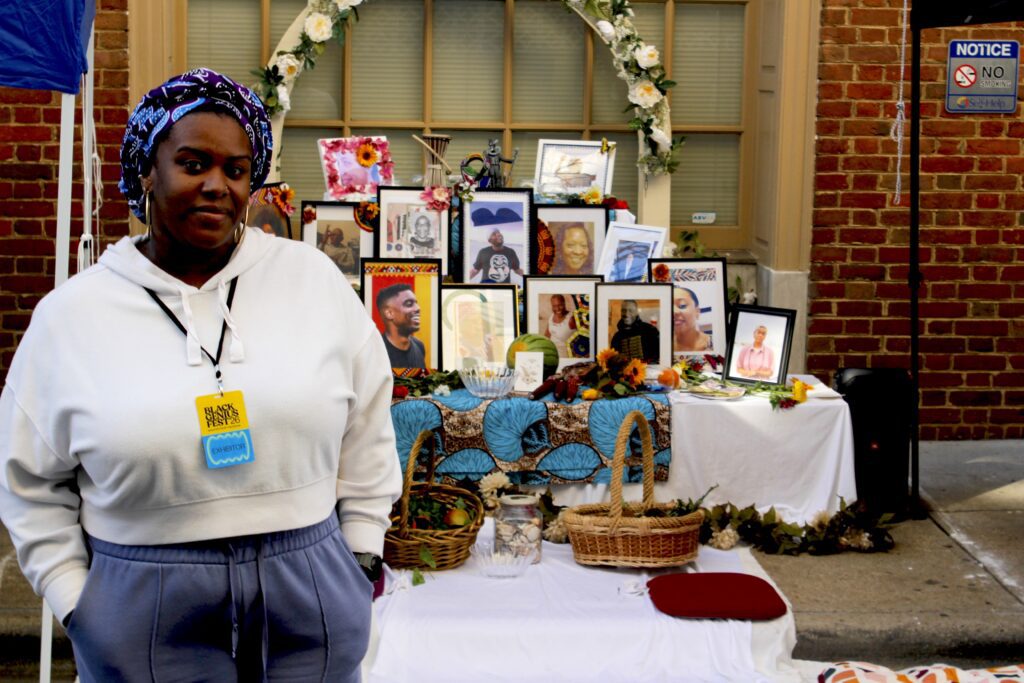
A multigenerational Durham native, affectionately referred to as a Durhamite, Hunter expressed that she couldn’t “recall a time when, as a young Black person, I was invited to run through the streets in downtown and be curious and have a world set up for me to explore.”
When reflecting on the experiences of her elders, Hunter stated that several of them have a recollection of when Black people were not allowed to walk through the front door of the Carolina Theatre in Durham, which is situated less than a quarter of a mile from Black Wall Street.
Historically, Black Durhamites were further impacted by the city’s redevelopment framed as “urban renewal,” which translated into the displacement of Black communities, thus adversely impacting the overall economic stature of Black Wall Street and the surrounding Black community.
Here in 2026, Hunter expressed an appreciation for witnessing Black children in that same space, having moments of joy and curiosity. “It means that you’re welcome,” she said, describing the experience as a signal that welcomes the brilliance and Blackness of festival goers to the streets of Durham.
As she stood on Market St. in downtown Durham, Hunter basked in the sight of the Black Genius once again on display in this historic district.
Recommended reading