
Annual KIDS COUNT® Data Book is out. What does it say about North Carolina?

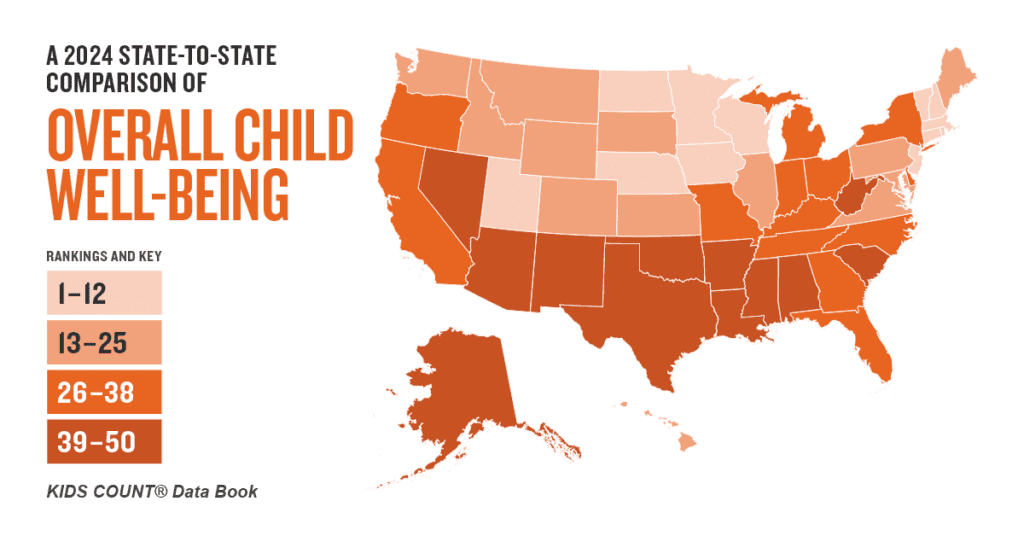
The 35th edition of the Annie E. Casey Foundation’s KIDS COUNT® Data Book was released in June 2024, and it continues to show the impact of the pandemic on children in North Carolina and across the nation.
Here is the landing page where you can start your exploration of the data.
The national press release finds the “50-state data show poor academic outcomes and chronic absence are linked to poverty and trauma” and says “policymakers must act soon to promote kids’ future success.”
Here you can see where North Carolina ranks and performs on 16 indicators, including economic well-being, education, health, as well as family and community. North Carolina ranks 33rd in the nation for overall child well-being, according to the data book.
You can find all of the data for North Carolina here. Note this wealth of data is searchable by county, city, school district, and congressional district.
 Sign up for the EdDaily to start each weekday with the top education news.
NC Child is North Carolina’s member of the KIDS COUNT network.
“The latest data shows that we have room for improvements in North Carolina when it comes to the lives of our children,” said Erica Palmer Smith, executive director of NC Child, in the press release for North Carolina. “The good news is that we know what to do. By investing in early childhood education and by providing resources, including mental health support, we can help North Carolina’s children thrive.”
The Casey Foundation recommends the following, according to the national press release:
- access to low- or no-cost meals;
- access to a reliable internet connection;
- a safe place to study;
- time with friends, teachers, and counselors;
- intensive tutoring for students who are behind in their classes and missing academic milestones;
- prioritizing any remaining pandemic relief funding for social, emotional, academic, and physical well-being of students;
- a plan to address chronic absence so more students return to learn, including:
- improving attendance tracking,
- reporting chronic absence data by grade, and
- embracing positive approaches rather than criminalizing students or parents due to attendance challenges; and
- investing in community schools, which are public schools that provide wraparound support to kids and families.
“Investing in the health, education, and overall well-being of North Carolina’s children today is an investment in the long-term prosperity of our state,” said Smith. “By working together to advance sound, evidence-based public policies, we can improve the outlook for our children and for all North Carolinians.”