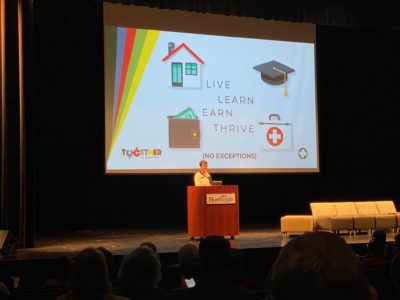
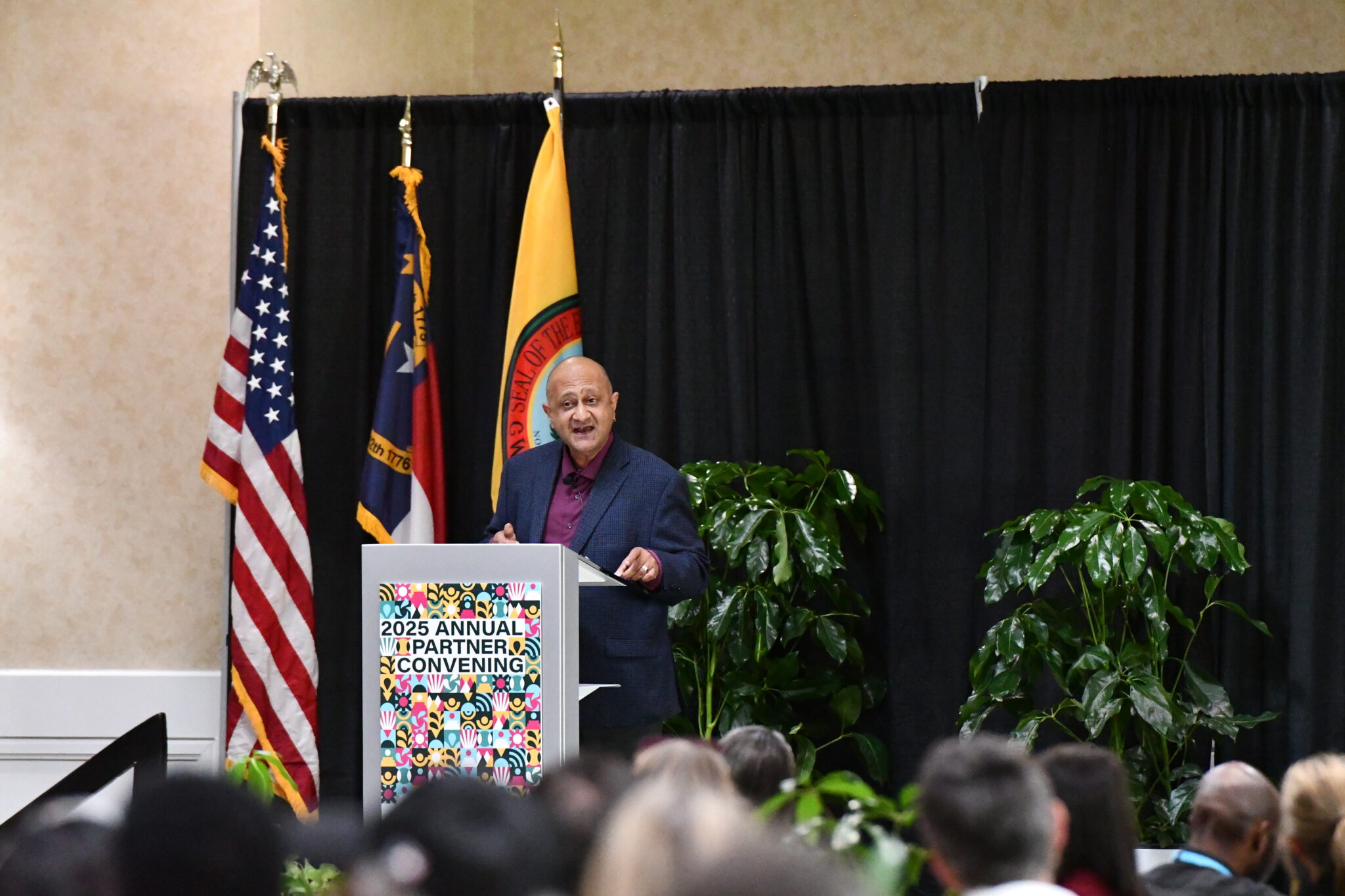
On Oct. 16, Dogwood Health Trust, a private foundation dedicated to improving the lives of western North Carolina (WNC) residents, held its annual meeting in Asheville. The convening brought together more than 400 attendees representing 270 organizations, with an additional 300-plus community members participating virtually.
This year’s theme, “cultivating active hope,” was particularly timely given recent challenges, including shifts in public funding and ongoing recovery efforts from Hurricane Helene.
Dogwood’s CEO, Dr. Susan Mims, explained that active hope is not optimism. Instead, it is a way of being — a practice.
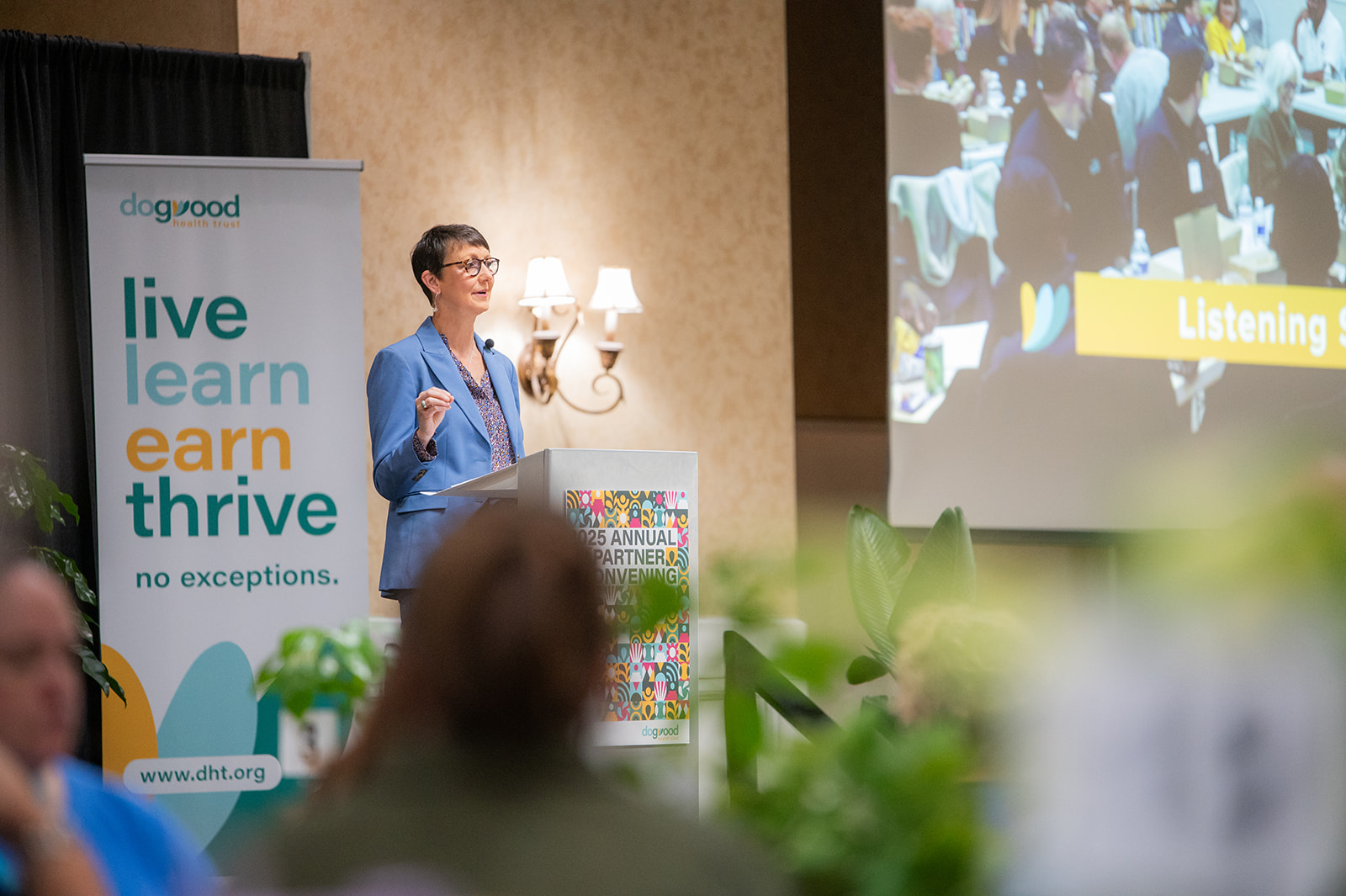
“Active hope isn’t waiting for something to happen,” Mims said. “It’s the practice of having a deep understanding of where we are starting and a vision for where we are heading, then taking steps toward that vision every day, even when things are difficult.”
We’re impatient for the change we want to see and we know we have to be patient because transformation takes a long time.
— Dr. Susan Mims, CEO of Dogwood Health Trust
Convening attendees had the opportunity to choose from nearly 20 breakout sessions throughout the day. Sessions addressed critical regional challenges, support for nonprofit leaders, and ongoing recovery efforts. Participants were encouraged to reflect, connect, and consider new ways to work collaboratively.
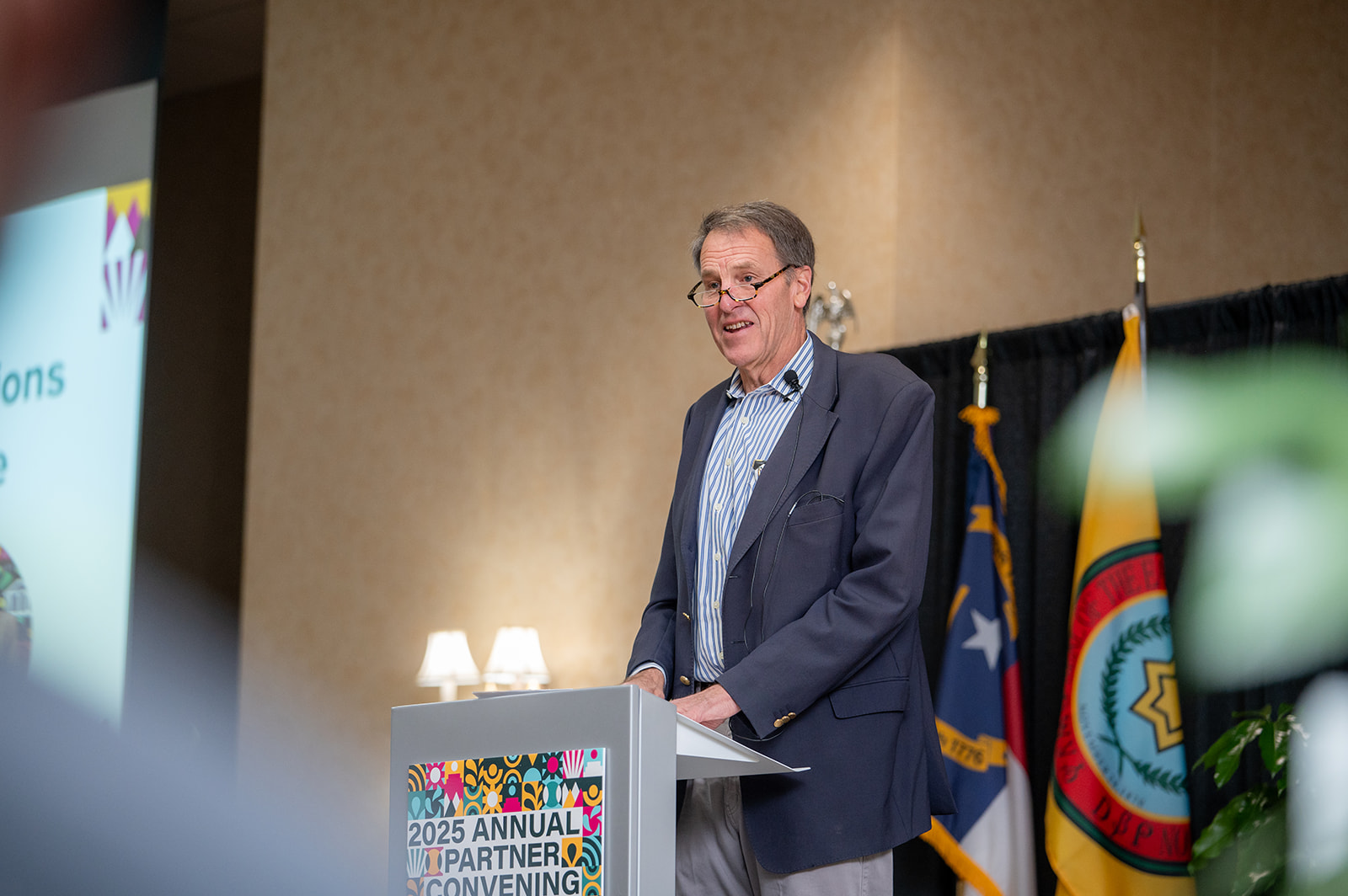
Jack Cecil, chair of Dogwood’s board of directors, reiterated the need for partnerships across the region.
“We can only do this by working shoulder-to-shoulder,” he said.
Investing in western North Carolina
Dogwood “exists to dramatically improve the health and well-being of all people and communities in the 18 counties and Qualla Boundary of western North Carolina.”
They do this by investing in “aligned organizations that advance efforts” across four interconnected strategic priorities: housing, education, economic opportunity, and health & wellness.
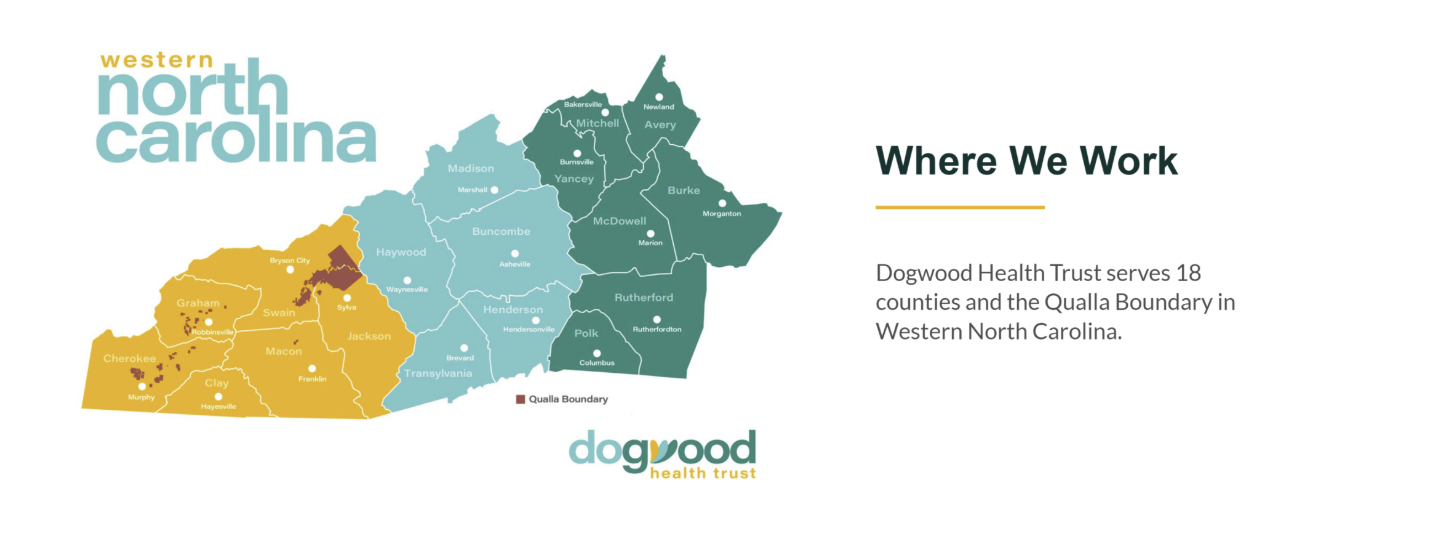
In 2024, Dogwood approved $151 million across 632 new grant commitments, including more than $70 million designated for Hurricane Helene relief and recovery. According to their annual report, Dogwood distributed more than $147 million through 547 grants in 2024, some of which were approved in previous years.
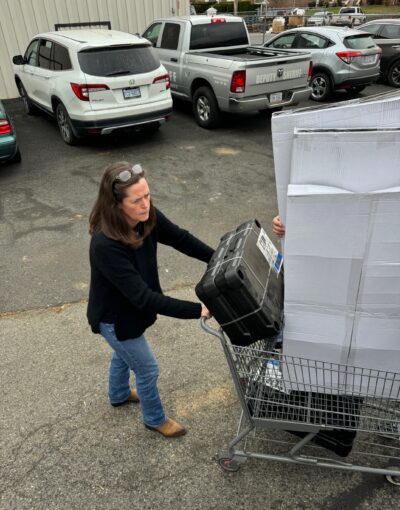
Hurricane relief funding supported critical areas across WNC, including qualified health centers, housing assistance, FEMA navigation, child care services, and investments for small farms.
Dogwood also created the WNC Small Business Initiative, established in partnership with Appalachian Community Capital. In addition to its $30 million investment, Dogwood was able to secure an additional $25 million from The Duke Endowment and the state of North Carolina, bringing the initiative to a total of $55 million. Funding was then dispersed to nearly 2,200 small businesses in four months.
 Sign up for the EdWeekly, a Friday roundup of the most important education news of the week.
Report details Helene’s impact on nonprofits
During opening remarks at Dogwood’s annual meeting, Mims shared a new report about Hurricane Helene’s impact on WNC nonprofits.
The report, “Rising Above: Resilience and Recovery Among Western North Carolina Nonprofits After Hurricane Helene,” was commissioned by WNC Nonprofit Pathways and Dogwood.
Released in September, the report includes survey responses from 251 nonprofit leaders across 18 WNC counties and the Qualla Boundary that were collected between May 28 and July 6, 2025. It highlights both the hurricane’s physical damage to buildings and the emotional and social toll it took on staff and volunteers.
Key findings include:
- Physical damage: 60% of WNC organizations that responded to the survey reported physical damage to buildings or property, totaling more than $100 million in losses.
- Short-term impacts: Many WNC nonprofits shifted from normal operations to provide frontline assistance immediately after the storm, leading to hardships for staff who were also dealing with personal loss and grief.
- Long-term impacts: Ongoing challenges include critical resource gaps for staff mental health support and increased staff burnout, creating strain on organizations’ capacities.
- Policy shifts: Many WNC nonprofits reported being affected by federal policy shifts that occurred in 2025, such as cuts or freezes to grants. According to the report, 54% of respondents said they have made a change to finances, programs, or staffing due to these shifts.
The report concludes with a section outlining the ongoing needs of nonprofits, including support with fundraising, donor relationship development, grant writing, peer connections, crisis support, and mental health services for leaders to ensure they can continue their work.
You can view the full report here.
Read more
A ‘Sankofa’ experience: Looking back to move forward
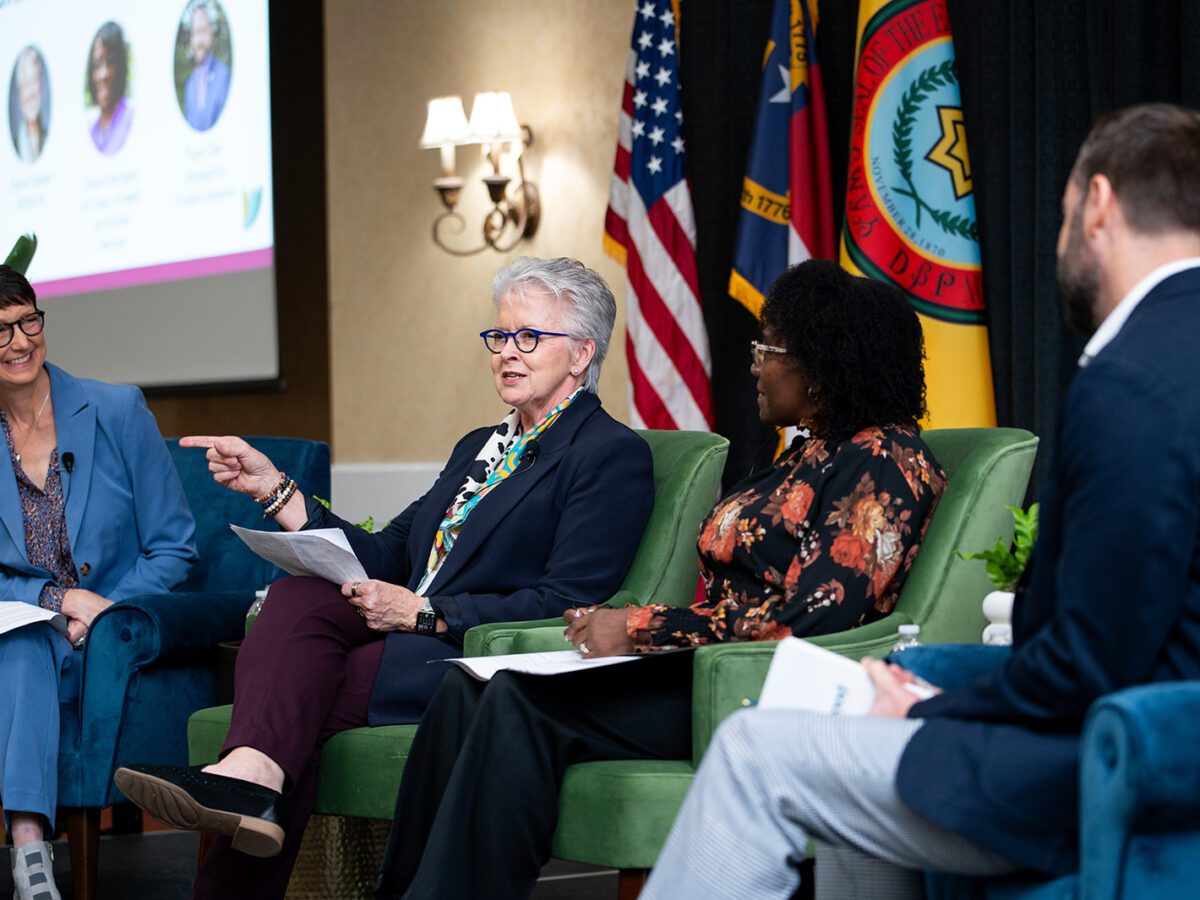
During the plenary panel at the annual meeting, Mims led the group through a “Sankofa” experience — the act of looking back in order to go forward. Physically, one’s feet are planted forward while the head and body are turned back.
Looking back is an important reflection, Mims said, and the forward stance represents using historical knowledge to forge a future-oriented practice.
The panel included:
- Sharon Decker, senior advisor for long-term recovery for the Governor’s Recovery Office for Western North Carolina (GROW NC).
- Debra Farrington, deputy secretary for health at NC Department of Health and Human Services (NCDHHS).
- Ryan Eller, executive director for Appalachia Funders Network.
Panelists recounted the last five years in WNC, describing the loss and grief stemming from COVID-19, recurring natural disasters, and recent shifts in public funding across various programs.
Decker reminded attendees that some of the issues the region faced, like inadequate infrastructure, housing shortages, and food insecurity, predated Hurricane Helene.
“Let’s not miss the opportunity as we’re reinvesting in our communities to think bigger than just taking us where we were,” Decker said.
She then stated that recovery and rebuilding will require collaborative thinking and the willingness of leaders within GROW NC and nonprofits to exit their silos and seek expertise outside of their own.
A health care nonprofit, for example, will need to engage in conversations with those in housing because new housing developments require access to food and health services, she said. Decker added that, even at the state level, agencies must sometimes reach across regional and state lines to think differently about infrastructure like water and wastewater management.
GROW NC’s priorities include rebuilding safe housing, restoring infrastructure, and revitalizing WNC’s economy and communities. The latest information about the team’s progress can be found on this recovery dashboard. You can also find an update on state and federal recovery funding here.
Mims asked Farrington how NCDHHS is responding to ongoing shifts in public funding, specifically regarding Medicaid.
The federal budget reconciliation bill signed in July by President Donald Trump is estimated to reduce federal Medicaid spending by $911 billion over ten years. Experts say the bill has ramifications beyond individuals losing coverage, noting possible impacts on rural hospitals where Medicaid spending is expected to decrease.
To support rural health care, the Centers for Medicare & Medicaid Services (CMS) launched a $50 billion Rural Health Transformation Program in September. According to the press release, “the program invites all 50 states to apply for funding to address state’s specific rural health challenge.”
NCDHHS submitted its Rural Transformation Plan to CMS in November. Farrington said the plan outlines how North Carolina could utilize $200 million annually in federal funding over five years to improve health across 85 of the state’s 100 counties.
North Carolina, which has the second-largest rural population of any state in the country, behind Texas, intends to use the funding to enhance technology, invest in the rural health care workforce, support rural providers, and increase mental health services, among other things.
During the panel, Eller highlighted the efforts of the Appalachia Funders Network, a multi-state organization helping to solve structural challenges and connect funders.
The network recently launched the Appalachian Helene Impact Explorer. The new tool provides funders and community members with various data points related to recovery, including individual assistance and flood payments distribution across the region.
Stories of hope
The annual meeting concluded with a keynote address by Kiran Singh Sirah, founder and creative lead for the project Storytelling: A Gift of Hope.
Sirah presented his address, “Stories for Hope and Healing,” where he discussed the concept of home. He said home was more than a physical space, but could also represent “memory, belonging, and possibility.”
He shared how stories of home have the power to “connect us all to our shared humanity, to heal, build common understanding, and move forward together.”
In a recent social media post, Sirah outlined five key ideas for cultivating hope and healing:
- Begin with the story of home. Home can be a place, a person, a smell — something that anchors us and reminds us who we are.
- Listening is a sacred act. Listening is an act of care. When we listen deeply, we offer dignity and connection.
- Turn vulnerability into connection. Hope grows when we risk being real. “Be willing to make yourself vulnerable… and when it’s your turn, listen with an open heart.”
- Reclaim and redefine the narrative. Don’t accept shallow or divisive stories. Tell the fuller, truer versions that reveal our shared strength.
- Create spaces of radical hospitality. Stories flourish where people feel welcome. Build spaces — literal or imagined — where we can break bread, share joy, and find common ground.
The rivers that run through these mountains are powerful. But when we cultivate our stories — individually and collectively — so are we. Every act of kindness sends ripples through our communities. And in every story of crisis, there are also stories of compassion, resilience, and renewal.
Looking ahead: Listening sessions inform five-year strategy
Cecil said that Dogwood neither intends to nor can it improve outcomes for the western North Carolina region alone. Instead, Dogwood acts as a facilitator, he said, dedicated to understanding the needs and priorities of the communities it serves.
In 2024, Dogwood held 19 community listening sessions across WNC to inform their five-year strategy for 2025-2030. Nearly 350 community members participated in those sessions, voicing that their organizations needed flexible, multi-year funding to support operations and organizational capacity.
This feedback informed Dogwood’s grantmaking strategy which, according to their website, will focus on four areas in 2025-2030:
- Capital attraction: Helping partners attract more financial resources from public and philanthropic sources.
- Capacity: Providing multi-year, unrestricted general operating support and capacity-building grants.
- Collaboration: Funding innovative ideas and collaborative efforts led by organizations and communities responding to challenges and opportunities post-Helene.
- Connections: Convening and connecting leaders and organizations working across Dogwood’s four strategic priorities.
Feedback from the listening sessions also helped Dogwood think about how to attract capital from outside the region for grantee partners. This involves more than money, Cecil said, noting that it includes social, moral, intellectual, reputational, and financial assets — or SMIRF.
By understanding local needs, Dogwood has been able to leverage its connections to access both capital and intellectual knowledge across the state and country, Cecil said in an interview for Dogwood’s annual report. This was a strategy used during COVID-19 and again following Hurricane Helene.
You can view Dogwood’s 2026 grant opportunities and support here.
Editor’s Note: Dogwood Health Trust and The Duke Endowment support the work of EducationNC.
Recommended reading