
A tale of two labs at Fayetteville Technical Community College

Fayetteville Technical Community College (FTCC) is leaning into community partnerships to prepare the next generation of cybersecurity professionals.
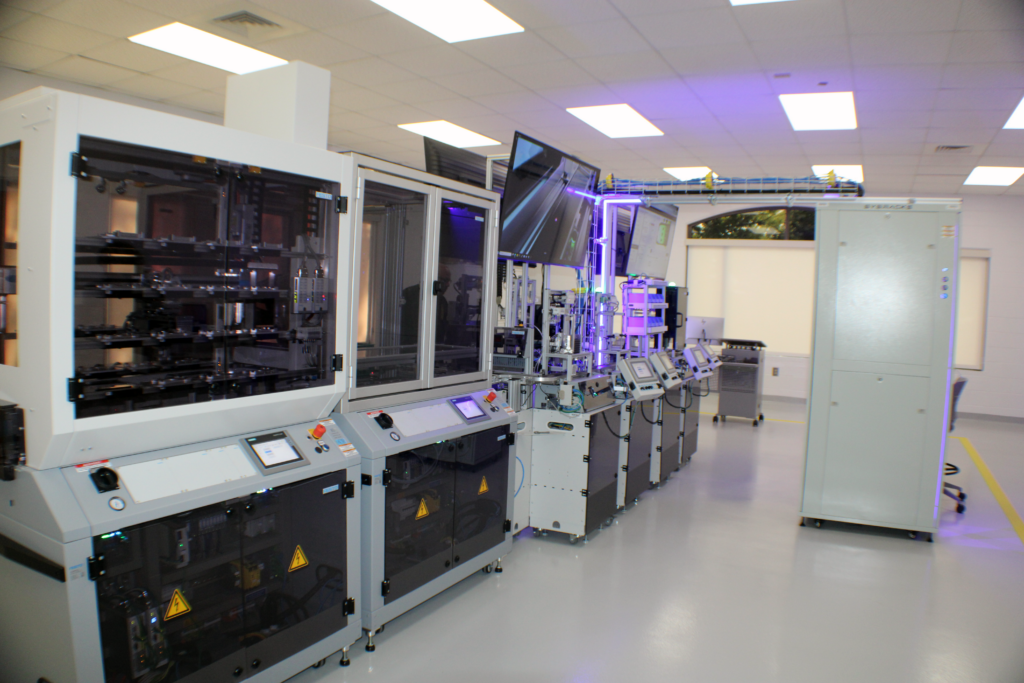
In summer 2026, FTCC completed a new lab that connects the worlds of information technology (IT) and operational technology (OT). The lab is meant to help students learn about cybernetworking, automation, and industrial operations.
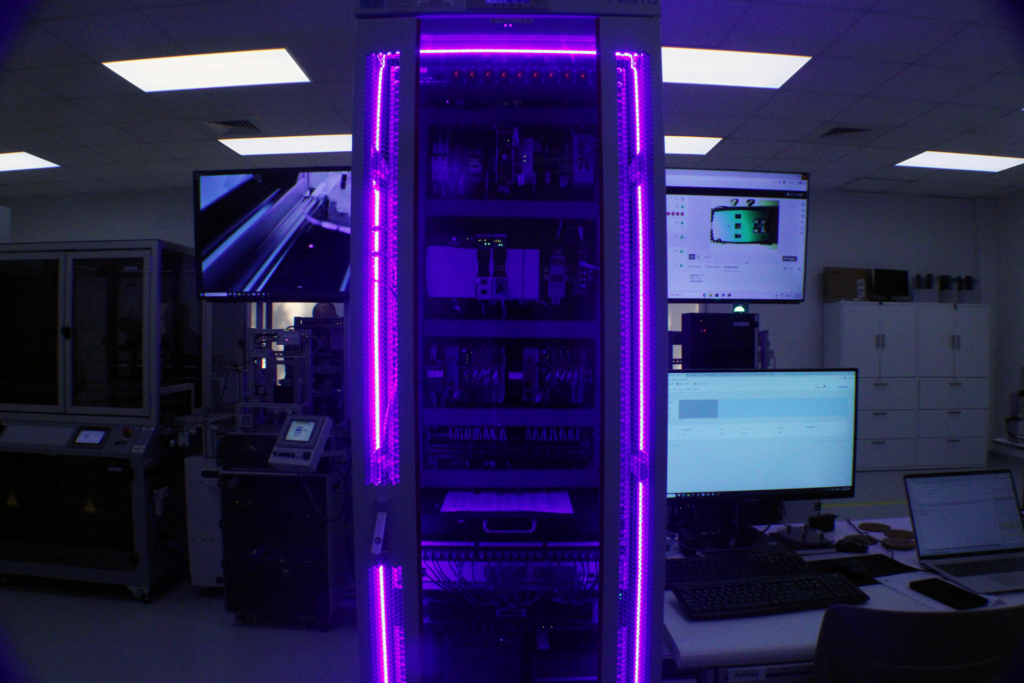
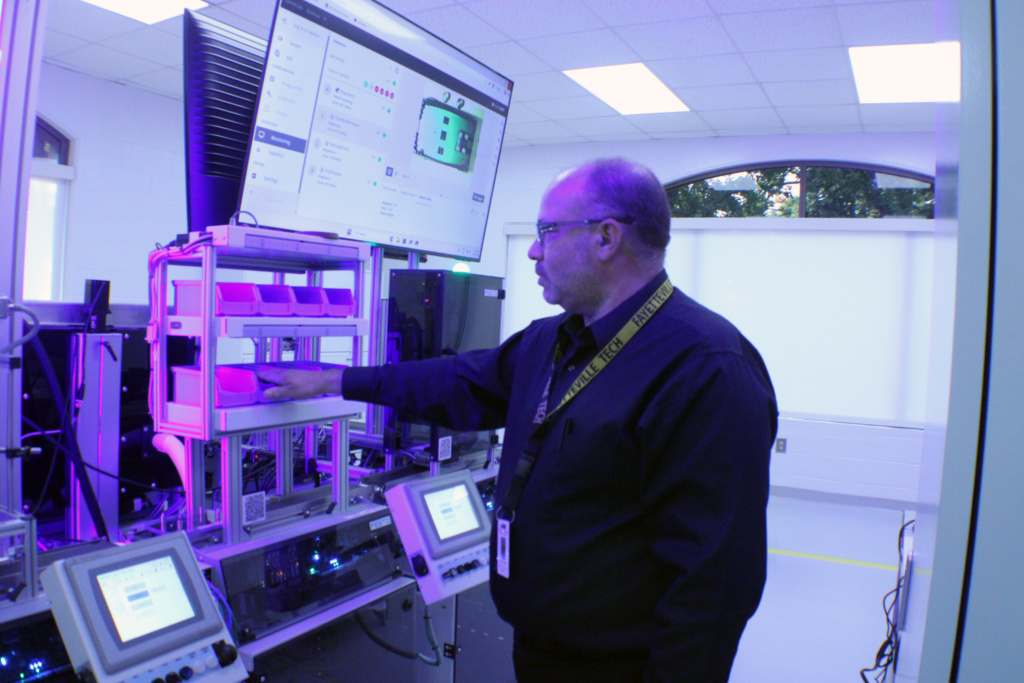
Through the lab machines created by Festo, students will have access to industrial control systems, programmable logic controllers, sensors, operational networks, automation technologies, and cybersecurity tools that can mimic real life scenarios.
When the lab opens to students in the spring, students will be able to work together to diagnose issues in cross-curricular training scenarios. The lab can launch a cyber attack within a contained technical environment known as a sandbox. Industrial mechanics students will do the hands-on work while IT students will handle the cybersecurity to conquer the simulated hack.
 Sign up for Awake58, our newsletter on all things community college.
FTCC president Dr. Mark Sorrells told EdNC that the idea for the lab came after FTCC faculty visited Idaho National Laboratory and saw their simulated chemical plant. Representatives from the lab expressed their desire for a partner on the East Coast.
Learning how data moves between operational and computer networks is important as critical infrastructure is connected by computers and therefore becomes vulnerable to hacking, Sorrells said.
The goal is for their curriculum to culminate in a capstone project, Sorrells and industrial systems instructor Heath Worriax said.
Before students enroll in the industrial systems program, FTCC wants to help them find that spark while they are in middle and high school.
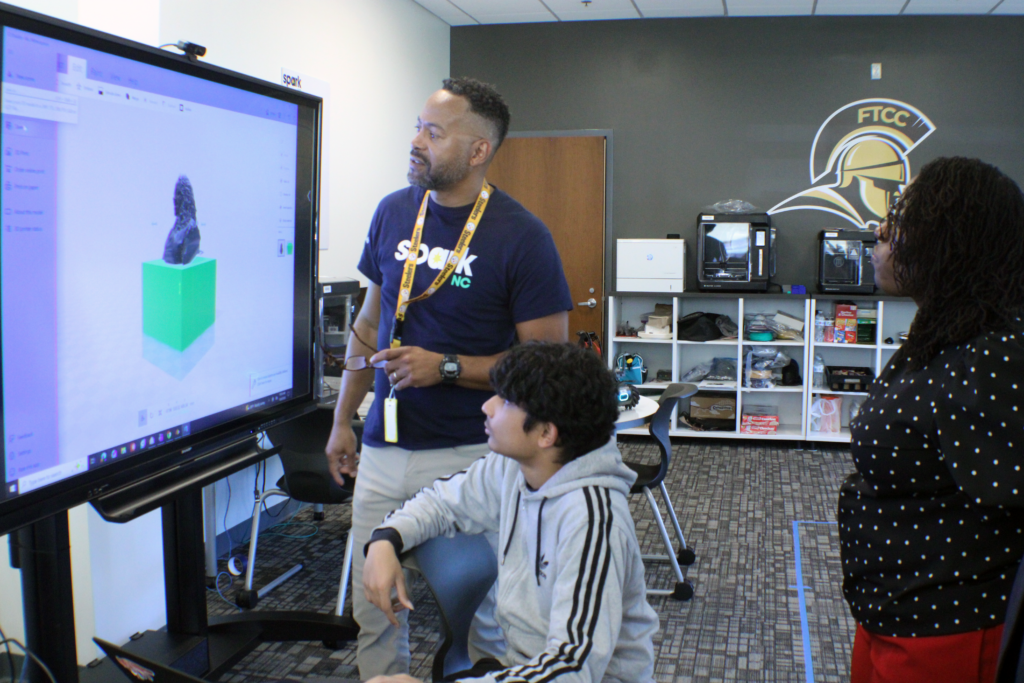
In June 2026, FTCC opened up its new SparkLab. The lab is the STEM nonprofit SparkNC’s first location on a community college campus.
“This provides SparkLab access to students on this side of town, as well as providing [students] with access to college-level professors and industry partners much earlier in their career than they would normally,” Jennifer Milton, the SparkLab leader for Cumberland County Schools, said. “Normally they would have to wait until college to get the experiences that they’re now getting in high school.”
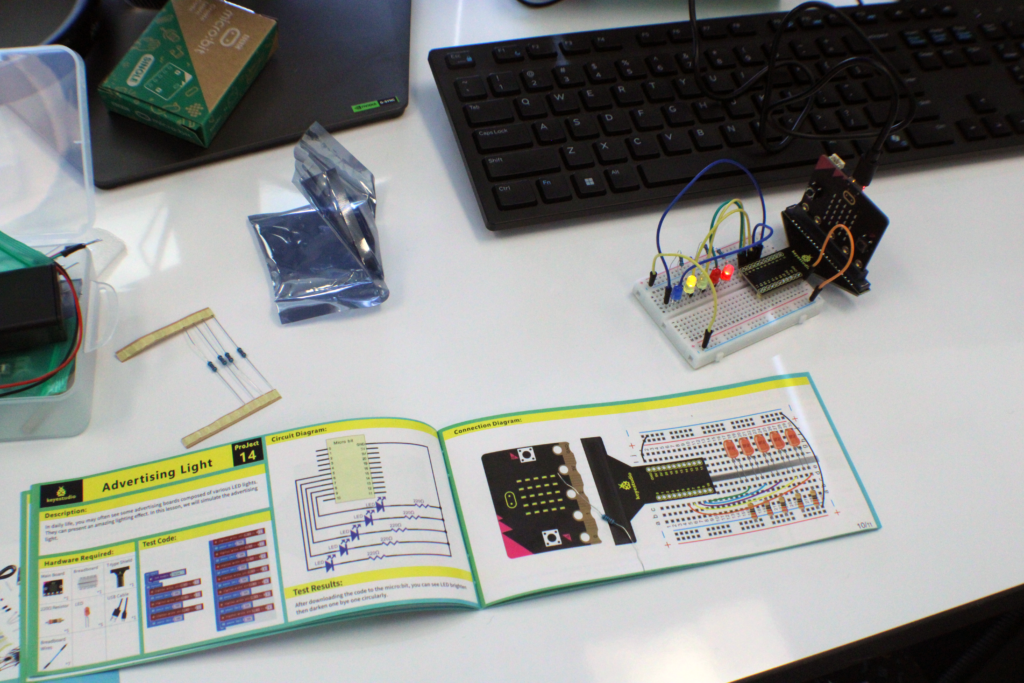
SparkNC gives middle and high school students an opportunity to explore the skills needed for careers in cybersecurity, artificial intelligence, computer systems engineering, software development, and game development.
All students in Cumberland County Schools are welcome to visit the lab if there is not already a location at their school. SparkNC works with homeschooled students as well.
Take Maaz Saayit, for example. The Cumberland Polytechnic High School senior wants to become a radiologist. What is the first step for him? Designing a 3D printed statue of his principal, Niesha Witherspoon.
“We are an innovative high school, right? And we want to ensure that our students have not just the academic piece, but the hands-on learning experience as well,” Witherspoon said about being neighbors with the SparkLab.
Using 3D printed models has become increasingly important in the medical field. Jeffries Epps, co-lab leader of FTCC’s SparkLab, said that Saayit’s practice in the lab will prepare him for a future of printing models of organs and bones.
Overall, Epps said that they look at their students through the lens of skills they already possess and then pair them with activities in the lab where they can exercise that skill.
“For example, students who play instruments make excellent coders,” Epps said. “They make excellent coders because they can code and decode. If you could decode sheet music, and recode it with a flute or an instrument, you can definitely decode text and tell a robot what to do. It’s the same skill set.”
Sorrells also said that exposure to STEM through the SparkLab helps students develop an appreciation for their parents who work in related fields.
“Being able to reach students in the middle school and high school that are military-affiliated and expose them to the skill sets that their parents use every day in the work that they do in the military begins to give them a sense of purpose and passion for what their parents are doing,” Sorrells said.
Each lab also serves as a hub where “Spark Scholars” can connect with peers, teachers, and tech industry professionals across the state through videoconferencing, according to a press release from FTCC.
Sorrells also said that the SparkLab will play a role in building the digital literacy of all Cumberland County constituents. He said they are working with SparkNC to develop a curriculum for adults.
One priority of FTCC is to retain talent in the county. The community college has an agreement with Fayetteville State University (FSU) where students who earn an associate degree from FTCC can attend the university tuition free for two years through the FTCC Keen Scholarship.

During a recent recruitment event at FTCC, FSU Chancellor Darrell T. Allison said that the relationship between the institutions goes beyond geography, and having the schools “firing on all cylinders” makes the area greater.
Over 200 students have been awarded the FTCC Keen Scholarship since 2022, Allison said.
“The partnership that we have with Fayetteville Tech and with Fayetteville State is building a pathway where students can go as far along that career ladder as they choose to go and never have to leave Cumberland County – and never have to go in debt,” Sorrells said.