Skip to content
EdNC. Essential education news. Important stories. Your voice.

Search ednc.org

FutureWork: A systemic disruption

Share this story

Our republishing policy

EdNC is a nonprofit, online, daily, independent newspaper. All of EdNC’s content is open source and free to republish. Please use the following guidelines when republishing our content.
  • Our content must be republished in full. If your organization uses a paywall, the content must be provided in full for free.
  • Credit our team by including both the author name and EdNC.org in the byline. Example: Alex Granados, EdNC.org.
  • If republishing the story online, please provide a link to EdNC.org or a link to the original article in either the byline or credit line.
  • The original headline of the article must be used. Allowable edits to the content of the piece include changes to meet your publication’s style guide and references to dates (i.e. this week changed to last week). Other edits must be approved by emailing Hannah Vinueza McClellan at [email protected].
  • Photos and other multimedia elements (audio, video, etc.) may not be republished without prior permission. Please email Hannah Vinueza McClellan at [email protected] if you are interested in sharing a multimedia element.
  • If you republish a story, please let us know by emailing Hannah Vinueza McClellan at [email protected].

Please email Hannah Vinueza McClellan at [email protected] if you have any questions. This work is licensed under a Creative Commons Attribution-NoDerivatives 4.0 International License.

Canonical tag

Please include the following canonical tag in the <head> of the republished story.

<link rel="canonical" href="https://www.ednc.org/a-systemic-disruption/">

HTML content

This includes the title, byline, content, and tracking pixel required for republishing this story.

This story is tagged:
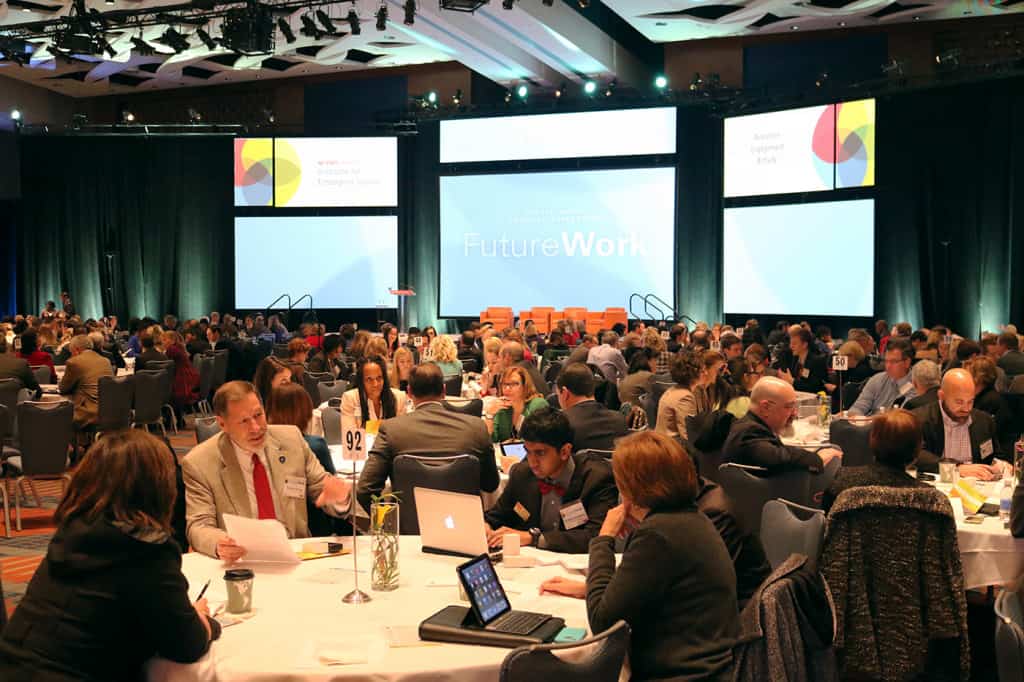
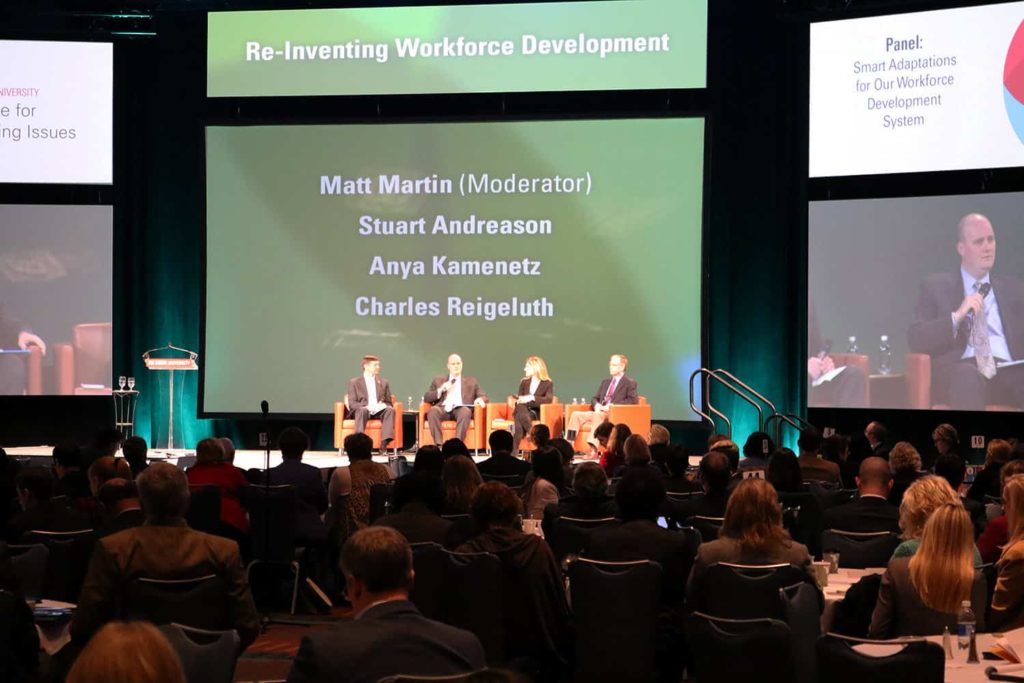
31st Annual Emerging Issues Forum. (Photo credit: Todd Brantley/EdNC)

The banners hanging from the street lights say simply,

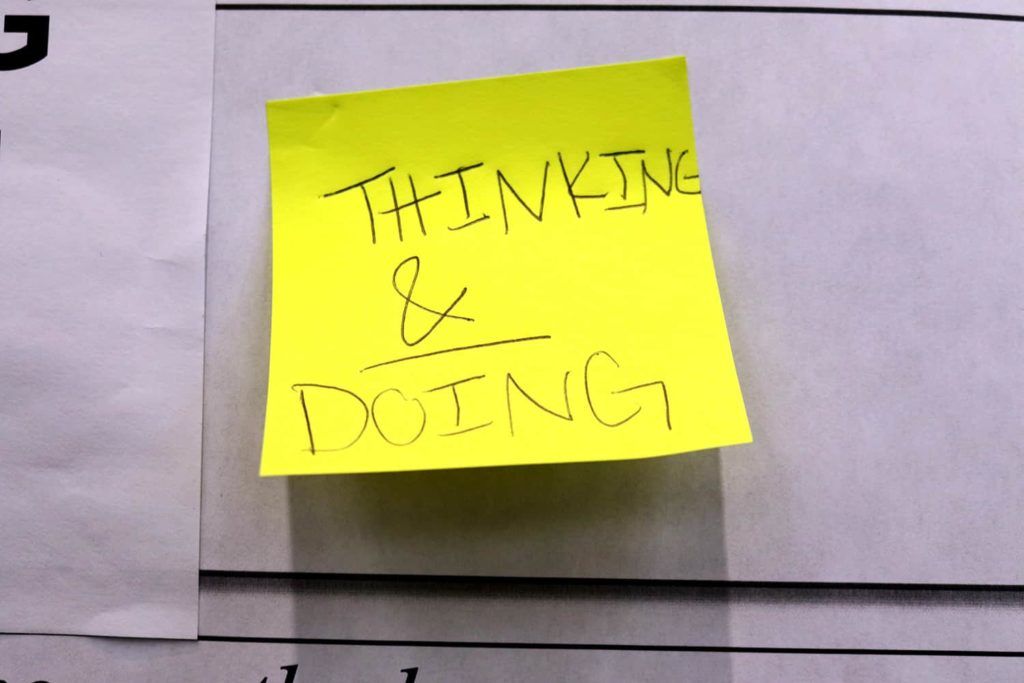
“Think and Do.”

It was the welcome participants received as they gathered at the Hunt Library at N.C. State University for the second day of the 31st Annual Emerging Issues Forum. It was also the mantra for a two-day event that encouraged participants to THINK deeply about educating and training North Carolina’s next generation of workers and to DO something, proactively and collaboratively, to make sure the diverse workforce of tomorrow was equipped and ready to lead our state.

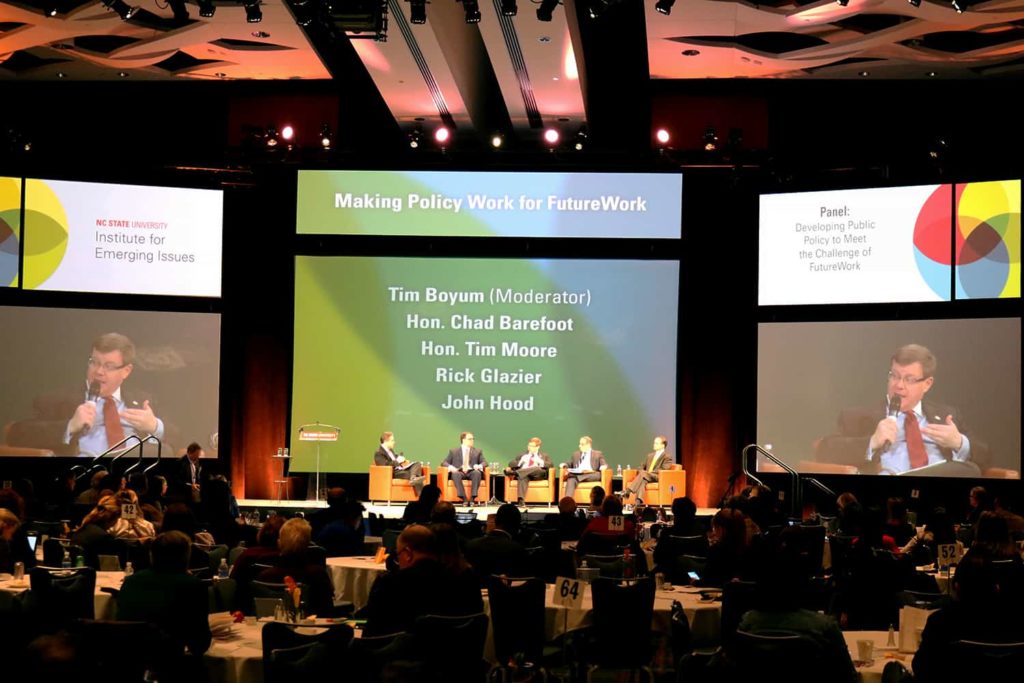
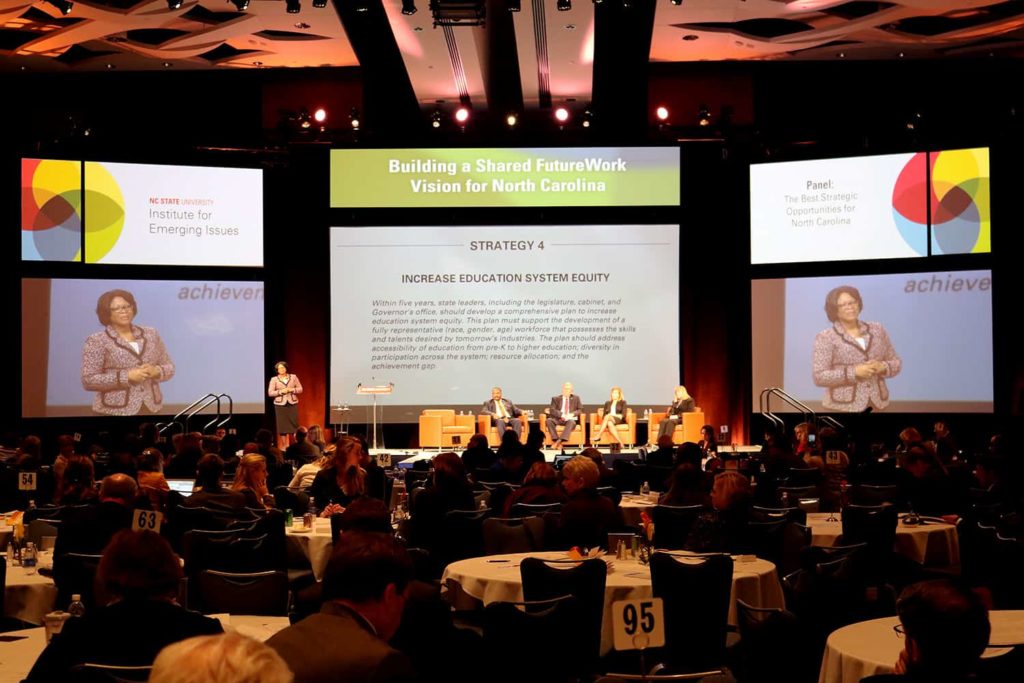
The first day of the forum featured economists, policymakers, elected officials, entrepreneurs, who spoke to the crowd filling the Raleigh Convention Center about the need to train our state’s youth and young adults for the jobs of tomorrow and encouraged the participants to think creatively about the delivery of education and the importance of public/private partnerships in connecting more young people to a meaningful, living-wage careers.

Throughout both days, several themes were repeated over and over again, two of which resonated more than others:

The next generation of jobs in this state will require innovative ways to connect education and real world work experiences, and 

Tomorrow’s workforce will be more diverse and it’s important to embrace that diversity and see it as a strength.

“When you have diversity you have more innovation. Diversity breeds innovation.” — Vivek Wadhwa, fellow at the Arthur & Toni Rembe Rock Center for Corporate Governance, Stanford University

“Our whole concept of all our students being on a single pace needs to be left behind.” — Anya Kamenetz, writer and education blogger at NPR_Ed

“We need to think much more creatively about how our public schools are organized.” — Charles Reigeluth, professor emeritus in education, Indiana University
“We get into a false dichotomy between science and the liberal arts. We need both. Not either or.” — Mary Grant, chancellor, University of North Carolina at Asheville
“Think big, start small, move fast. Public policy on entrepreneurship needs to be entrepreneurial.” — Philip Auerswald, associate professor of public policy, George Mason University


UNC-TV live interview

“For the first time in history, the current generation is doing worse than previous generation in terms of skills and education.” — Dambisa Moyo, economist and author
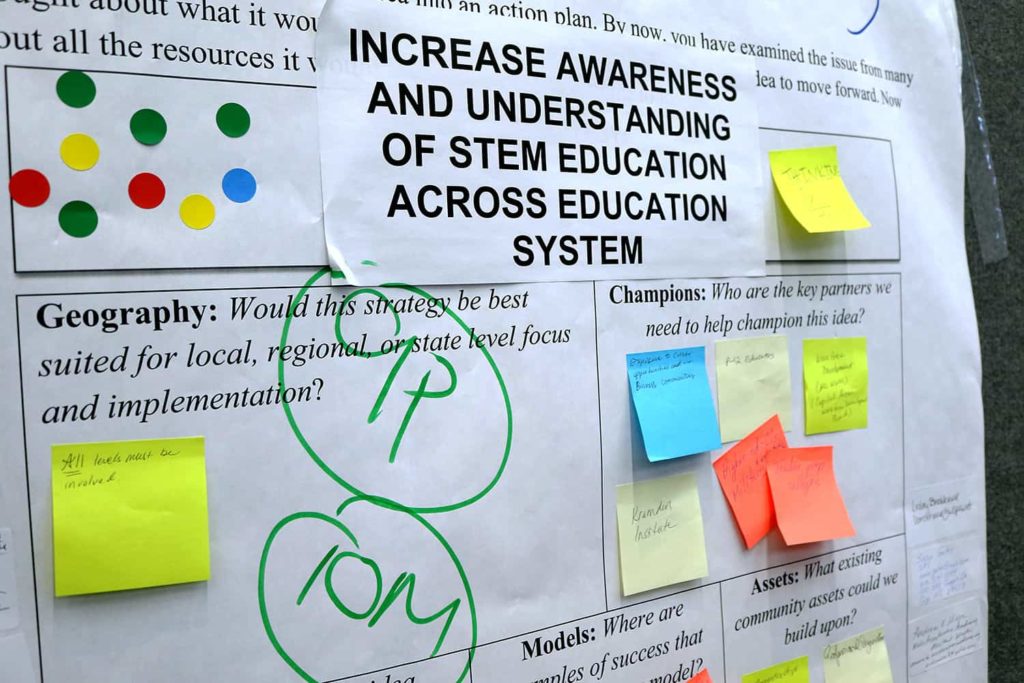

“We are not using our unique and extrodinary diversity to our global advantage.”– Henry Rock, executive director and founder, City Startup Labs

This story is tagged:

Meet the author

Todd Brantley is the senior director of public affairs at The Rural Center. He formerly served as director of policy and research at EducationNC.

He grew up in Randolph County where he attended Farmer Elementary School, Randleman Middle School, and Randleman High School. Todd attended Randolph Community College before graduating from the University of North Carolina at Chapel Hill in 1995. He received a master’s in theological studies from Duke Divinity School in 2002 and a master’s from the UNC School of Journalism and Mass Communication in 2009.

Prior to his work at The Rural Center and EducationNC, Todd also worked as the associate communications director at MDC providing strategic communications support for several programs, including the Bill & Melinda Gates Foundation’s Partners for Postsecondary Success and the Developmental Education Initiative. Todd was part of the writing and research team that produced the 2010 and 2011 State of the South reports. While a graduate student, he interned at The Story with Dick Gordon and was the editor of The Fountain, the alumni magazine for the Graduate School at UNC-Chapel Hill.

He was part of the research and writing team that received the Governmental Research Association’s 2014 Most Distinguished Research Award for a report on the use of telepsychiatry in rural areas. He was a co-author of How the Triangle Gives Back, a 2008 report that examined local philanthropic and charitable giving in the Research Triangle region. His writing and research has appeared in the Daily Yonder; Insight, a publication of the North Carolina Center for Public Policy Research; and NC DataNet, a publication of The Program on Public Life at UNC-Chapel Hill.

A native of North Carolina, Todd currently splits his time between Raleigh and Pikeville, where he helps maintain his wife’s family’s farm. He says, “As a product of this state’s systems of public education, from secondary, to the community college system, to our public postsecondary system, I have seen firsthand how important these institutions are for the social and economic wellbeing of this state and its citizens. Regardless of whether you are a new resident or a native, a parent or not, we all benefit from the fruits of our current system of public learning, and the hard work and foresight of those who came before us who understood that, regardless of political affiliation, North Carolina needed to be a national leader in access to quality education for everyone.”

Recommended reading