
Daniel Center brings STEM in focus for southeast Raleigh students

In 2008, Kirby Jones had been a pastor in southeast Raleigh for 15 years. He had watched his youngest church members grow up — he said they were “fabulous, beautiful kids.” But through his insight into the community, he realized that his hopes for great outcomes for these children simply weren’t coming to fruition.
Southeast Raleigh, he said, is the “inner city” of Raleigh.
“And all of the sadly typical issues that you have in any inner city in this nation, you find in Raleigh,” Jones said. “Scale may be different than South Side Chicago or West Baltimore, but it’s the same problems.”
He would see the same movie replay itself: bright young children growing up only to drop out of school, get in trouble with the justice system, experience teen pregnancy, or become involved with gangs.
“All kinds of things that I had not anticipated when I met them when they were elementary age,” Jones said. “And so I just became somewhat burdened with a desire to do something to change that trajectory for kids in this community.”
Although his background wasn’t in education, Jones said he thought supporting the education of the children of his community — from a very young age throughout their childhood — would be the best solution to change outcomes.
“There are a lot of issues that make inner city communities sometimes challenged,” Jones said. “So there is no silver bullet, per se. But the closest thing, I think, to breaking generational poverty and breaking the cycle of poor outcomes is education for kids.”
While researching strategies, Jones stumbled across STEM education. He had never even heard of the acronym, he recalled. But when he looked into it, he saw a critical issue: Math and science constituted the biggest academic gap for the children his church served. He also learned that STEM careers represented the best-growing economic sector for the foreseeable future.
“So if the object of the game is to break generational poverty through education, that must lead to a livable wage,” Jones said. “STEM is the path.”
The STEM strategy was rooted in statistics, rather than personal preference. Jones had no STEM background, and he said he’d much rather talk about art history with the children — but that probably wouldn’t make them a living.
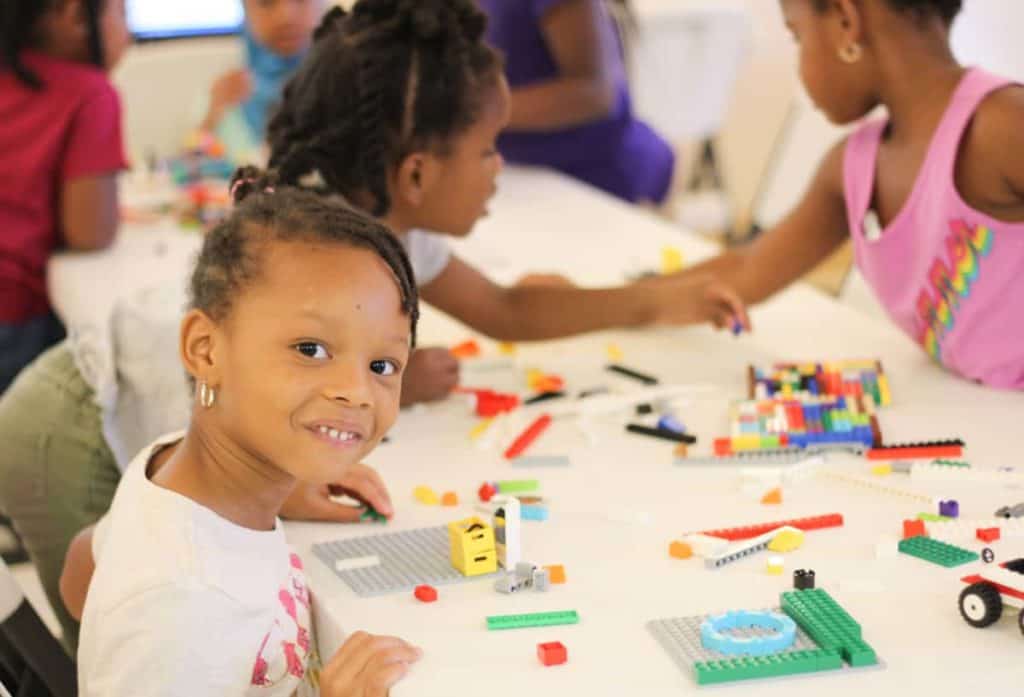
So in 2010, Jones founded the Daniel Center for Math and Science. The five-star licensed child care facility accepted its first cohort in the spring of 2011. This year, the program expanded to include pre-K, so that children can enroll as early as age 3.
The program’s framework is a long-term, comprehensive pipeline model.
“They literally are with us all of their childhood, and that’s strategic as well,” Jones said. “That’s a part of our theory of change model. Because we don’t think you can change the trajectory for children with deep academic deficits, sometimes deep social-emotional deficits, economic deficits, in a one-off, two-week science camp. There are just too many other forces.”
Daniel Center students, primarily made up of a cohort of 5- to 12-year-olds (though there is a teen and now college component as well), have access to the Center five days a week, year-round. During the summer, the afterschool program expands into a full-day STEM camp.
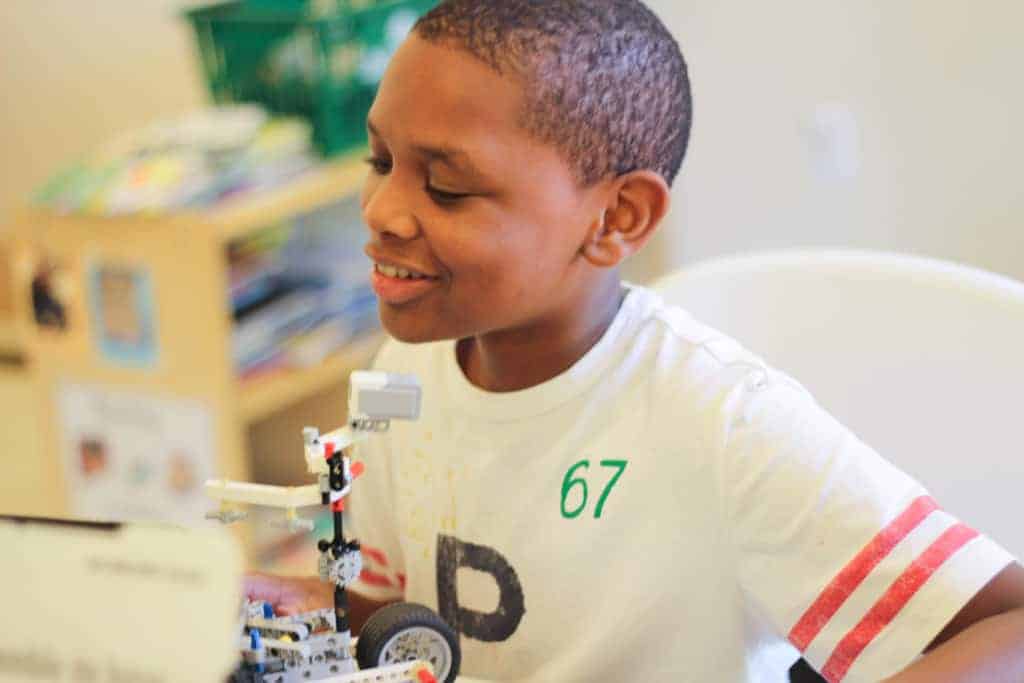
“I’ve been here every day all summer,” said seventh grader Jaden Henderson, who has been attending the Daniel Center since kindergarten. “We went bowling. We went to Red Hat. We went to the beach. We went to a lot of museums. We went to Marbles Museum right downtown.”
This intensive summer programming is also part of the Daniel Center’s strategic plan.
“Because education is not just books,” Jones said. “Education is exposure. It’s experience. And you can’t be what you’ve never seen.”
In the afterschool program, each day is dedicated to specific activities to allow children to dive into various STEM interests.
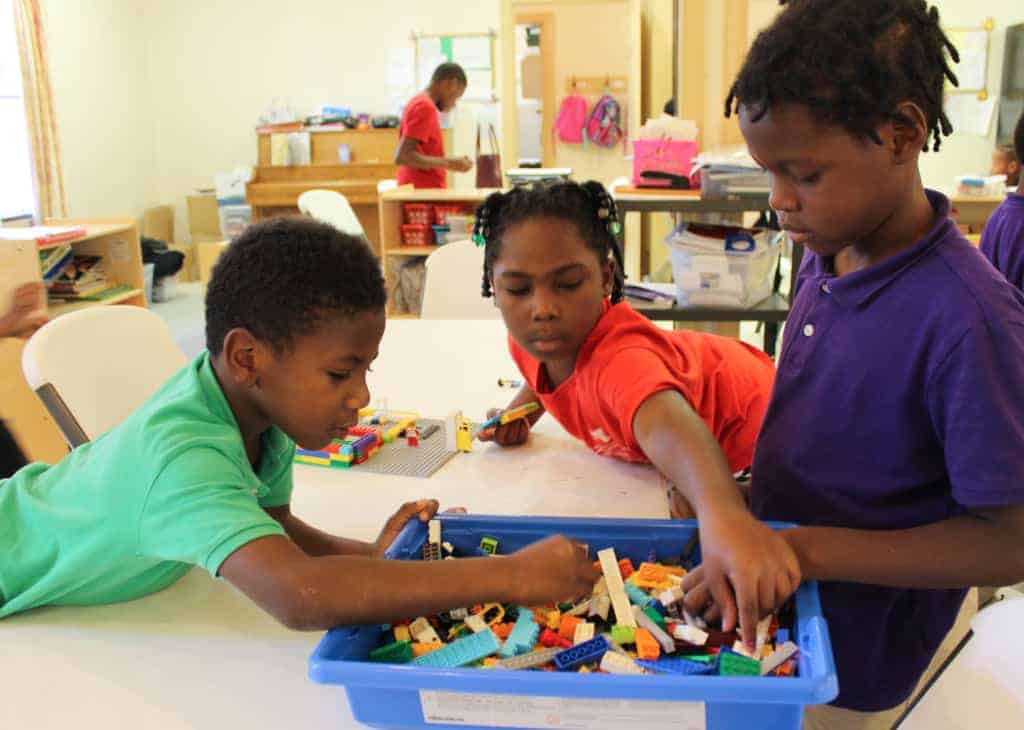
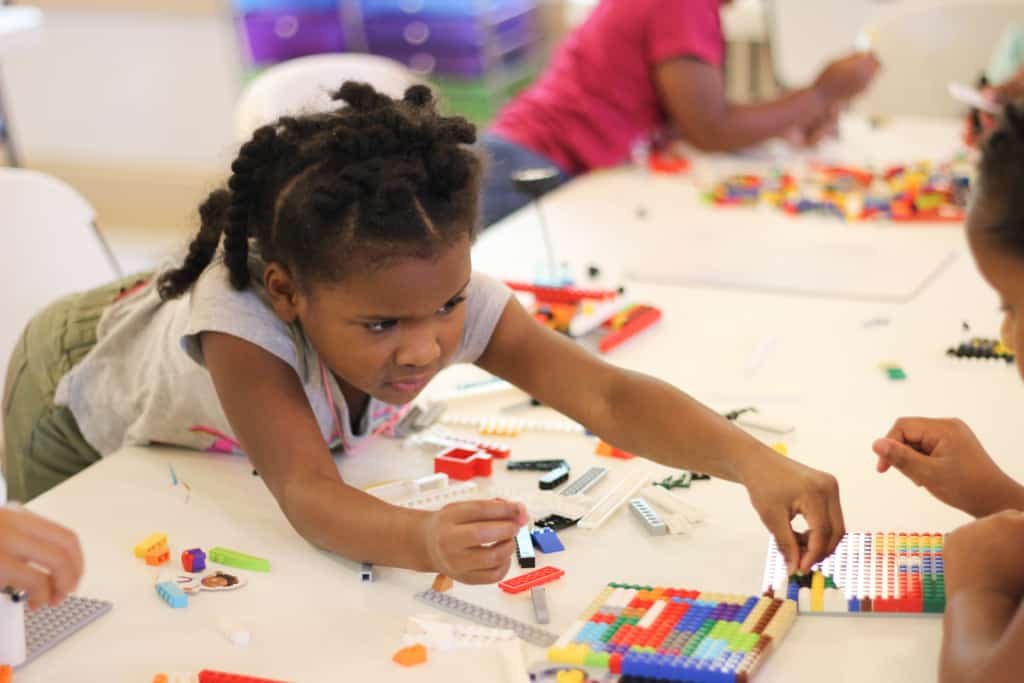
“On Mondays and Tuesdays, we do packets and lessons and articles,” Henderson said. “Wednesdays, we do financial literacy, so we learn about math. Sometimes we’ll go outside if we’re good. Thursdays, we do Lego robotics, so we play with Legos and we build. Fridays, we go on tablets.”
Fridays are Henderson’s favorite because he gets to practice coding with games like Tynker’s coding for kids. Plus, it’s in line with his favorite subject: math.
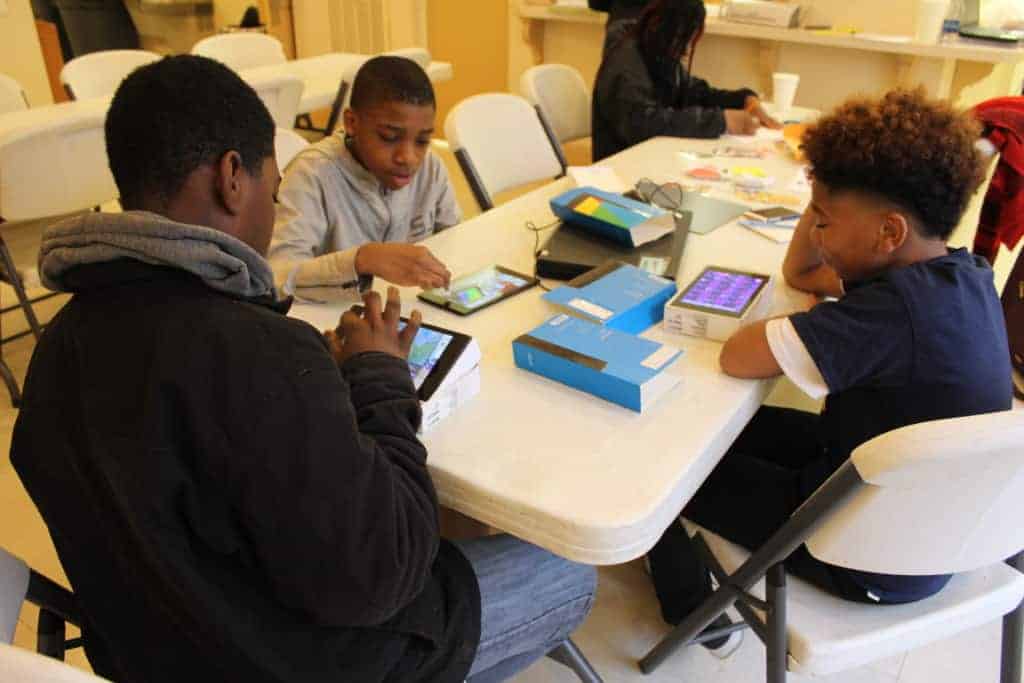
Fellow seventh grader Jamieson Jones completed all levels of Tynker this year.
“It took months,” he said. But every Friday, he became more and more familiar with what coding blocks to use, even as the levels got harder.
“It taught me how to problem solve,” he said. “I feel like if it’s hard, just keep trying and trying until you get it.”
Pastor Jones said this type of persistence in STEM is critical for these students.
“Society and culture gives these kids permission to fail,” Jones said. “We don’t give them permission to fail at the Daniel Center.”
Instead, Jones said, the program works to provide what he feels the children need beyond just academic tools: someone to be their cheerleaders and to believe in them. Administrators at the Daniel Center also work with parents if their kids need advocacy at school or help navigating the school system.
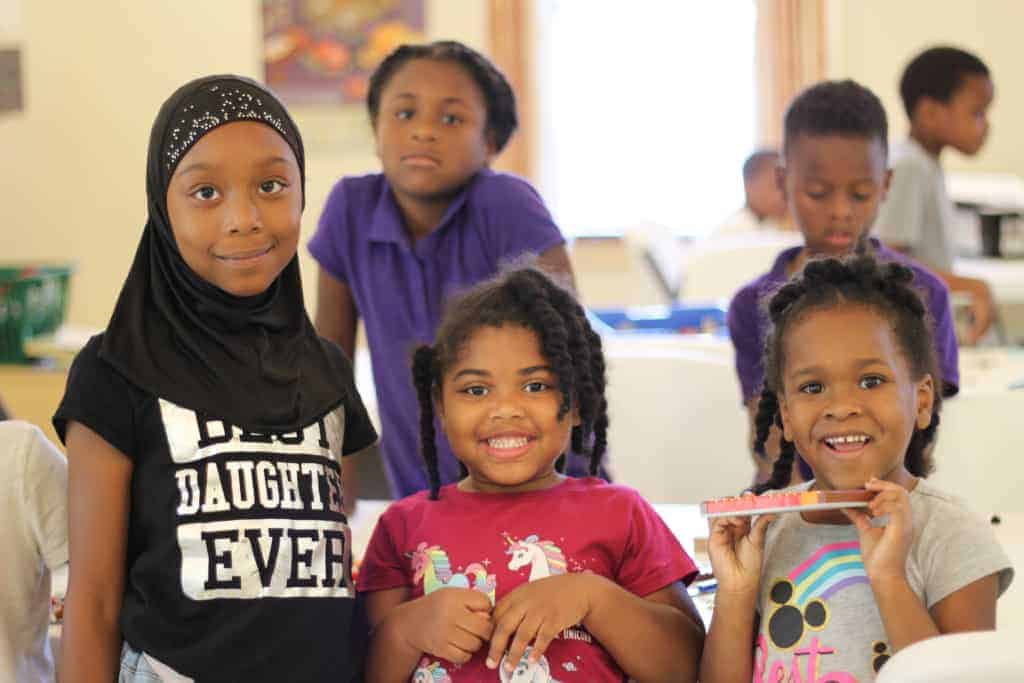
Still, academics remain a cornerstone of the afterschool program. After daily slated activities, students have a reading or one-on-one tutoring period.
“If you can’t read, you can’t do STEM,” Jones said. “So we recognized really early on that we had to do that. … And we collect their report cards for each reporting period, so we know where they are struggling and so we identify those kids and make sure they get one-on-one time and attention.”
The Daniels Center is staffed with a program administrator who has a master’s in education, a program coordinator who has a background as a teacher, and two other child care credentialed teachers. But with over 30 students enrolled in the afterschool program, it would be difficult for each child to get one-on-one reading time without the assistance of a dedicated volunteer program.
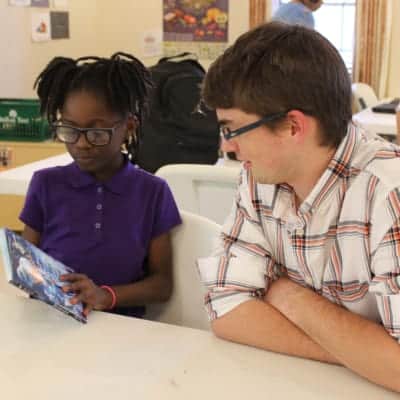
Griffin Drye has volunteered for three years at the Daniel Center, beginning during his freshman year at N.C. State. This past year, he stepped up as volunteer coordinator for the University Honors Program, which has had a relationship with the center for several years.
Drye said he grew up always working with kids because his parents were teachers in rural North Carolina. As a college student now, he said that volunteering at the Daniel Center has become an “oasis” away from college.
“You walk in there and all the kids are like, ‘Read with me!’” he said.
But after spending three years with the students, Drye would also overhear students talk about their issues at home or with their teachers at school.
“They’re extremely smart,” Drye said. “It’s just that you haven’t been focusing enough on these kids with the problems that they have in the lives that they’ve lived.”
The role of the N.C. State volunteer students, he said, is to serve as models who can say, “Hey, you can do this. You can be an engineer. You can be a doctor if you want to. It’s not something you don’t have to think about.”
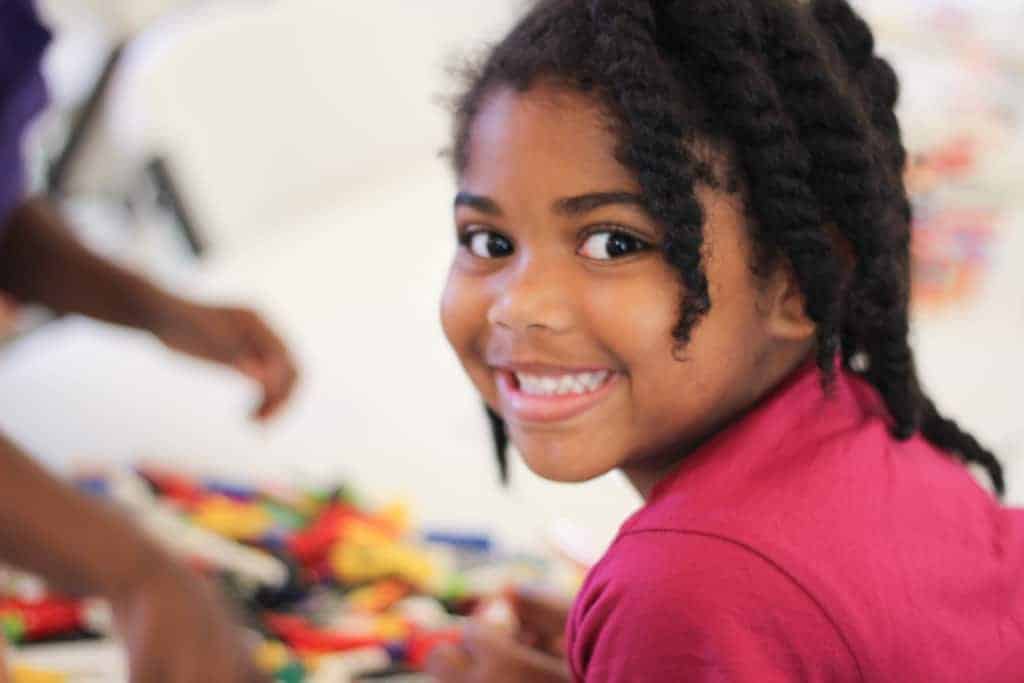
At the end of the day, Jones said, it’s this coordinated, long-term, strategic effort that will move the needle for kids.
“What if your default setting is: ‘Everybody I see around me, all of my family and circle, there are a lot of them who didn’t even graduate high school. There’s nobody that went to college…’” Jones said. “A lot of what we have to do at the Daniel Center is change these kids’ default setting. Now we see kids that are 10, 11 years old that have been here since they’re 5. Their default setting is absolutely changed.”