
It’s time to harness the power of interactive talk to boost school readiness
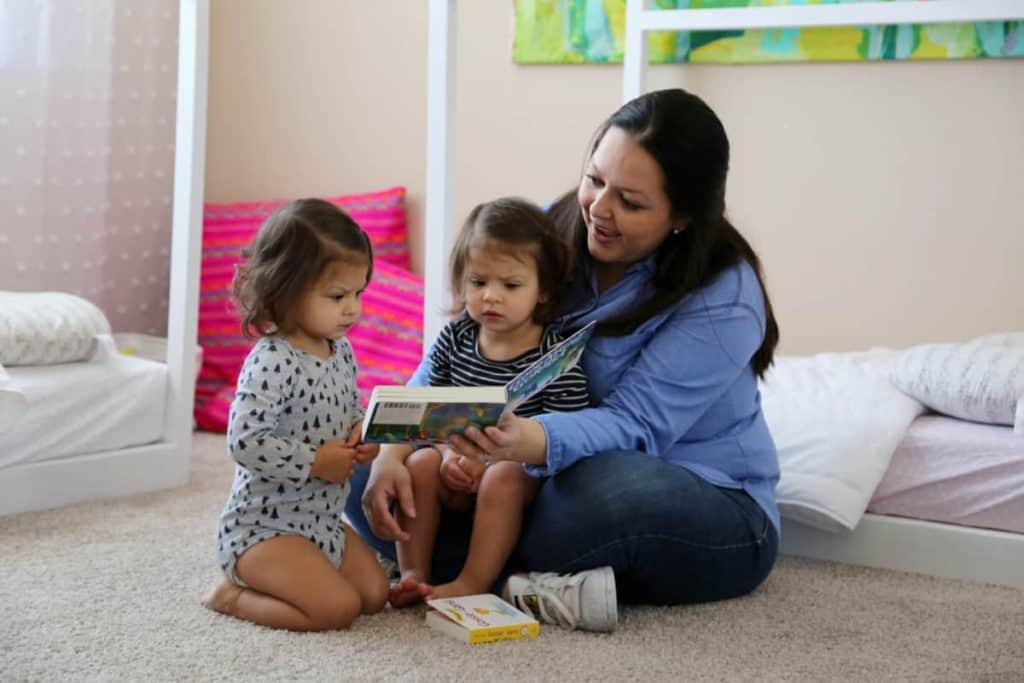

Between the ages of 0-3, children’s brains develop more than 1 million neural connections every second, according to the Harvard Center on the Developing Child.
During those early years, experience shapes children’s development. In particular, the way that adult caregivers respond to children shapes how their brain architecture is formed.
“When an infant or young child babbles, gestures, or cries, and an adult responds appropriately with eye contact, words, or a hug, neural connections are built and strengthened in the child’s brain that support the development of communication and social skill,” the Harvard experts explain.
As anyone with a Fitbit will testify, having accurate data on what you’re doing every day makes it easier to create positive behavior change. With this in mind, our organization developed “talk pedometer” technology to measure back-and-forth conversations between adults and children. It’s called LENA, which stands for Language Environment Analysis.
The data provides adult caregivers with actionable feedback on the early language environment that they’re creating for children, so they’re better able to develop their strengths and build responsive caregiving skills.
Research shows that the amount of conversation children experience is related to their brain structure and function. A 10-year longitudinal study by LENA’s research team found that conversation between the ages of 18-24 months of age was linked to a child’s IQ, language skills, and verbal comprehension in adolescence.
Our programs, implemented through trusted community partners, are used to support children’s cognitive development across the country and in several communities in North Carolina:
- Smart Start Davie County and Ready for School, Ready for Life in Guilford County are using LENA Home to bolster their Parents as Teachers Home Visiting program, coaching families to increase interactive talk in a one-on-one setting.
- RTI International, headquartered outside of Raleigh, is using LENA Home to study maternal well-being in families whose young children are being served by the early intervention system.
- The Alamance Partnership for Children in Burlington and the Franklin-Granville-Vance Smart Start in Henderson are using LENA Grow to provide early childhood teachers with experiential professional development on increasing early talk in the classroom.
We’re excited to be working with these local organizations to close the early talk gap in North Carolina. By boosting interactive talk during the first three years of life, we can prepare every child to arrive at kindergarten equipped with the skills to succeed. I encourage you to learn more about the early talk gap and our efforts to close it and download 14 practical tips for talking with children.