
Valuing veteran teachers — and the need for teachers of color

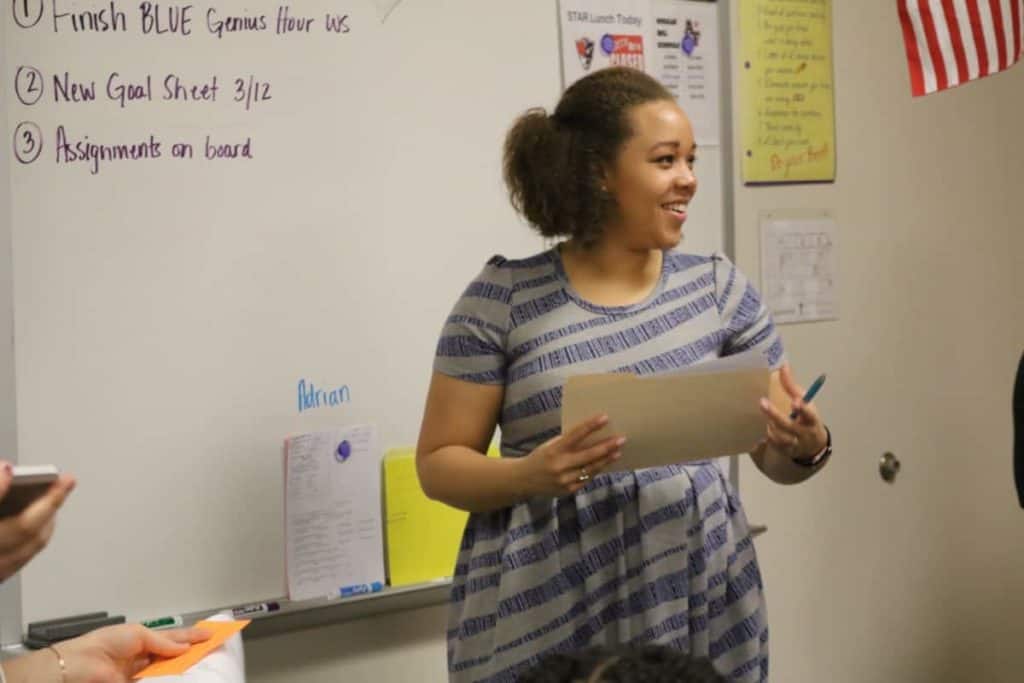
The National Center for Education Statistics reports that male teachers in public secondary schools declined from 41 percent to 36 percent in the 1999-2016 period nationwide. Also, teachers with more than 20 years of experience dropped from 32 percent to 22 percent of all teachers in elementary and secondary schools.
Of all North Carolina teachers, 80 percent are white, 15 percent are black, and 5 percent are of other ethnic groups. The demographic profile of students is dramatically more diverse: 48 percent are white, 25 percent are black, and 27 percent are Latinx, Asian, American Indians and others.
These sets of national and state statistics help define issues facing North Carolina education leaders and policymakers. As legislative deliberations proceed through 2019, certainly teacher pay will again emerge as a central issue. Still, additional characteristics of teachers and teaching deserve attention:
Do we sufficiently value veteran teachers, women and men? Do we allow creative teachers to flourish, especially in dealing with fraught questions of history and democracy? Are we doing enough to encourage more bright, creative young men and women of color to join the teaching profession?
Through 2018, both The Atlantic and The Guardian published series of reports and reflections on the departure of experienced teachers. The Guardian, a British daily newspaper, published its series in the form of blogs by an educator identified only as “Secret Teacher.”
Secret Teacher expressed sorrow at the impending departure of “a teacher at my school who is adored by students and staff…The school benefits from his expertise daily, from the way he handles tricky content to how he manages difficult behavior. In many ways, he is irreplaceable.”
“Formal teacher training is the equivalent of being told how your parachute works before being chucked out of a plane at 12,000 feet,” Secret Teacher wrote. “Becoming a teacher takes years: It’s a lifelong apprenticeship, with best practice passed from experienced colleagues to new recruits.”
The Atlantic series concluded with a report from Columbus, MS., by journalist Kristina Rizga under the headline, “How to Teach the Civil War in the Deep South.” The report focused on Chuck Yarborough, a white native Mississippian who is a 25-year veteran teacher at the Mississippi School for Mathematics and Science.
Building upon a teaching method of his own mentor, Yarborough assigns students to research the lives of people buried in two local cemeteries, one a historic burial ground for African Americans, the other containing graves of many Confederate soldiers. The history course concludes with students giving a public performance drawn from what they learned in the local archives.
“Human beings like there to be no shades of gray,” Yarborough is quoted as saying. “We want simplicity in history. We want either good or bad, just or unjust, right or wrong. And while that’s very satisfactory to us individually, any project in history that is going to reflect our world, and teach kids how to operate in our world, has to explore that complexity.”
The complexity of men and boys is the subject of new guidelines from the American Psychological Association. The APA’s 31-page publication offers guidance to psychologists, including a section positioning them to support education efforts to enhance males’ “intellectual, emotional and social development.”
The APA observes that boys “face greater odds of being diagnosed with a developmental disability that can impair academic functioning and/or result in placement in special education classes. Moreover, it is well documented that boys of color are disproportionately punished more severely for similar behavioral issues compared to their white peers … Addressing the school-related problems of boys is also important, because many of the problems posed by boys in schools (e.g., classroom disruption, poor organization, sexual harassment, bullying, discourtesy) have a detrimental impact on the academic and social experiences of other students.”
In this moment of political and cultural polarization, the APA treatment of “traditional masculine ideology’’ has stirred up a multi-faceted debate, as Thomas B. Edsall has explored in The New York Times. And yet, while the APA guidelines are not specifically addressed to education administrators and policymakers, they serve to reinforce the need for a more male teachers and counselors — especially a stronger presence of black men — in North Carolina’s schools.