
Building community beyond the classroom walls
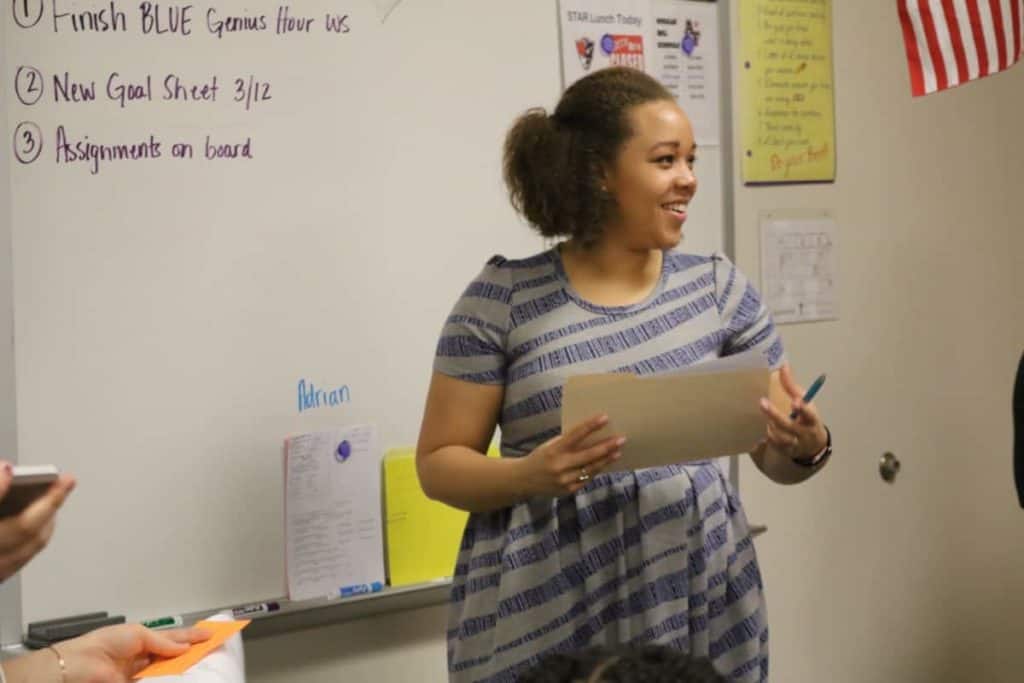

Being a classroom teacher can feel isolating. During the school day, teachers have very few interactions with other adults. The bulk of a teacher’s day is spent with students in the same classroom, so it’s easy for a teacher to find themselves on an island.
Of course there are opportunities for teachers to build community with others in their school or district. For example, teachers must participate in professional learning teams (PLTs) based on their grade-level or subject area. PLTs serve as a space for teachers to plan instruction and discuss student data. Additionally, teachers engage in school-wide faculty meetings and may even attend district-wide professional development (PD).
But are these opportunities provided by the school or district authentic ways to build community with other educators? What happens when the “community building” offered by a school or district isn’t feeding a teacher’s soul? What does it look like when a teacher recognizes a problem of practice outside of their classroom and hopes to impact the environment in a meaningful way, but isn’t provided the resources to do so?
Entering the profession, I quickly realized the opportunities which were readily available to me were not adequately building the sense of community that I longed for. They weren’t feeding my hunger to impact change, nor were the opportunities available aligned with my interests and passions. I valued the time spent planning with my PLT and I appreciated the knowledge gleaned from district leaders; however, I wanted to discover how policy affects the daily lives of teachers and I needed to explore the intersections of race and education.
It was time to take a step outside of my classroom and intentionally find the learning community that would challenge my thinking and my practices. It was time to find my people – the people interested in questioning the status quo, the people who wanted to discuss how race and power impact education, the people who knew “learning communities” meant more than an hour together per week as mandated by the district.
Even as a novice teacher, I recognized that challenging issues around school funding, teacher recruitment and retention, and teacher pay meant taking my concerns straight to the top. I needed to brush elbows with policymakers. So naturally, the first stop in my journey toward building community was at the Public School Forum of North Carolina and their newly formed Beginning Teacher Leadership Network (BTLN). BTLN serves to bridge practice and policy by producing and retaining teachers who will be empowered to lead and inform change.
Through sound professional development and collaboration with other early career educators, I began to build knowledge in education policy issues. Beyond that, I researched current education policy and drafted possible solutions to share with policymakers. Because of my drive to seek learning opportunities outside of my school building, I have built community with a group of beginning teacher leaders who are interested in affecting policy change through advocacy.
I can’t write a piece about building community without shouting out Twitter as an easy way to connect with other educators and learn from scholars of diverse backgrounds. You can find experts in any area of expertise by doing a quick search or participate in Twitter chats focused on topics of interest. By being an active participant on Twitter, I have discovered groups of folks who have impacted my practices and challenged me to think critically about my pedagogy. #EduColor is a phenomenal community of public school advocates of color who put educational equity and justice at the forefront of their work. The people in this community push my thinking and are my go-tos for learning around race, power, diversity, inclusion, and more.
Additionally, I discovered the ECET2 community through my Twitter interactions. Teacher2Teacher intentionally elevates and celebrates the experiences of teachers by providing learning experiences created by teachers. By participating in the ECET2 convening in North Carolina for the last two years, I have been exposed to many resources for teachers and most importantly, I have built community with teachers across my state. Beyond that, through ECET2’s national community and Twitter presence, I have connected with educators around the nation to build a strong online professional learning community.
Some teachers are not satisfied with the professional development offered by their school district. Some teachers have a desire to step outside of their classrooms to learn about education issues that directly impact their lives inside the classroom. I am not satisfied with the way the system is set up for teachers to build community.
As I continue to explore the complexities of what it means to be a teacher of color, I’m left with questions about why teachers like me have to reach beyond their school sites to build community in a meaningful way. I challenge administrators and district leaders to elevate the voices and experiences of teachers of color when planning professional development and providing opportunities to build community.
I will continue to collaborate and build community with teachers in my school and district, but I will continue to create learning communities with educators outside of my immediate circles in order to shape my skills as a teacher leader.