
Western NC community college presidents discuss educational and workforce pipeline


Representatives from the North Carolina School for the Deaf, based in Morganton, raised their hands to sign for “applause” after a panel of four community college presidents from western North Carolina spoke about providing education and workforce opportunities in the region. The panel addressed an audience of local community college students, K-12 educators, government officials and other community members on Wednesday afternoon in Lenoir at the J.E. Broyhill Civic Center as part of a listening session of the myFutureNC Commission.
With sessions scheduled throughout the state, the Commission hopes to gather community input on educational needs in North Carolina through inclusive focus group interviews, spearheaded by the Friday Institute.
“We didn’t solve anything necessarily, but what I thought was most important is that we surfaced a lot of things,” Dr. Trip Stallings, director of policy research at the Friday Institute, said of the Lenoir listening session.
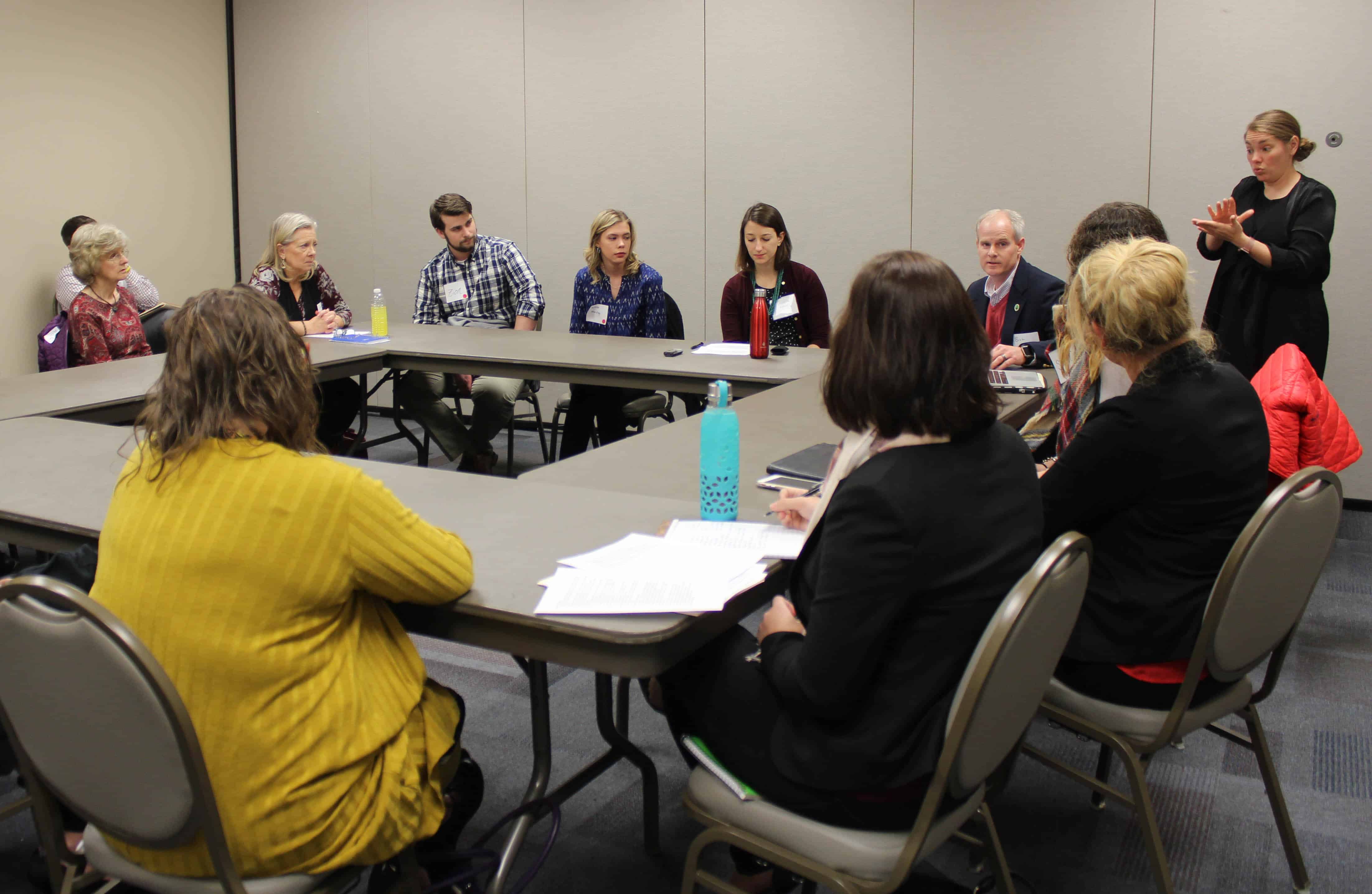
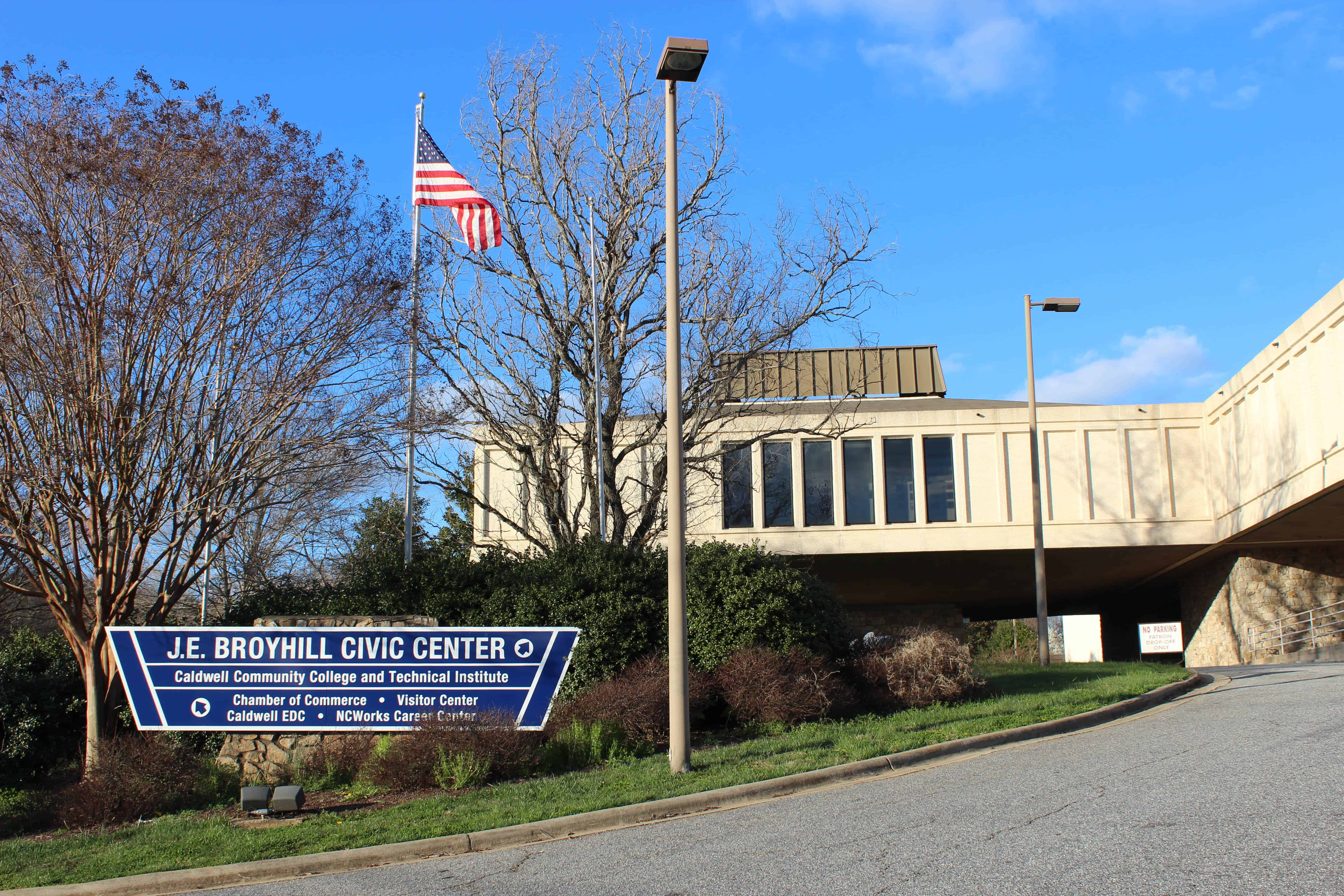
The role of community colleges in education and workforce attainment created the most lively dialogue capping the day. Dr. Jeff Cox, president of Wilkes Community College; Dr. Mark Poarch, president of Caldwell Community College and Technical Institute; Dr. Michael Helmick, president of Western Piedmont Community College; and Dr. Garrett Hinshaw, president of Catawba Valley Community College entertained audience questions and discussed the significant role community colleges have in the state as well as the challenges they face.
“Community colleges are where the boots are on the ground,” Hinshaw said, pointing to the connection between community colleges, high schools, four-year universities, and the workforce. “We have worked on building relationships in our community.”
These relationships create a space for community colleges to serve as a link between education and local workforce. For example, Catawba Valley Community College (CVCC) developed a curriculum to supply a furniture manufacturing workforce to the community at a time when workers were retiring without replacements. Over three years, more than 300 CVCC graduates were employed in the industry at a 100 percent hiring rate.
Other successful programs implemented by the community colleges include the addition of career coaches in high schools, allowing high school students to enroll in community college courses, and exposing middle schoolers to the workforce first-hand through field trips.
“If you allow these communities to solve their problems, they will solve their problems,” Hinshaw said.
However, the panel also recognized community colleges have several challenges, including statewide regulations that may not be applicable to their regions, misperceptions of community colleges by prospective students, and more.
“Recruitment and retention of qualified staff and faculty continues to be a challenge,” Poarch said as panel members discussed the role of legislative funding.
“Fortunately for us, we have fantastic faculty across the board,” Helmick said of Western Piedmont Community College. “But any one of them could leave today and make 30 percent more in the industry.”
Another challenge is college-readiness for recent high school graduates. Cox said Wilkes Community College receives 400 applications for a nursing program of 40 slots. Of those applicants, approximately 50 meet the minimum academic requirements to enter the program. Cox said this demonstrates a broader issue in K-12 education in making sure students are ready for college and the workforce.
Still, Cox said that the panelists believed community colleges are where change is possible.
“The collaboration is key,” Poarch said of the work of community colleges. “It’s a special place because everybody’s got a common goal.”
Editor’s Note: Mebane Rash, the CEO of EducationNC, serves as a subject matter expert on myFutureNC.