
Messages for schools in a survey of U.S. religious landscape

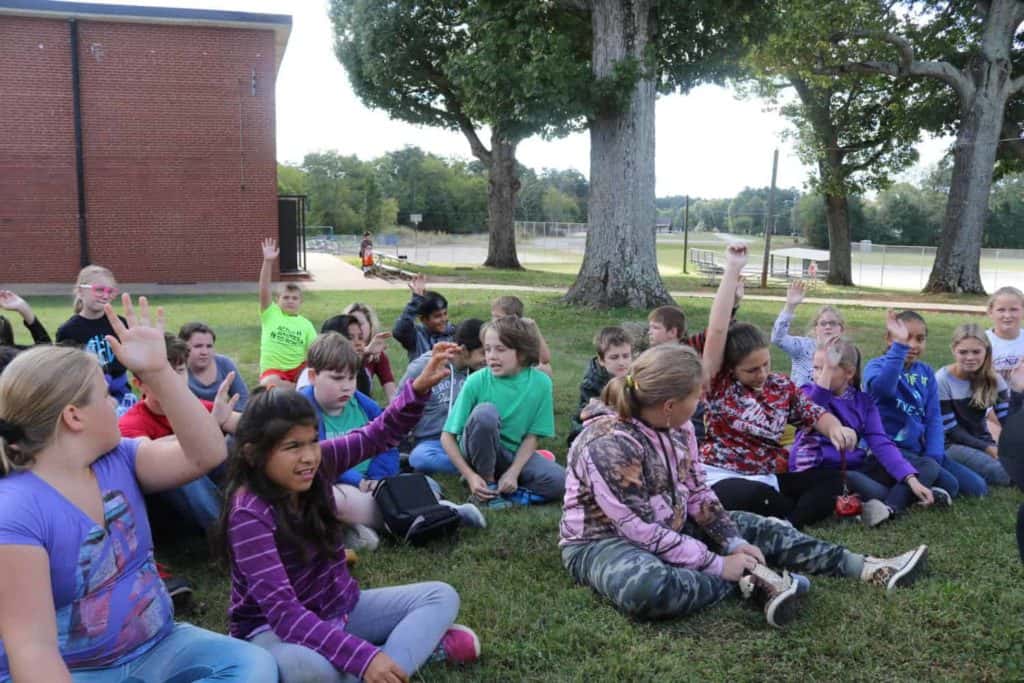
You often hear it said that America’s public schools responded to and took on characteristics of the industrial economy of the 20th Century. For many decades, too, the public schools also reflected the dominant culture of a nation with a white and Christian majority.
Now, the nation has fully entered a post-industrial, digital, globalized economy. The United States, meanwhile, has also undergone a profound demographic transition.
“White Christians, once the dominant religious group in the U.S., now account for fewer than half of all adults living in the country,” according to the findings of a massive survey of more than 100,000 Americans, released last month by the Public Religion Research Institute.
Forty years ago, says the PRRI report, 81 percent of Americans identified as white and Christian — with 55 percent Protestant. Today, 43 percent of Americans identify as white and Christian — with 30 percent Protestant.
PRRI is a Washington-based, nonprofit, nonpartisan, nondenominational organization, whose religious identity study was funded by major national foundations. While the study did not specifically focus on schooling, the findings provide important insights into the cultural context in which public education must operate in the 21st Century.
In today’s religious landscape, according to PRRI, 15 percent of Americans are nonwhite Protestants, seven percent are Hispanic Catholics, two percent are Jewish, and Muslims, Buddhists, and Hindus represent about one percent each.
“No religious group is larger than those who are unaffiliated from religion,” says the report. “Nearly one in four (24%) Americans are now religiously unaffiliated.”
The PRRI survey detected a significant generational stratification in religious adherence. Among Americans 65 and older, two-third identify as white and Christian — 26 percent evangelical Protestants, 19 percent mainline Protestant, and 16 percent Catholic — with merely 12 percent unaffiliated. In contrast, fully 38 percent of 18-to-29-year-olds identified as religiously unaffiliated, and only about one-quarter as white and Christian.
The RPPI also makes the point that racial, ethnic, and religious identities shape political identity in this polarized nation. While educators must remain sensitive to the demographic and cultural shifts that shape their cohort of students, public schools also have to navigate their way through often-rough political waters.
Even though white Christians now account for just fewer than half of American adults, the RPPI finds that “roughly three-quarters (73 percent) of Republicans belong to a white Christian religious group.” In the federal government, in North Carolina and in most states, Republicans hold governing power.
In the multi-ethnic coalition that is the Democratic Party, white Christians have become a minority. At the same time, says RPPI, “white evangelical Protestants remain the dominant religious force in the GOP.”
The nation’s dramatic economic, cultural, and political changes have left many Americans feeling as if they are strangers in their own land. In a complementary survey of 3,400 Americans in April and May that explored child and family well-being, RPPI provided data to document the civic distemper.
“Almost half of Americans (44 percent) agree that things have changed so much that they often feel like strangers in their own country,” RPPI reports. Older adults are more likely to express such a sentiment than younger adults. Whites feeling estranged have held at about 40 percent recently. But noticeably, black Americans feeling like strangers jumped from 48 percent in 2016 to 59 percent in 2017 — surely attributable to discontent arising from Trump administration rhetoric and policy shifts and from the renewed visibility of white-supremacist activities.
Over time, public education has served the nation as a vital vehicle for advancing economic prospects of both the nation itself and individual citizens — and for moving the United States toward the ideal embodied in its motto, E Pluribus Unum. Now, just as public schools have the job of producing skilled workers, managers, and entrepreneurs for the modern economy, so schools also face the task of educating a rising generation that reflects the new cultural reality.