For nearly 10 years, Orgullo Latinx Pride has changed students’ lives. Now, it’s teaching them brain science
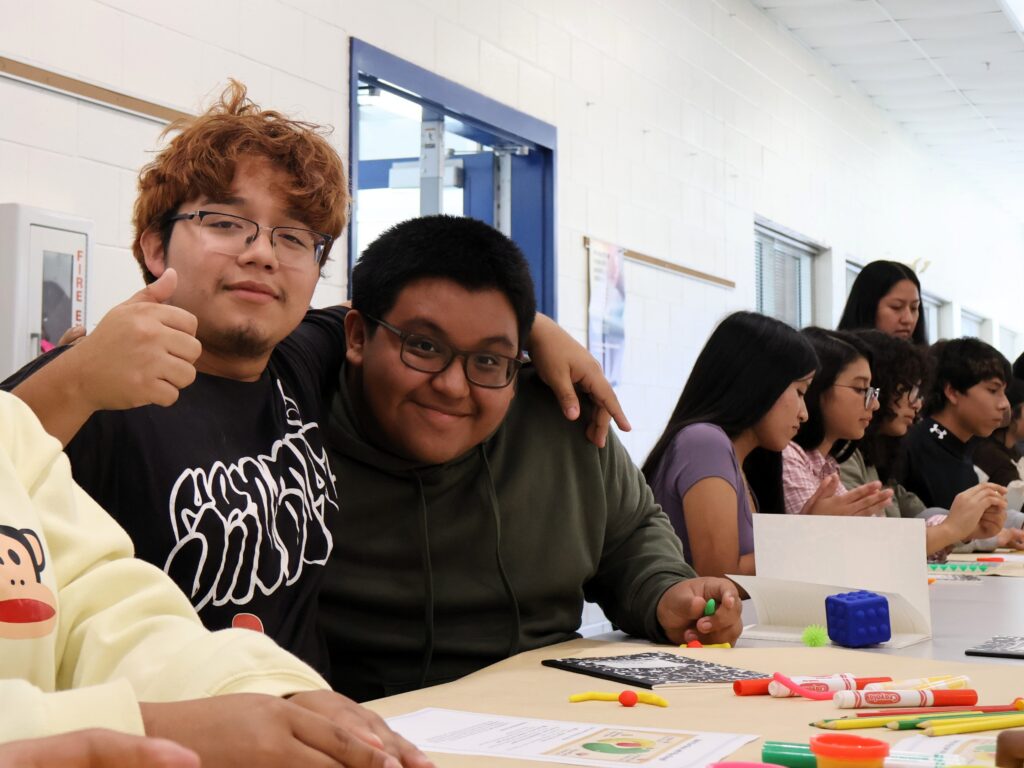
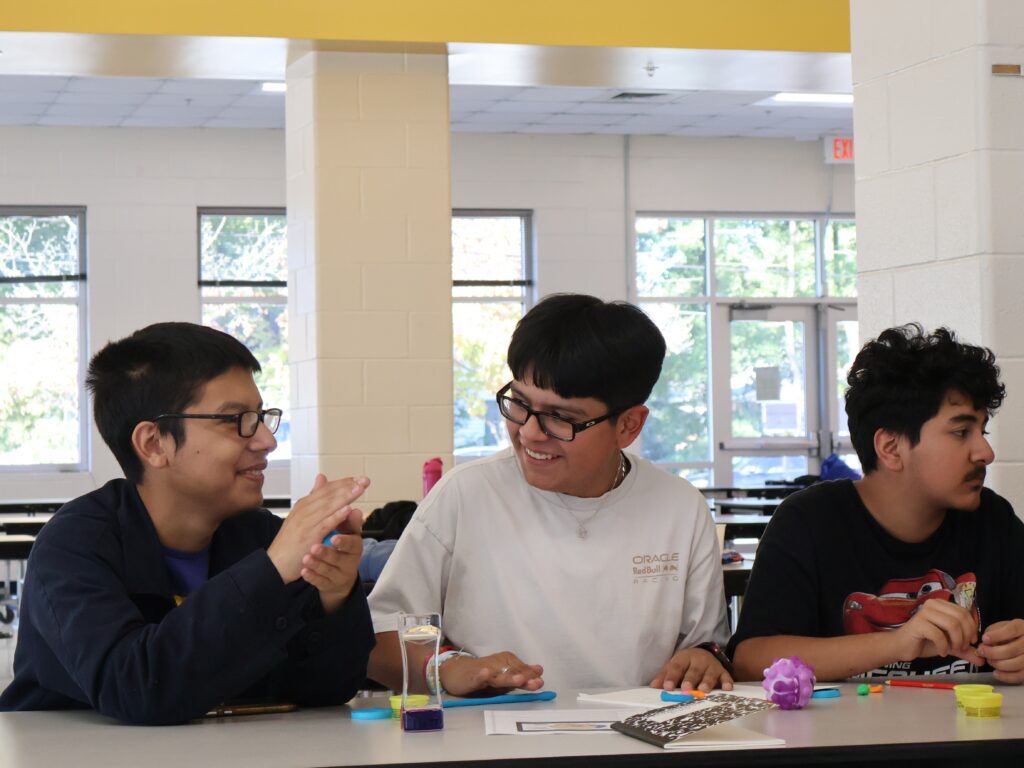
Autumn sunlight streams into a Siler City high school cafeteria and shines off white linoleum tiles. The smell of takeout from a local Chinese restaurant wafts around the room, and high schoolers plop down around half a dozen lunchroom tables to eat their early dinner.
Students chat, catch up on chemistry homework, and discuss their upcoming plans to attend the North Carolina State Fair.
This scene unfolds weekly at a high school where El Vinculo Hispano (EVH) — or The Hispanic Liaison — delivers its Orgullo Latinx Pride (OLP) after-school programming.
Selina Lopez, OLP’s program director, said that evening’s turnout of roughly 30 students was only about half of the program’s reach. This year, 56 ninth through 12th grade students are enrolled in the free year-round program.
Those who couldn’t attend, she said, might be busy working a shift at their part-time job or taking care of younger siblings’ transportation needs.
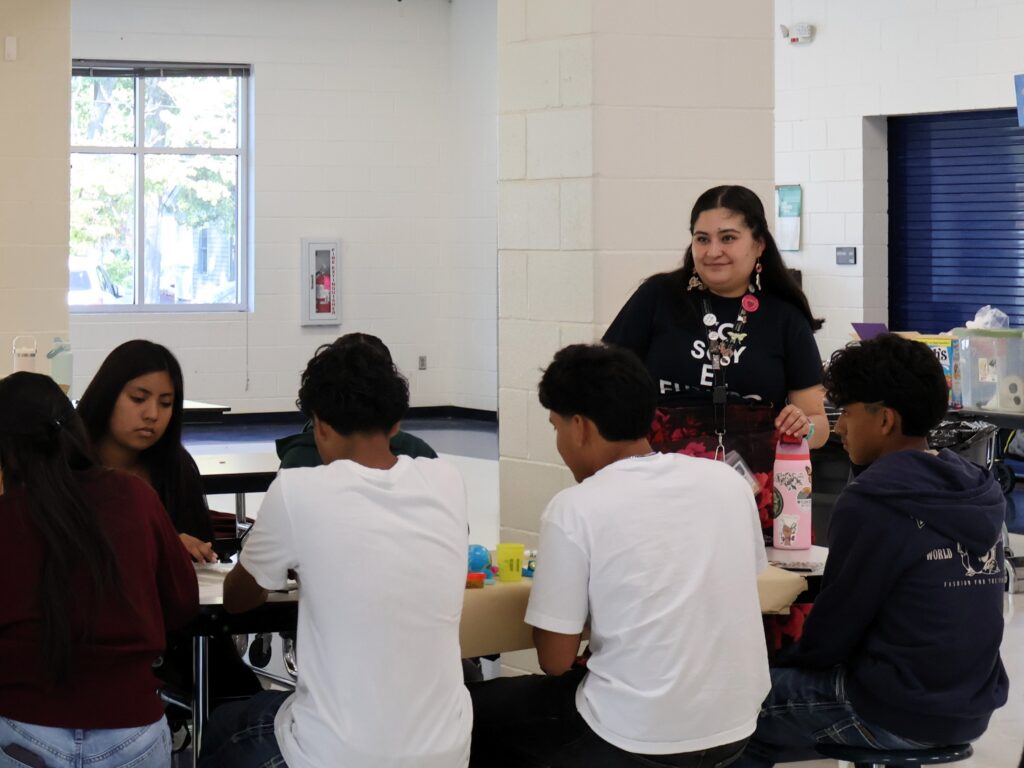
For over three decades, EVH’s mission has been to help Latine residents “overcome the challenges (they) face and make (their) voices heard in the community.” Today, the nonprofit serves Alamance, Chatham, Harnett, Lee, and Randolph counties.
The nonprofit launched OLP in 2017. After serving nearly 10 cohorts of high school students, it’s the organization’s longest-running program.
This year, OLP is introducing a new youth mental health curriculum to equip students with resilience, healthy coping skills, and the vocabulary of mental health.
OLP leaders and students credit the program’s success to its genuine attention to and interest in young Latine people’s lives. As the new curriculum gets underway, they have no doubt it will enhance the after-school program experience.
 Sign up for the EdWeekly, a Friday roundup of the most important education news of the week.
‘Mind Matters’
“What stressed you out today?”
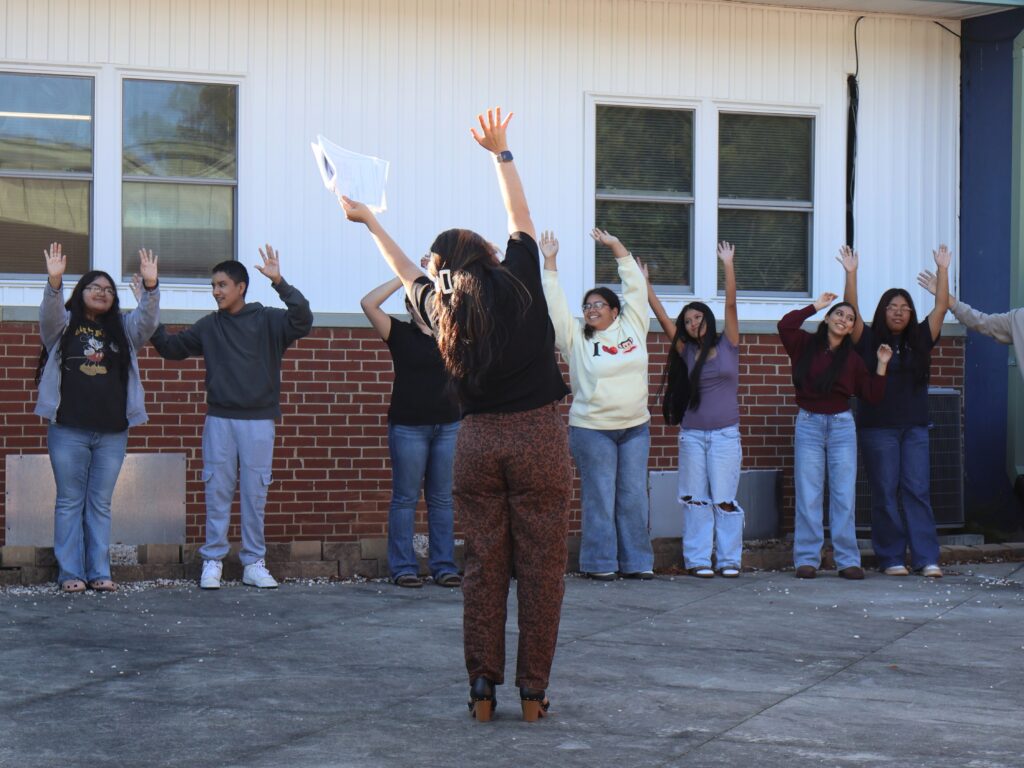
Students gathered in a circle took turns walking to the center and sharing their answers to that question: Homework. College applications. Work. Family responsibilities. Staying up late to finish an assignment.
Yoraidyl Decipulo, EVH’s youth mental health program manager, had asked the initial question. After surfacing stressors, she led students through a series of breathing exercises.
“I want you to inhale in, lift up your shoulders up toward your ears, and exhale out and drop your arms,” she instructed. “We’re gonna do that one more time.”
Some students laughed with each other as they tried new poses, but soon the entire circle was engaged in the exercise.
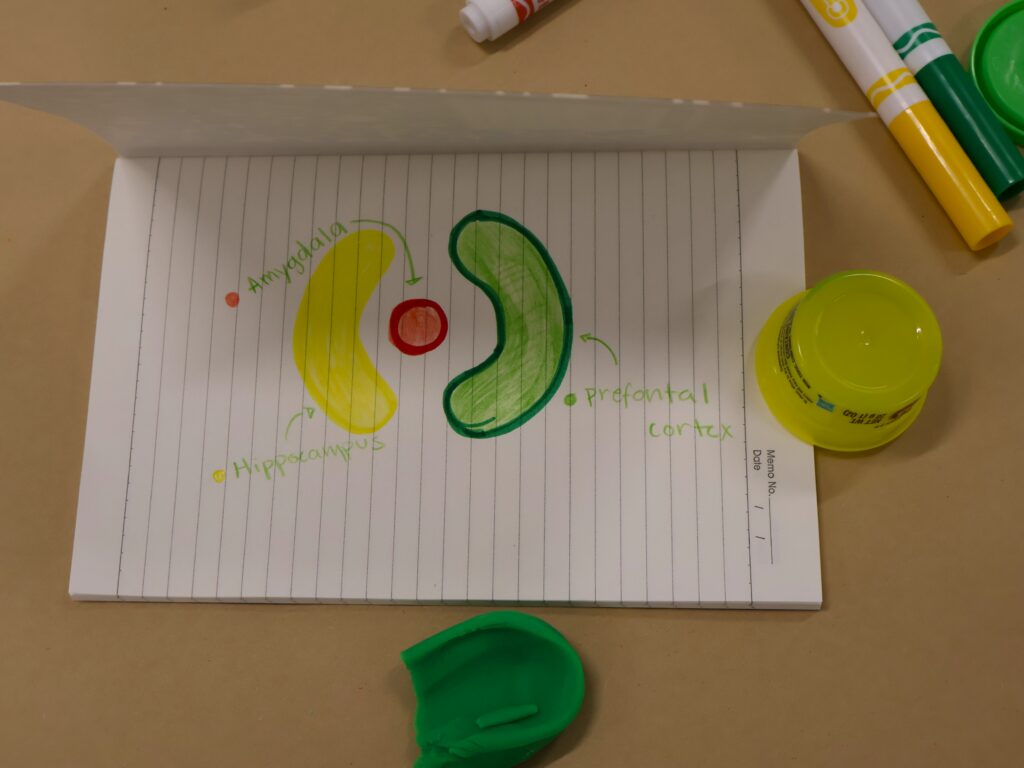
After heading inside, students used Play-Doh to map out different parts of their brain. Decipulo explained that the prefrontal cortex drives decision-making, the amygdala is responsible for their fight or flight response, and the hippocampus processes their memories.
Decipulo then called back the stressors students named outside.
“That’s the reason why it’s important for you to understand the parts of your brain and how those parts of your brain are affected with stress,” she said. “Your brain is carrying a heavy load.”
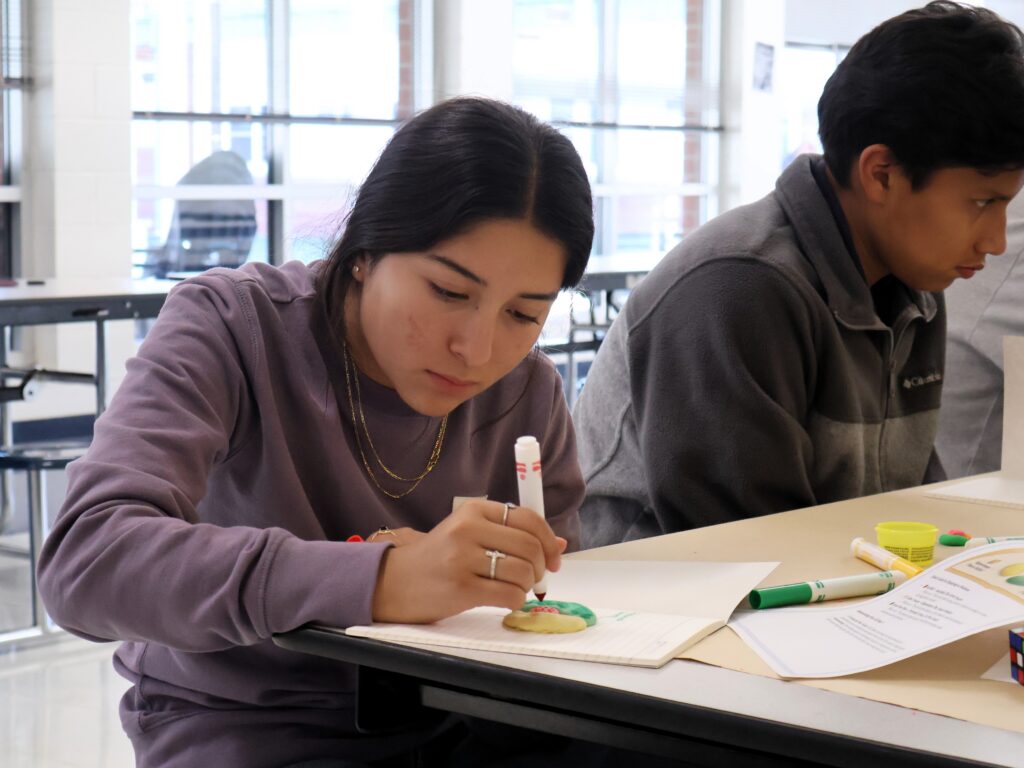
In a time where Latine students and students of immigrants face a variety of distinct stressors, Decipulo says she hopes the curriculum — which students have dubbed “Mind Matters” — will help them name their feelings of stress, anxiety, or fear, recognize how it impacts their health and thinking, and, ultimately, feel supported by their OLP peers and mentors to work through it.
One of EVH’s student leaders said that she appreciates that the Mind Matters curriculum is “starting slow.” She said that she wishes people spoke more openly and seriously about mental health, and believes that perhaps that’s the case because people don’t have the words to discuss the topics confidently.
By learning the science behind what’s going on in her brain, the student leader said that Mind Matters is helping her practice those conversations in a space that feels safe.
Decipulo said that experience is the exact intention behind the curriculum’s design.
Decipulo, who spent 15 years in education, including 10 years as a lead teacher and five years as an assistant teacher and after-school teacher, started working for EVH in May 2026. She’s now pursuing a master’s degree in Clinical Mental Health Counseling.
After joining EVH, she quickly got to work to understand what students would want to discuss in the lessons. She conducted a questionnaire, met with students one-on-one, and, in August, sought students’ feedback on a proposed curriculum — centering student voice throughout the design process.
What she and other OLP leadership found was that while students had lots of ideas for lessons designed to teach them about mental health (for example, suggesting outdoor activities or incorporating music and art into sessions), they didn’t have the exact words to describe what they wanted to learn.
During the process, Decipulo said she also noticed that students didn’t love the phrase “mental health.”
In response to both of these findings, OLP leadership shifted the curriculum’s early lessons to focus on basic brain science rather than launching straight into topics such as mental illnesses and their symptoms.
Eventually, the students voted to name their curriculum “Mind Matters.”
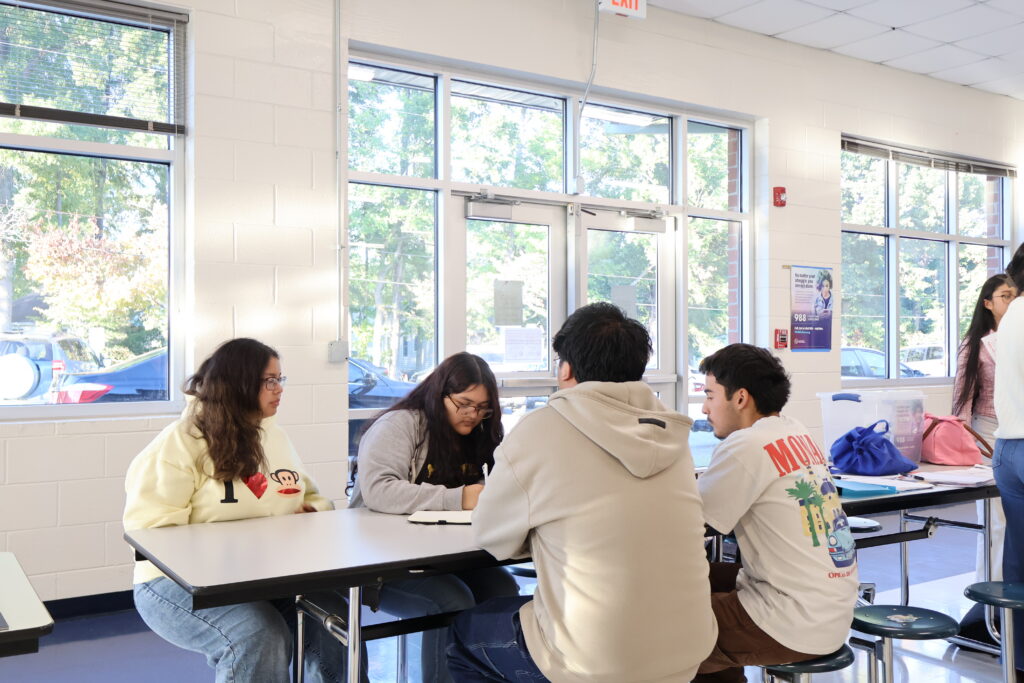
With these changes, Decipulo said students were immediately more relaxed and interested in the curriculum. As the curriculum delves deeper into mental health topics, she believes the scaffolded approach will help students develop mental health literacy while meeting them where they are.
Reflecting on the new Mind Matters curriculum, a student leader told EdNC that he hasn’t experienced a student organization that listens to and honors student’s preferences like OLP does.
“Other clubs aren’t created in the same way,” he said. “They don’t have the same intention.”
What does it mean to liaise for a community?
The Mind Matters programming is the latest in El Vinculo Hispano’s long-standing commitment to Siler City’s Latine residents, as the nonprofit itself was born out of service to its community.
In 1995, founder Ilana Dubester saw the growing need for an organized effort to advocate for Siler City’s new Spanish-speaking residents. At the time, the arrival of two chicken processing plants attracted immigrant labor to Siler City, spurring demographic change in the rural community.
According to its website, EVH is one of the first Latinx nonprofit organizations formed in North Carolina to address the unique needs of a growing Hispanic community. In a 2008 radio documentary, for example, an EVH employee conducts a ride along with a Chatham County employee to explain a housing code violation to a Spanish-speaking resident.
Today, the nonprofit continues to act as a bridge between the Hispanic community and nonprofits, government agencies, and law enforcement.
The OLP program launched in 2017 after the nonprofit partnered with the Latino Migration Project at UNC-Chapel Hill to conduct a Hispanic community needs assessment. The purpose of the assessment was to ask the community what services it needed from EVH.
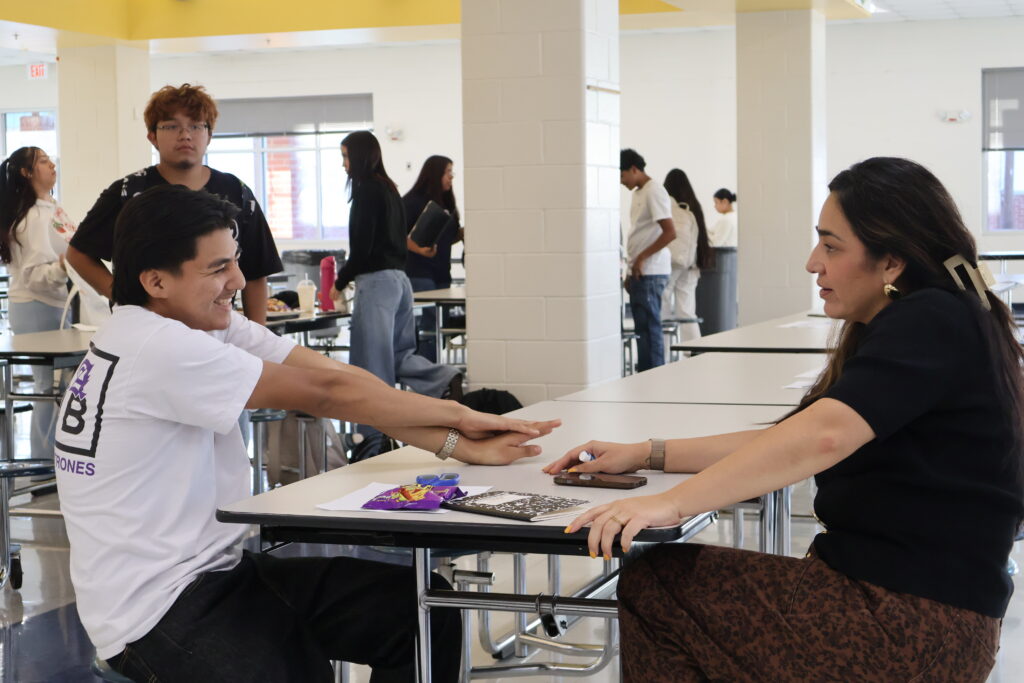
Lopez, who was hired in 2017 to start the OLP program, said what EVH heard from parents in the needs assessment was a desire for an after-school program where their children would receive high-quality mentorship and academic support in an environment that treats their cultural background as a source of strength.
Lopez said the name itself, Orgullo Latinx Pride, which translates to “Pride Latinx Pride,” was chosen by students to recognize their bicultural identities.
“We are both, and we’re proud of being both. And so I think that’s the beauty of it,” she said. “We want them to know that their ideas and what they have to say matters.”
Members of EVH’s student leadership council each said OLP has touched their lives in different ways. One student said he was brought into the program by Anthony Santiago, one of OLP’s program assistants, an alumni of the program, and a family friend. He said Santiago noticed a change in his mood after an ACL tear forced the student to stop playing soccer competitively, and encouraged him to apply to the program.
“If it wasn’t for OLP, I think I probably would have been on that same path,” the student leader said of feeling isolated and negatively affected mentally by his injury and recovery.
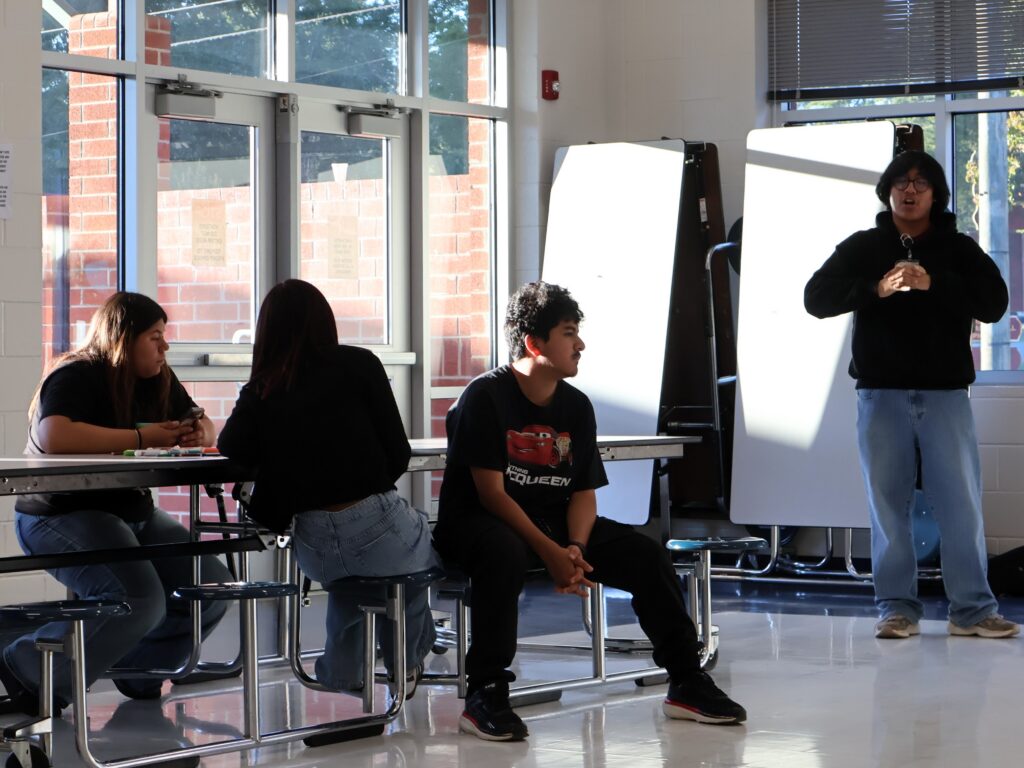
Each of the student leaders EdNC spoke with also said OLP has helped them transform into more confident, authentic versions of themselves. For one, the students had to be elected to their leadership positions by their peers, which entailed giving a presentation on their qualifications.
“I’m never the first one to speak up, especially in front of other people,” said one student leader. “It’s a big leap from that to leadership … (but) being here with a bunch of people with the same background has helped me remove some of the pressure (of) not being the odd one out.”
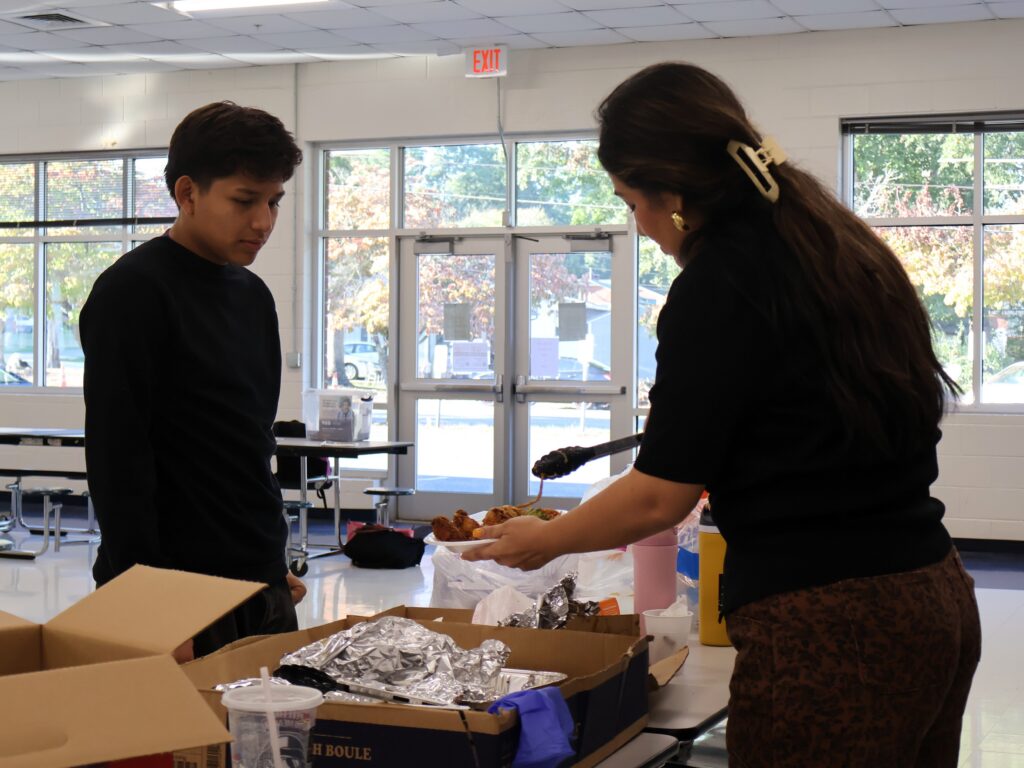
As the newest member of the team spearheading OLP’s youth mental health work, Decipulo said she wanted to work for the organization because she has seen it change students’ lives.
She pulled out her phone and scrolled through dozens of photos she’d taken the previous spring of her colleague, Lopez, helping OLP seniors pose for photos in their graduation regalia.
In many, Lopez stood just out of frame, holding taut the corner of a flag from each student’s country of origin.
“I was just overwhelmed,” she said of witnessing the photoshoot and realizing the impact Lopez and the OLP program had on students’ lives. “These are children of immigrants. They’re the first ones to go to college. And they get to raise their flag.”