
Postsecondary pathways: Empowering Latine students and families in rural NC
LatinxEd is a statewide education nonprofit that works to dismantle the barriers that have kept the Latine community on the margins of education. Through leadership development, postsecondary access, and policy advocacy, they empower Latine advocates and allies to shape education systems to reflect their lived experiences.
LatinxEd’s Eastern Fellows Project is an initiative an initiative to strengthen educational leaders in eastern N.C. by transforming them into advocates through collaboration and mobilizing action. The initiative focuses on launching community-centered campaigns that align with LatinxEd’s R.E.A.P. policy priorities: representation, engagement, adequate funding, and postsecondary pathways.
 Sign up for the EdWeekly, a Friday roundup of the most important education news of the week.
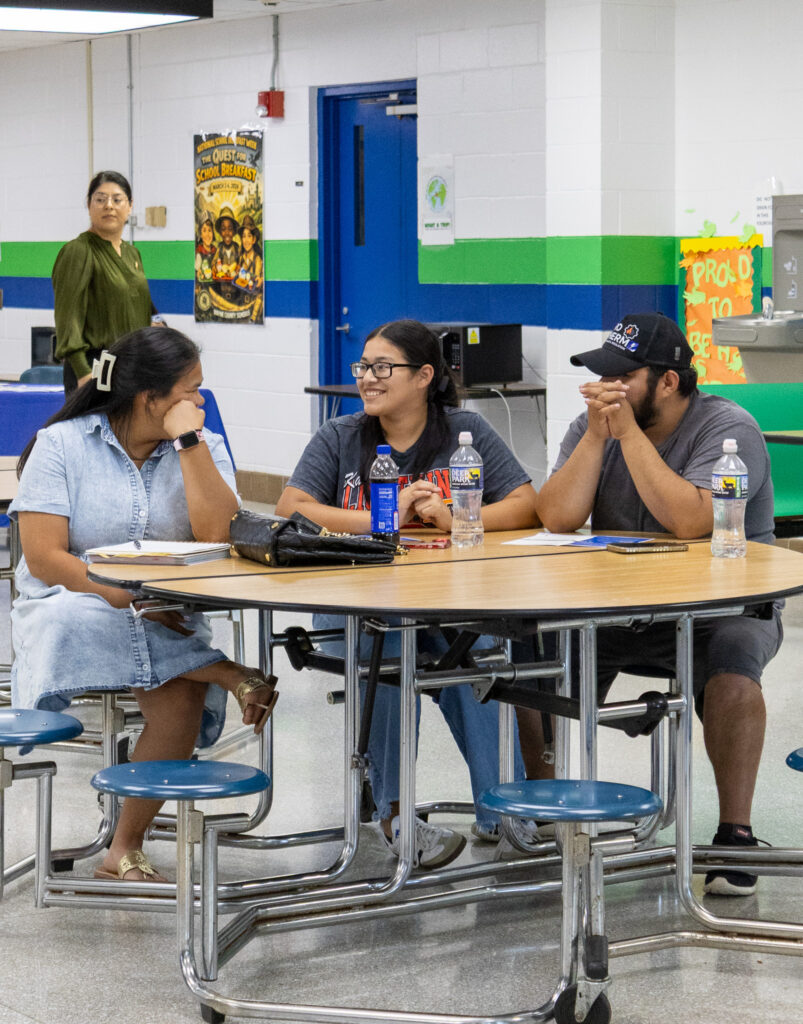
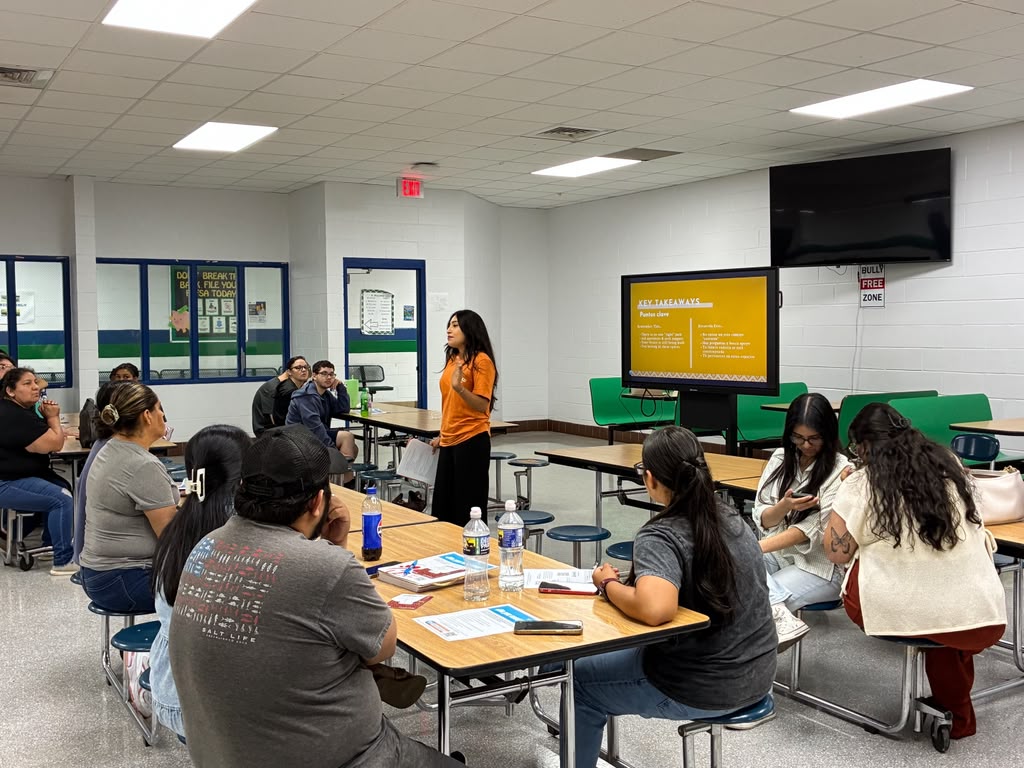
The eastern fellows project recently held a student-family night titled, “Los Caminos de La Vida (The Paths of Life): Pathways to College & Career Success,” to help Latine students and their families better understand and navigate postsecondary options. The event was held at Spring Creek High School in Wayne County, where the student body is over 60% Latine.
During the event, one mother raised her hand and asked in Spanish, “How can I help my daughter with her goals after high school? I don’t speak English, I work during the day, and my husband works evenings. It helps that schools have gotten better at having interpreters, and I can call to speak with someone, but what else can I do to help her?”
Her question carried the overwhelming feeling many Latine parents have when trying to guide their children through unfamiliar systems. Across North Carolina, there are thousands of parents just like her, desperate to help their children but with no one to explain the steps in their child’s journey.
According to Carolina Demography, 20% of North Carolina K-12 students identify as Latine. The Higher Ed Immigration Portal reports that about 2,000 students without legal status graduate from high school each year. These students dream of college, entering trades, entrepreneurships, or joining the military just like their other classmates. Latine families want to support them in reaching their goals. However, many in rural areas of eastern North Carolina do not have access to information about postsecondary options, leaving many students with aspirations without guidance.
Too often, immigrant parents become spectators in discussions about their children’s futures, forced to depend on their children to interpret complex information about academics, financial aid, or career planning.
When only 4% of K-12 teachers and 2% of principals in North Carolina identify as Latine, Latine students have limited opportunities to interact with professionals who look like them and share their culture. For students carrying questions about identity or whether success is truly possible for someone like them, seeing professionals who look like them can be transformational.
Thus, the eastern fellows organized the student-family night to address the postsecondary gap Latine students and families navigate by themselves. The entire event was fully bilingual, which allowed all parents to ask questions directly and take part without feeling left out.
Students attended breakout sessions focused on career exploration, skill-building, mental health, applications, and financial aid and scholarships led by Latine professionals from eastern North Carolina.
Meanwhile, parents had a session with Casa Azul de Wilson, a nonprofit in Wilson, to learn how to navigate the school system and support their students’ educational journeys.
Read more
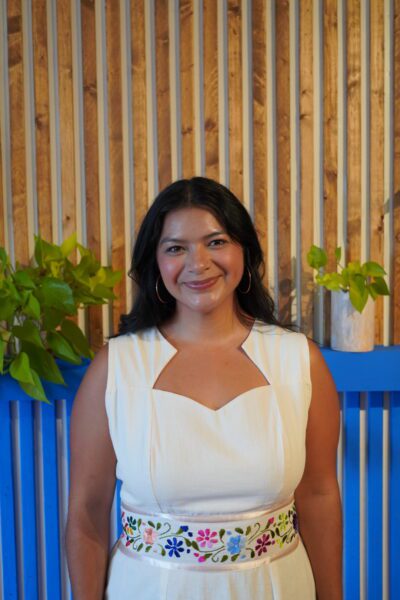
One of the most powerful moments of the night came during the panel discussion. Latine professionals, including a DACA recipient, a community college graduate, and a four-year college graduate, shared their stories openly in both English and Spanish. They spoke honestly about the obstacles they faced: financial hardship, uncertainty about their immigration status, pressure to support their families, and the feeling that they had to figure everything out alone.
But they also shared perseverance.
They reminded students that success is not always linear. It is okay for them to rethink their aspirations, take longer than expected, or redefine what achievement looks like. For Latine students, who often feel the pressure to succeed and carry their dreams and the weight of their families’ sacrifices, hearing someone say, “I struggled too, and I still made it,” can change everything for them.
By the end of the night, several families repeatedly shared the same thing: “This was so helpful! We don’t get this kind of information.”
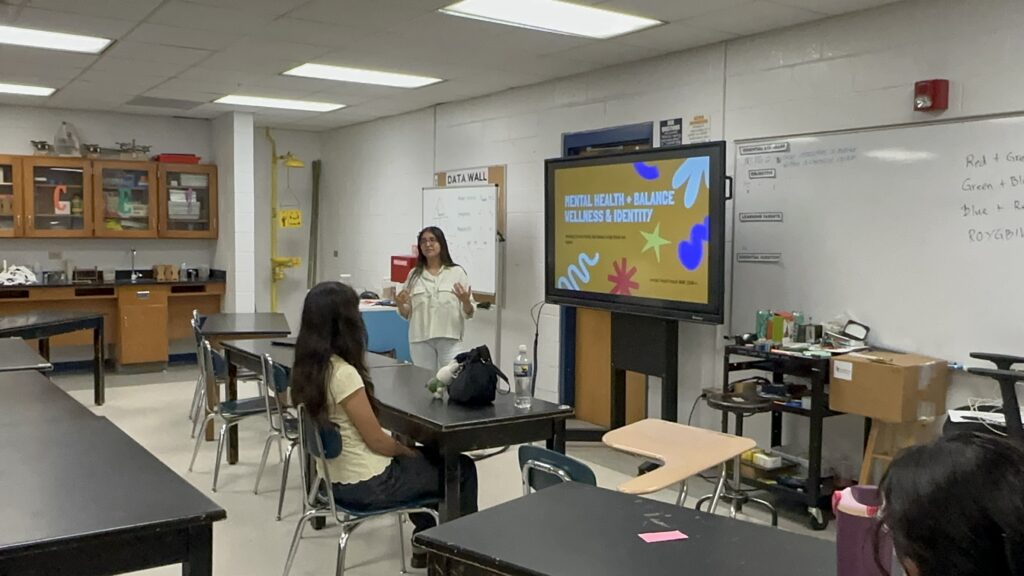
Their comments revealed an uncomfortable truth: School systems likely have this information, but it often remains inadvertently hidden behind language and cultural barriers. College and career readiness are mandates from the state and federal institutions, yet they can seem invisible to 20% N.C. high school students and their families. Events like ours are rare in rural North Carolina, but they are not impossible.
Near the end of the evening, Maria Morales, a panelist at the event, responded to the mother’s original question about how she could support her daughter: “Estando aquí, ya está haciendo mucho.” (Just by being here, you are already doing so much.)
That response captured the heart of the evening.
This event was organized by advocates who once experienced these same gaps. The students who translated forms for their parents, navigated FAFSA applications on their own, or wondered whether college was meant for them. Now the eastern fellows are empowered to clear the path for the next generation.
School districts and nonprofits can partner with local Latine organizations and leaders to host similar student-family nights in their communities. First-generation Latine professionals in rural areas should consider the impact they could have by organizing such events.
True partnership with Latine families requires creating spaces where parents are valued as essential guides in their children’s futures.
The eastern fellows who organized this event were Andressia Ramirez, Bilma Iniguez, Flor Juarez Diaz, Guile Contreras, and Rutben Cruz.