
Asheboro City Schools ‘grow your own’ program graduates first cohort

In Asheboro, the school district is preparing for the future by teaching it.
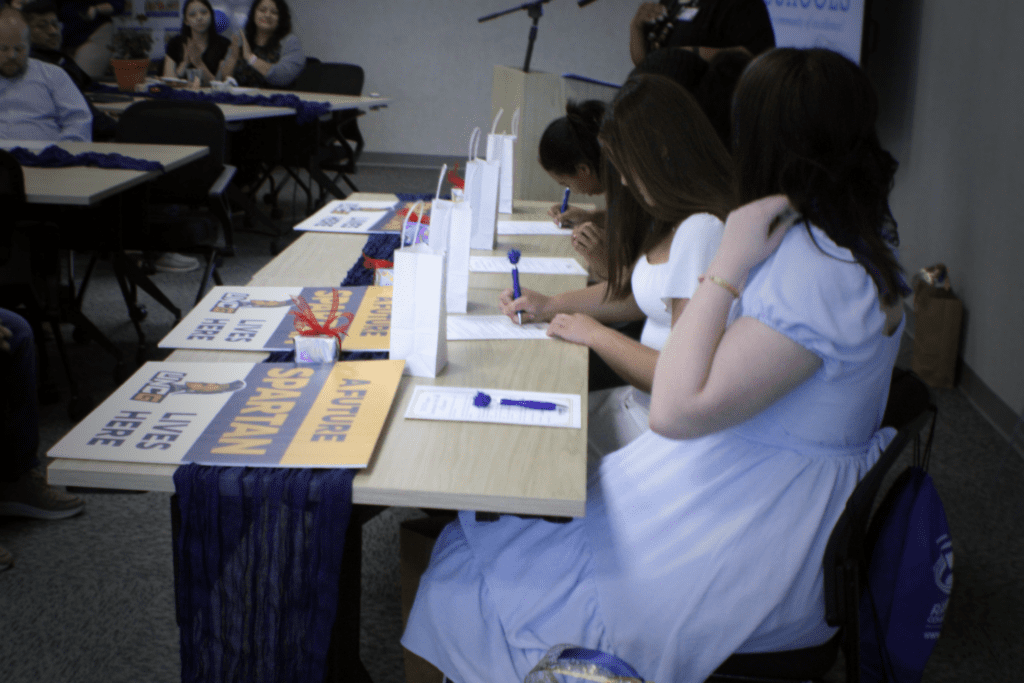
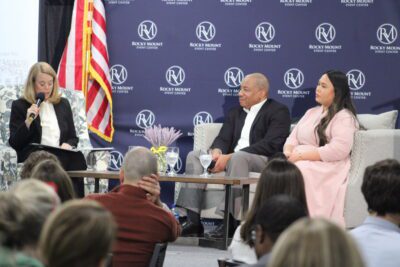
Over the past three years, TEACH has provided dual-enrollment coursework, advising, and early field-based learning experiences to Asheboro City Schools (ACS) high school juniors and seniors. On April 21, the district held a celebration for the graduating students in their first cohort.
Through TEACH — which stands for Tomorrow’s Educators: Advancement to College through High School — ACS said students are able to explore teaching as a profession while earning college credit and building clear connections between high school, community college, and university career pathways in education.
 Sign up for the EdWeekly, a Friday roundup of the most important education news of the week.
During last week’s celebration, TEACH celebrated its first four graduates: Asheboro High School seniors Nevieona Coite, Madison Cross, Taylor Hoskins, and Kady Jefferson. ACS is also celebrating the success of its partnership with the University of North Carolina at Greensboro and Randolph Community College (RCC), which makes TEACH possible.
Creating TEACH
Four years ago, ACS Chief Academic Officer Dr. Wendy Rich made a call to Dr. Holt Wilson at the UNCG Institute for Partnerships in Education, and then to RCC.
Rich said it took two years of planning and collaboration between the three institutions before the TEACH program began in fall 2024. The committee now meets monthly.
Misty D. West, RCC associate dean of educational partnerships and pathways, explained how important it is to keep the lines of communication open between partners.
“The most important thing we did was sit down at the very beginning, and we always made sure to remind everybody that students come first,” West said. “So in every decision, every sticking point, anytime we had to think something over, somebody would say out loud, ‘What is best for the student?’”
The TEACH program follows a hybrid model. On Tuesdays and Thursdays, Dr. Jennifer Lingle and Wilson come to Asheboro High to teach the participants the prerequisite courses they would need before being admitted into the college’s School of Education; including Mathematics for Teaching, and Teaching as a Profession I & II.
The rest of the week, students have a free 90-minute period to work on their courses at RCC. The current TEACH graduates students said they have acquired between 36-60 college credits from their time in the program.
While it is preferred for students to start the program during their junior year, ACS is flexible. Whenever students are ready to start their journey to becoming an educator, ACS said they will try to integrate them in the program.
TEACH introduces students to college coursework, while still having the support of their high school peers. Raleigh Brady, a junior at Asheboro High in TEACH, recalled going over a math problem with her cohort and learning, “different ways that people get to the same destination through different thinking.”
Rich and West said there was concerted effort to make sure participants were enrolled in the same sections of their online classes at RCC.
“We want the students to have this cohort feel. We want them to be together. We want them to learn from each other. We want to be able to support them throughout the courses,” Rich said.
Through TEACH, participants were able to get a variety of hands-on experiences. For example, students have been able to participate internships at local elementary schools based on their interests and goals. As a requirement for their Teaching as a Profession courses, students intern in a classroom for the entire year for at least three hours a week.
“It’s a really great networking opportunity, and you meet new people all the time,” Jefferson said in her graduation remarks. “It’s created such a good community; I know my teachers will always be there for me, and I love being with my students.”
Another notable experience for the participants was volunteering with a summer literacy camp at a local elementary school. For graduating senior Taylor Hoskins, her time with the camp’s students was a formative moment for her.
“Every morning they were so excited to see me, and in the hallways they would come to me with said and ‘Miss Taylor, Miss Taylor! I like your outfit! I like your pink water bottle!’” Hoskins described.
After that summer, Hoskins said she realized that teachers can have a balance of being strict while also being “calm and positive.”
Brady recently had a moment at her elementary school internship placement where her cooperating teacher — who acts as the classroom lead — had to get a substitute at the last minute. Even though there were still other teachers in the room, Brady was a more familiar face to the students.
“I felt like everything I’ve been taught, and everything I’ve been seeing through UNCG, I actually got to do some of it that day, and help students,” Brady said. “Before, I was just watching them and seeing how they respond to what the teacher says.”
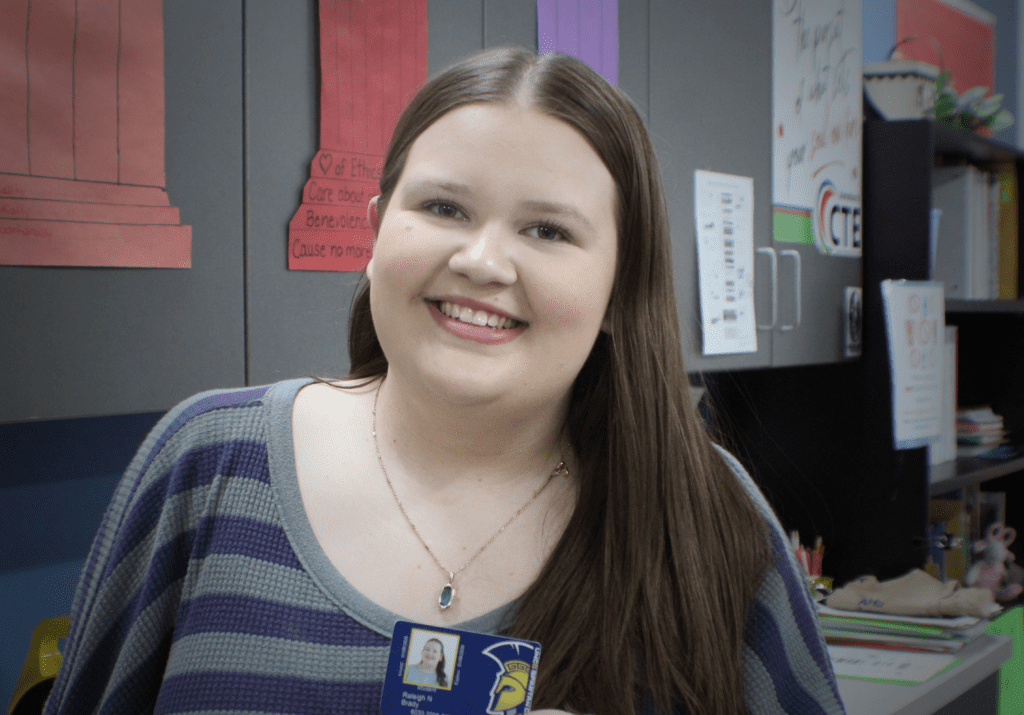
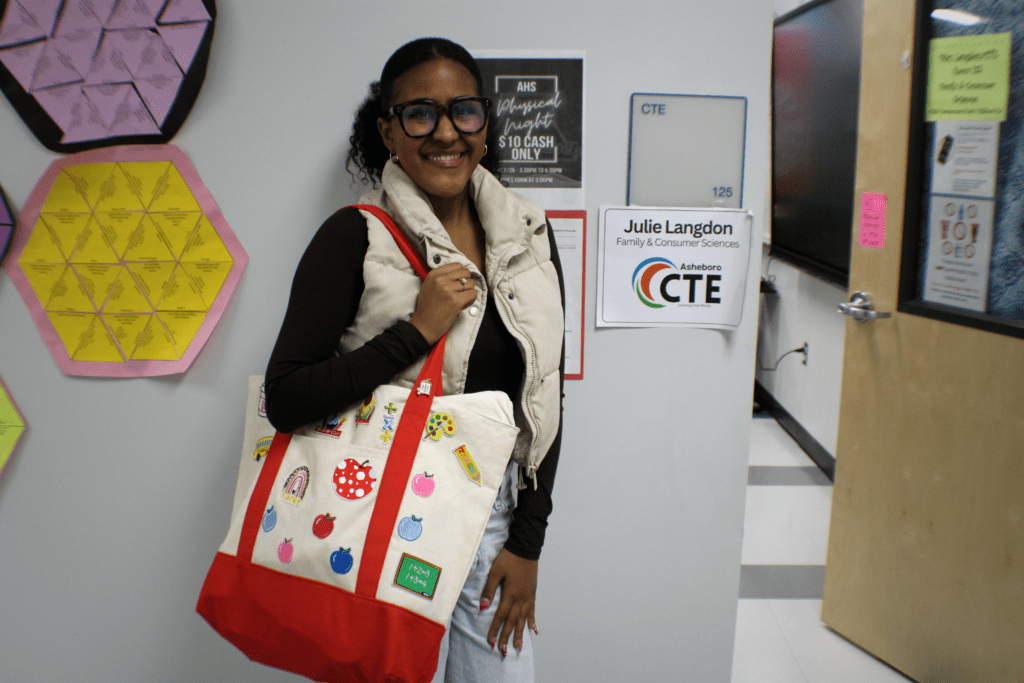
The participants are also guided through the experience by Julie Langdon, an early childhood education instructor in ACS, who has students who are earning career and technical education credentials in her class as well as with TEACH.
“I feel like this is helping to kind of capture them in the moment of them experiencing that first internship time and realizing, ‘Hey, you know, this might be my real passion, what I really want to do,’” Langdon said.
Langdon also allows her classroom to be a hub for the TEACH program. During her planning period, UNCG instructors are there to administer the courses or the participants are using it as a study hall.
Knowing their ‘why’
ACS reported a 2.6% vacancy rate for the 2024-25 academic year. The district said that vacancies for teaching positions were not the primary reason for starting TEACH.
Instead, Rich said, the district wants to value traditionally training teachers, as compared to entering the profession through alternative preparation routes.
“We firmly believe that going through student teaching, going through an education program, is important, and that is something that we really know gives our teachers an advantage,” Rich said. “We want our students to have that advantage, because we want teachers so we can grow in that pipeline.”
Rich also said that having a “grow your own program” will create teachers that understand the culture of ACS.
Another goal that both the students and Asheboro administrators expressed is haing a population of teachers that match their student demographics.
“Representation was the main reason I got (into) teaching,” Hoskins said. “I didn’t really see many teachers who looked like me in the front of the room growing up. Also, I have a little niece and a little nephew who also don’t have much representation as they’re growing up.”
Colte said that she had teachers who supported her while growing up in poor living conditions.
“I want to be able to do that for my students someday and help them get to where I am now, and just have a better life,” Colte said.
When asked about the value of TEACH, Lingle said it’s the moments where she can speak with the cohort not just as students, but as colleagues.
“I have notes full of ‘I got to go to field day, let me tell you what happened,’’’ Lingle said. “That’s what we do with beginning teachers. You know, mentoring teachers, sitting, and saying, ‘How was your day?’”
Read more
The next four years
Coite, Cross, and Jefferson have all been admitted to UNCG as Spartan Ed Scholars. Hoskins will be going to University of North Carolina at Charlotte with a scholarship from NC Teaching fellows.
Jefferson is also expected to graduate with an Associate in Arts in Teacher Preparation degree from RCC this spring.
A part of the TEACH experience was exposure to what life is like on college campuses. Before the program, the participants said they had different levels of exposure to higher education.
Cross said she always knew that she wanted to go to college, and the moment that it became real for her was when she was introduced to the Spartan Scholarship program, which covers tuition and housing.
“I knew I really wanted to live on a college campus, because I wanted to grow within a community and have that experience,” Cross said. “But I knew money wise, if I didn’t get some type of scholarship, that that wouldn’t be possible. So I ended up getting it, and I think that’s what made everything so real for me, and fell into place.”
Students are able to fulfill their student teaching degree requirement — a full-time, semester-long placement in a classroom assisting a cooperating teacher — within ACS as well.
Chandra Manning, ACS director of communications and talent development, said the hope is that graduates of the program will go out into the world and advocate for things they are doing in ACS and if they are able to, return as educators.
However, TEACH participants are not required to sign a contract to return and teach in ACS. Rich explained that they want to give students the flexibility to decide where they want to live and work after they experience college.
“We hope eventually they’ll come back and teach us. But no matter where they go, they’re going to be excellent teachers, and students are going to love them wherever they are,” Rich said.
UNCG School of Education Dean Dr. Morgan Chitiyo said their institution intends to be a long-term partner. Demonstrating this, Chitiyo recently announced a new scholarship for graduates of the TEACH program. Beginning in the 2026-27 academic year, the scholarship fund will be available for up to two recipients, the dean said, and the college hope to add two scholars each year. Each recipient will receive the equivalent of one-half of undergraduate tuition and fees.
“This recognition reflects our confidence in you, in our commitment to supporting your journey through teacher preparation and into the profession. So welcome to UNC Greensboro. You will not make the journey alone,” Chitiyo said during the graduation.
The TEACH program is already seeing growth, the district said, as it expects to have seven students in their fall 2026 cohort.
At the first cohort’s graduation, Rich left students with the following message.
“TEACH is more than a program. It’s an investment in our community,” Rich said. “It reflects the shared commitment to building a strong, sustainable pipeline for the teaching profession and for ensuring that our students see education not just as a career, but as a calling.”