First Lady Anna Stein moderates panel with people who are incarcerated at reentry conference amid funding challenges

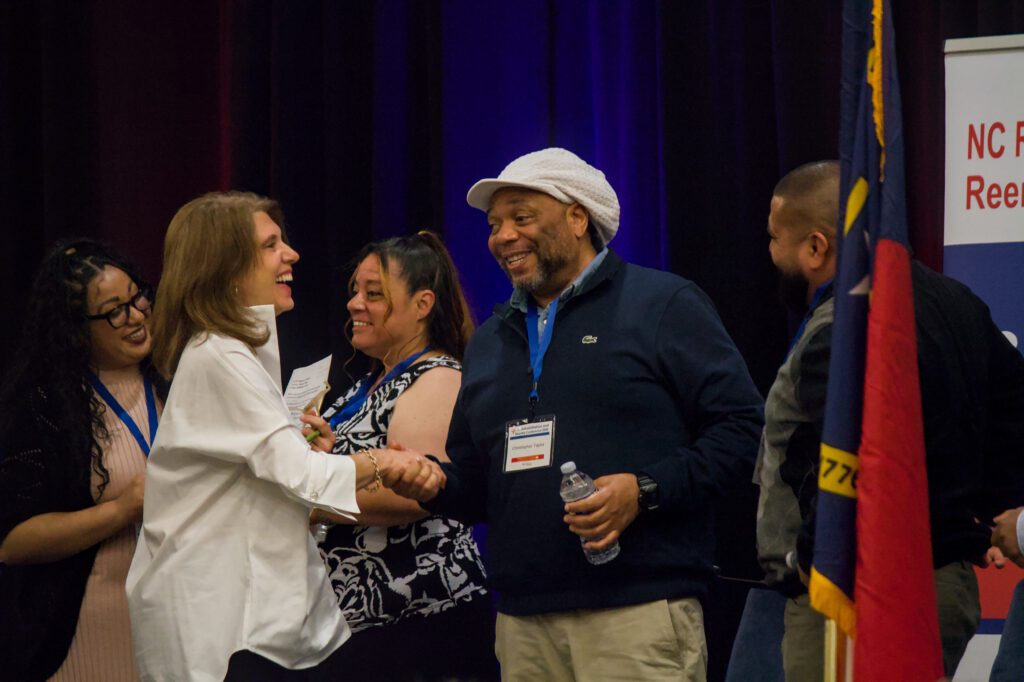
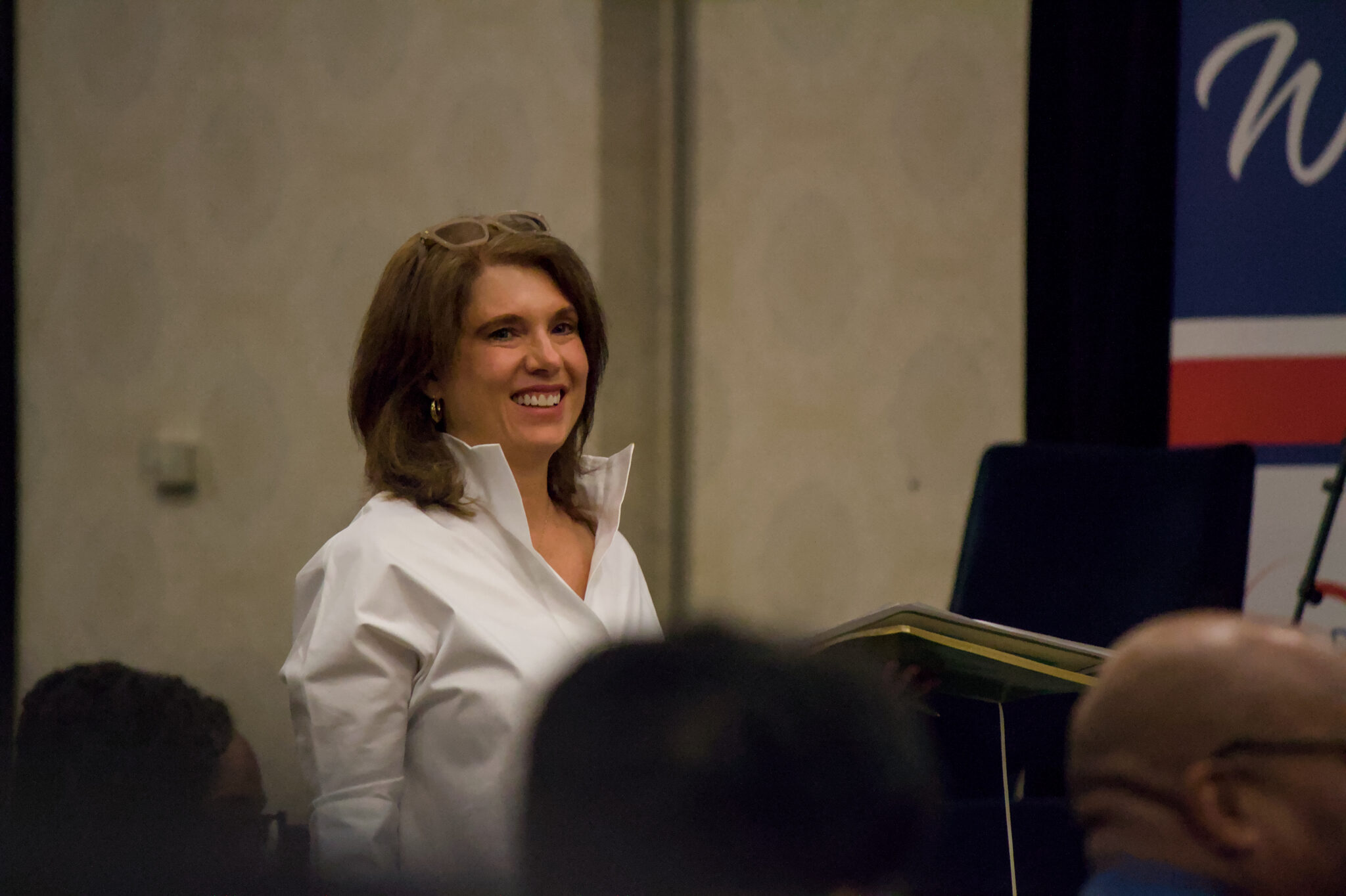
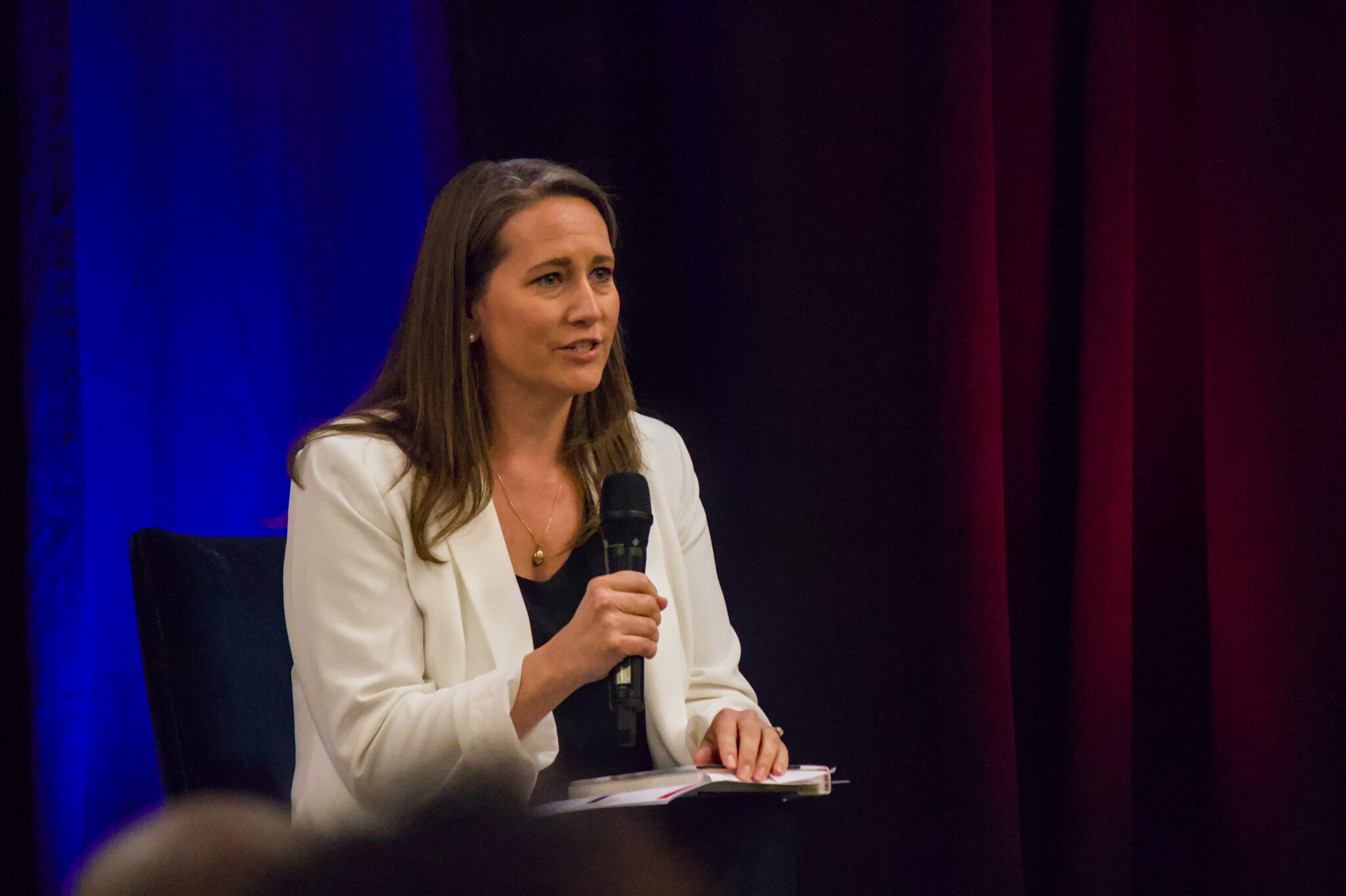
First Lady Anna Stein moderated a panel of people who are currently incarcerated in North Carolina prisons at the 2026 Rehabilitation and Reentry Conference hosted by the North Carolina Department of Adult Correction (NCDAC). The panel focused on current needs within the prison system and future needs as the panelists approach their release.
The conference, hosted in Raleigh on April 7-9, came as advocates and people in the corrections field say momentum in North Carolina is building for strengthening reentry efforts.
Part of that momentum, according to George Pettigrew, senior deputy secretary of rehabilitation and reentry at NCDAC, is due to Stein’s attention and efforts. Stein’s website includes “Supporting Rehabilitation and Reentry Programs” as one of her three priorities.
“The momentum we’ve got going,” Pettigrew said in his opening remarks to a room of about 600 conference attendees. “You can just look around — we’ve got the first lady participating.”
NCDAC Secretary Leslie Cooley Dismukes told the audience that there is no other first lady in the country as devoted to rehabilitation and reentry as Stein.
NC prisons are facing ‘dire’ conditions
Before the panel, Dismukes encouraged attendees to advocate for the funding the agency needs to pay its bills and to improve its services, ahead of the upcoming legislative short session.
“Right now we are $100 million behind on paying our bills,” she said. “We do not have enough money as an agency to fund what we are already doing. And so how are we going to get the money that we need to expand?”
Dismukes said that the outstanding bills are for water, lights, clothing, housing, and medical care, as well as for education and other programs.
“We need the General Assembly to step up, and to fund our agency so that we can provide the programs we need to provide,” she said.
One of the biggest requests from NCDAC, also prioritized by the governor in his critical needs budget, is a raise for correctional officers. Currently, the starting salary for a correctional officer in North Carolina is between $37,621 and $41,558.
Low pay has led to staffing shortages, turnover, and unsafe conditions, NCDAC officials say. Dismukes previously called the situation in North Carolina prisons “dire” and “dangerous.”
 Sign up for the EdDaily to start each weekday with the top education news.
The funding difficulties come as North Carolina is trying to meet the goals outlined in Reentry 2030, a national initiative to transform reentry infrastructure by 2030. You can track progress toward the goals on the Reentry 2030 dashboard.
Many of the Reentry 2030 objectives focus on education programming and attainment, such as the objective to increase educational credentials in custody and expand postsecondary education in prisons.
Dismukes and others working in prisons have previously said that the lack of funding for basic operations is getting in the way of expanding education programs.
“If we don’t have custody staff who can help us run these (education) programs, then we cannot provide the programs,” Dismukes said to the General Assembly’s Joint Legislative Oversight Committee on Justice and Public Safety in January. “We are, as I said earlier, just warehousing people. We are not making people any better, not giving them any life skills to then return to their communities and not return to our custody.”
Read more about the state of prison education in North Carolina here.
Preparing for reentry through learning and work programs
The panel Stein moderated brought six people who are incarcerated in correctional facilities around Raleigh to the stage to speak about their experiences and their needs in front of a crowd of NCDAC employees, members of other state agencies, community partners, and criminal justice professionals.
The panelists were Tyrone Hardison, David Martin, Rosemary Hernandez, Shannon Priolo, Carlos Zantizo, and Christopher Taylor.
They spoke about a range of topics including work and work release, parenting and family reunification, and learning and educational opportunities.
When asked about needs, Taylor responded by saying he wants to reconnect with his daughter, needs identification, and needs health care. He said without those things, there’s no way to succeed.
The importance of reentry programs
The panelists also stressed the importance of programs supporting reentry by exposing them to life outside of prison and teaching them skills they need to thrive. All of the panelists participate in work release programs — one works behind a deli counter, another trains service dogs.
Another such program, the Community Volunteer Program (CV), has allowed multiple panelists to go on excursions, accompanied by volunteers, outside of correctional facilities.
Taylor described visiting places like Starbucks and Barnes and Noble and relishing the feeling of normalcy that came when someone told him to have a nice day.
“It gives you this sense of, like, redeemable purpose,” he said. “You know that there’s people out there that care about you. That’s what’s powerful, to just feel like you’re part of this greater community.”
Taylor added that he firmly believes that every person who is incarcerated should participate in a CV program, because it is a great motivator.
“That sense of six hours of freedom, to let you know what you’re missing,” he said. “It gives greater value to me coming back to the prison and saying: You know what, six hours isn’t enough.”
Zantizo recounted a visit to Walmart, also through CV, where he took 30 minutes to traverse just three aisles, overwhelmed by choice.
“It goes to show what the system has done to me mentally to be able to manage my own choices — or not,” he said.
Zantizo described the CV program as a useful tool to reintegrate and to “build calluses” as people who are incarcerated prepare to reenter.
Read more about prison education in North Carolina

Positive incentives and culture
Stein asked the panelists what changes they would institute that might make people feel more motivated to improve their lives. Many responded that change has to happen on the individual level, with individuals making the choice.
Some also said positive incentives such as education programs and work release, which require participants to be infraction-free for a certain amount of time, help to encourage good behavior and self-improvement.
Beyond that, they said, being treated with respect and trust, and being in an environment that provides opportunities, helps.
“If the prison provides a culture where there is the belief that I can do better, I will do better,” Zantizo said.
Education lets students feel more human
“They teach us how to be more human,” Zantizo said, referring to the University of North Carolina courses he has taken remotely.
Other panelists also praised their educational opportunities. Hernandez said she has taken a financial literacy class, a small business class, and a computer skills class — and she got help with creating a résumé.
“It’s honestly a great pleasure to do a lot of these things there, because it’s not just a distraction,” Hernandez said. “It makes us feel like community — not just behind bars.”
Amplifying the voices of those whose lives are at stake
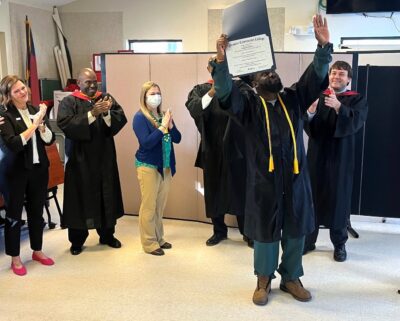
At the end of the panel, the panelists received a standing ovation from the audience. Multiple panelists had previously expressed surprise and gratefulness that so many people cared to listen to them.
“All of you here — I didn’t know that this many people cared, to tell you the truth,” Hardison said.
In an interview with EdNC, Stein said there can be a stigma, even in the reentry space, about listening to people before they’re released from prison. Stein rejects that view.
“No — they’re ready to talk and be listened to now,” she said.
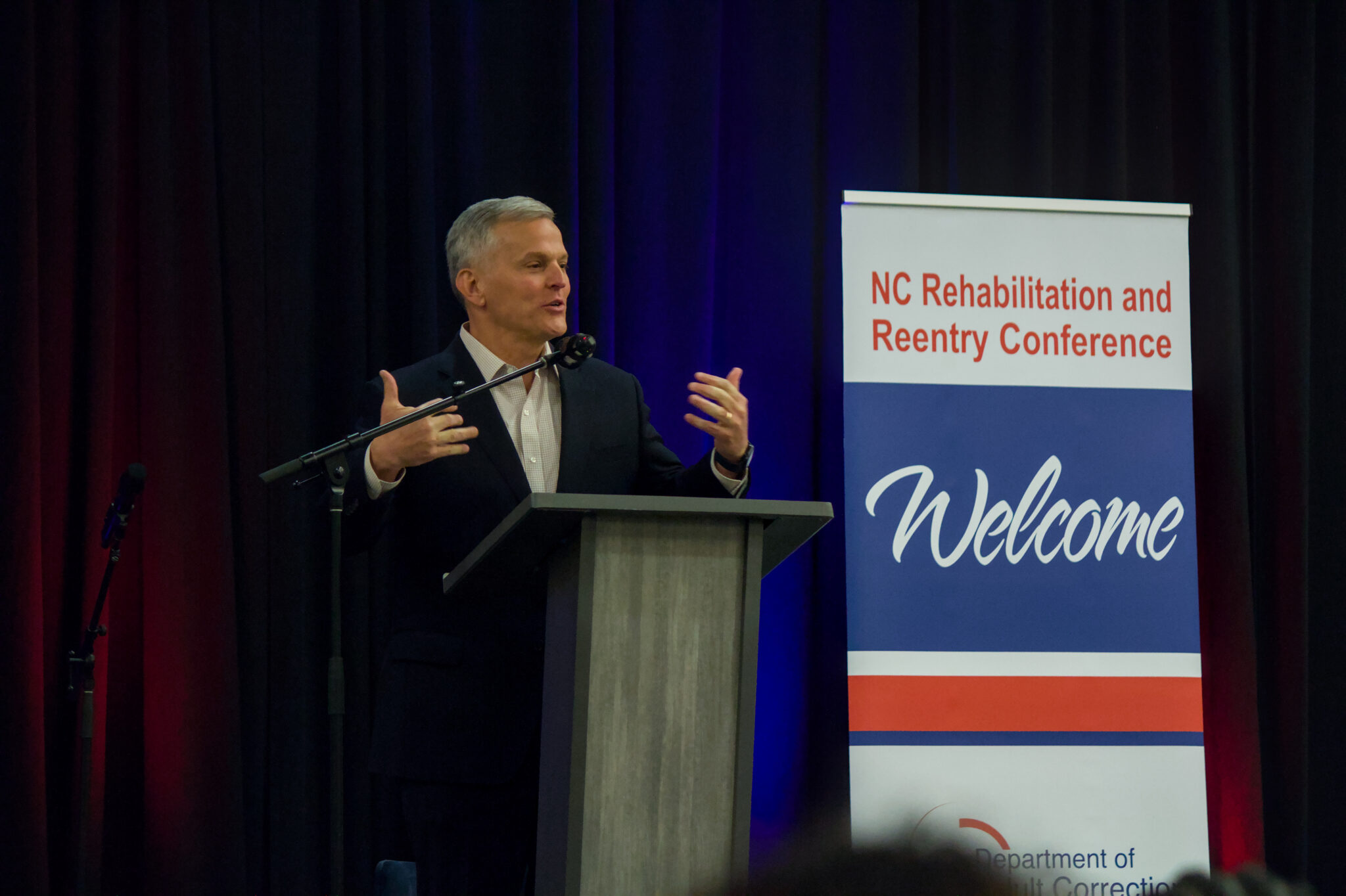
Gov. Josh Stein gives remarks
The conference went on for two more days, featuring other panels and breakout sessions on topics related to reentry and rehabilitation. See the full itinerary here.
Gov. Josh Stein gave a speech on the second day of the conference, reiterating the call for funding that Dismukes had made. He said that everyone benefits when each person that goes through the correction system meets his or her potential, and that NCDAC needs funds to do its job.
“We are not a poor state, but we are acting like one,” he said.