A recent survey from Common Sense Media found that 70% of teenagers have used at least one generative artificial intelligence (AI) tool, and the World Economic Forum projects that 65% of children who entered primary school in 2016 will ultimately end up working in jobs that do not yet exist.
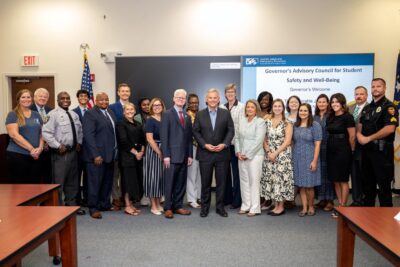
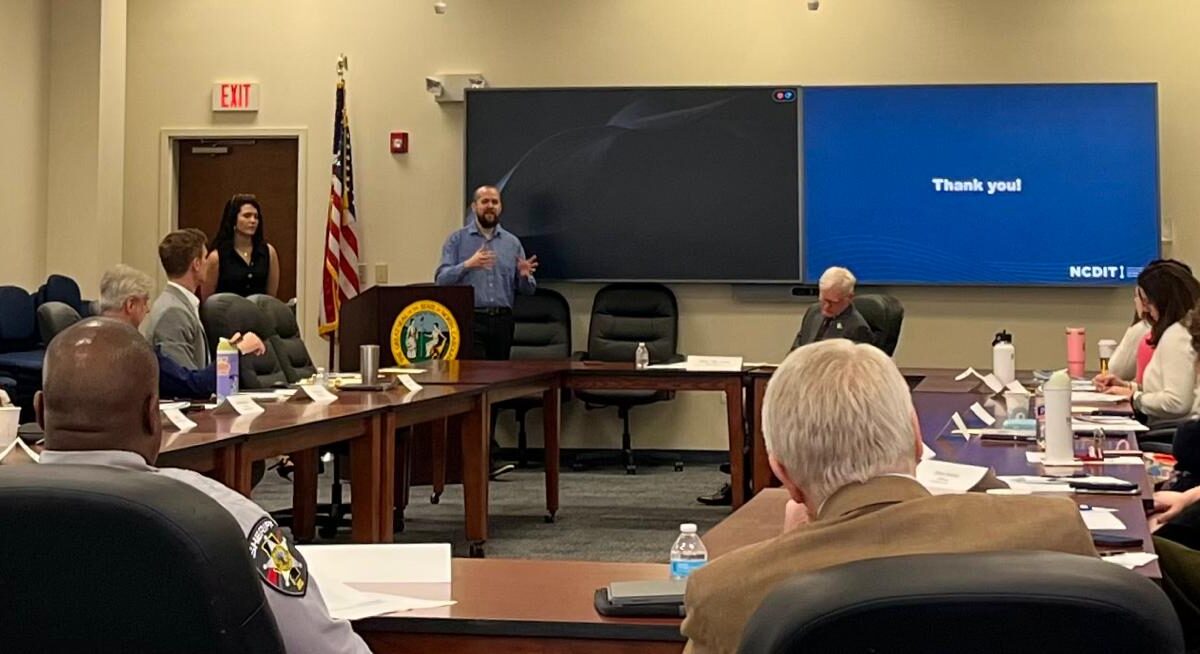
The Governor’s Advisory Council for Student Safety and Well-being heard this data and more during its Monday meeting when council members convened to discuss how schools can responsibly integrate AI in ways that safeguard student, educator, and administrator well-being.
Council discusses DPI’s AI Guidebook
Vera Cubero, an emerging technologies consultant in the North Carolina Department of Public Instruction (DPI)’s Office of Digital Learning and School Connectivity, shared data on AI’s prevalence with council members, including figures from the World Economic Forum’s projections.
The reality that students are using AI is “the simple fact that we have to accept,” said Cubero.
DPI has worked to support AI integration in school districts since the AI Guidelines Committee was created in 2023, Cubero said. The committee’s resulting AI Guidebook, first published in January 2024 and last updated in February 2026, acts as a living document for the most up-to-date guidance from DPI on the safe and responsible use of AI in schools.
According to a press release from DPI, North Carolina was the fourth state in the nation to issue AI guidance for public schools.
Developed around North Carolina’s Digital Learning Standards, the currently 42-page guidebook includes a checklist for districts’ AI guidelines, differences between AI models and associated environmental costs, and questions districts can ask education technology companies to evaluate quality. There are also seven appendices that supplement the guidebook’s content.
 Sign up for the EdWeekly, a Friday roundup of the most important education news of the week.
The guidelines are designed to guide school districts’ integration of AI into curriculum in a way that increases human capacity rather than diminishes it. Part of that strategy, Cubero said, is keeping human agency present while educators and students use AI.
The Human Agency & Judgement Gem, a custom Google Gemini chatbot created by DPI and added to the Guidebook in February 2026, helps teachers create lessons and projects that have students use AI while engaging their own critical thinking.
According to the chatbot’s instructions, teachers can upload an assignment or provide grade, subject, standard, or learning objective, plus what city they are located in, and the chatbot will help teachers design “a locally-aligned task to keep human judgement at the center while enforcing the durable skills,” outlined in DPI’s Portrait of a Graduate.
As this resource suggests, training teachers to become familiar with AI precedes students’ own AI literacy.
“We have to teach our students how to use it to support their own learning, not replace it, and that’s something our educators need training on,” said Cubero.
Cubero told council members she believes this level of fluency takes at least 10 initial hours of training and, ideally, would be supplemented with ongoing professional learning communities. However, the number of school staff positions that typically lead this type of professional learning — such as media literacy coordinators and digital learning facilitators — is decreasing in North Carolina.
Cubero said these conditions create “a perfect storm” as AI’s prevalence grows and the number of staff to help educators integrate AI into the classroom diminishes.
Other resources Cubero highlighted include DPI’s partnership with AI Innovation Index to measure AI readiness across the state, and the Digital Teaching and Learning Support Network that provides digital learning consultants to educators in each of the state’s eight regions.
Read more on youth well-being
DPI promotes developmentally appropriate integration of AI into classrooms
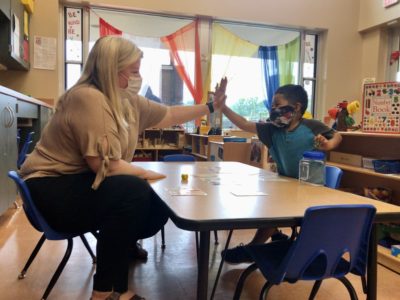
Guidance from DPI also makes clear that successful AI integration must be developmentally appropriate.
Cubero told council members that another Common Sense Media survey found that 39% of children between ages 3 and 8 years old are using AI for learning.
The NC AI Literacy Timeline, developed by Cubero’s office, makes clear that young students in pre-K through fifth grade should not be interacting with AI in their learning at all, but rather should be building cognitive awareness and critical thinking skills that will serve as the foundation for their later AI literacy and eventual AI fluency.
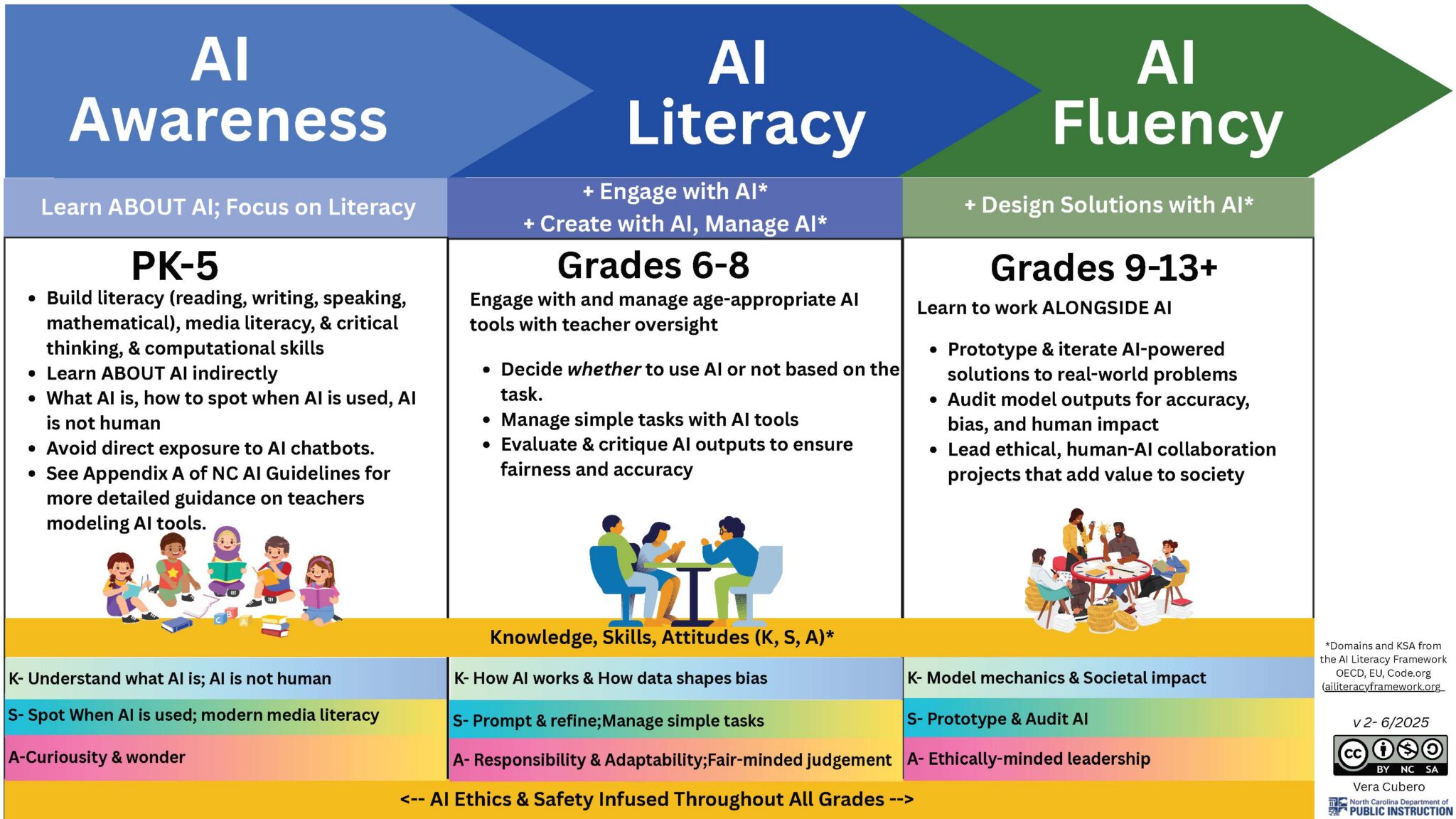
Cubero said this recommendation is also to prioritize young students’ well-being.
“Public schools have to be that last safe place for students,” she said, later adding that “these tools are becoming more and more like a human all the time, and students at this age just do not have the discernment or the understanding of the world to be able to interact with them safely.”
At a broader state level, Gov. Josh Stein’s AI Leadership Council was formed to guide and inform state agencies on responsible and trustworthy use of AI. During Monday’s council meeting, Sofya Diktas and Chris Brittingham, both staff at the North Carolina Department of Information Technology, provided updates on the council’s work to safeguard students from some of AI’s negative consequences.
Diktas said that a December 2025 Executive Order (EO) from President Donald Trump preempts states from taking legislative action when it comes to AI in favor of a forthcoming national framework. However, child safety protections are one of a handful of exceptions listed in the EO.
In light of this exception, the AI Leadership Council is examining other states’ legislative approaches to child safety protections to form recommendations for North Carolina.
One approach Diktas highlighted are efforts to redesign the user experience within AI platforms rather than regulate their content, such as a removing infinite chatting and other anthropomorphizing features in hopes of making the technology less addictive.
“I think that’s something that we’re most interested in tackling, is taking away the reliance on feeling like you are really talking with a person,” added Brittingham.
Student well-being subcommittee discusses need for financial investments
As in previous council meetings, the council’s three subcommittees on student safety, well-being, and physical health met separately to hear from subject matter experts ahead of the council’s final recommendations to Stein.
Jenn Birch, owner of Birch Therapy in Durham, shared her recommendations from a clinical perspective with student well-being subcommittee members.
Birch’s recommendations focused on helping students live and learn within the top level of Maslow’s Hierarchy of Needs, where basic and psychological needs are met, and where students have the capacity to learn.
Birch has been a therapist since 2007, and almost all of the nearly 1,000 clients her practice has served were school-aged children. She told subcommittee members she has noticed some opportunities to improve how students receive mental health care.
“The structural problems are kind of colliding at this point,” said Birch. “So how do we kind of step back and look at a bigger system more thoughtfully?”
Subcommittee members discussed the COVID pandemic as an inflection point in state and federal support for student well-being.
For example, North Carolina’s school mental health policy, created in 2020, required all schools to begin documenting their mental health support plans. Pandemic-era federal funding, such as Elementary and Secondary School Emergency Relief (ESSER) funds, provided districts with funding to put toward student well-being. Many districts, particularly those in rural parts of the state, used these funds for one-time bonuses to attract staff in traditionally hard-to-fill positions. Psychologists and health professionals were the second largest category of ESSER fund spending.
The challenges districts face in the absence of these funds, and differences between districts in the types of mental health support available to students, signifies a need for increased investments at the state level in school mental health supports, subcommittee members said.
“There’s so many people working so hard, and there’s been such creative cross-agency work too,” said Beckie Spears, principal at Wilkesboro Elementary School and a member of the student well-being subcommittee. “It’s our job as a public school system to evolve, and I think it’s our opportunity to move the policymakers and to move the legislators.”
An update on the state’s cellphone policy
A state law requiring school districts to restrict students’ cellphone use during school hours took effect in January 2026. Previously, the council’s work focused on developing recommendations to the governor on cellphone policies. In June 2025, the council published a best practices guide for classroom cellphone policies and recommended a statewide policy to limit students’ use of cellphones in the classroom.
In December 2025, the council shared a video report detailing the cellphone policy in action. Benefits of the policy, according to the video, include increased social interactions and focus on classroom instruction.
According to a report accompanying the video, all traditional public school units have a local policy that addresses student cellphone use.
Read more about North Carolina’s cellphones in schools law

Over the next year, the council plans to collect student feedback on the policy. Ultimately, they will produce a report on students’ perspectives on the cellphone policy implementation by the time the council’s work concludes in March 2027.
The council’s final recommendations on student safety, well-being, and physical health will also be outlined in a final report that the council aims to publish in March 2027.
The council’s next meeting will be held virtually on May 18, 2026. Meetings are open to the public, and you can use this form to submit public comments.

Recommended reading