
Educators, tell NC leaders what it’s like to do your job in this year’s Teacher Working Conditions Survey

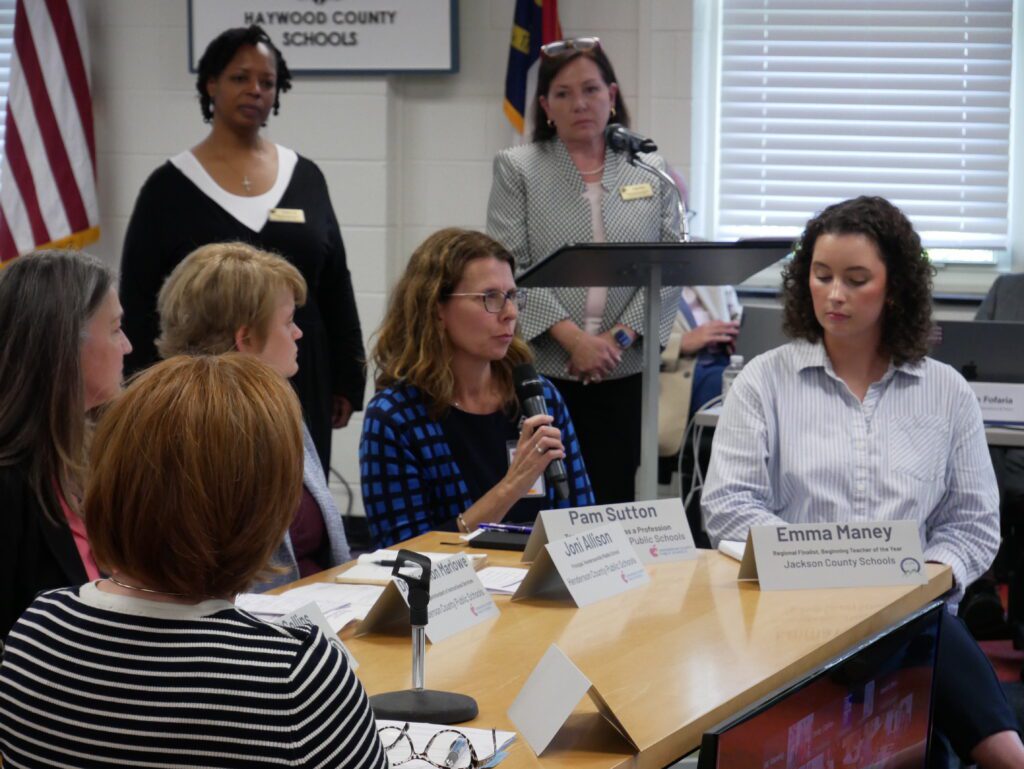
A survey allowing educators to report their working conditions opened Monday.
The state Department of Public Instruction (DPI), working with the nonprofit Academic Development Institute, will be administering the biennial NC Teacher Working Conditions (NCTWC) Survey through March 31.
 Sign up for the EdDaily to start each weekday with the top education news.
According to DPI, certified and non-certified teachers, as well as other licensed educators — including school counselors, media coordinators, and instructional coaches based at a school — eligible for the survey will receive a unique survey code from their school-level coordinator. DPI suggests educators speak to their school’s administrators if they don’t know who the survey coordinator is.
Principals and assistant principals receive a different survey — the NC Principal Working Conditions (NCPWC) Survey. Instructional assistants and central office personnel are not eligible for the survey, per DPI.
Data from the anonymous survey informs improvements across the state’s education system, the survey website says. Policymakers have previously used the results in improvement plans, evaluations, and state plans for the federal Every Student Succeeds Act (ESSA), and Title I and Title IIA programs.
The survey’s 100 questions cover issues such as school leadership, student conduct management, safety, school facilities and resources, community support, professional development, nondiscrimination, among others. It takes about 20 minutes to complete, DPI’s website says.
“The TWC is one of the most important data points for a school and school district,” Richmond County Schools Superintendent Joe Ferrell said, as quoted on the survey website. “I have always believed that if staff feel supported, valued and heard … great things will happen for students. The TWC gives us that data so that we can continuously improve conditions for staff and, ultimately, conditions for students.”
In the 2024 survey, over 100,000 teachers completed the survey, or about 85% of eligible respondents. Nine-in-ten respondents strongly agreed or agreed that their school was “a good place to work and learn.” Roughly 80% said they planned to continue teaching at their current school the following year.
The state piloted the survey across 60 schools for the first time during the 2001-2002 school year, expanding statewide in 2002. According to the survey website, North Carolina was the first state to survey its entire licensed teaching staff about their working conditions.
Educators in need of assistance completing the survey can email SurveySupport@adi.org or contact their school administration.