
NC community college leaders travel to DC for legislative summit, with a focus on Workforce Pell

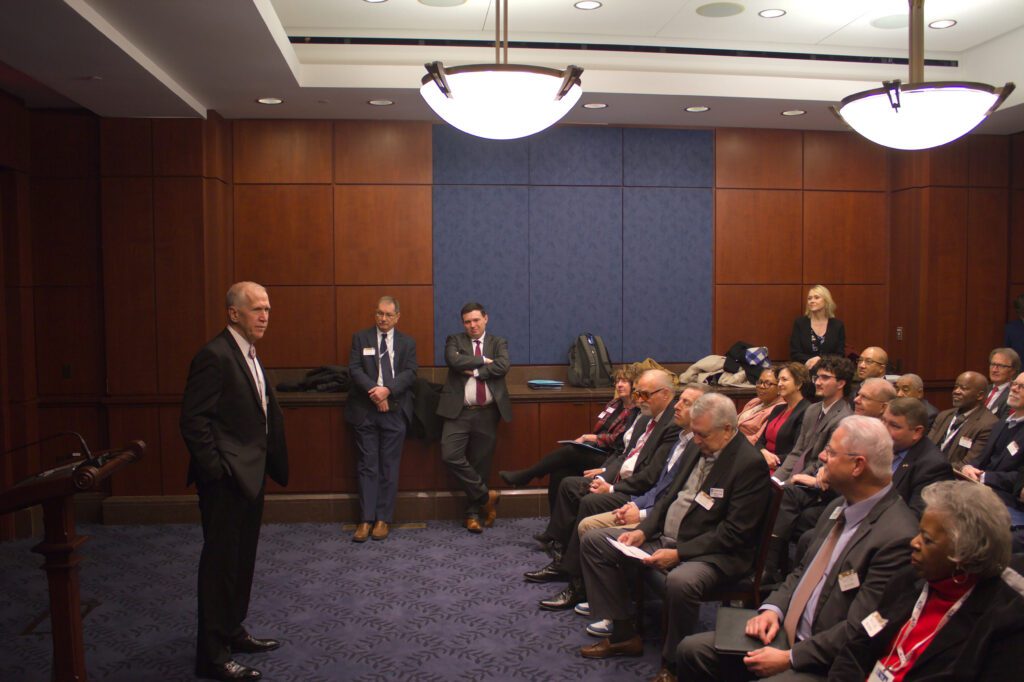
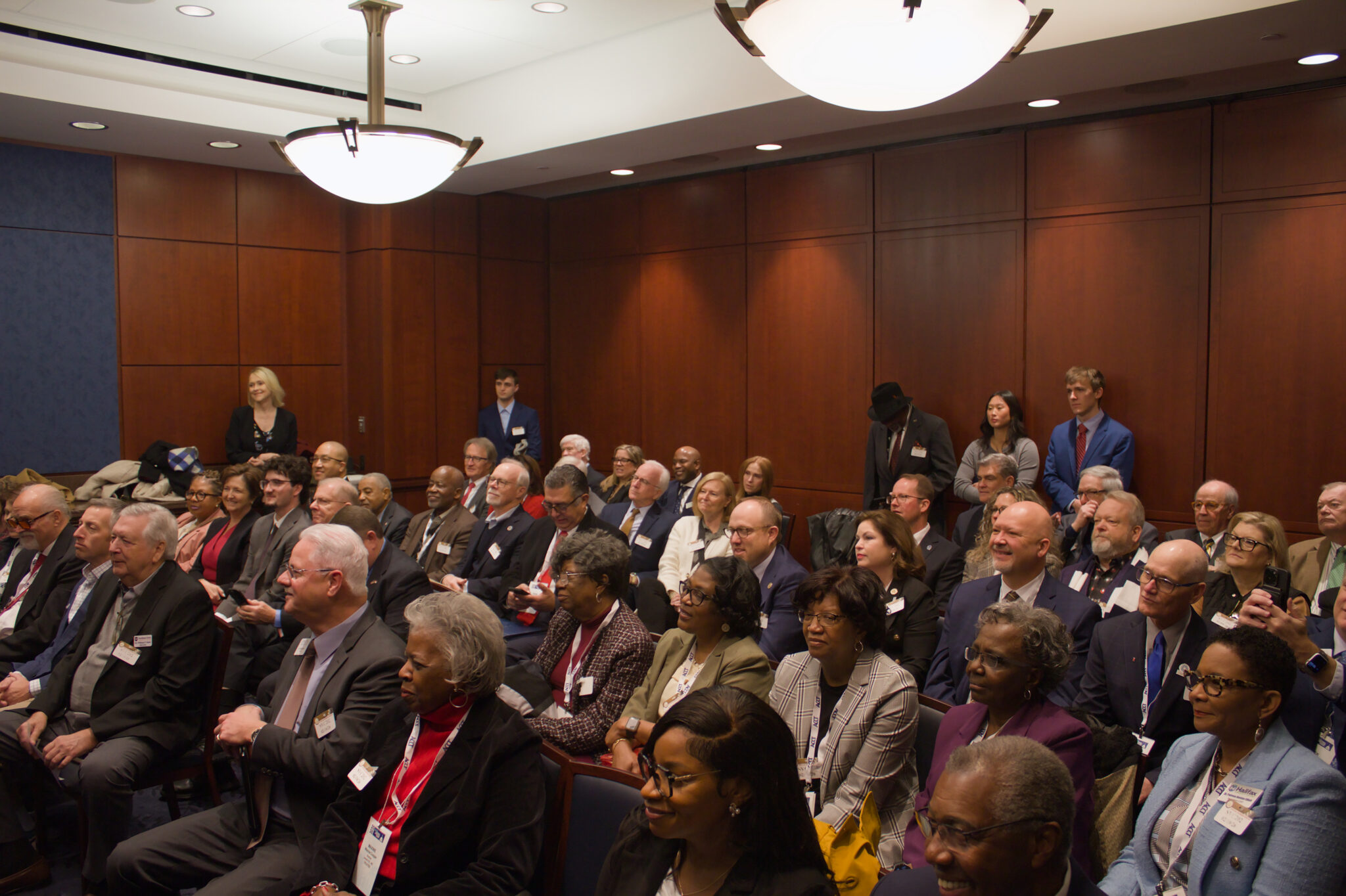
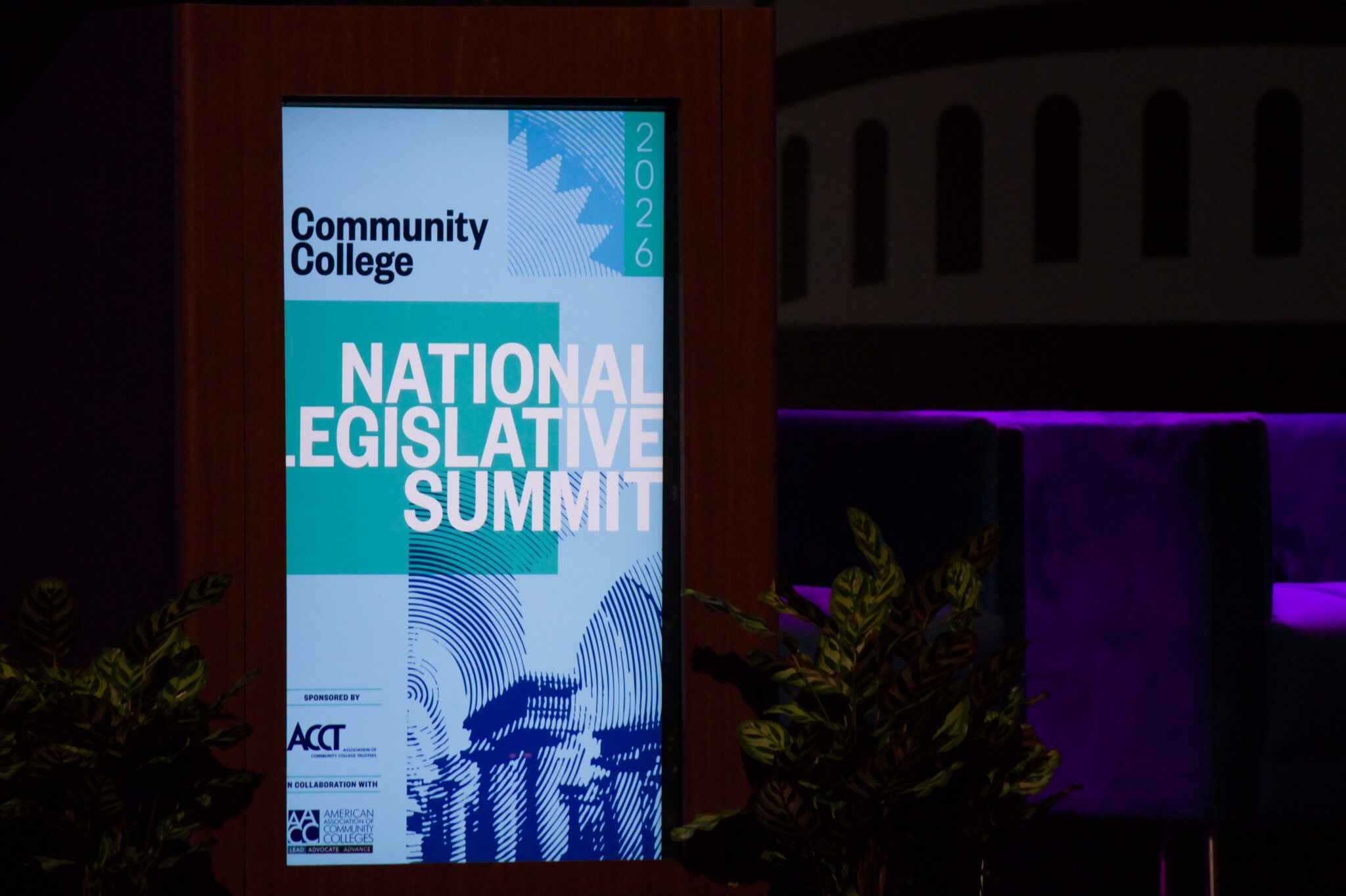
North Carolina community college trustees, presidents, students, and other leaders traveled to Washington, D.C., last week for the 2026 Association of Community College Trustees (ACCT) National Legislative Summit, an annual event that convenes ACCT members and prepares them for advocacy meetings on Capitol Hill.
Attendees, including North Carolina Community College System (NCCCS) President Dr. Jeff Cox, met with U.S. Sens. Thom Tillis and Ted Budd on Tuesday, Feb. 10, as part of the trip.
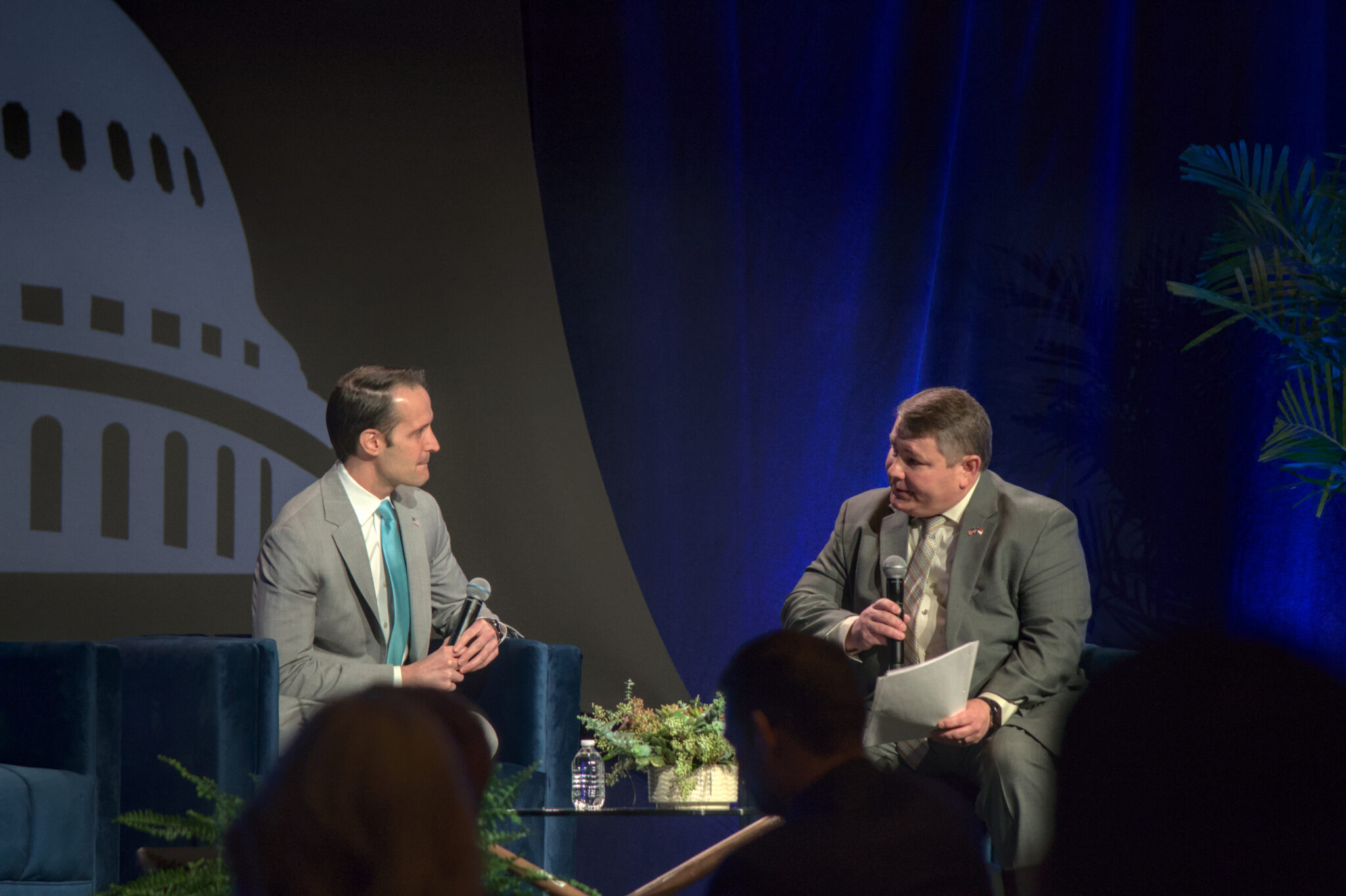
North Carolina was also represented on stage at the summit by Dr. John Enamait, president of Stanly Community College and chair-elect of the American Association of Community Colleges (AACC) board of directors. He interviewed Under Secretary of Education Nicholas Kent, who serves as the nation’s top federal official for higher education.
 Sign up for Awake58, our newsletter on all things community college.
Summit celebrates Workforce Pell
A central focus of the summit and a key legislative priority of the ACCT was Workforce Pell, a new expansion of the federal Pell Grant program passed last year that will allow students to receive funds to participate in short-term workforce training programs. Community colleges house many of the programs expected to qualify.
Workforce Pell has long been a priority for community college stakeholders across the country. ACCT Board of Directors Chair Carol Del Carlo said the achievement of Workforce Pell is “one of our longest sought after policy wins.”
The policy that created the Workforce Pell Grant program was included in the federal reconciliation bill passed in the summer of 2025. The U.S. Department of Education is expected to post the consensus rules of the program for public comment sometime this spring, and the program will launch on July 1, according to statute.
Since Workforce Pell was secured last year, conversation at the summit focused on the proposed rules for the program and smaller policy asks related to Workforce Pell.
Once finalized, the rules are expected to clarify definitions of terms in federal law. For example, the law says programs eligible for Workforce Pell Grants must lead to a “stackable and portable” credential and must align with “high-skill, high-wage” or “in-demand” industry sectors or occupations.
NCCCS has published a list of programs that may qualify for Workforce Pell Grants based on meeting the time requirements in the law. Eligible programs will need to be between eight to less than 15 weeks in length, show completion rates of at least 70%, and show job placement rates of at least 70%. The programs must also place students in jobs that reflect median earnings that exceed program tuition and fees plus 150% of the federal poverty level.
There are still uncertainties about which programs will be eligible, according to the NCCCS document, because “it is not yet known which data sources will be used for program eligibility (institutional, state, or federal), or if there will be flexibility.”

N.C. leaders meet with Tillis and Budd
Before North Carolina community college leaders met with Tillis and Budd, Cox said he hoped to have a dialogue about the proposed Workforce Pell rules that will be open for public comment in the coming months.
“We already have identified some areas that we think probably need tweaking,” he said. “Right now, under Workforce Pell, the guidelines are pretty restrictive, so we’re not going to have a huge number of our programs that actually qualify.”
Cox said the job placement requirement and wage earnings requirement could both be worth further consideration. He also said that there are programs on both sides of the program length requirement being missed that he would like to see be eligible, including Basic Law Enforcement Training (BLET). At Mayland Community College, for example, BLET is a 640-hour program — just exceeding the Workforce Pell maximum of 599 clock hours.
Cox said that he hasn’t finalized an exact change in eligibility requirements that he would ask legislators to consider, but that he hopes they would review data to determine how different modifications would impact the number of eligible programs.
“Where is the right dividing line — if it were 100 less hours or 100 more hours, would that make a difference?” Cox said.
Lenoir Community College President Dr. Rusty Hunt, who also attended the meeting with the senators, said he likewise hoped for flexibility to include longer programs.
“(Workforce Pell) is a great, great step for all of our community colleges across the country, but certainly particularly in North Carolina,” Hunt said. “And I think we will see some opportunities to expand that in the future, particularly for some high-demand courses that exceed that 599-hour cap.”
Leaders call for ending taxation of Pell Grants
Dr. Ken Ingle, president of Alamance Community College, echoed praise for the implementation of Workforce Pell, and also said he planned to advocate for ending taxation on Pell Grants. Cox supported ending taxation of the grants as well.
An ACCT green sheet distributed to advocates at the summit also calls for the end of taxes on Pell Grants.
“Make Pell Grants tax-free for all low-income students,” the sheet says. “Because of their low tuition, community college students must pay taxes on Pell Grant funds used for living expenses. By law, Pell Grants must be used for specified educational expenses; taxing them exacerbates affordability challenges for the lowest-income students.”
ACCT also encouraged community college advocates to ask lawmakers to appropriate additional funding to the Pell Grant program to accommodate program growth due to the simplified FAFSA, Workforce Pell, and increasing enrollments. According to the National College Attainment Network, making the FAFSA form easier to complete and simplifying the eligibility criteria has resulted in more students qualifying for federal aid, including Pell Grants.
A February report from the Congressional Budget Office projects that, without congressional action, Pell Grants will face a $5.4 billion deficit for fiscal year 2026, which would increase to nearly $11.5 billion in fiscal year 2027.
Sen. Budd thanked for his work on Workforce Pell
Community college leaders said they planned to thank Budd during their meeting for his help in passing Workforce Pell. Budd introduced a bill last year, and in 2023, to expand Pell Grants to workforce programs.
“I was proud to lead the Senate effort to ensure the PELL Act was signed into law by President Trump as part of the Working Families Tax Cut Act,” Budd said in a statement to EdNC. “As the number one state in the nation for doing business, North Carolina is leading the way in modernizing our workforce — and now, with the PELL Act as the law of the land, we can build on that momentum nationwide.”
Under Secretary of Education Kent on Workforce Pell and the federal landscape
Workforce Pell timeline
In the interview with Kent, Enamait said some are concerned that Workforce Pell may not be ready before the expected launch date of July 1, and he asked Kent how preparations are going.
Kent said that, despite an accelerated timeline, Workforce Pell will be ready on July 1 and that the rules will come out “very soon.”
“I don’t think that, you know, audience members and those who may be listening at home should really think about whether the Department is going to be ready on July 1,” Kent said. “What I think about is, are you all going to be ready on July 1?”
Kent said some institutions, governor’s offices, and state legislatures are “absolutely going to be ready” by the launch but that others “are a little bit behind the curve from their peers.”
Long-term fiscal viability of the Pell Grant program
Enamait then asked Kent what the administration’s plan is to ensure fiscal stability for the Pell Grant program in the long term, since the simplified FAFSA has resulted in many more new students participating in the program.
Kent said Congress did not give the Department of Education any new money to support the program, and that it may be hard to predict the behavioral changes of students and the resulting financial needs. For example, Workforce Pell could draw students away from traditional Pell Grant programs, resulting in net savings for the government; or, an influx of new students could increase overall demand for funds.
“We want to work with Congress, you know, to identify areas where, you know, we can cut back, and then areas where we can further support,” Kent said. “And I think that there is a great deal of support for the Pell Grant program, and specifically the (Workforce) Pell Grant program.”
Navigating the current federal landscape
In another question to Kent, Enamait alluded to an uncertain federal landscape.
“This past year, certainly, has not been ‘business as usual’ for community colleges, for higher education, and for many of the federal grant programs that provide capacity building funds for many of the colleges that are represented by the members in the audience, that ultimately help support our students,” Enamait said. “What role do you believe the federal government should play in supporting particularly under-resourced institutions, and how do you see that playing out in Fiscal Year 2026, with the new appropriations law?”
“Thank you for the question,” Kent said. “I’m going to say something that is not going to be super popular here, which is that money is not always the solution.”
Kent said that Americans’ perception of higher education is down, and that they are questioning the value of higher education for a variety of reasons including cost, safety, and civil discourse.
“One of the things that I think that the Congress and the president are attuned to is the fact that we do need to see some major and systematic change in higher education,” he said.
The attempted closure of the Department of Education and interagency agreements
Enamait also asked about the restructuring of the U.S. Department of Education, which President Trump is planning to close, and whether recipients of federal grants should expect disruptions. North Carolina has previously sued the federal government over frozen education funding, and the funds were subsequently released.
The Trump administration is using interagency agreements (IAAs) to move responsibility of grants and programs from the Department of Education to other departments, such as the Department of Labor.
As part of his answer, Kent said that these IAAs are reducing red tape.
“If we’re talking about career and technical education programs, you know, we want a community college leader to be able to pick up the phone and talk to somebody at the Department of Labor and get all of their questions answered, as opposed to having to pick up the phone to the Department of Education,” he said.
“So will there be hiccups for, you know, employees? Will there be small hiccups for grantees? Yes, but we want to hear from you. We want to learn from you. And just like any relationship, it may be a little rocky in the beginning, but we believe that at the outset of this, you know, we are making very good decisions that will streamline these programs, create better efficiencies for the grantees, for students, for families, and we look forward to learning a whole lot as we sort of get well into this process.”
Enamait pushed back on Kent’s answer, saying there is reason for cautious optimism but that “the little hiccups that may be realized at (the Department of Education) may seem to be little hiccups in D.C., but they are directly impacting the students.”
After applause from the audience, Enamait asked:
“I think my follow up question for you, Mr. Under Secretary, is, when institutions are faced with snafus that directly impact our students and their ability to consume community college education, what advice would you give to the leaders and the trustees in this room on how to best effectively advocate for the resolution of those hiccups?”
Kent replied by claiming that community colleges and career and technical education programs haven’t been affected by federal restructuring.
“There’s a difference between what you may read in the news and what you experience in reality on a college campus,” Kent said. “You know, I get weekly reports on drawdowns of grants from community colleges and other types of institutions, showing that year over year, we are not seeing any material difference in terms of the drawdowns from states on our career and technical education programs, for certain.”