
EdNC’s Hurricane Helene Playbook: Lessons learned in leadership, trauma, wellness, and ‘facing forward’

Editor’s note: This article is part of EdNC’s playbook on Hurricane Helene. Other articles in the playbook are available here.
Whether it was the pandemic, the closing of the mill in Canton, or Hurricane Helene, we’ve learned leaders need a strategy, especially in crisis.
EdNC relies on two sources to guide our strategic leadership.
When education journalist Amanda Ripley — the author of “The Unthinkable: Who Survives When Disaster Strikes — and Why” — talks about leadership in crisis, she describes three phases of disbelief, deliberation, and the move to decisive action. This framework has proven invaluable to our team.
We also use Terrence Real’s book, “Us,” in our work to support communities through natural cycles of harmony, disharmony, and repair.
During the pandemic, Mitchell County Schools developed what they call a plan instead of a strategy. District leaders were able to quickly iterate it after Helene, and it served the same purpose: everyone knows how the organization is going to approach a crisis even in the immediate aftermath. When communications were down after the storm, I was impressed that all of the leaders in central office and the principals of each school knew how to work the plan, even without being able to communicate with each other.
There are any number of theories of leadership, and the point is to know yours before the crisis.
Once you know your strategy, there is also one thing you need to avoid: Leadership transition in crisis is a momentum killer like no other.
 Sign up for the EdWeekly, a Friday roundup of the most important education news of the week.
How to manage direct and secondary trauma
Leadership can also be compromised if you don’t attend to your own wellness.
Our expectation of educators and other first responders to manage their own direct trauma and the secondary trauma of those they serve is never more apparent than in natural weather disasters and school shootings.
Carrying dual roles as both a community member who experienced the crisis and as a helper in responding to the crisis can intensify the emotional impact of the disaster and may lead to post-traumatic stress disorder (PTSD).
Hearing the stories of students and families after a crisis puts educators in a position in which their own experience is constantly being retriggered, often leading to chronic stress.
A psychologist in Florida who has expertise in secondary trauma after hurricanes identifies the following signs and symptoms as well as coping strategies. Rose Illes says that what begins as emotional exhaustion and irritability; difficulty concentrating and sleeping; feelings of anger, sadness, and guilt; and physical symptoms like stomachaches and headaches can turn into hypervigilance, nightmares, avoidant behaviors, and depression, leading to strained personal and professional relationships.
Increasing awareness of secondary trauma is critical, says Illes.
Coping strategies include self-education about secondary trauma; mindfulness and other wellness strategies that support self-care; setting personal boundaries with the disaster and recovery, including limiting exposure as needed; and developing rituals as first responders move from addressing the personal impact of the storm to the professional impact of the storm.
External support like therapy or counseling can be even more important for secondary trauma after natural disasters since normal community support systems, such as families and faith leaders, may be stressed with everyone having experienced the crisis.
“Reaching out is normal because, again, what you have survived is not a normal situation,” Illes says.
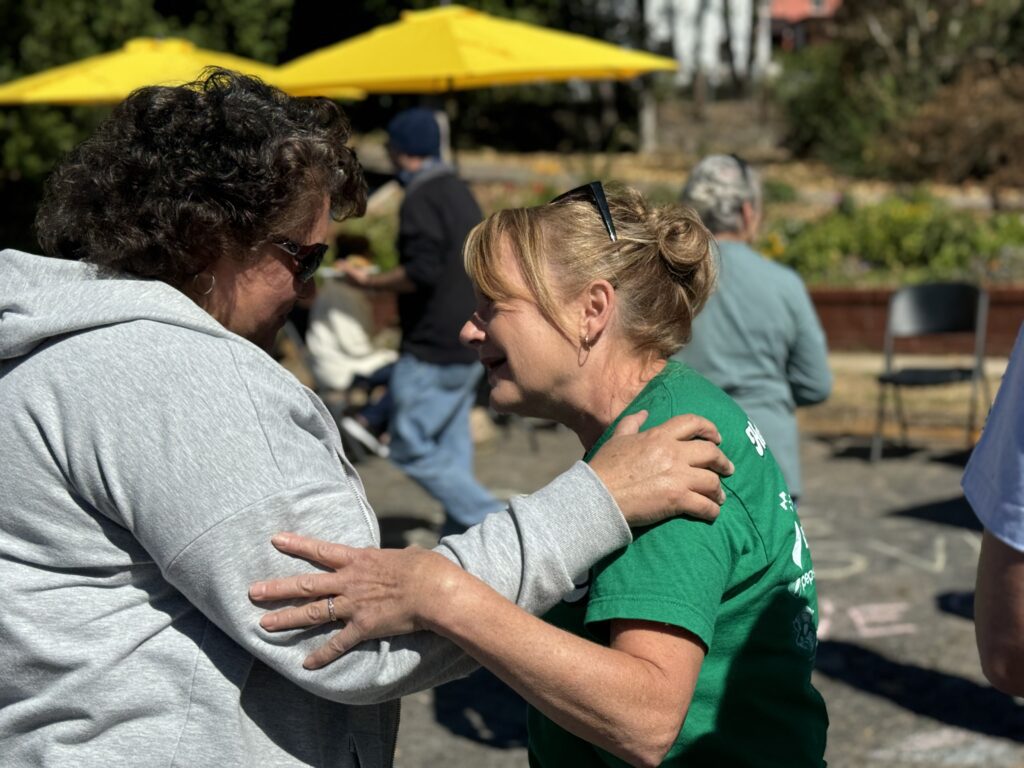
The experience of being a community member and helper can also lead to post-traumatic growth — or the experience of both post-traumatic stress and growth.
Post-traumatic growth is “positive psychological changes experienced as a result of the struggle with trauma or highly challenging situations,” often “a parallel process with respect to negative psychological consequences.”
The leaders of Mitchell County Schools proactively addressed the secondary trauma of educators through a range of supports, including workshops on compassion fatigue, before students returned to school after the storm.
Proactively building your support network
Cheryl Fuller is a North Carolina educator with more than four decades of experiences as a teacher, counselor, principal, professional development provider, and education consultant. She is the author of two books: “Peace by Piece,” about trauma survival and recovery, and “Forward-Facing® for Educators: A Journey to Professional Resilience and Compassion Restoration.”
Fuller provides a variety of accompanying trainings for educators, including an eight-month book study, three-day model, or four half-day sessions. She is revered by educators statewide for her own lived experience and expertise in “facing forward.”
Ideally, educators and other first responders would be steeped in the principles of “facing forward” long before a crisis.
The book is a practical guide to self-care — including physical, psychological, emotional, spiritual, and professional self-care — before, during, and after trauma.
It calls for intentionally and proactively building your support network, including the need to establish a “trusted other” to be your primary support in crisis. Here is why that is critical, according to the book:
- We need someone “to be our eyes and ears, assisting us in monitoring ourselves,” for the early and later signs of trauma.
- These people are intentionally empowered “to call us out” during crisis to hold us accountable for behaviors, choices, and actions.
- Having this person in your life facilitates the safe integration and resolution of the trauma.
- These people also provide social support and relief during the crisis.
Who is your person? This book will help you intentionally start building your support network.
Checklist for leaders
- What is your theory of leadership and/or leadership plan if there is a crisis? Does your team know the plan and have they been trained on how to execute the plan?
- Do you and your team understand the effects of primary and secondary trauma?
- Have you built your own support network, including identifying your “trusted other”?