
EdNC’s Hurricane Helene Playbook: The role of faith and faith institutions after disaster

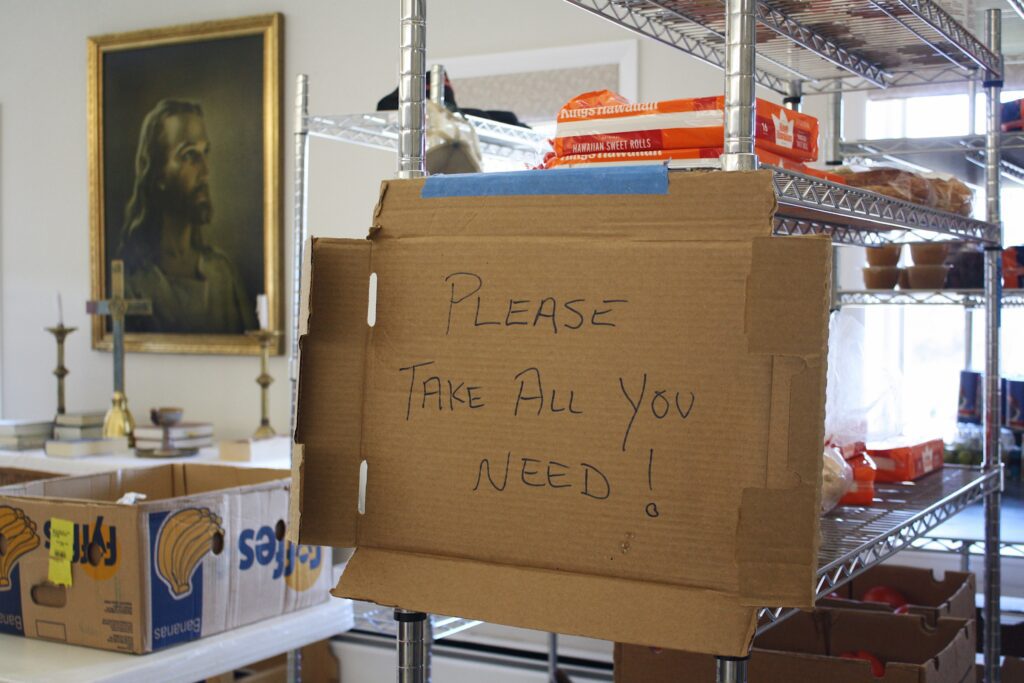
Editor’s note: This article is part of EdNC’s playbook on Hurricane Helene. Other articles in the playbook are available here.
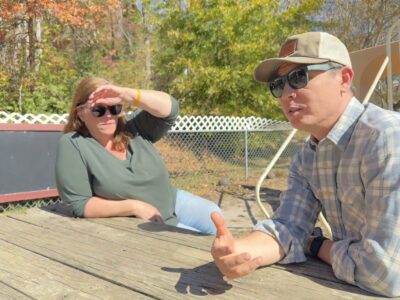
Hurricane Helene hit western North Carolina on Friday, Sept. 27, 2024. The next day, Denise Teague went to Clyde Central United Methodist Church in Haywood County to see how she could help with immediate recovery needs. There, she learned about free meals being offered at the church.
By Sunday afternoon, Teague — joined by her husband and a local chef — were cooking and serving meals out of a propane camp stove at the church for those impacted by the storm.
Soon after, the nearby fire department also set up shop in the church, as its building was destroyed by flooding. While sharing the same space meant tight quarters, it also meant internet and electricity for the church was restored much more quickly due to local prioritization efforts for firefighters and other first responders.
By early October 2024, the team of church volunteers had grown, serving 150 meals on average per day. Teague, who is a member of another Haywood County church, Love First — which does not have its own building — said partnerships were crucial to setting up such services so quickly. In the days and weeks after Helene, Teague sent texts calling for help, and fellow church members, friends, and friends of friends quickly began bringing ingredients and meals. By mid-October, other local churches, organizations, and ministries began sending donations, volunteers, and food, including weekly deliveries from Haywood Christian Ministry.
“Forming those partnerships has been essential,” Teague said. “No single group could do all the things that we’ve done, but all of us together can continue to do what we’re doing.”
 Sign up for the EdWeekly, a Friday roundup of the most important education news of the week.
Today, Teague is still leading the meal ministry, now as part of a new nonprofit, Wider Circle: Pigeon River Cooperative, which serves roughly 250 meals each day with the help of volunteers from churches across the region. While the ministry no longer primarily serves those suffering losses from Helene, Teague said they serve people experiencing homelessness and underemployment — issues only exacerbated in the year-plus following the storm. A few of the original volunteers and meal recipients still join nearly every day, now sharing meals and service responsibilities.
Together, Love First, Clyde Central UMC, and Teague represent faith leaders and houses of worship across western North Carolina and beyond that stepped up following Helene, working to identify needs and fill those they could.
“It’s what Jesus said we’re supposed to do … it’s what we’re called to do,” Teague said.
Reflecting on her decision to help with recovery starting the day after Helene hit, Teague acknowledged that she had her own concerns about damage from the storm, but felt still compelled to do something to help her community.
“So it started out with, I can provide food. I can cook a meal. I can stand in the kitchen and do this,” said Teague, who is also finance manager and part owner of an engineering firm with her husband. “And I think for a lot of people immediately following the disaster, it was that: I can be a part. I can do this. I can and I have to — I can’t sit back and watch. … Until God says, ‘No, Denise, you need to be somewhere else,’ this is where I’m going to be.”
In the face of major destruction, Teague was not alone in her dedication to serving others through her church. Matt Calabria, director of the Governor’s Recovery Office for Western North Carolina (GROW NC), said faith groups and houses of worship played a “major role” in recovery in western North Carolina following Hurricane Helene.
“These groups were on the ground when the storm hit, and they’ve continued to help their communities in the long term,” Calabria told EdNC in an emailed statement. “From food insecurity to home repair, faith-based organizations provided much-needed relief to neighbors in need.”
This article, part of EdNC’s Hurricane Helene Playbook, highlights how faith groups organized to aid in recovery after Hurricane Helene and lessons leaders learned from working to serve their communities in the short-term recovery and beyond.
The role of faith groups after disaster
In the weeks and months following the storm, faith groups and houses of worship showed up in myriad ways.
Churches EdNC spoke with worked to locate people and check on their status and needs in the first weeks after Helene, stood up and donated to food pantries and meal ministries, created mutual aid funds to help with rent support, served as distribution sites, and organized volunteers to help with repair work.
Religious organizations and ministries that were already established before the storm also played an important role in recovery, Calabria said, particularly when it came to home repairs and rebuilds, which he described as “a pressing need after Helene.”
“Organizations such as Baptists on Mission brought in volunteers from across the country to complete critical repairs and help get folks back in their homes,” he said. “The Governor and his team have worked to provide grants to several of these organizations to support and continue the incredible work they’re doing.”
Baptists on Mission (NCBOM) is a 501(c)(3) organization that is an auxiliary to the Baptist State Convention of North Carolina which includes 19 different ministries, including disaster relief and recovery.
“The purpose of NCBOM’s Disaster Response Ministry is to relieve human suffering caused by disasters by providing among other things: hot meals, debris removal, child care and family assistance,” its website says. “We seek to provide organization, equipment, and strategy for committed volunteers to help affected individuals/families rebuild their lives and homes.”
Over three installments starting in October 2024, the SECU Foundation donated $8.95 million to nonprofits for disaster recovery in western North Carolina, including $3 million to Baptists on Mission.
In November 2024, Baptists on Missions purchased a former elementary school in Mitchell County to establish a permanent headquarters for recovery work in the region. Prior to the building being ready, the organization worked out of First Baptist Church in Spruce Pine, where they had access to showers and laundry and were housing and feeding workers.
On Oct. 2, 2025, Gov. Josh Stein announced that 14 nonprofits received more than $9 million in grants for Helene-related repair and reconstruction projects, including $2.5 million to Baptists on Mission. In January 2025, per the release, Stein awarded an additional $6 million in grants split between Baptists on Mission and Habitat for Humanity.
These grants — which also went to secular organizations — included $850,000 to First United Methodist Church Waynesville for its Rebuild Haywood program, the release said, and $300,000 to the Western NC Conference of United Methodist Church to replace and repair homes in the highest-impacted counties of western North Carolina.
“Using these state-funded grants, these organizations have together already completed repairs on more than 500 homes,” the release said.
Another Christian organization, Samaritan’s Purse, also played a key role in Helene recovery. The international nondenominational relief organization has a U.S. disaster relief and rebuild ministry, which works to “deploy an army of volunteers to come alongside homeowners to bring relief and help rebuild in Jesus’ Name” after natural disasters.
Right after Helene, Samaritan’s Purse mobilized tens of thousands of volunteers, according to a report by the Watauga Democrat, and coordinated hundreds of air missions to cut-off communities.
“According to Samaritan’s Purse, 35,399 volunteers served 511,744 hours to help 4,424 Western North Carolina families with flood recovery efforts,” the article says. “After the initial disaster response, Samaritan’s Purse launched a large-scale recovery initiative, going door-to-door in the hardest-hit areas to identify urgent needs, which included providing: 163 campers, 220 vehicles, 2,764 appliances, (and) 18,317 grocery cards.”
More from EdNC’s Helene Playbook

In some cases, organizations also expanded their mission to directly serve people in need following Helene.
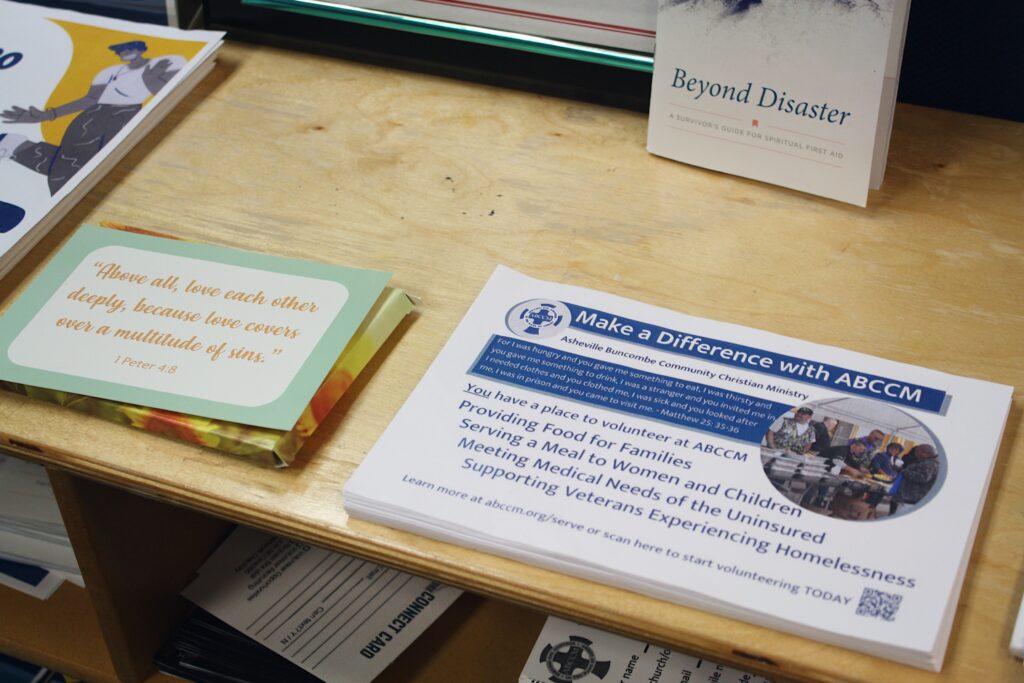
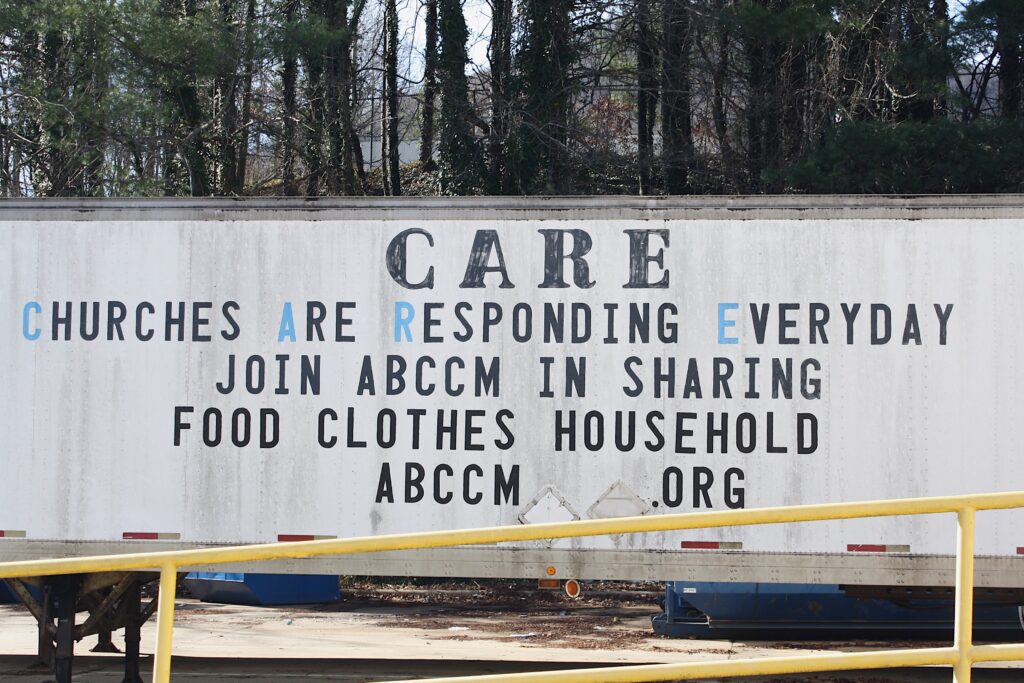
Asheville Buncombe Community Christian Ministry (ABCCM) was founded in 1969 by local churches to address “poverty, hunger, homelessness, and access to healthcare for underserved populations in North Carolina.” Today, the ministry is supported by more than 300 churches and 5,000 volunteers each year, according to its website, serving more than 30,000 people through its seven core ministries.
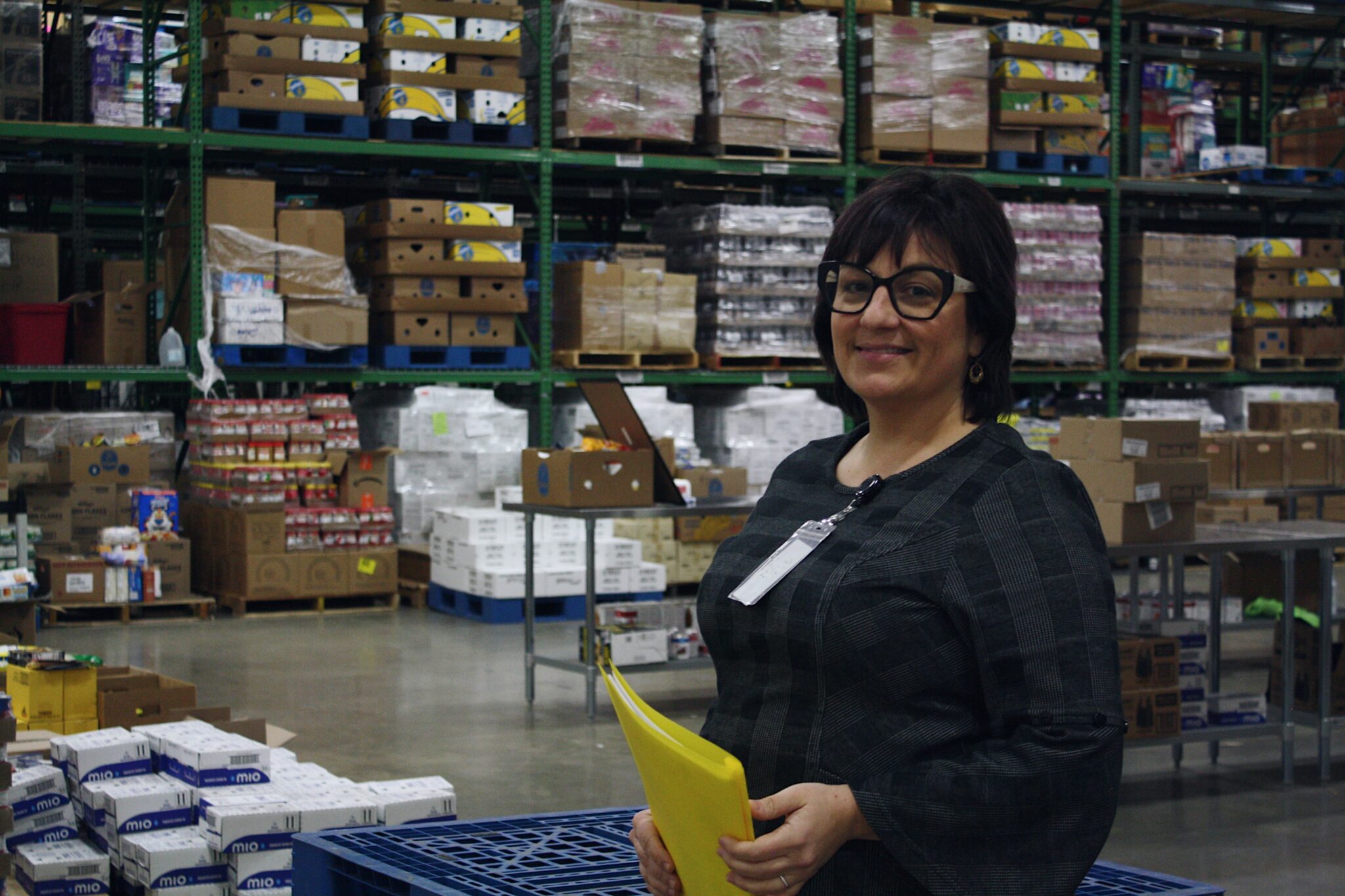
In summer 2024, ABCCM moved into a new facility, which included a larger space and warehouse. Initially, ABCCM planned to rent out the warehouse, as the organization wasn’t sure what it would use the space for.
A few months after moving in, however, Hurricane Helene hit, and ABCCM quickly changed gears, realizing what an asset the building could be as the only standing warehouse in Buncombe County following the storm. That first weekend after Helene, ABCCM quickly organized the warehouse into a disaster recovery hub, coordinating emergency supplies for distribution across western North Carolina.
From October to December 2024, 477 trucks dropped off supplies, according to a report by the Triangle Business Journal, with 1,782 volunteers clocking 7,532 hours of service.
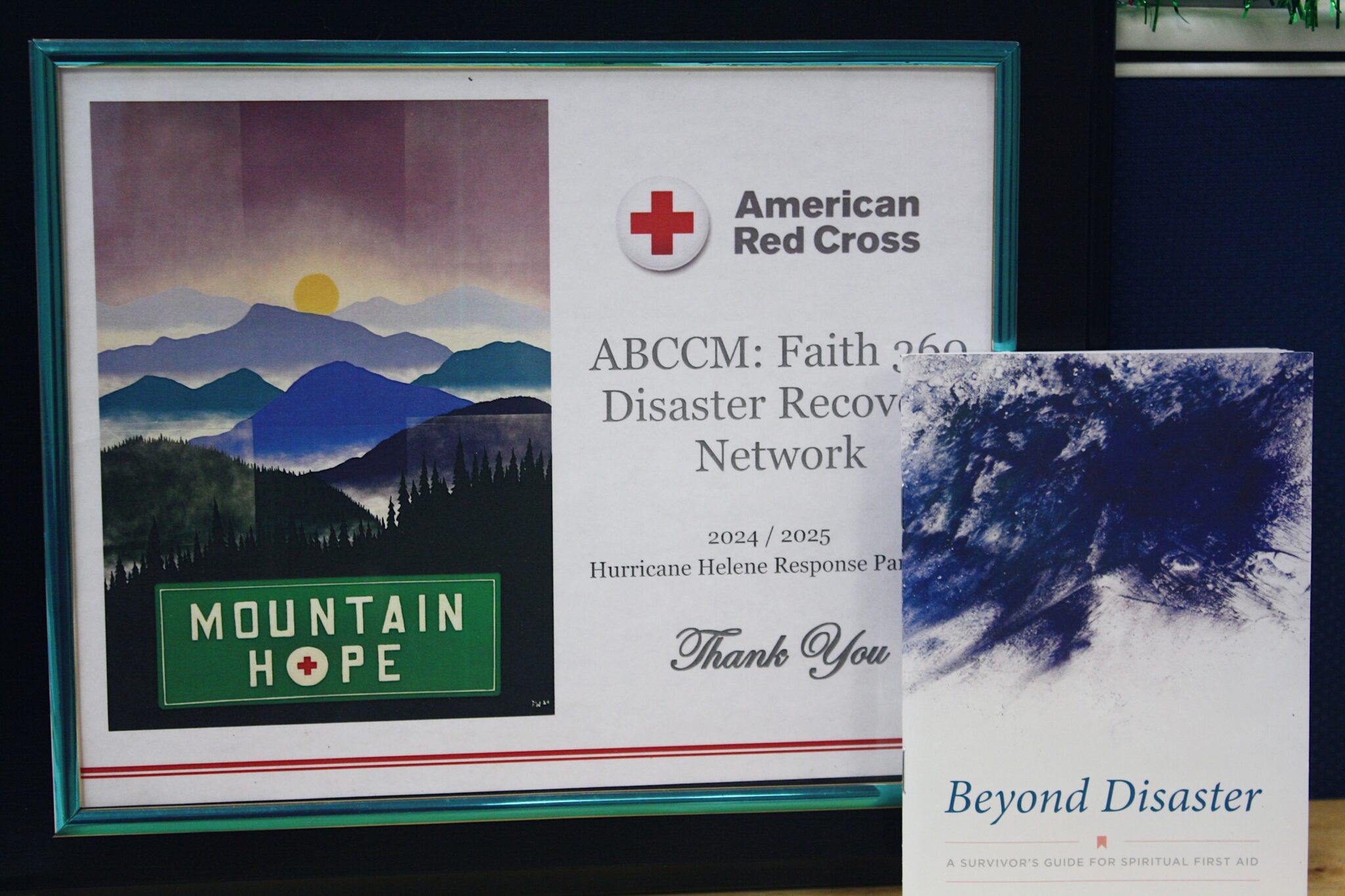
By spring, ABCCM formalized its recovery efforts by launching the Faith360 Network, which “unites churches, faith-based organizations, and community partners across Western North Carolina to coordinate, resource, and celebrate faith-led disaster recovery efforts.”
Rev. Erin Burleson, Faith360’s network director, said that about 25 organizations steadily receive supplies from the warehouse. One of them is Burleson’s church, which after Helene, provided space for RVs as temporary housing solutions for families and volunteers.
Currently, the network is focused on “identifying capacity building pathways” for local churches and organizations, and working to create preparedness pallets for churches and organizations to have for any future disasters.
“I think what people loved after the disaster was coming together, seeing everybody’s potential and capacity — finding a way to make a difference,” Burleson said. “There’s something powerful about reminding people that you don’t have to wait for a disaster for that to continue to be the case.”
Less tangibly, churches also provided another much-needed resource during recovery: emotional and spiritual comfort.
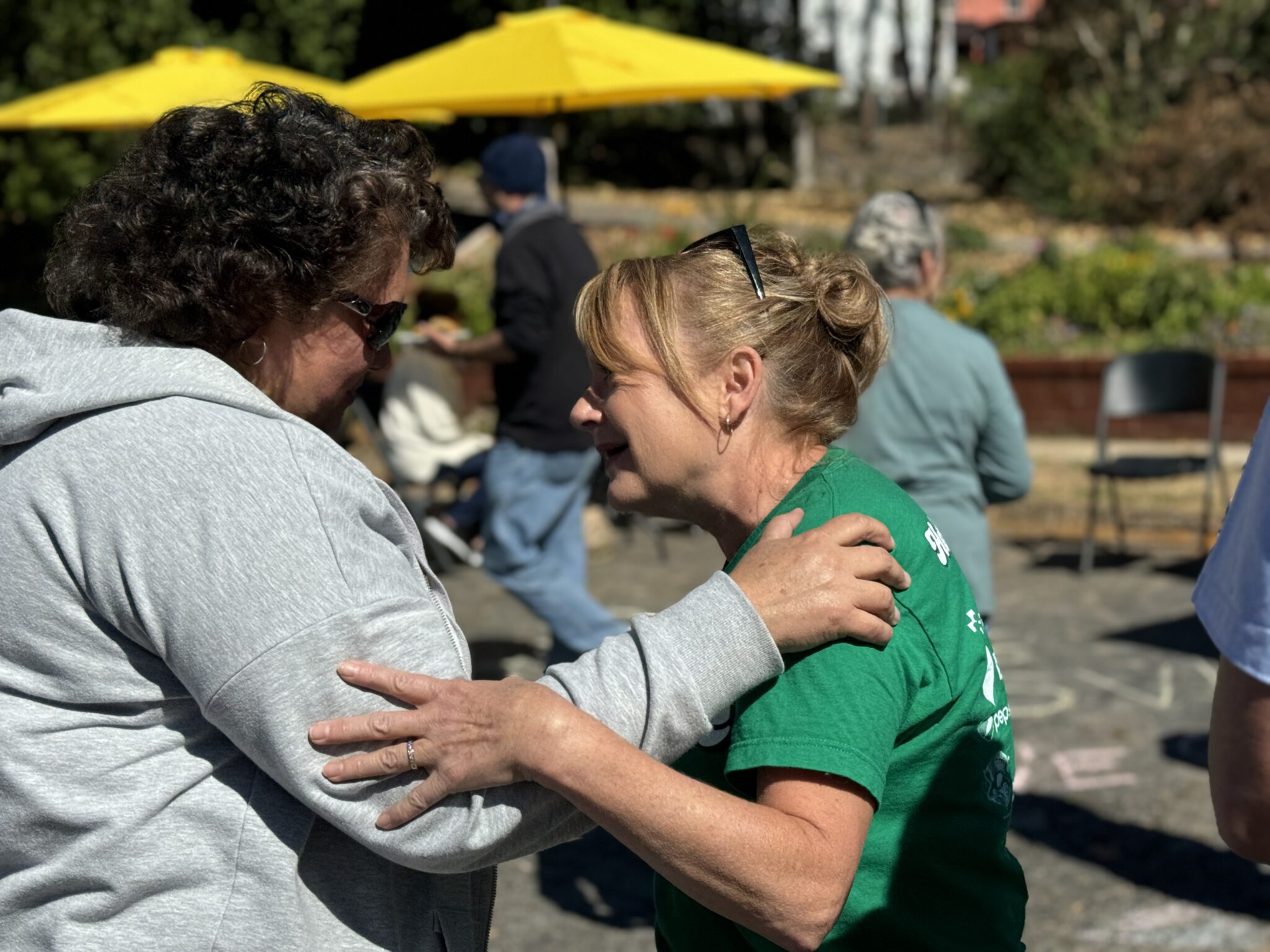
In addition to offering meals, Haywood’s Teague said the ministry also provides an important space for people to simply share a meal together. Her day-to-day tasks include coordinating supply runs and deliveries, planning and adjusting menus, and managing volunteers and the kitchen, but she also sees getting to know her neighbors as part of the work, too.
From day one, Teague has believed in showing up, filling needs, and being present. In fact, she said she ended up leading the meal ministry mostly because she showed up enough days in a row that other volunteers started asking her what to do and where things were. Now, in addition to telling you where to find the ladles and extra butter, she can also tell you the name of every meal recipient, along with their story.
Teague’s pastor, Ray Hausler, said that’s because the goal of Wider Circle isn’t just to feed people. In addition to serving meals, the ministry also operates a small food pantry and closet and connects people to community resources and financial aid. Recently, in response to people asking for “spiritual nourishment,” the ministry also started offering church dinner nights.
“When you show hospitality to people and welcome them to come and sit and have a meal together, you begin to learn their stories,” Hausler said. “As we heard their stories and listened to them, we realized how many more needs there were, and we realized the needs that we were seeing in response to Helene and the floods were just revealing that there were greater problems in our area.”
GROW NC’s Calabria said his team quickly realized how important faith leaders and communities would be for recovery from Helene.
“Faith-based organizations and the faith community broadly have always shown up for North Carolina in times of need,” he said. “We want these leaders to know that their contributions are critical and life-changing to those impacted by Helene. We look forward to partnering with them and with so many others as we continue to repair and rebuild western North Carolina.”
Lessons learned from faith leaders
- Know your assets and stick to them.
- Develop a network and relationships with other churches and organizations, and invest in partnerships before and after disaster.
- Work broadly across denominations and faith traditions, uniting on common goals.
- Do no harm and prioritize reciprocal relationships.
- Learn now to navigate red tape to help effectively help fill gaps in state and federal funding.
- Document lessons learned.
- Don’t forget about emotional and spiritual recovery.
Know your assets
Nearly every faith leader EdNC spoke with about recovery efforts stressed the importance of knowing your assets.
This knowledge requires clarity and work before disasters, said Rev. Dr. Marcia Mount Shoop, pastor at Grace Covenant Presbyterian Church in Asheville.
“My advice is really to do some intentional work on, what is your capacity? What is something that you feel like you could really stand up and do?” she said. “Everybody can’t do everything, and every community doesn’t have to look the same, but everybody does have something that they bring to the community.”
After Helene, the church realized what people in their community needed most was rent support. As of December 2025, the church has provided $7 million in rent support and $500,000 in utility bill support, Mount Shoop said — relying on private donors and congregational giving.
While the need greatly increased after Helene, with roughly 100 people coming to the church every day the first few months asking for support, Mount Shoop said the church had previously budgeted funds prior to the storm to provide support to community members. Importantly, the church focused on partnering with grassroots organizations to reach people in need, and viewed the work as mutual aid, rather than charity.
“We were able to do what we did because of what we’ve been doing for the last almost 10 years,” she said regarding the church’s values of justice and mutual aid.
Faith360’s Burleson said houses of worship should get a sense of their assets to they can work with their strengths instead of spending time mitigating deficits.
“For everywhere there’s a need or a deficit or a gap, there’s also a strength, there’s also resilience, there’s also people learning they were capable of things they didn’t know they were capable of, or forgot they were capable of,” she said.
At Clyde Central, Teague said work to prepare for a disaster response started years before Helene, following flooding in Haywood County in 2004.
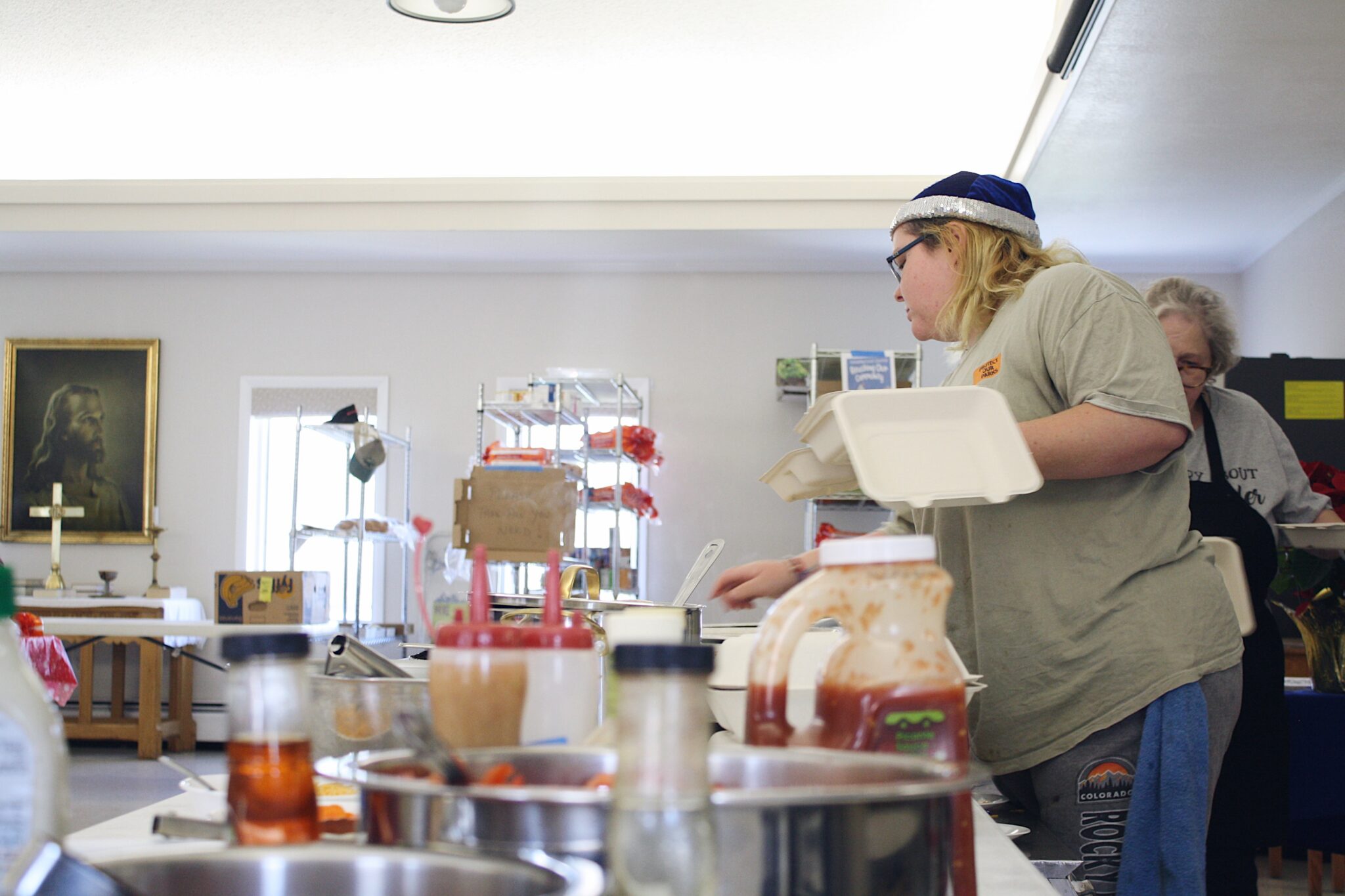
At that point, the pastor and some church members decided they wanted to renovate their building in order to help the next time there was a disaster. So they redesigned and expanded the fellowship hall, updated the kitchen, and purchased hundreds of serving plates, pots, and utensils.
“They’ve held it as stewards, paid the utilities and paid the rent, done all of those things for all of these years as stewards of this space to be able to address the needs of the community,” Teague said. “And now the opportunity is here.”
John Dempsey Parker, who helps lead the NC Council of Churches’ trauma response in western North Carolina, said he encourages churches to complete asset mapping to understand their community’s primary gifts — whether its talented members, property, finances, or the ability to apply skills in a coordinated way.
Parker said churches need to talk out loud about their assets in order to create buy-in and vision about ways the church can engage with their community.
“Looking forward, what’s really important is for congregations to decide what kind of role they want to have in future disasters,” he said. “Create goals — what kind of resilience hub do you want to be?”
The importance of relationships and networks
After a church identifies its own assets, Parker said it’s also important to talk to other churches and organizations.
“You’re not going to have all the things you need at one congregation, which is why it’s important to do it at a network level,” Parker said. “That’s part of the work too.”
Rev. Kelsey Davis, the Bishop’s deputy for disaster response at the Episcopal Diocese of Western North Carolina, said being aware of your strengths and limitations is an important first step to collaborating well.
“If you weren’t good at it before the disaster, you’re probably not going to be good at it in the wake of responding and recovering from the disaster,” she said. “It’s OK to not be able to be all things, and that’s why we have to collaborate.”
Even if you have considered your strengths and weaknesses before a disaster, Davis said there is still often a lot of trial and error in the initial phase of recovery, when partners are “finding our legs together.”
Churches and faith leaders should rely on the wisdom of people who have lived through prior disasters, she said, while also being willing to try new things and shift gears together when needed.
“If we’re prepared and we’re resilient, it just means that we’re upping our game of being better community members,” Davis said. “It takes the cooperation of everybody.”
In Asheville, Mount Shoop echoed that belief, emphasizing how important it is to build relationships before a disaster.
Likewise, she said, it is important to realize that every community has its own challenges before a natural disaster ever occurs, and so churches should also look for ways to partner to meet long-term needs in a community.
“The more we can build strong partnerships and have honest conversations when we’re not living in a natural disaster — but kind of dealing with the disasters that are already there, like housing affordability, whatever it is — the better you’re going to be able to just stand up when something happens,” Mount Shoop said.
Faith leaders also told EdNC it is important to differentiate between levels of partnerships.
At Faith360, Burleson said the network tries to work widely with volunteers, hosting a monthly meeting to celebrate good work, brainstorm solutions, and lift up available resources. For these volunteers, there is not typically a formal agreement, Burleson said, but a focus on maintaining relationships. The network also uses NCCare360, a shared statewide platform, to collaborate with partners, identify resources, and track follow-ups.
“When somebody moves from being a participant in the network to being a partner, for us internally, it means that they are operating on that statewide referral platform, and that involves training,” she said.
However, any partner receiving funds or physical products must sign a memorandum of understanding (MOU) to ensure partners take care of property (like iPads) or use funds in agreed-upon ways.
At Wider Circle, a large number of volunteers help with meal service and preparation, including one-time volunteers, weekly student volunteers, and Teague and her daughter, Amanda — who show up nearly every day.
On Nov. 1, 2025, Wider Circle signed a MOU with Clyde Central, Teague said, which was an important part of ensuring the ministry is sustainable. The MOU lays out responsibilities of both partners and guaranteed usage of the building space on service days.
That MOU will be renewed on an annual basis, Teague said, which allows both partners to iterate as needed while still providing stability for daily operations.
Unified front across denominations and faith groups
Faith leaders also emphasized the need to work across denominational and faith lines to expand reach and impact.
Baptists on Mission, for example, works with various organizations in its disaster-relief efforts, including American Red Cross, The Salvation Army, NC Emergency Management, and other groups.
At Faith360, Burleson said the organization trains partners on nondiscrimination, emphasizing that even though the organization is a Christian ministry, they serve people from all faith backgrounds. As an example, she said they ask partner churches to offer aid without requiring people to participate in prayer meetings or Bible studies.
NECHAMA – Jewish Response to Disaster provides immediate and continued disaster relief “without religious bias,” according to its website, “offering a visible Jewish presence in communities that often have limited exposure to Jewish life.”
The organization is rooted in the Jewish principle of “Tikkun Olam,” repairing the world, and in Hebrew, its name, nechama, means “to comfort.”
“By caring for all individuals, regardless of faith, we not only support disaster-affected areas but also challenge harmful stereotypes and foster understanding, helping to reduce the spread of antisemitic beliefs and strengthen Jewish ties in rural communities,” the website says.
NECHAMA began the first phase of recovery in western North Carolina on Oct. 4, 2024 with debris removal in homes, completing over 2,200 hours of volunteer labor and 445 volunteer shifts by the end of the year.
“As an interfaith Jew, I was so grateful for the opportunity to participate in this experience with NECHAMA,” one volunteer said in a NECHAMA report. “It was emotional for me to see how many people cared enough to take days out of their workweek to volunteer and make a difference in the lives of others in need.”
NECHAMA also collaborates with a wide variety of partners.
We’ve also taken on an expanded communal role in North Carolina, partnering with the
— NECHAMA report
North Carolina Council of Churches for a Yom Hashoah memorial event, sponsoring an LGBTQ+ Pride initiative of the Asheville Jewish Community Center, and leading a Good Deed’s Day at Agudath Israel of Hendersonville. The cities of Hendersonville and Asheville both passed proclamations appreciating both our direct service as well as our efforts to help combat antisemitism in the region.
In additional to denominational and faith diversity, leaders said there is also a need to seek partnerships across all lines of difference. At Grace Covenant Presbyterian Church, for example, partnerships with Spanish-speaking organizations and churches allowed their rent fund to not only reach Spanish-speaking residents, but also to provide interpretation services on-site.
“From day one, we’ve been ready to work with anyone who wants to help,” GROW NC’s Calabria said regarding state recovery efforts. “This includes organizations of all different backgrounds and leaders across the political spectrum. Impacted people have a wide variety of resources available, both from the state and from local organizations.”
While a wide array of partners expands reach and impact, it can also potentially bring up challenges as groups navigate different priorities and approaches to doing the work.
Such challenges are not a reason to stop seeking diverse partnerships, Teague said, but rather emphasize the need for consistent and open communication. Part of that communication means asking good questions and not making assumptions about the way things work for a partner. Teague noted that different churches have different organizational structures, for example, which can impact decision-making timelines.
At the end of the day, though, she said a shared commitment to the overall mission of meeting needs can help partners work together, persist through challenges, and adapt as needed.
“The best volunteers, and the ones who have enjoyed being volunteers and have continued to be volunteers with us, are also flexible,” she said. “I think it makes for a happier place too.”
Do no harm
Faith360 also uplifts empowerment principles with partners, aiming to move from charity to mutuality in partnerships and service.
While charity has a time and place, Burleson said — particularly immediately following a disaster — ABCCM believes in moving beyond the goals of “us fixing” to creating opportunities and conditions for community resiliency, development, and growth.
“All those things are really important and true to the kingdom of God,” she said. “And I hope that would be what sets apart a faith-based nonprofit.”
Like Mount Shoop and Burleson, other leaders expressed the need for a mutual aid framework and for investing in reciprocal relationships with neighbors and recipients of aid.
At Wider Circle, for example, Teague knows the names and stories of meal recipients and volunteers alike, and finds a role for anyone who wants to help. One man who has been coming for meals since the beginning helps with trash and recycling after eating, for example, while others help with cleaning and welcoming new people. Regular volunteers also make a habit of sitting down and eating a meal with others during their shifts.
At the Episcopal Diocese of Western North Carolina, Davis said they have also tried to prioritize supporting “local efforts by locals.”
Additionally, their recovery team has worked with families to provide “holistic” recovery by asking people what their top three priorities are — beyond home repair — rather than offering blanket support to every family.
“That agency piece is really important to us, and listening to the individuals,” Davis said.
Learn about government relief processes and resources
ABCCM and Faith360 quickly learned “the education gap is huge” when it comes to churches and smaller nonprofits knowing how to navigate local regulations, Burleson said.
“A big takeaway from me is how much we need to prepare organizations, churches, in particular, to navigate the local government tape for the solutions they want to offer,” she said.
In the weeks after the storm, she said they heard of multiple churches putting sheds on their property, for example, not realizing that they needed zoning permits for people to legally live there (or that permits for home units require bathrooms, among other things).
Burleson said another challenge for churches has been understanding how state and federal funding works — much less navigating how to then fill in gaps in funding.
If churches hope to provide aid following disasters, particularly assistance with housing, Burleson said faith leaders need to learn the basics about how government funding works and who they can reach out to if a disaster happens to get on the right track more quickly.

Document lessons learned
Another challenge, Burleson said, is there is “still a lot of duplication of services until people get on any platform, let alone the same platform.”
This can make the work less effective, and also pose confusion for people trying to find resources and services. In response, Faith360 is working to clearly document the lessons it has learned about disaster recovery, with hopes of eventually sharing those lessons externally.
In addition to the statewide platform, employees and partners also enter updates on needs, resources, and services in Faith360’s engagement platform to keep a record of strategies being used. When network coordinators visit potential partners or meet with community members, they enter reflections to the platform before leaving the site.
On a monthly basis, Burleson reviews these reflections and then brings them to her team for any next steps or follow up.
“It helps inform what we’re actually going to do next as a team,” she said.
Tiffany Dix, community impact manager at Faith360, noted that Facebook has been an important communication tool for churches and small organizations. She encouraged larger organizations looking to document lessons learned to not forget about Facebook pages when reflecting on recovery efforts.
Importance of spiritual and emotional recovery
While houses of worship often help meet practical needs during disaster recovery, faith leaders said churches shouldn’t underestimate their ability to also aid in spiritual and emotional healing.
Davis, who is an Episcopal priest and chaplain, said she was very aware of the trauma that comes with disaster and recovery. When the diocese began their recovery efforts, Davis said they started with listening, and asking people, “How are you holding up right now? What do you need?”
In addition to one-on-one conversations with community and church members, Davis said the diocese also partnered with a local clinic, All Souls Counseling Center, to help provide mental health resources in underserved areas. They are also working to provide psychological first aid, mental health first aid, and coaching for clergy and lay leaders on how to comfort people who are struggling and grieving.
“And also just encouraging people that, like with any grief or any loss, that you simply being present and being warm and compassionate and just listening is enough,” she said. “This is where the church can be really beautiful. A lot of (recovery) is so practical, but also, who are the people who are looking out to accompany folks while they’re in these transitions or displaced?”
“We need clinicians to do this work,” she added. “But I also think we just need compassionate neighbors who are just keeping watch on each other.”
Checklist for faith leaders
- What are your main assets?
- What kind of resilience hub does your institution want to be?
- Who are your partners? What relationships can you build or strengthen?
- Who aren’t you working with in your community?
- What MOUs do you have, if any? Should any existing partnerships establish an MOU?
- What are your core values, goals, and nonnegotiables when it comes to partnerships?
- Where does information on local regulations live? What are your primary knowledge gaps when it comes to local regulations and state and federal funding?
- How can you contribute to spiritual healing after disaster? What practices are most important to you?
Our Helene blessing
The following is an excerpt from EdNC’s 2024 Thanksgiving blessing, published two months after Helene.
A blessing for western North Carolina after Hurricane Helene hit the state as a Tropical Storm, leaving many areas in western North Carolina with unprecedented levels of flooding and devastation.
A blessing for all who came and helped — for emergency workers, volunteers, philanthropists, and faith leaders — and for all who have stayed. As much as has been lost or damaged, we are inspired by all the stories of people showing up, rolling up their sleeves, and doing what needs to be done to serve our students and our educators, our neighbors and our communities.
A blessing for all the “Godwinks” that found their way to people in need after the storm, offering signs of hope and reassurance that even on our worst days none of us are ever truly alone.
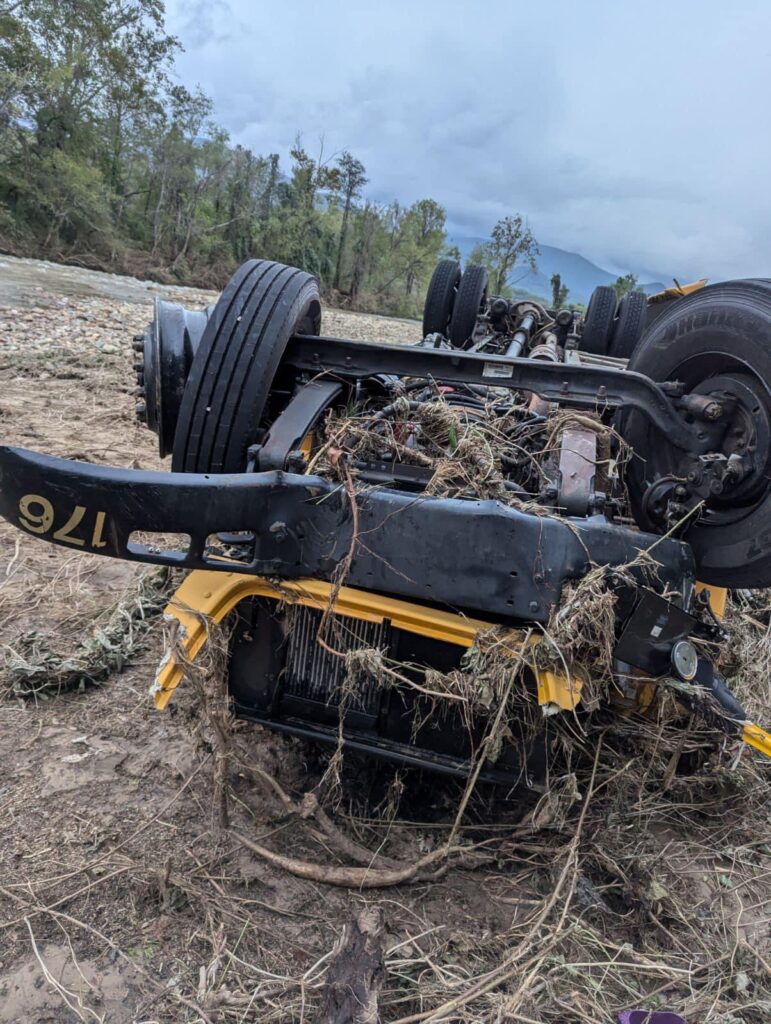
Godwinks like the beloved bus, #176, because when it was replaced by the state after it was totaled in the storm, it serendipitously had the same number.
Godwinks like how after the Old Fort Eagles were displaced from their elementary school, an eagle soared over head to welcome them to their new, temporary location.
Godwinks like the new school that was completed a year early, allowing students to relocate there after the storm.
Godwinks like the aurora borealis on Oct. 10, 2024, which educators saw and believed the beautiful phenomenon was sent to comfort them.
Godwinks like this national guardsman who sat down in the auditorium of Micaville Elementary and filled it with music one last time.
A blessing for the stories of kindness; of canned goods and potluck meals; of kids building forts; of staying up together by candlelight to read Shel Silverstein poems; of gathering on the Blue Ridge Parkway for cell service and community.
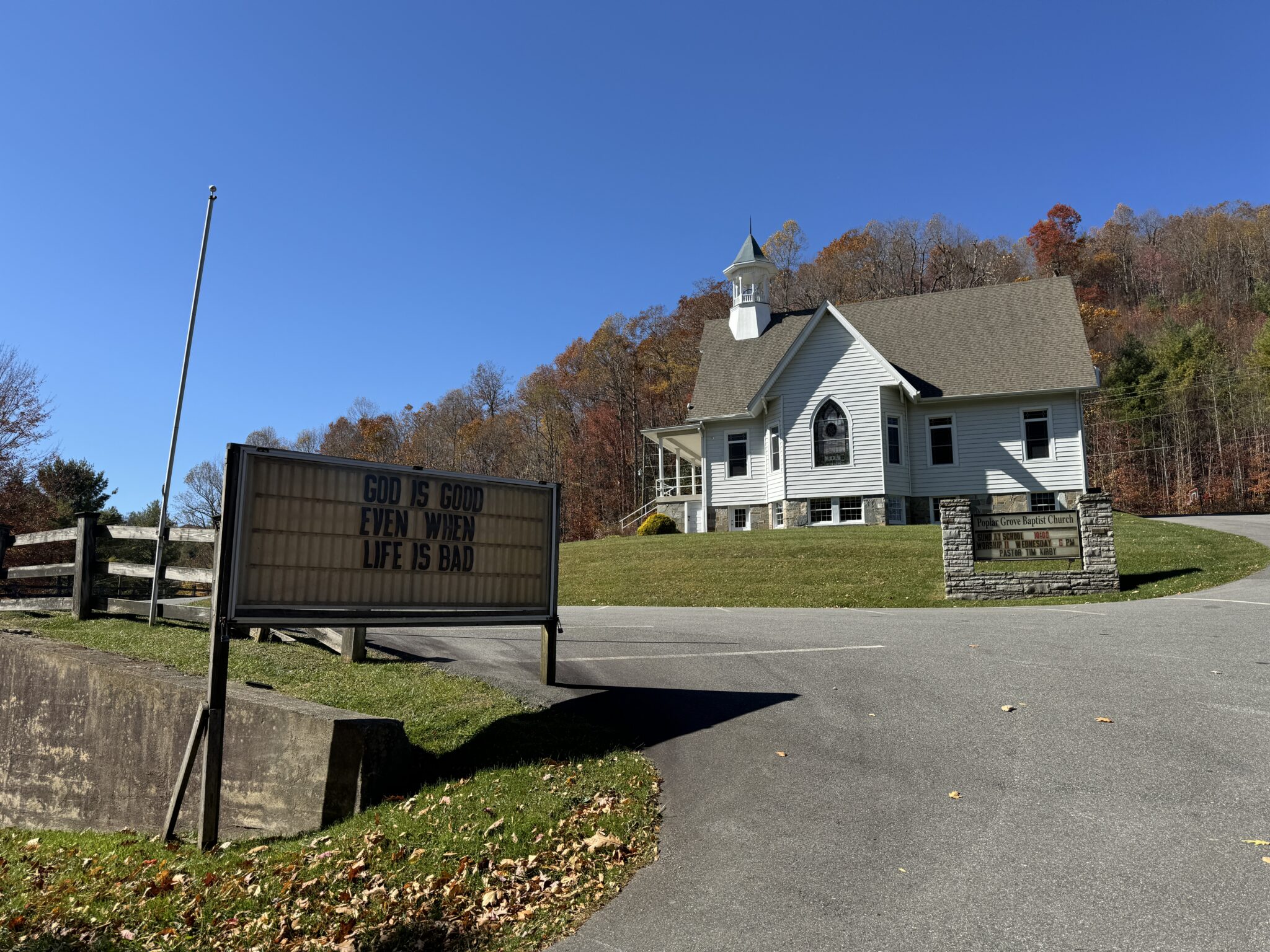
For the people on the ground, who in the face of tragedy and myriad challenges, said, “God is good. That’s the short version.”
A blessing for the moments of sadness, for the people who have seen despair up close. For the Christmas ornaments and backpacks and all of the favorite things that were lost. “You see whole lives on the road three weeks after the storm.”

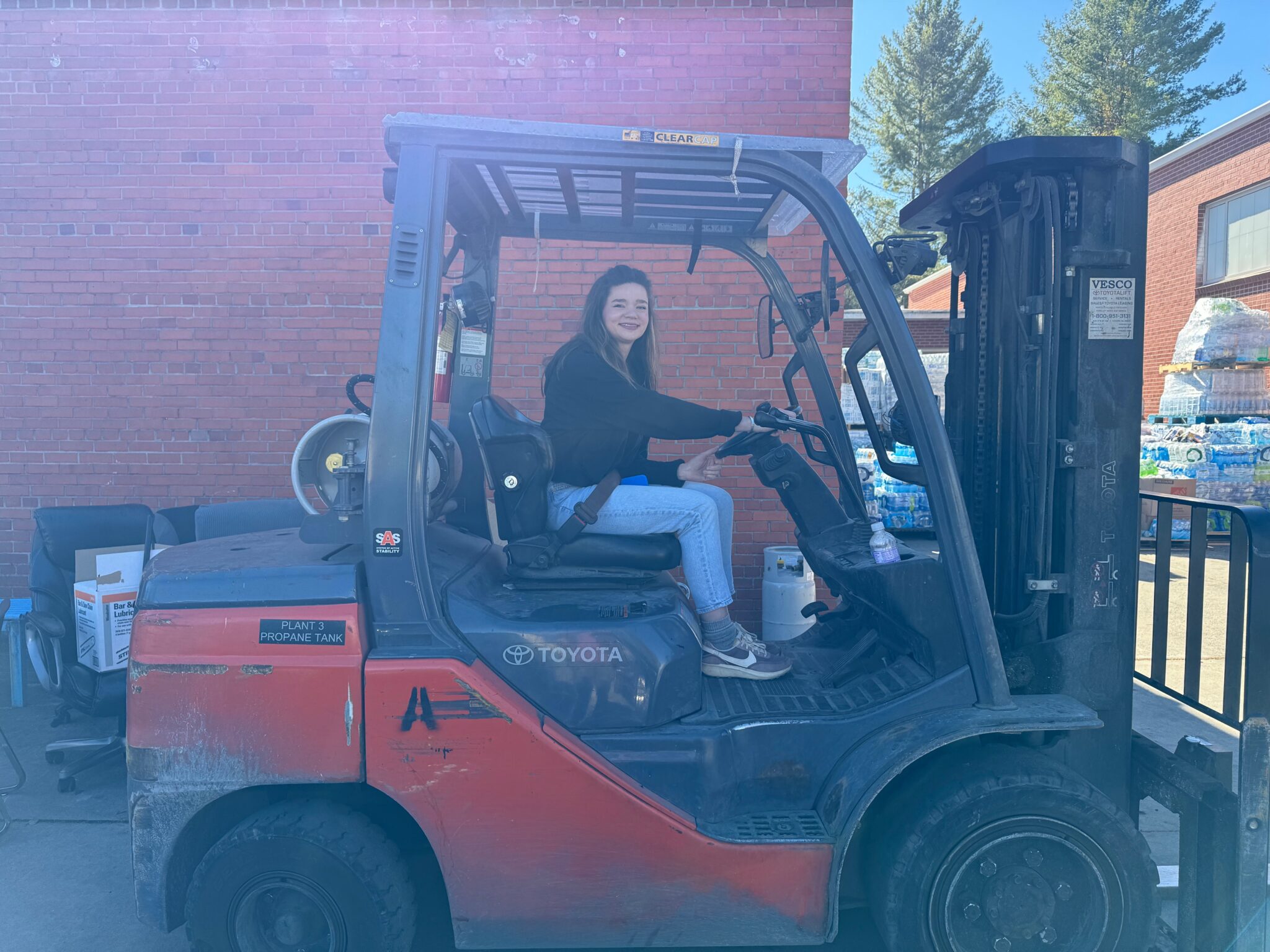
A blessing for the educators who learned to drive forklifts, took your kids with you to serve, and set up cots for sleeping in classrooms and libraries.
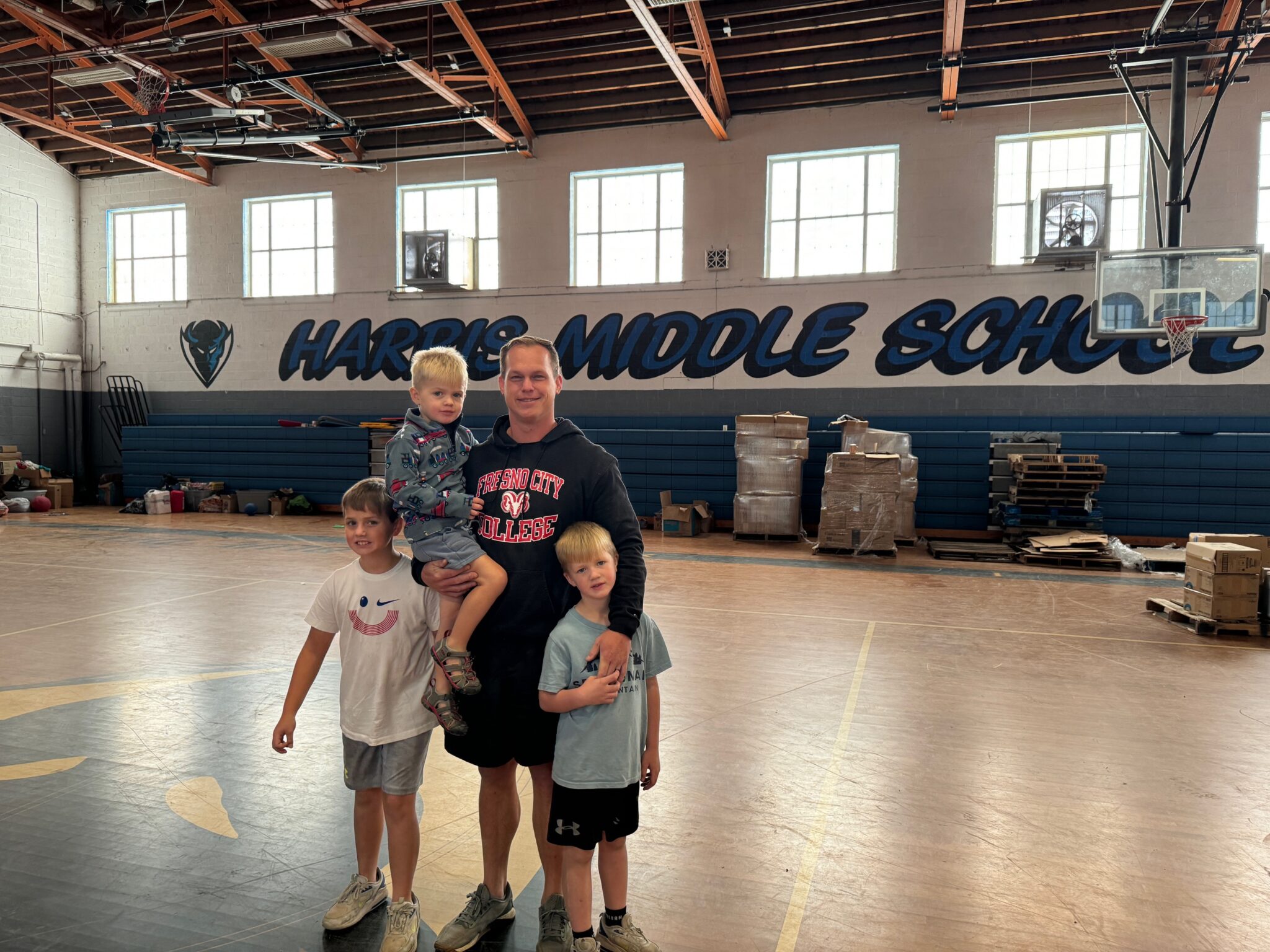
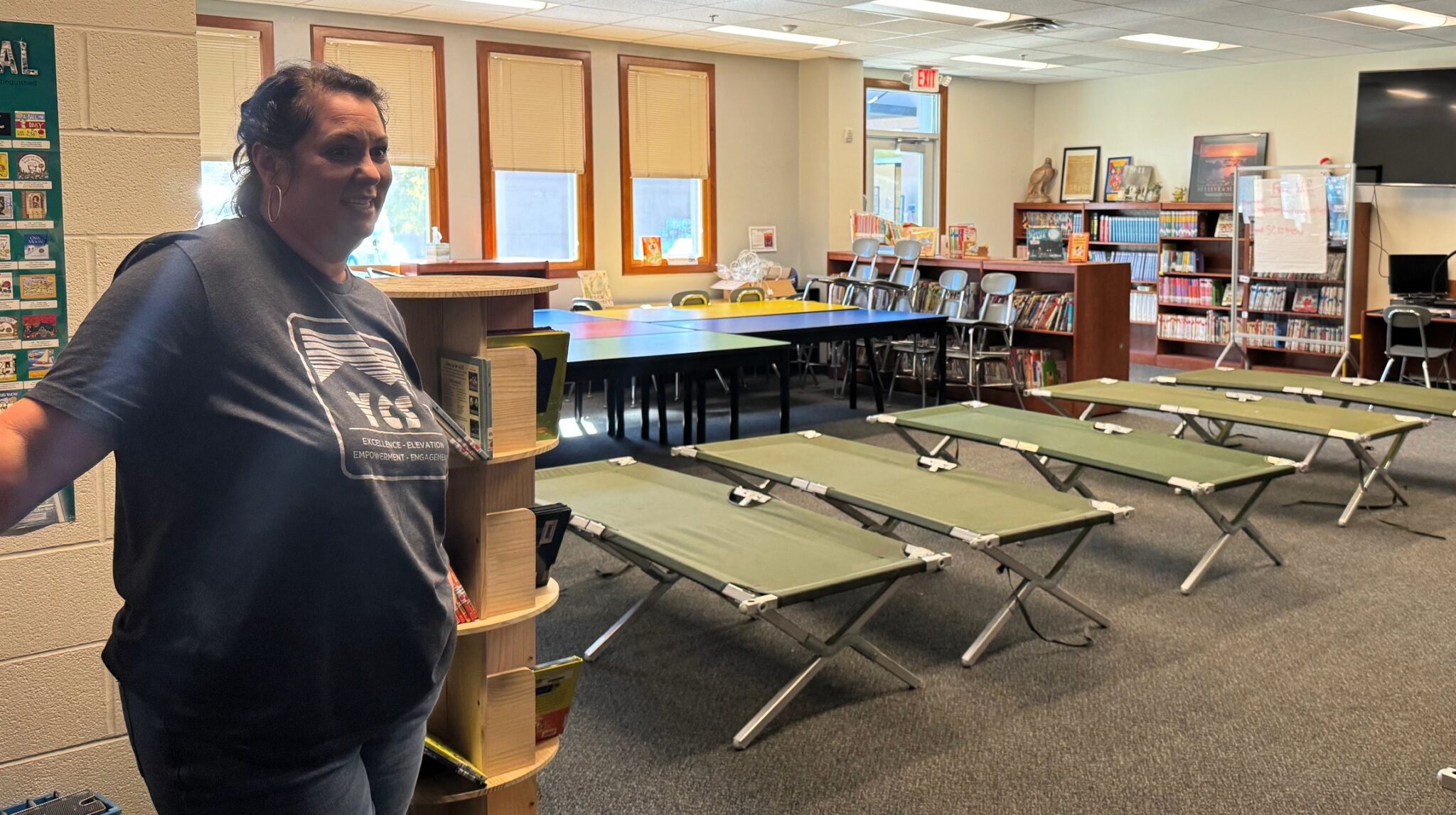
A blessing for the athletes who led the way in bringing our communities back together.

A blessing for the people who shared their experiences of Helene, and in doing so made us feel not so alone. And for the students and educators at Watauga High School who challenged us to think deeply about recovery, community, and aid — asking us “Are you a day helper or a stay helper?”
A blessing for all the places impacted by Hurricane Helene, including the towns of Hot Springs, Marshall, Banner Elk, Lansing, Spruce Pine, Canton, Old Fort, and Swannanoa, and communities like Pensacola, Plumtree, and Cranberry. As you rebuild in the months and years ahead, we will not forget you.
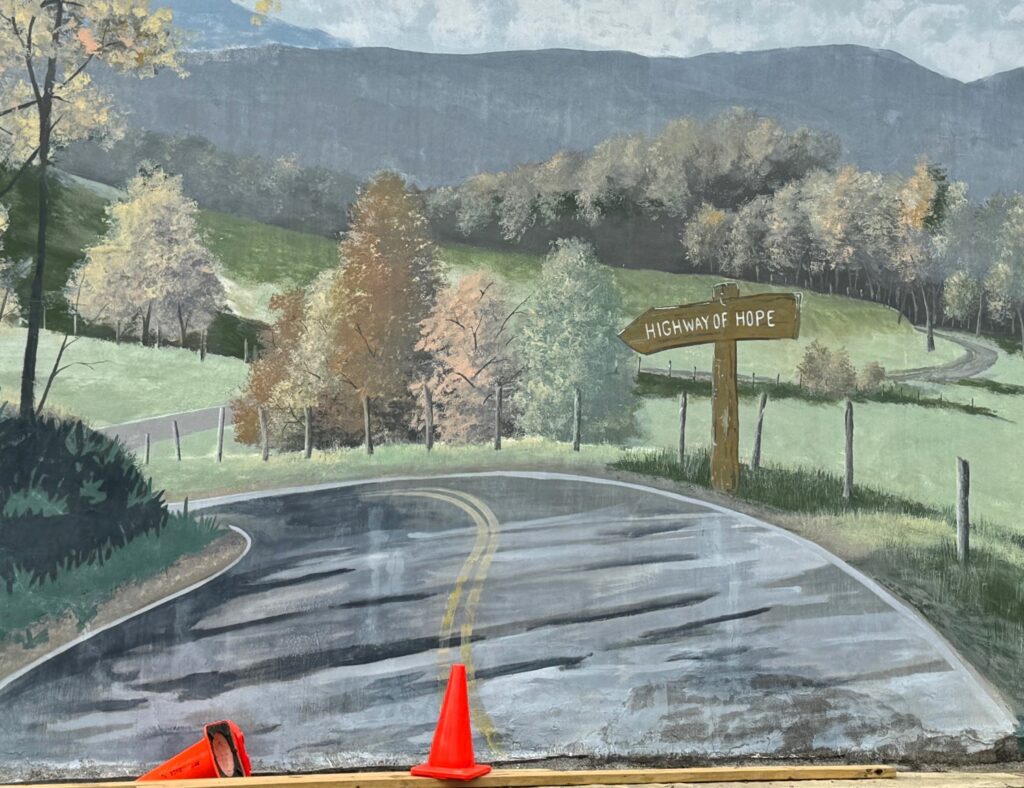
A blessing for ongoing efforts to restore infrastructure, put creeks and rivers back where they were, and rebuild our highways of hope.
A blessing for anyone who lost a loved one because of Helene, but especially for the children who lost one or both parents. A blessing for those who are still missing. In the face of unimaginable loss and heartache, a blessing for those who are still here, telling theirs and their loved ones stories.
As life goes on — like it always does — a blessing for feeling all the things: grief and joy, despair and hope, frustration and excitement, loneliness and togetherness.
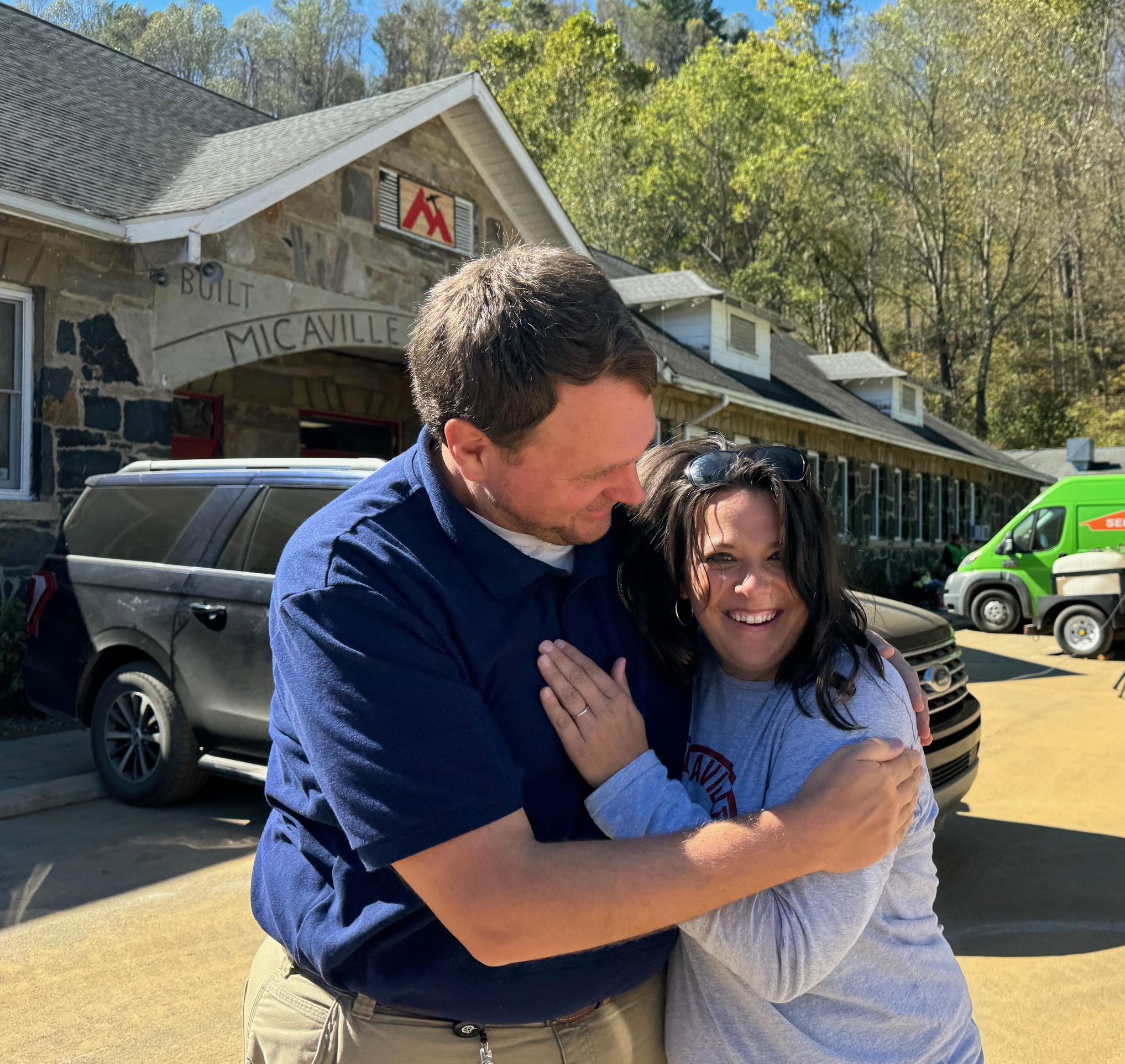
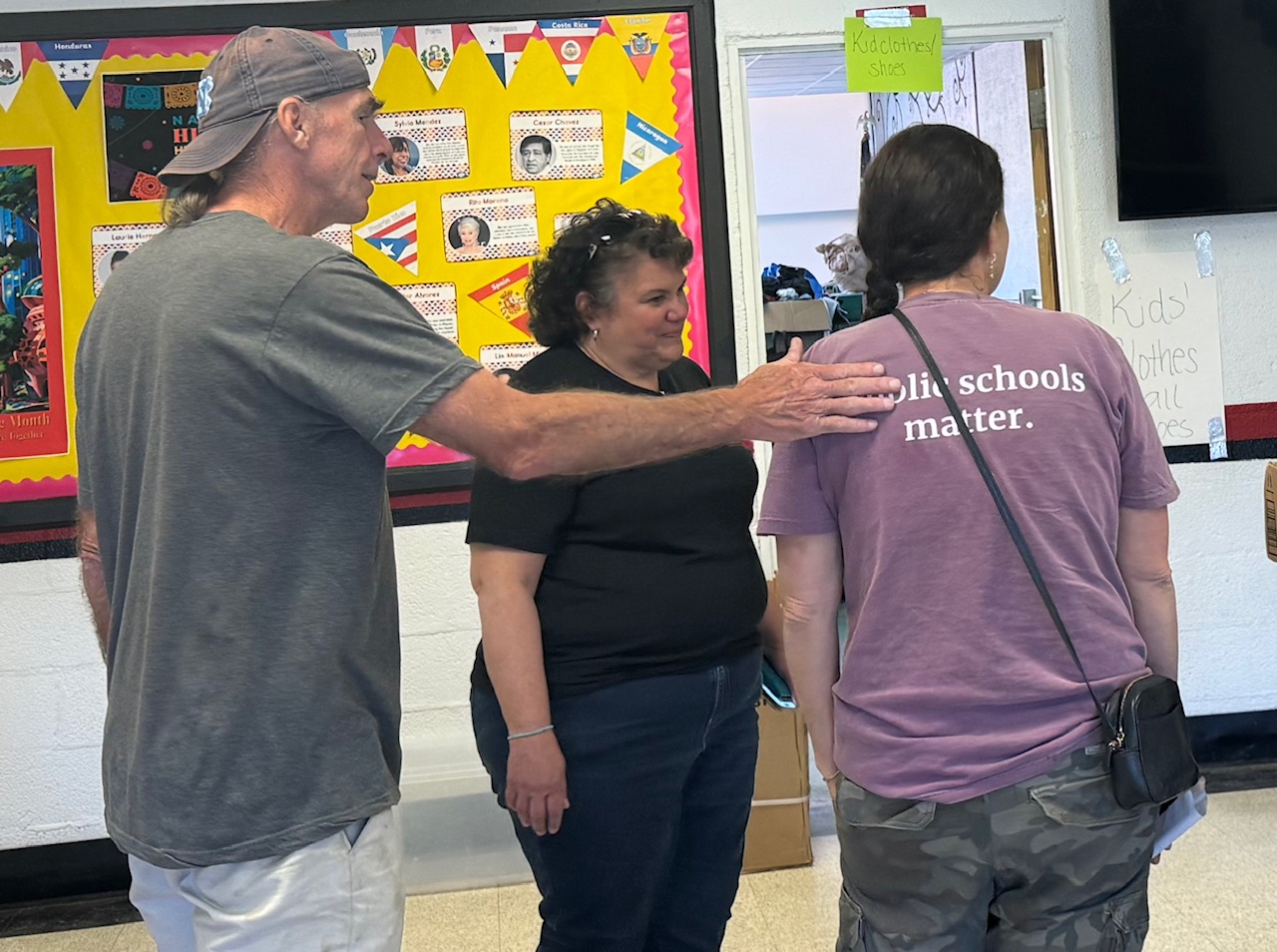
Keeping holding on to each other.