
Perspective | Helping students cultivate contribution mindsets through ‘Teamship’

On the first morning of my internship, the manager eased into our get-to-know-you chat with a simple question: “What do you hope to accomplish here this summer?”
I launched into the most honest and well-intentioned answer I could give. I hoped to “get my feet wet” and “gain the experience I would need to take the next step” towards my career ambition.
I won’t ever forget the icy stare and quick response I got back: “So you have no interest in actually helping us?”
It was less of a question and more of a lesson, but the lesson was lost on me at the time. And so I froze, and remained pretty well frozen for the rest of the summer. I couldn’t have been any less prepared for this internship opportunity. I didn’t realize why until much later.
 Sign up for the EdWeekly, a Friday roundup of the most important education news of the week.
I was always good at school, and being good at school meant finishing quickly so you could move on to the next assignment, the next chapter, the next grade level. The implicit contract was clear: Work diligently to get done and you’ll be allowed to advance. Decades later, that contract hasn’t changed. The most successful students are those who fully embrace what I call the “completion” mindset.
But the workplace plays by a different set of rules. Deadlines still matter, but your worth as an employee is measured less by how quickly you can put things in the rearview mirror and more by what value you can create for others — your teammates, your supervisor, your customers. Sometimes delivering value means cranking out work quickly. But more often, it’s the person who suggests an improvement, rallies others to rethink a process, steps in to cover for a teammate, or goes above and beyond for a client who stands apart.
In short, school often rewards a completion mindset, but the workplace rewards a contribution mindset.
If we believe preparing young people for work is one of the goals of school, we have to give students more chances to make this shift.
We can start by ensuring that not all student work exists solely to propel the individual forward on their personal path of finish lines. In other words, engage students in work that produces real value for someone or something beyond themselves. When students work on projects that matter to someone else’s mission, they start to see their effort in a new light. It’s not just about getting it done. It’s about making an impact.
At District C, the nonprofit where I work, we’ve built a program called Teamship that is designed to do exactly this.
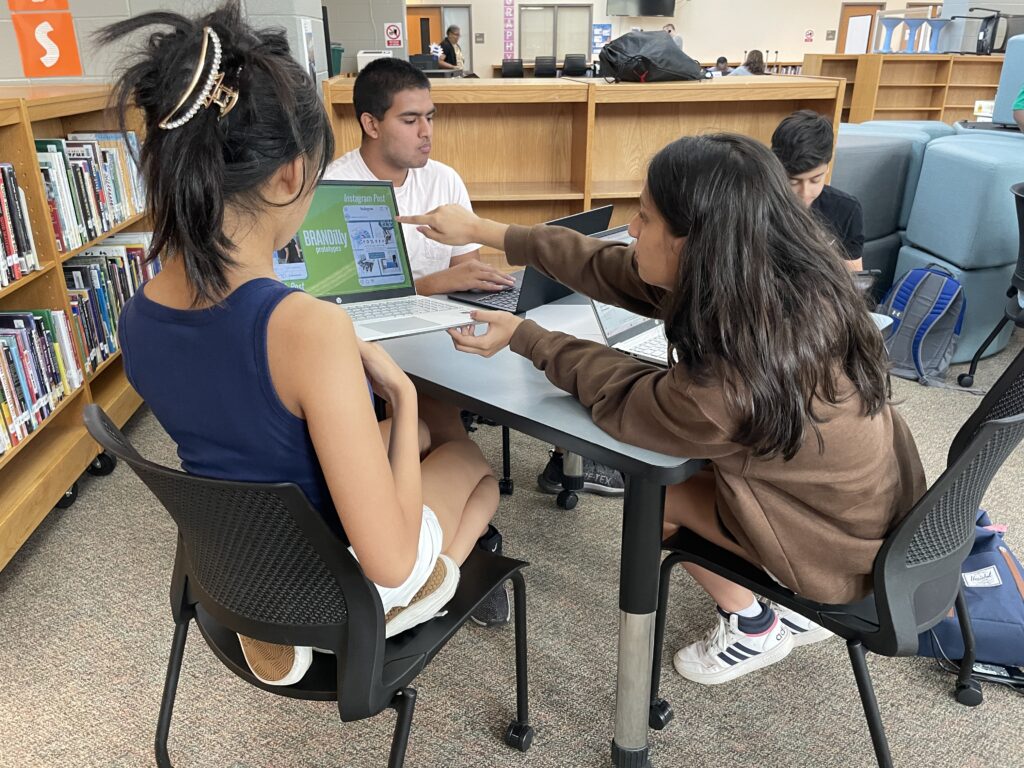
In Teamship, diverse teams of students work with real businesses to solve real problems. A business professional — anyone from a coffee shop owner to an engineer at a tech startup — comes to the student team with a real challenge they’re facing. It could be figuring out how to reach a new customer segment, reduce operational waste, or improve employee onboarding.
We’ve noticed an interesting pattern when students step into these real-world problem-solving situations for the first time. They meet with the business partner, hear the challenge, and almost immediately latch onto a solution. In their minds, this is the job — get to the answer and be done. But this is the completion mindset at work. Our job as Teamship coaches is to slow them down, help them dig deeper, and push them to think carefully about what else they need to know and understand about the problem at hand.
As the work unfolds, students start to feel the difference. This isn’t about earning a grade; it’s about creating something that might actually be used. Their audience isn’t a teacher with a red pen, it’s a business partner who has a real problem to solve and no time for busywork. That shift raises the stakes. You can see it in the way they dig deeper, challenge their own ideas, and push for solutions that will hold up in the real world. The contribution mindset starts to kick in, and they begin to recognize the currency their work can carry outside the classroom. One team, for example, pitched OpiAID CEO David Reeser on a bold plan to turn his competitors into customers. He didn’t just thank the students. He invited them to keep working with him.
A recent Teamship student put it this way: “It feels so good to be tackling something real, not some made-up scenario for class, and to talk to the official employees who have the power to change things using our suggestions!”
None of this is to say that learning for learning’s sake isn’t important. It is. Nor am I saying that the discipline required to complete work on time isn’t valuable. It absolutely is.
But if students leave school only knowing how to finish work for the sake of moving on to the next thing, we’re setting them up for the kind of deer-in-the-headlights moment I had on my first day as an intern.
Looking back, I can see that my manager’s sharp comment on that first day was his way of nudging me toward a contribution mindset. I wasn’t ready to hear it then. But if we give students earlier, authentic chances to practice contribution through work that matters to others, they won’t freeze the way I did. They’ll step forward, ready to help, ready to add value.
And maybe, when a future manager asks them what they hope to accomplish, they’ll say something like, “I hope to make a real difference for you and your team.”